


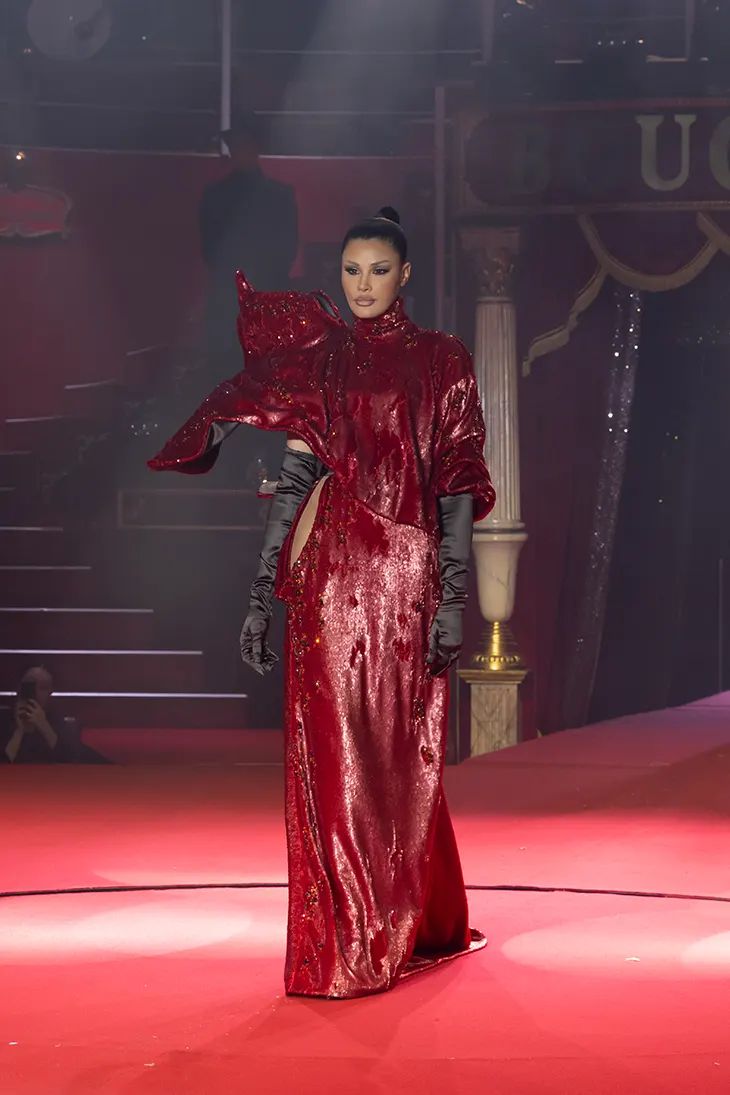
With Summer 2026 Haute Couture, Stéphane Rolland presents Parade as a circus believed to have disappeared. He imagines a circus that refuses excess and spectacle. The collection approaches couture as ritual, where silence carries weight and restraint shapes meaning.
COUTURE COLLECTIONS
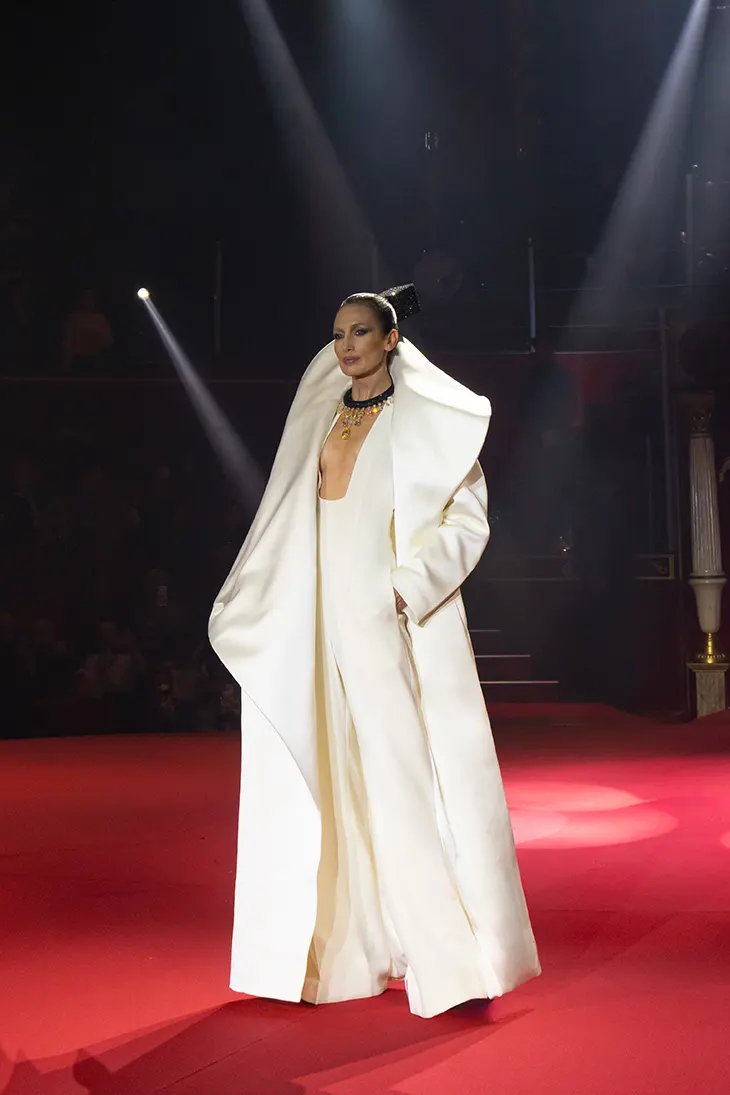
Asymmetrical coats, coat-dresses, and long structured capes define an architecture built on tension between body and material. Volumes remain precise and sometimes severe, reinforcing the rigor that governs this vision of the circus. Gazar, duchess satin, and crepe operate as materials of construction.
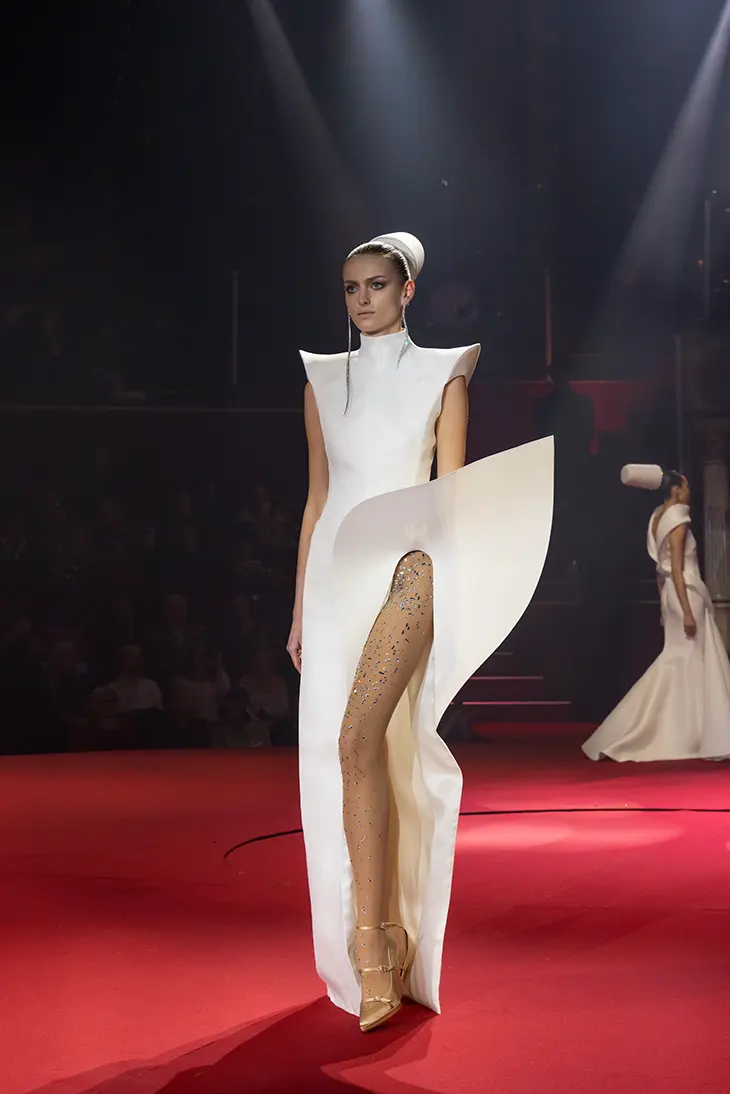
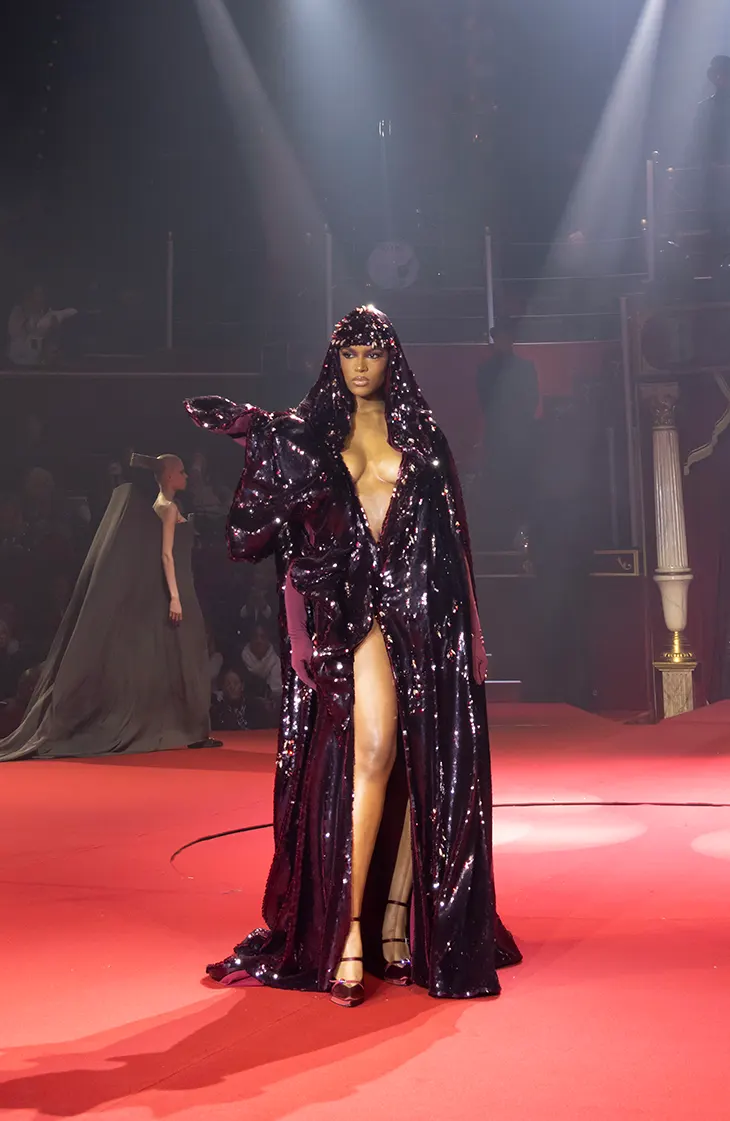
The runway unfolds as a procession that closes in on itself. The models advance slowly, carrying the gravity of performers conscious of their role. Jumpsuits dominate the collection, expressing a total-body approach that allows movement while maintaining containment. Structured shorts, bustiers, and dresses with bustles or winged backs address balance through form. Shoulder volumes, cubic sleeves, corolla shapes, and ball skirts suggest suspension and momentum, capturing the instant before ascent.
The Auguste, the Ringmaster, Pierrot, and the solitary clown inform the work without appearing as costumes. Rolland extracts their essence through cut, rhythm, and material. The clown emerges through tension between gravity and fragility, expressed by matte surfaces interrupted by concentrated embroidery. The Ringmaster appears through disciplined lines and the restraint of black-and-white compositions. Pierrot surfaces through ruffs, circular volumes, and sharp contrasts.
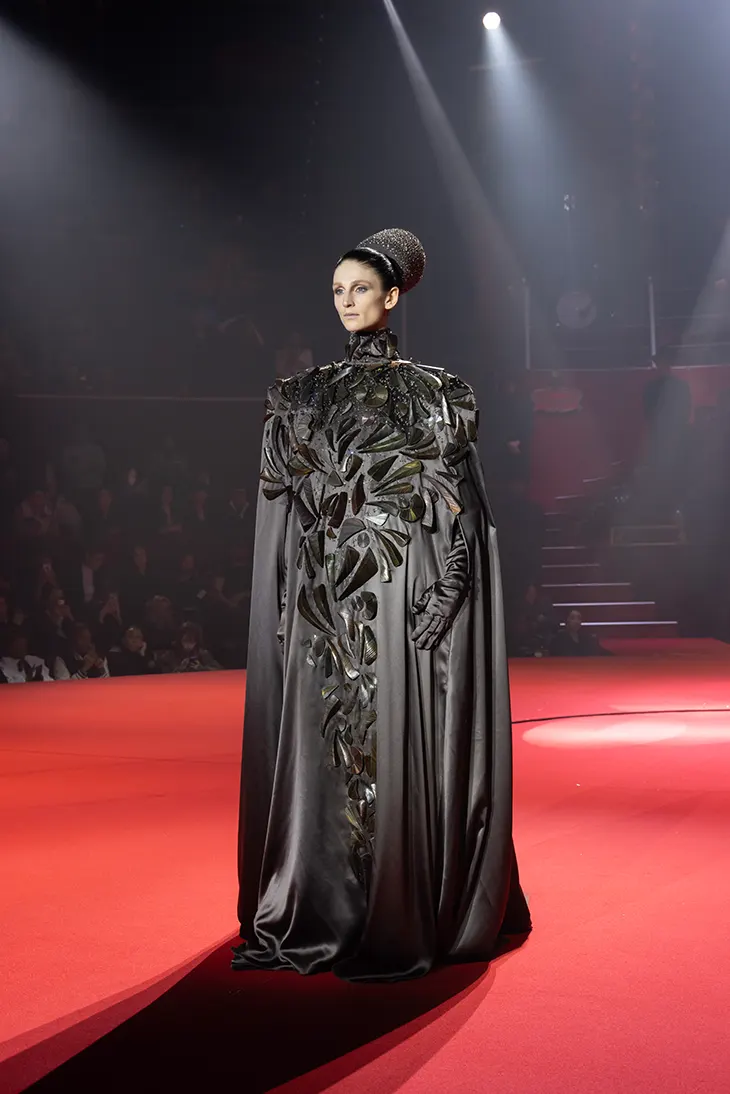
Diamonds, crystals, rubies, topazes, and garnets register as points of light. They appear like constellations, offering orientation within darkness. Brooches and plexiglass elements function as fragments of set design transferred onto the body. Jewelry assumes architectural presence, while garments take on scenographic roles.
Pablo Picasso threads through the collection as a guiding presence. His engagement with the circus and with saltimbanques informs Rolland’s perspective. Picasso’s attention to fragility and marginal figures shapes the emotional register of Parade. The runway operates as a contemporary ballet, drawing indirect reference to Picasso’s Parade.
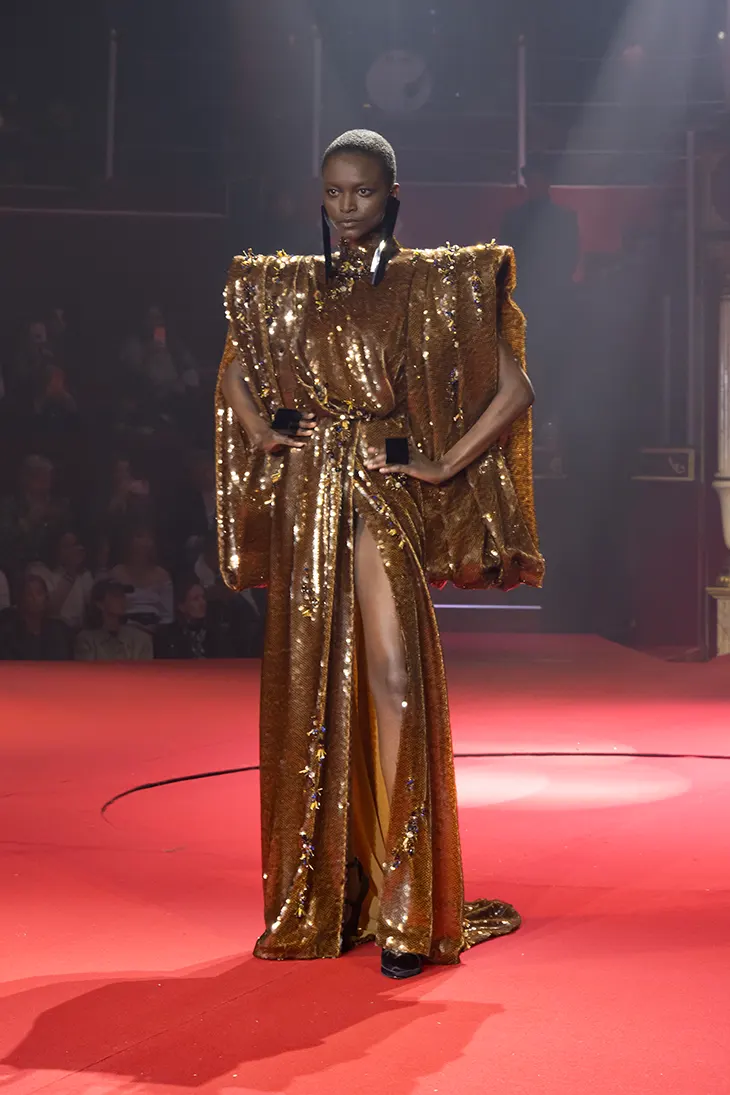
Erik Satie’s compositions guide the rhythm with repetition, rupture, and irony, setting a slow and controlled pace. Nino Rota introduces poetic imbalance and tenderness associated with fragile, excessive figures. Echoes of Fellini hover in the atmosphere, carried by an imagined bandoneon that follows the silhouettes like breath.
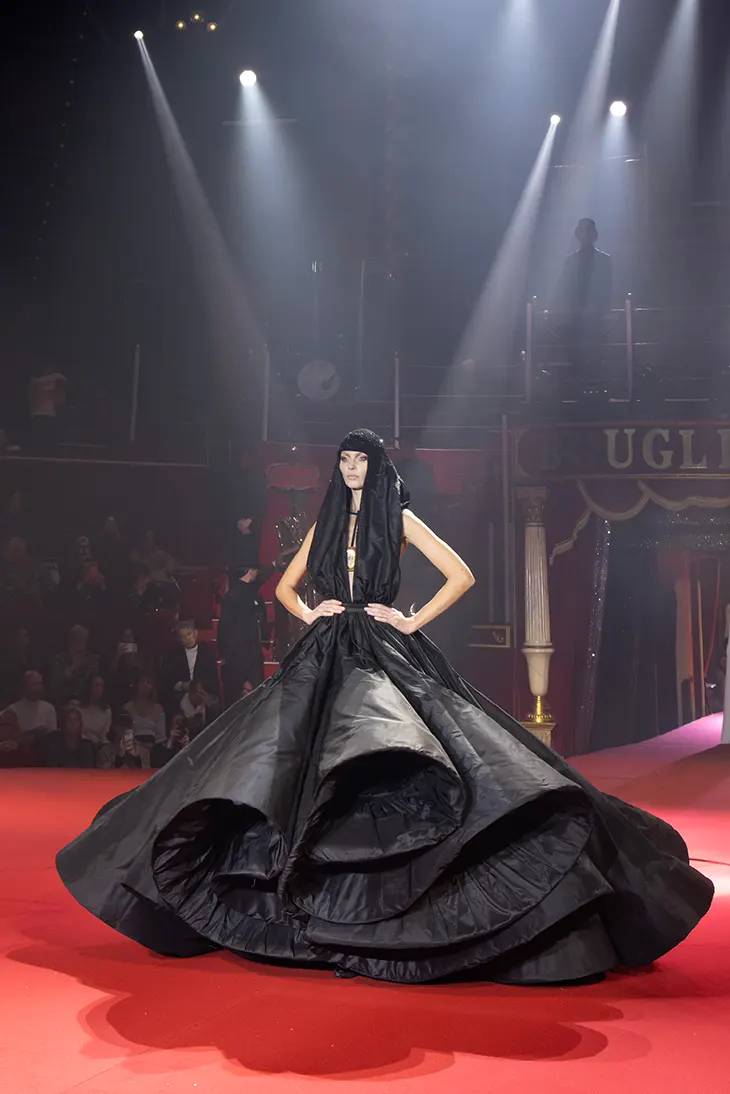
Rolland recalls the Cirque d’Hiver of the Second Empire under Napoleon III, a circus defined by discipline and ceremony. Deep blacks, radiant whites, and reds enriched with stones converse with this idea of controlled grandeur. Capes, long dresses, and trains suggest ritual and order.
Doves traverse the collection as a recurring symbol. Appearing through embroidery or abstraction, they signal peace, renewal, and trust. Their presence recalls Picasso’s universal gesture and offers affirmation without innocence. The show completes its circle as figures cross the space and vanish.