


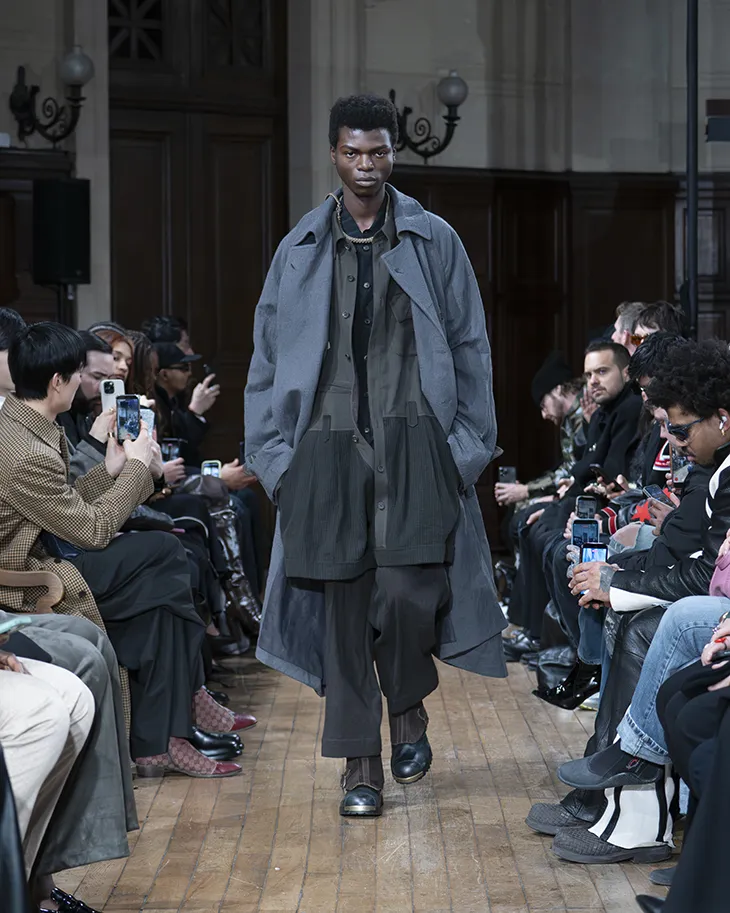
ZIGGY CHEN introduced its Fall Winter 2026 collection under the title Dissparation, presenting a body of work shaped by separation, delay, and subtle transformation. The collection operates at the edge of perception, where form shifts gradually and meaning emerges through distance, layering, and time. Dissparation defines dislocation as an ongoing condition, one that affects how garments take shape and how they communicate with the body.
FALL WINTER 2026.27 MENSWEAR
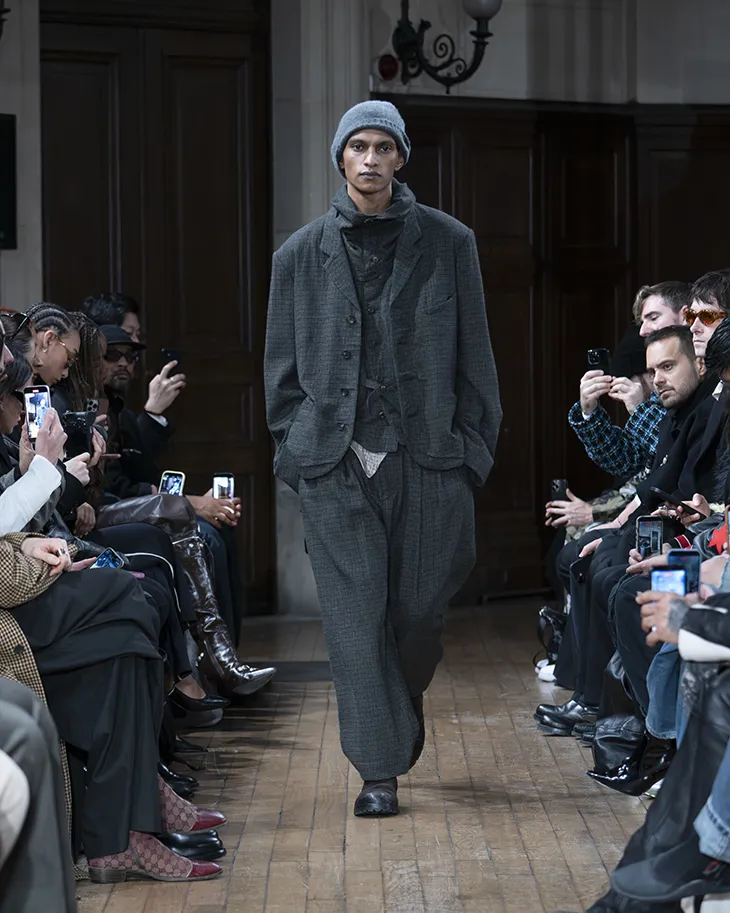
The collection draws from fragments of the past, with historical references appearing as observations rather than quotations. ZIGGY CHEN displaces these fragments and reassembles them through a contemporary sensibility that values balance and function. Each garment exists in a state of suspension. Nothing reaches full resolution. Tension remains present across silhouette, surface, and structure, allowing garments to evolve through wear and movement over time.
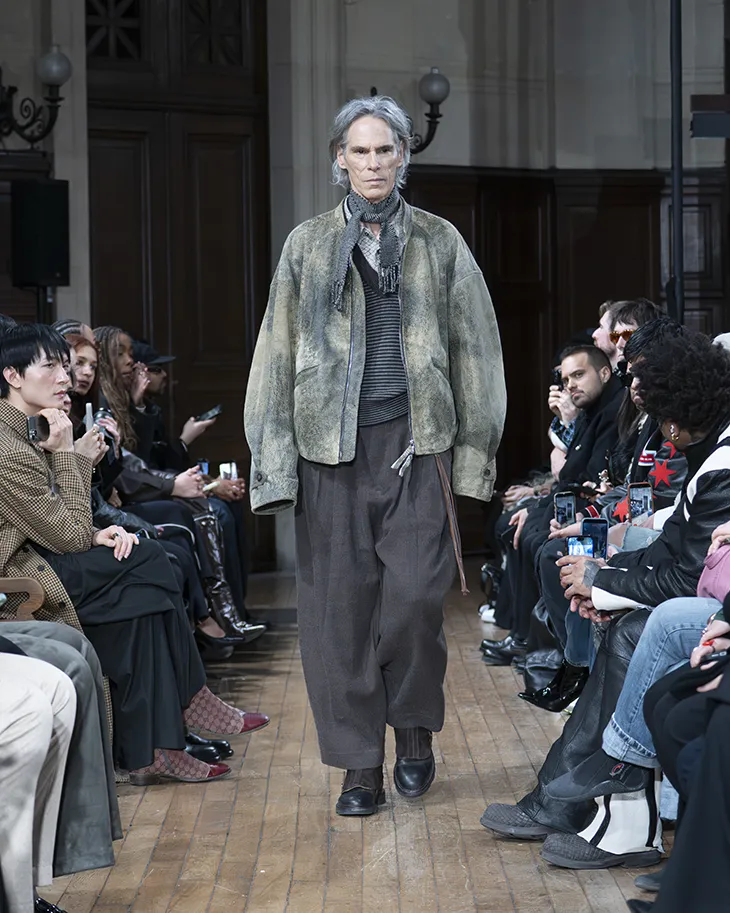
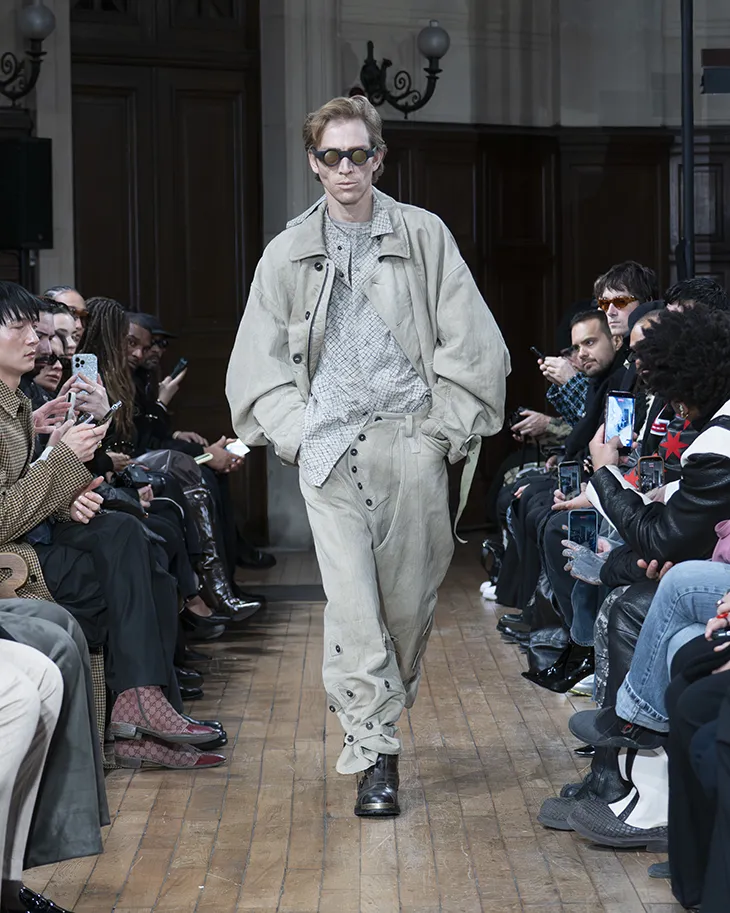
Patterns originate from hand-drawn marks and memory-based references. Stone surfaces, architectural forms, and historical imagery inform these designs, which remain abstract yet grounded. Construction takes on a visible role throughout. Linings appear on the exterior. Interiors surface openly. Garments communicate through their own assembly, allowing seams, layers, and inner structures to participate in the visual language.
Colour appears through a restrained range. Warm browns, softened greys, deep grey-blues, black, and muted grey-yellow tones dominate the palette. These hues support the collection’s focus on quiet transformation and material presence. Layering builds depth through accumulation, producing complexity without heaviness.
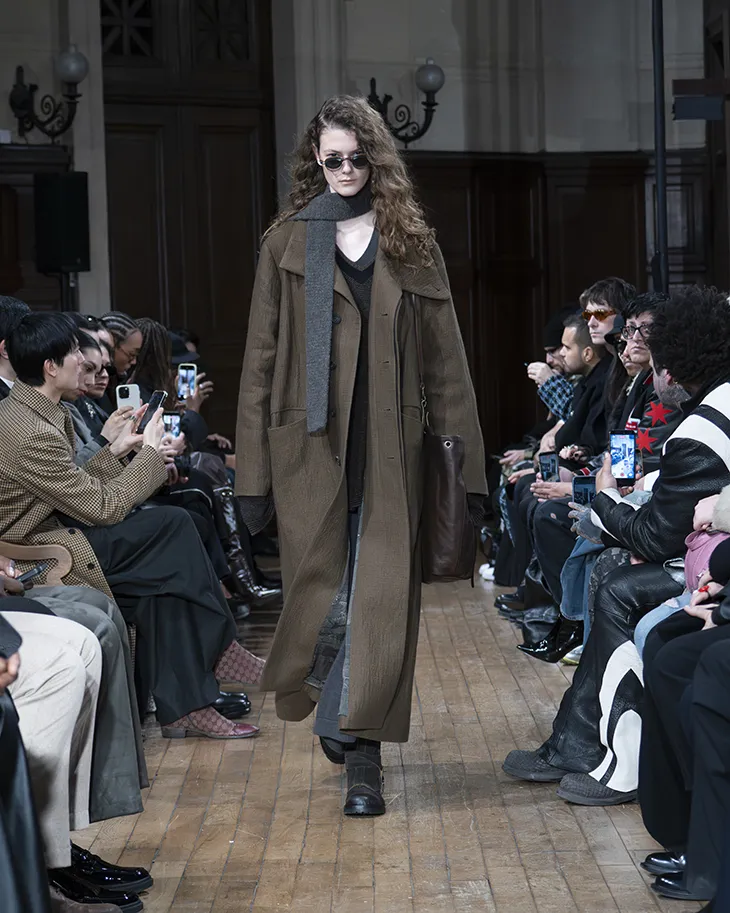
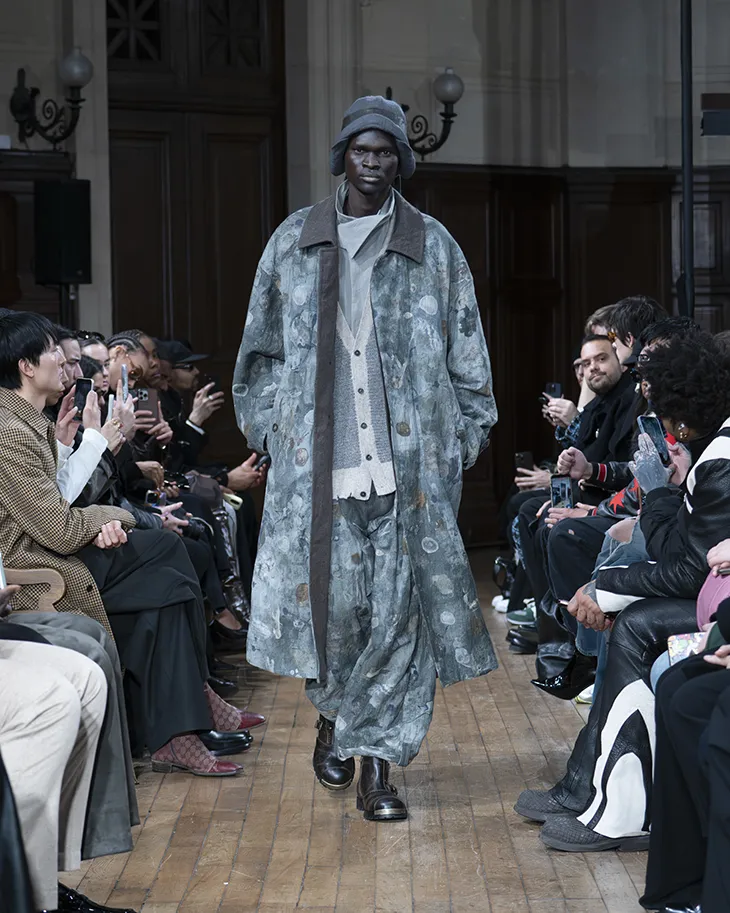
Material choice anchors the collection in direct physicality. Wool, cashmere, hemp, linen, and silk define the foundation of the garments. Irregular yarns and bouclé textiles preserve visible traces of process. These materials retain signs of their making, allowing variation and inconsistency to remain present. The collection treats imperfection as part of the garment’s character, leaving surfaces uncorrected and textures intact.
Accessories follow the same logic as the clothing. Braided leather and metal elements introduce tactile contrast. Cashmere scarves extend the material language of the collection, reinforcing continuity across garments and accessories.
Dissparation aligns craftsmanship with wearability through construction and material. Every component contributes to the collection’s internal logic. The garments suggest meaning through form, texture, and assembly rather than overt symbolism.