


As the Olympic Winter Games Milano Cortina 2026 starts, the uniforms stepping into view reveal how far Olympic dressing has moved beyond pure performance. Framed by Italy’s design legacy and shaped by global fashion houses, this year’s team kits operate as cultural signals as much as athletic equipment. Across ceremonies, podiums, and villages, clothing becomes a way for nations to articulate identity, memory, and ambition, often with as much precision as the sport itself.
OLYMPICS
Rather than functioning as interchangeable sportswear, the 2026 uniforms present a spectrum of approaches, from archival continuity to contemporary reinterpretation. Heritage, symbolism, and material intelligence sit alongside technical demands, creating a visual language that resonates well beyond the Games.
Team Mongolia:
Goyol Cashmere
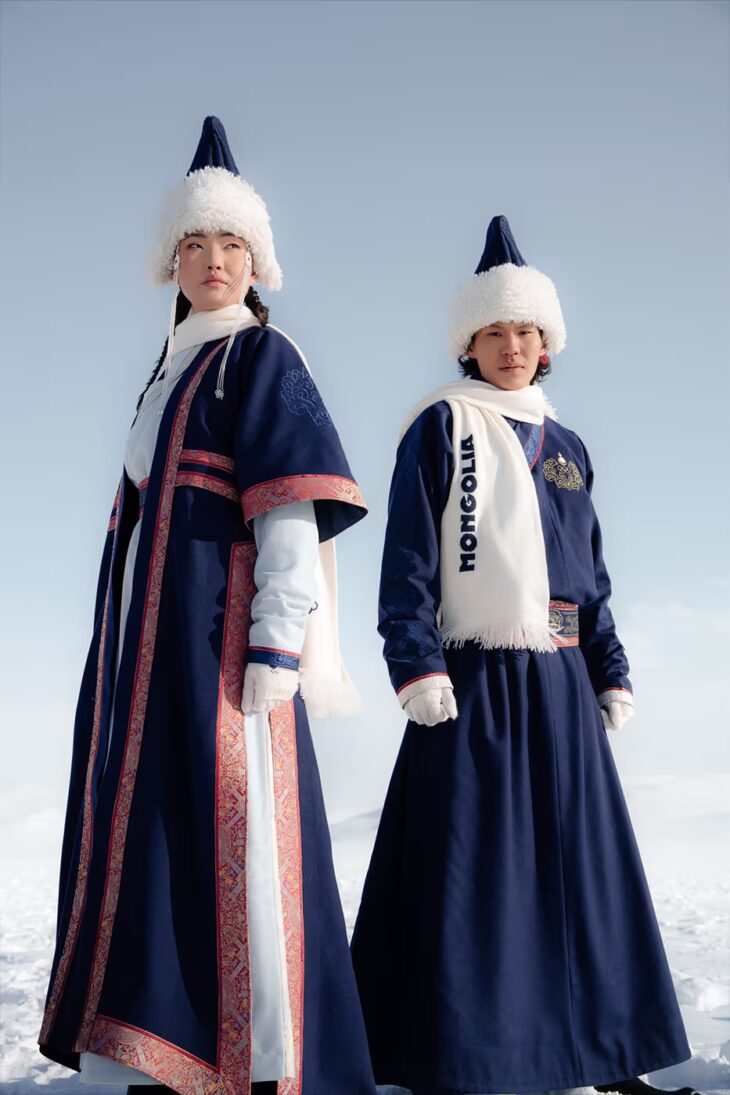
Among the most anticipated ceremonial looks are those of Mongolia, designed by Goyol Cashmere. The uniforms reinterpret the traditional deel through contemporary tailoring, crafted in cashmere and finished with silk and horn-inspired motifs. Rooted in nomadic heritage yet resolutely modern, the designs transform ancestral dress into a global statement, positioning Mongolia’s Opening Ceremony appearance as one of the Games’ most resonant visual moments.
Team Haiti:
Stella Jean
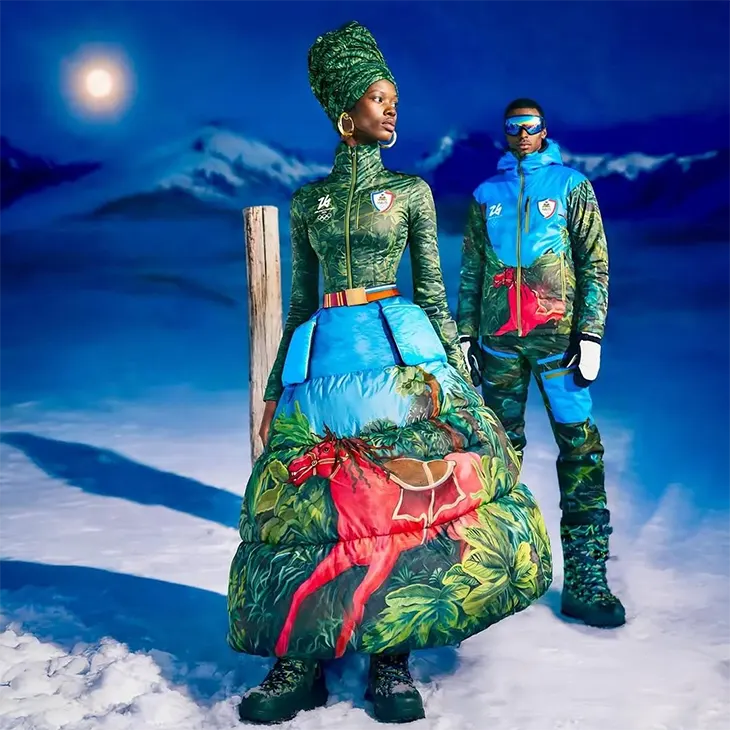
Haiti arrives at the Olympic Winter Games Milano Cortina 2026 with ceremonial uniforms designed by Stella Jean, continuing her collaboration with the team following Paris 2024. Hand-painted with a striking red riderless horse set against a sky-blue ground, the looks draw inspiration from the work of Haitian artist Édouard Duval-Carrié, translating cultural memory into a bold visual statement. With Richardson Viano and Stevenson Savart representing the nation on snow, the uniforms place Haiti firmly in the spotlight before competition begins, embodying what Jean describes as the very symbol of the Haitian spirit.
Team France:
Le Coq Sportif
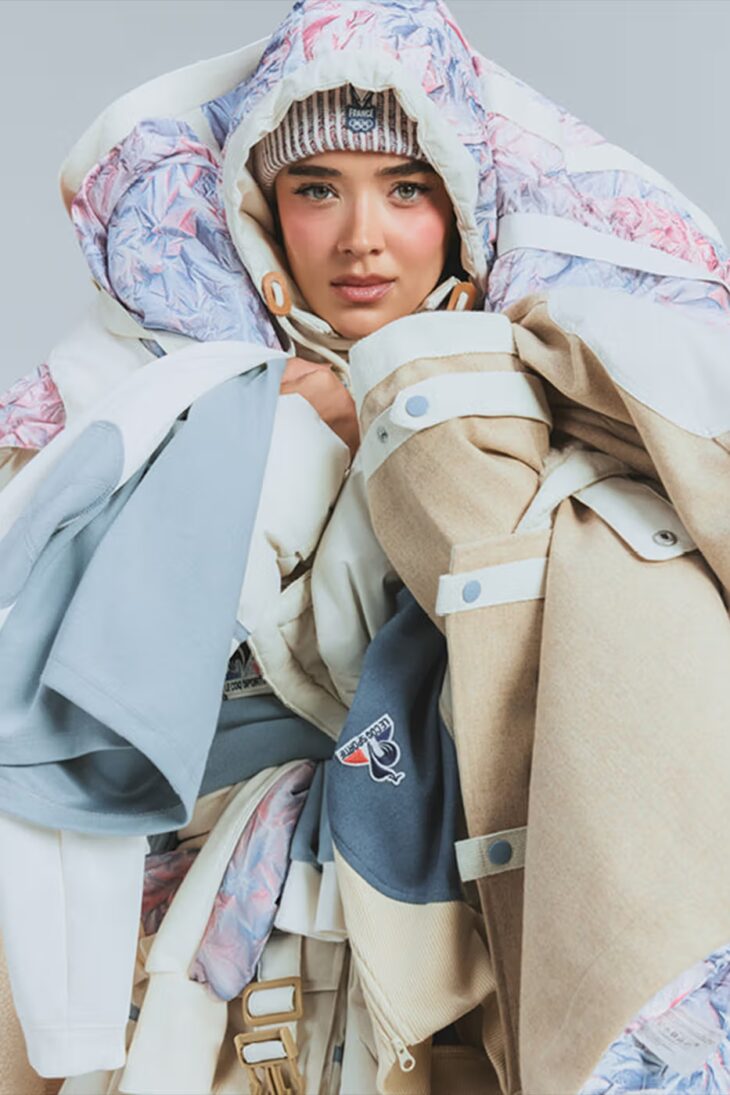
For France, Le Coq Sportif translates national symbolism into a restrained, performance-driven wardrobe. The familiar tricolor appears in softened shades of icy blue, cream, and muted red, applied across ergonomic silhouettes designed for extreme conditions. Subtle references to 1970s sportswear, zip-up tops with wide collars, straight-cut trousers, recycled sherpa trims, anchor the collection in French sporting history while keeping it firmly contemporary.
Team Brazil:
Moncler and Oskar Metsavaht
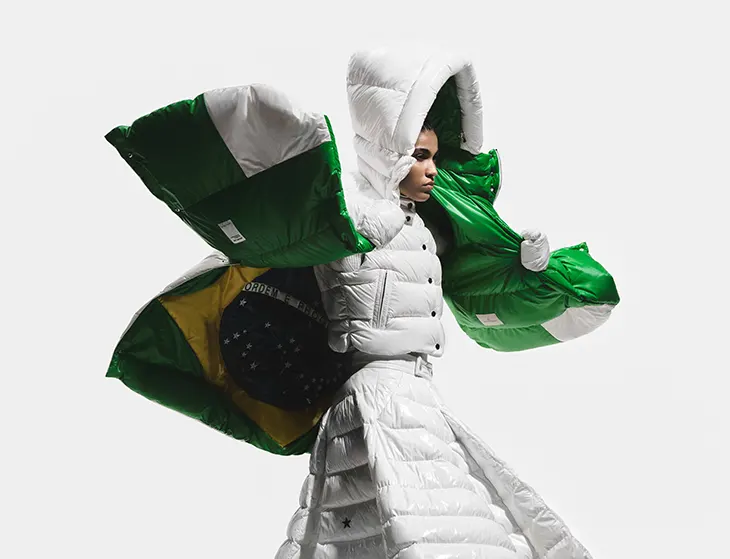
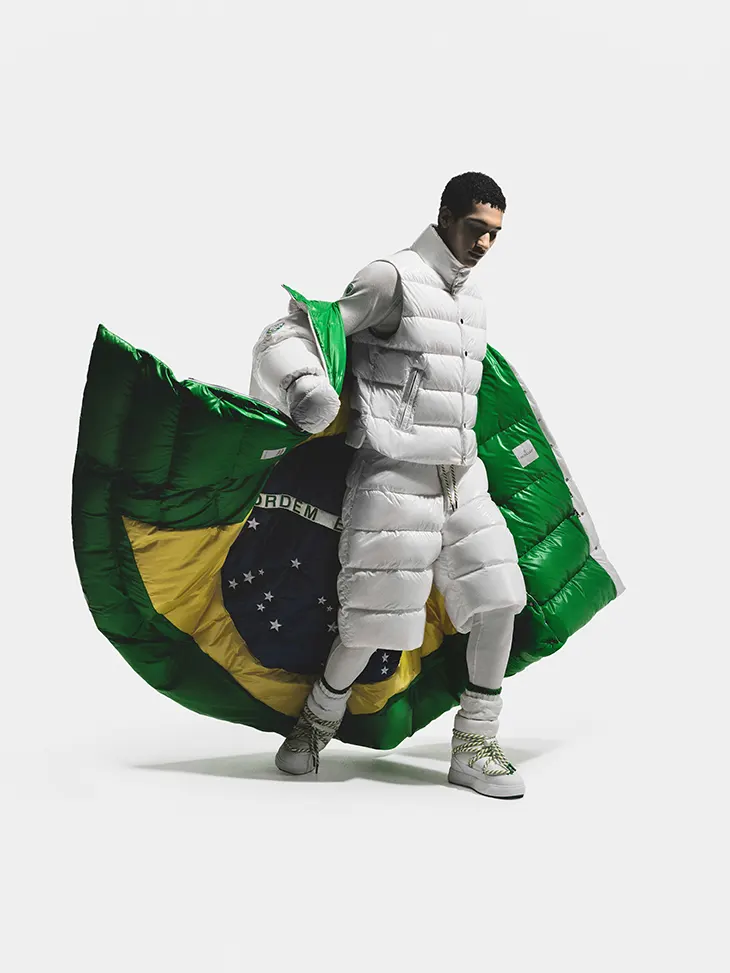
Brazil’s ceremonial uniforms arrive as one of the most visually striking statements of the Games. Designed by Moncler in collaboration with Oskar Metsavaht, the looks reinterpret Moncler’s historic Karakorum jacket through a Brazilian lens. Sculptural capes for flag bearers Lucas Pinheiro Braathen and Nicole Silveira introduce fluid movement and ceremonial presence, crafted in recycled nylon laqué and lined with intarsia Brazilian flags. Blue, green, and white palettes echo national symbolism while maintaining alpine performance credibility.
Team Great Britain:
Ben Sherman
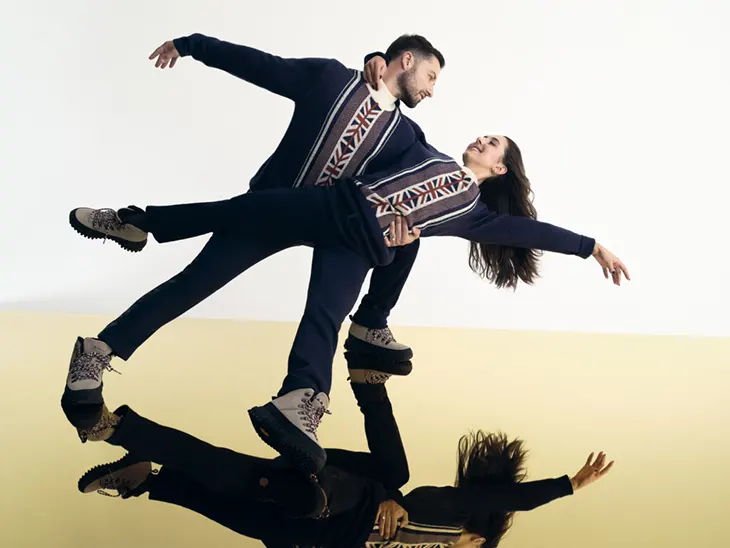
Ben Sherman returns as official ceremonial wear supplier for Team GB at the Olympic Winter Games Milano Cortina 2026, marking its fourth consecutive Olympic partnership. Inspired by the Dolomites and British tailoring codes, the collection reworks heritage checks, Fair Isle knits, and oversized outerwear into contemporary silhouettes designed for the alpine stage. An exclusive knitted accessories collaboration with Olympic gold medallist Tom Daley adds a personal, craft-led layer to the ceremonial looks worn by Team GB’s flagbearers.
Team Canada:
Lululemon
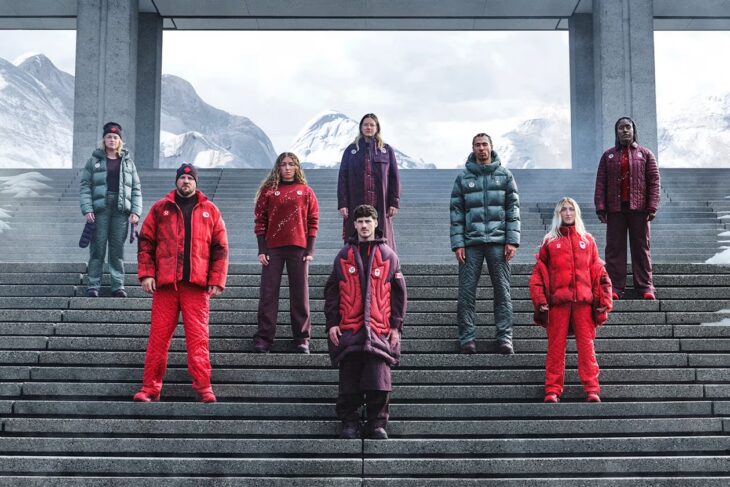
Canada’s uniforms, designed by Lululemon, center on the oversized red maple leaf, scaled boldly across puffers, vests, and podium layers. Modular construction allows garments to convert into scarves or pillows, reflecting the realities of travel and recovery. The palette shifts from saturated reds to blue-greens inspired by Canada’s landscapes, supported by thermoregulation technology and adaptive fits that prioritize comfort without sacrificing identity.
Team Italy:
Emporio Armani
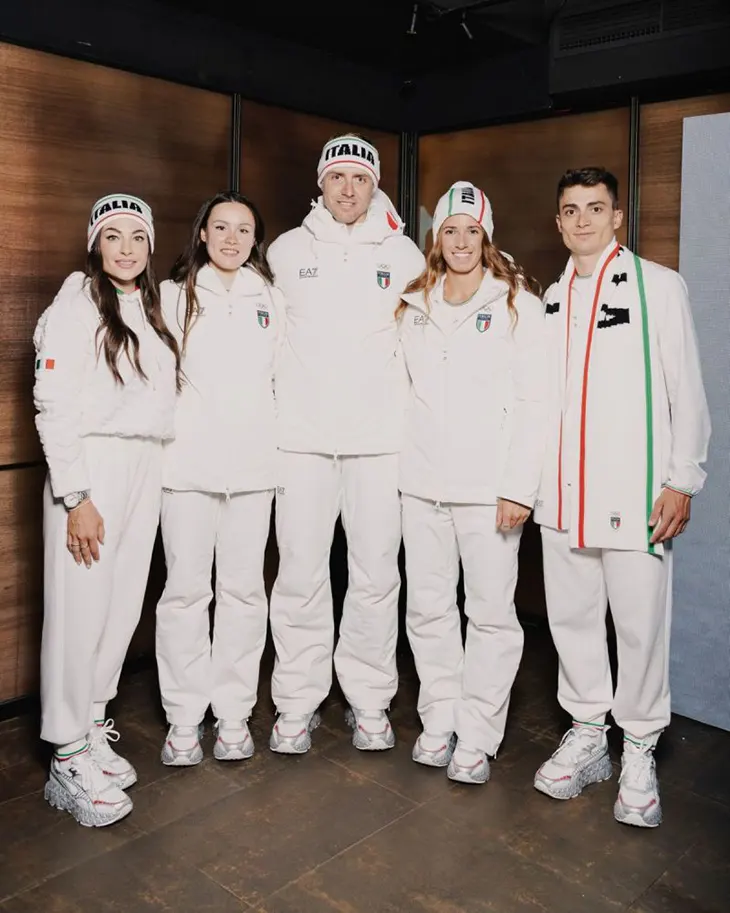
As host nation, Italy steps onto the Olympic stage dressed by Emporio Armani through its EA7 line. The 2026 uniforms are defined by a disciplined white palette, echoing snow-covered peaks and Milanese clarity. Sharp tailoring, three-dimensional “Italia” embroidery, and refined accessories establish a composed visual language, while lyrics from the Italian national anthem printed inside jackets and polos add a discreet patriotic gesture.
Team New Zealand:
Kathmandu
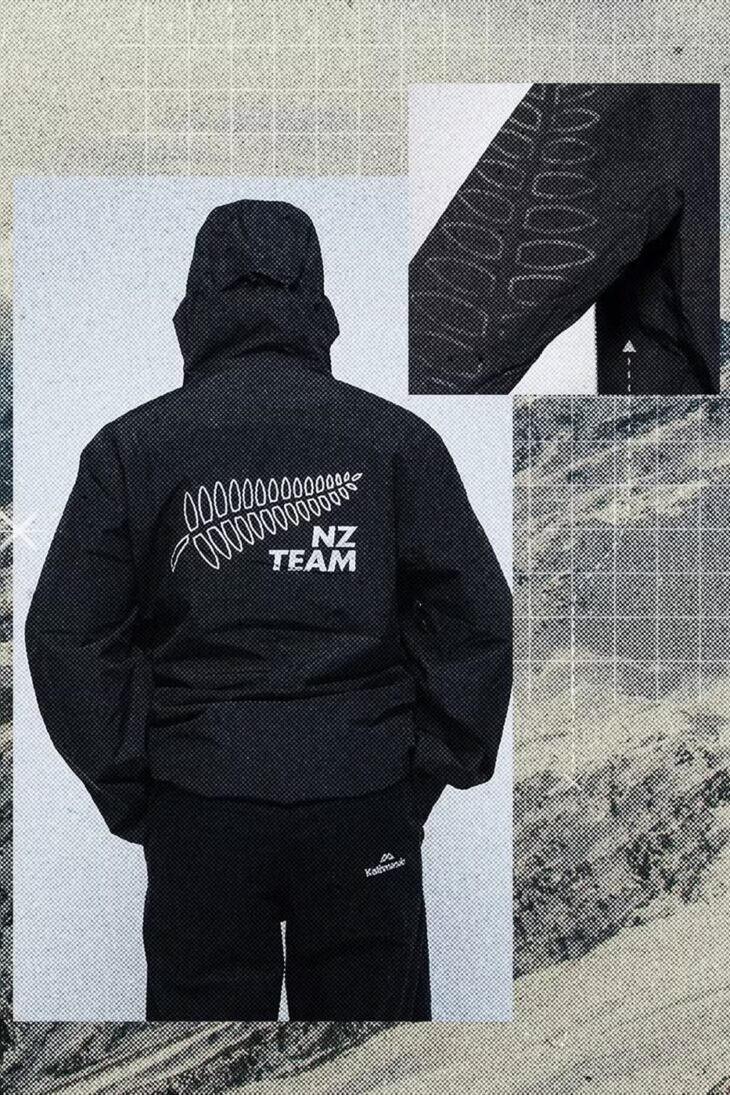
Kathmandu outfits Team New Zealand with an Earth-first uniform built around circular design and environmental responsibility. Made using recycled ocean plastics and biodegradable insulation, the kit reflects the country’s close relationship with nature through an understated all-black palette marked by the Silver Fern. Adapt technology allows athletes to adjust insulation levels, pairing technical precision with the restrained confidence of the Kiwi approach.
Team USA:
Ralph Lauren
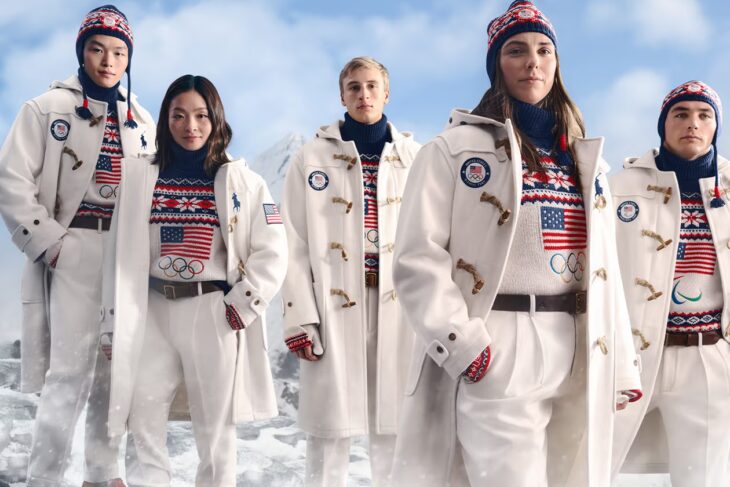
The quintessential American Olympic aesthetic returns through Ralph Lauren, marking nearly two decades of the brand’s involvement with Team USA. For the 2026 Opening Ceremony, Ralph Lauren leans into “Vintage Americana” with a cinematic sensibility. The look centers on a white wool coat paired with patriotic intarsia sweaters featuring the American flag and all-white utility trousers.
Team Norway:
Dale of Norway
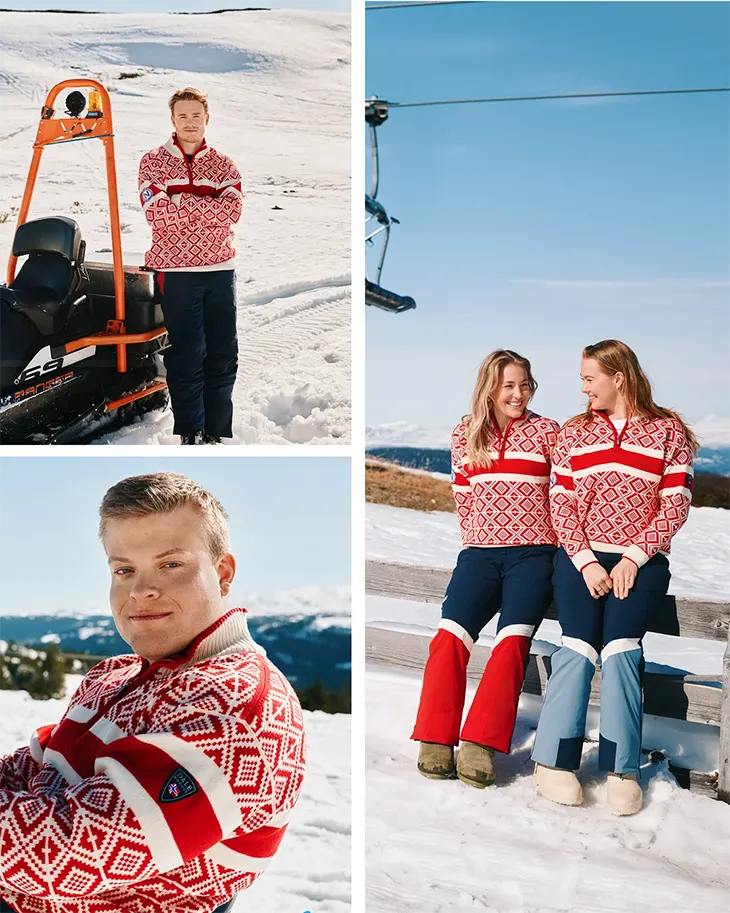
Norway’s Olympic presence returns to its roots through Dale of Norway, whose relationship with the Winter Games dates back to Cortina in 1956. For 2026, the brand revisits that legacy with a high-neck, half-zip sweater crafted in traditional Norwegian wool, lined with merino for insulation. The geometric pattern, rendered in deep red and navy on soft white, reinforces Norway’s enduring connection to winter sport, craft, and functional elegance.
Across all delegations, the Milano Cortina 2026 uniforms confirm a broader shift in Olympic fashion. These garments no longer exist solely for competition or ceremony. They carry history, politics, and cultural ambition, turning the Olympic stage into a moving exhibition of global design.