


IRO introduces the Fall Winter 2026 collection under the direction of Nicolas Rohaut. The collection carries the title Serious Joy and builds a wardrobe through references drawn from multiple eras. Rohaut approaches the house archives as a starting point and constructs silhouettes that combine the visual language of the 2000s with elements associated with the Renaissance and the 1980s. Through this process, the collection develops a layered identity grounded in recognizable shapes and material contrasts.
FALL WINTER 2026 WOMENSWEAR
The designer draws heavily from the archives of IRO to reinterpret the codes associated with the brand. Rohaut approaches the archive through juxtaposition, bringing together references from different time periods to create an instinctive composition. The 2000s remain closely connected to the identity of the house, and the collection uses this decade as a foundation. Renaissance references and elements drawn from the 1980s interact with these archival cues, creating silhouettes that bring several visual languages into a single wardrobe.
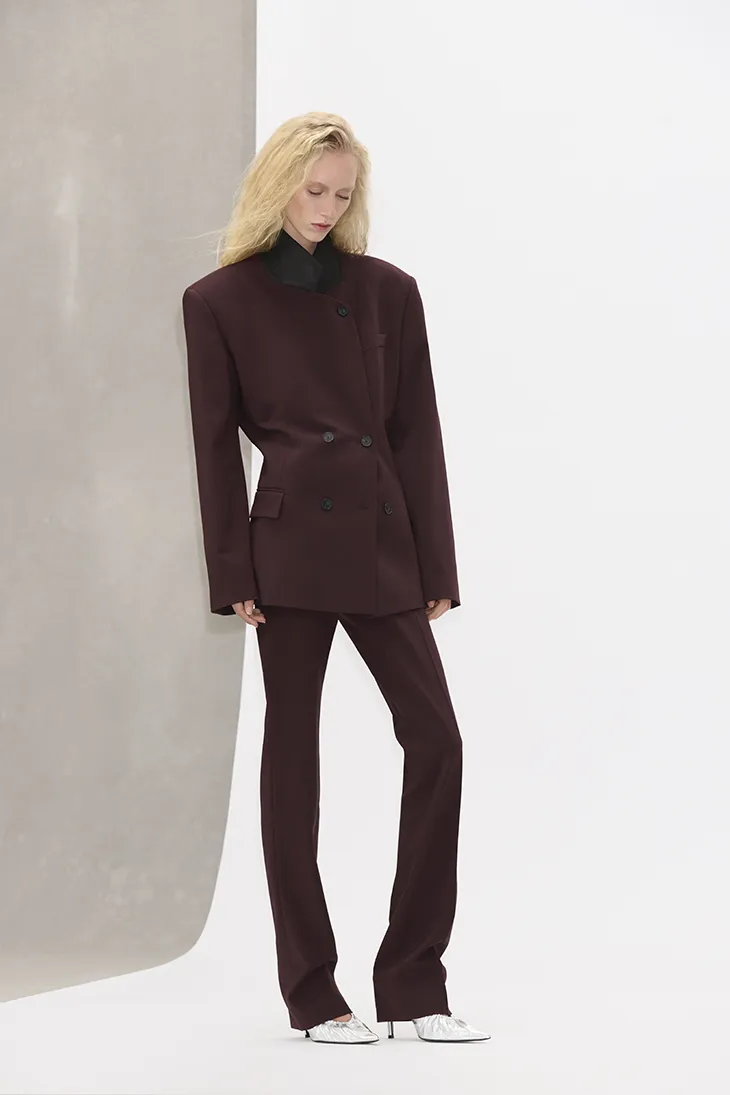
The influence of the 1980s appears through structure and drape. Jackets feature defined shoulders and waists that shape sharp silhouettes. Tailoring emphasizes structure, while generous draping introduces fluidity into the garments. Materials play an important role in this part of the collection. Iridescent surfaces and fabrics with shine appear throughout the lineup. A body-hugging scuba line introduces garments that echo dance culture and the energy associated with that period.
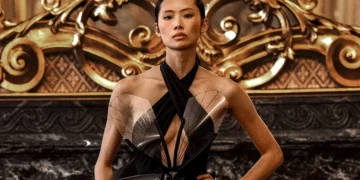
The collection also includes an evening capsule titled Palace. The capsule references the festive atmosphere that surrounded the Paris nightclub Palace between 1978 and 1995. Garments in this section rely on materials such as pinstripes formed with sequins, rhinestones, lamé, extra-large sequins, and lacquer-effect tweeds.
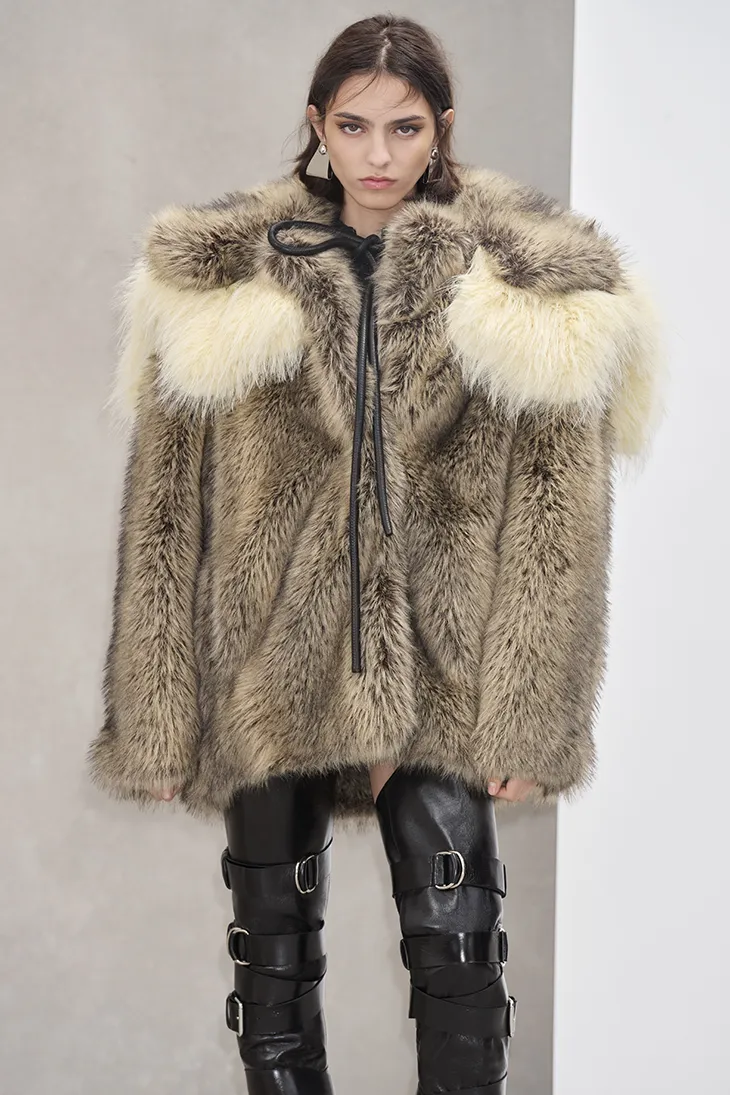
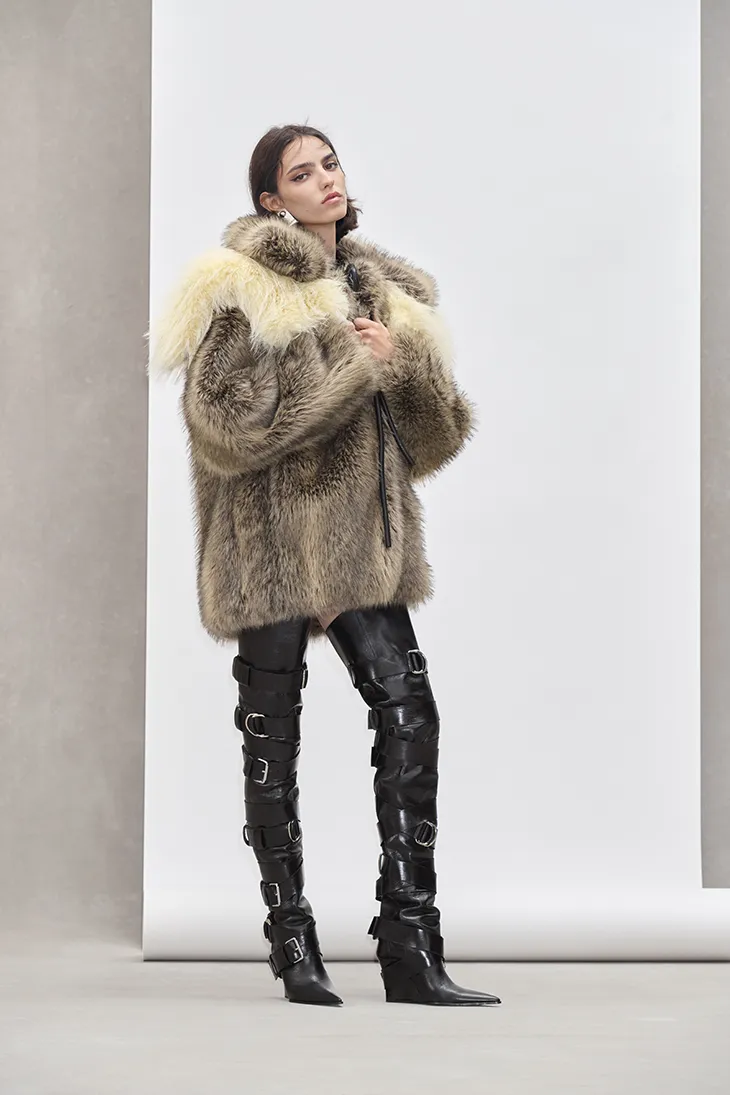
Rohaut also draws on the cultural energy associated with the early 2000s. This reference appears through a spontaneous relationship with clothing and styling. Silhouettes combine tailoring with leisure elements, creating compositions that feel instinctive. Styling echoes images associated with street photography from that era. The collection recalls looks similar to those worn by Chloë Sevigny and Kate Moss, whose street style images shaped visual culture more than two decades ago. Examples within the collection include oversized fur worn over draped tops and mini shorts, reflecting a styling approach connected with nightlife and personal expression.
A Renaissance register introduces another layer of reference. Certain volumes recall the drapery visible in historical paintings. Materials echo the richness associated with historical garments. Leather tiles arranged in overlapping patterns create tops and skirts that resemble armor. Sequins evoke the appearance of chainmail. Sleeves feature fur trimming, while dresses incorporate capes. Thigh-high boots include multiple straps that build structured silhouettes.
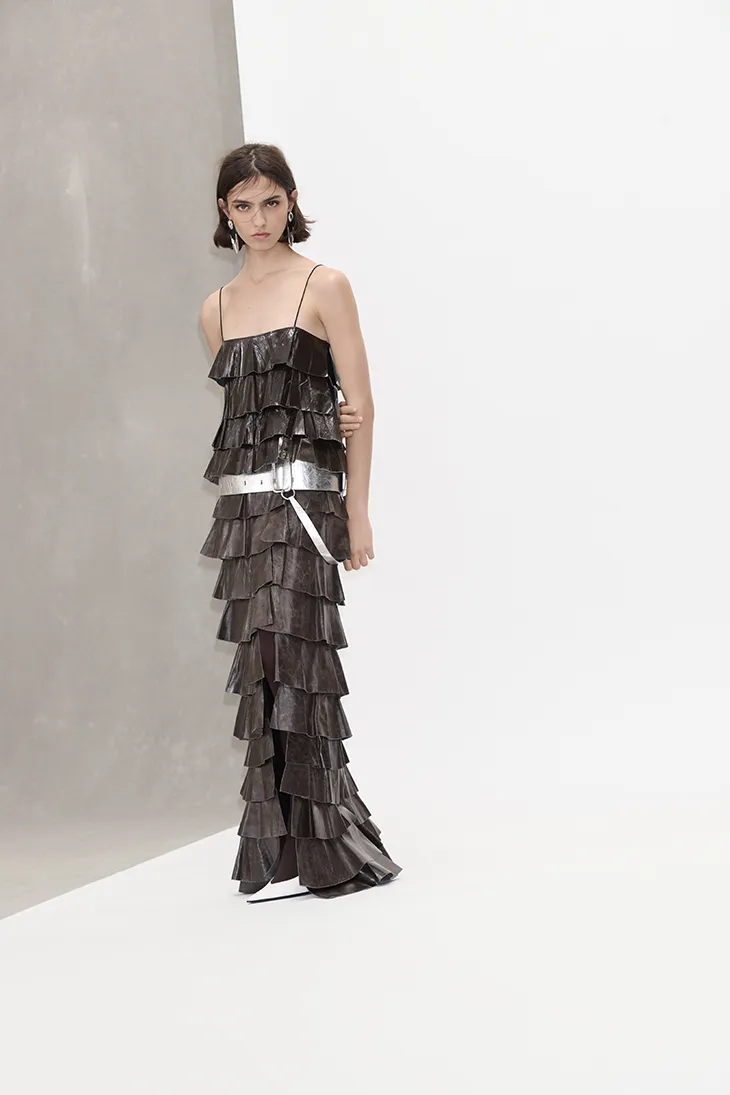
Layering also contributes to the Renaissance reference. Translucent garments appear in combinations that recall undershirts visible in court portraiture. Jackets with an X-line shape return from the Pre-Spring 2026 collection and appear again in schierling and brushed velvet, echoing the construction of historical doublets. Ruched bubble skirts introduce rounded forms that resemble the puffed shapes associated with historical costume.
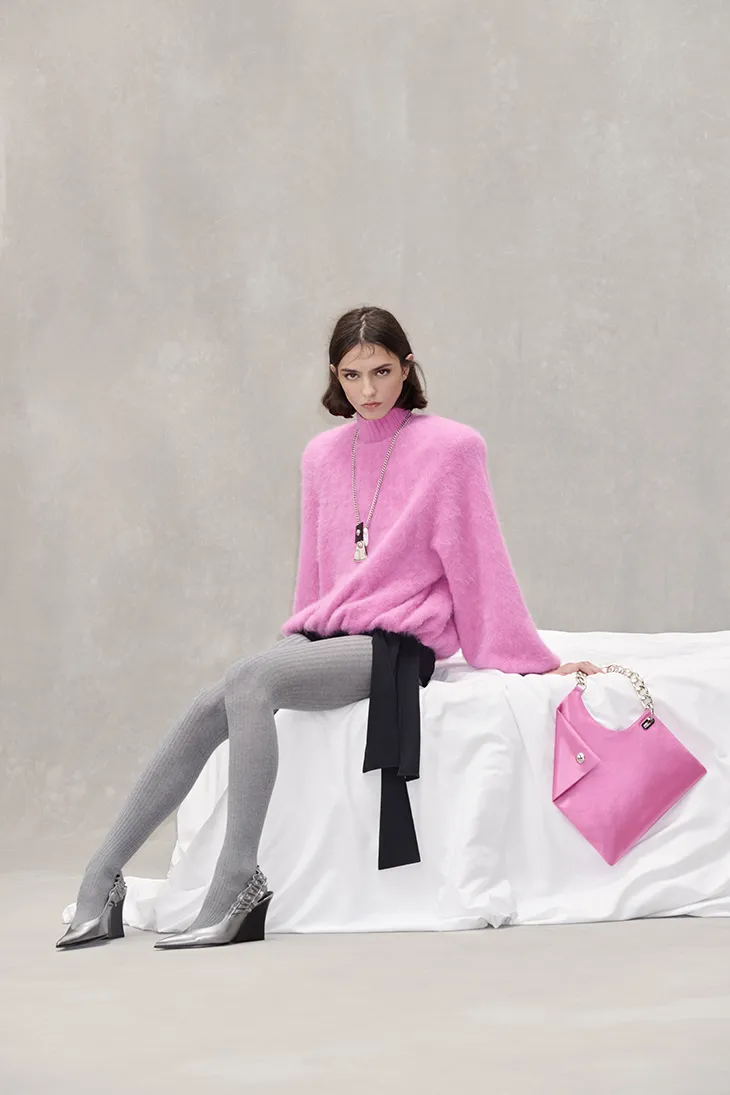
The color palette grounds the collection in winter tones. Deep blue, black, elephant grey, lichen green, dark cherry, and squirrel brown establish the base. Blush, neon yellow, and candy pink introduce brighter accents within the lineup. Accessories continue the visual language of the garments. Bags and shoes carry prints such as Dalmatian pony hair and ocelot motifs. The Fauve shoe appears in several versions including a slingback gathered at the heel and a pump with gathered detail on the upper.
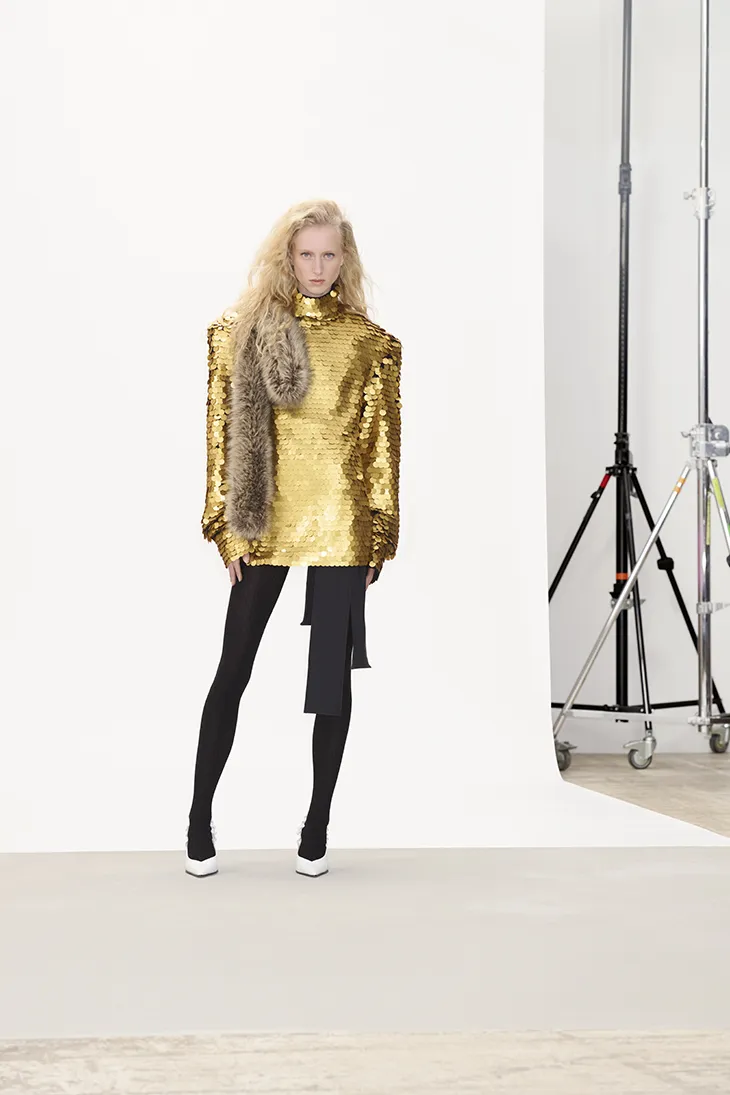
Accessories also introduce structural additions to the garments. Wide fur collars and large hoods function as removable elements that alter the silhouette. These components create layered forms that reinforce the hybrid approach of the collection.