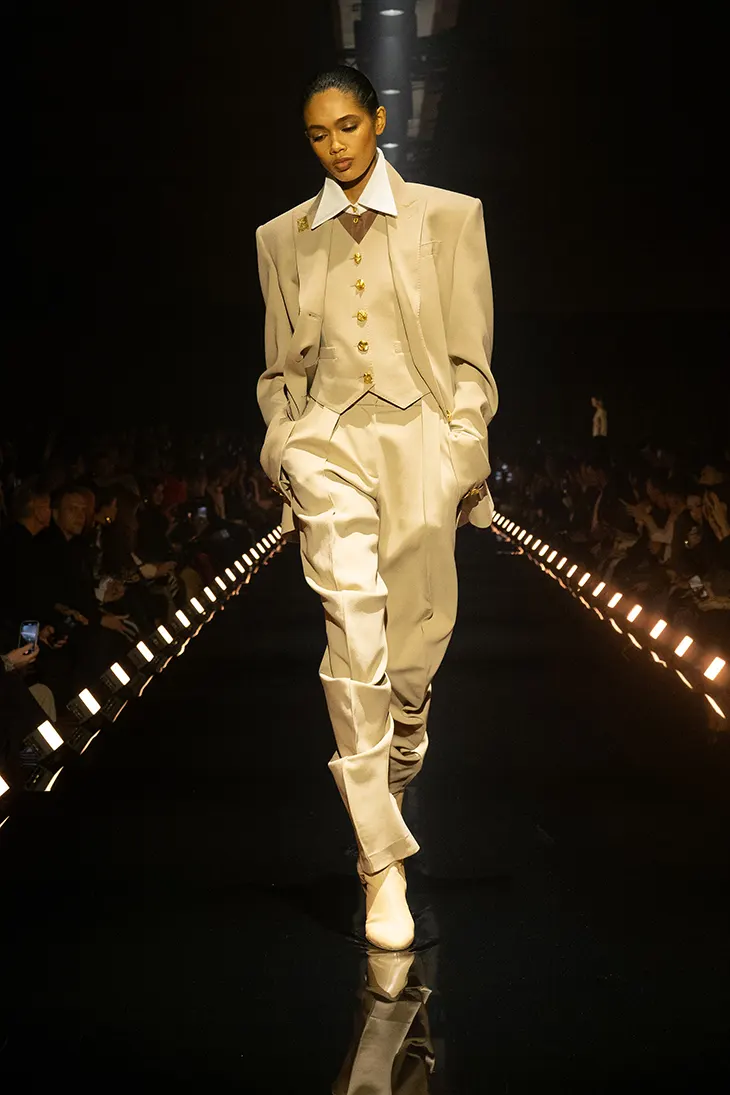



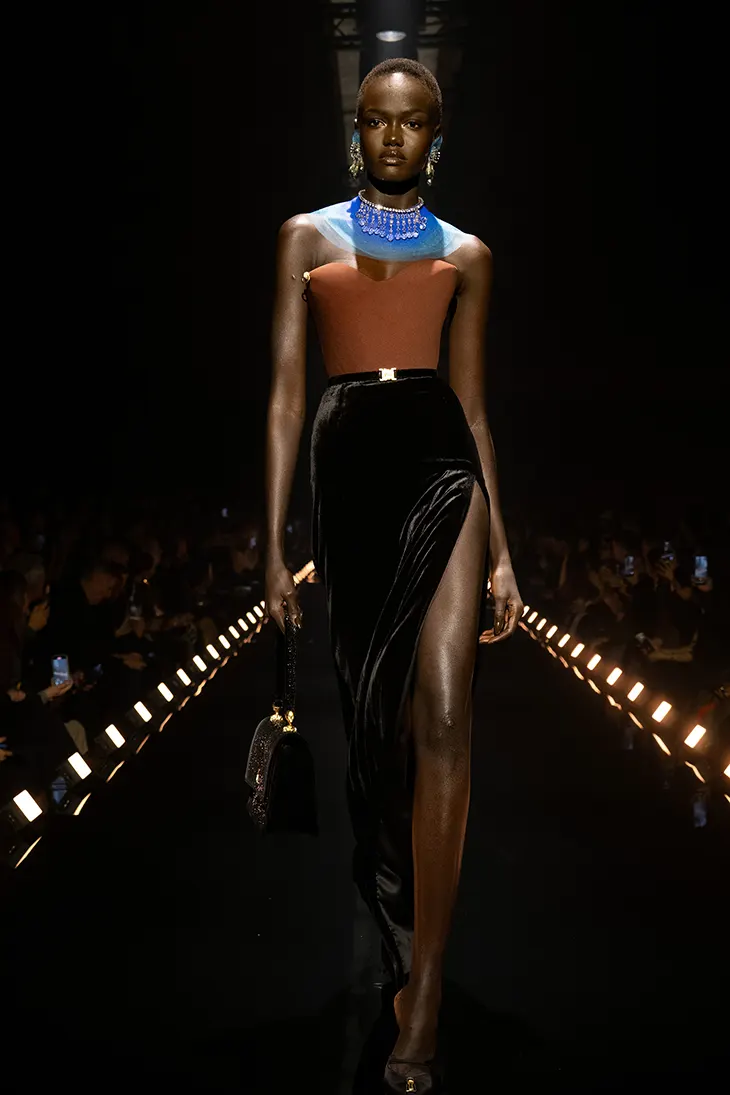
Schiaparelli opens Fall Winter 2026 with The Sphynx as the Victoria and Albert Museum prepares to unveil “Schiaparelli Fashion Becomes Art,” a retrospective devoted to Elsa Schiaparelli. The exhibition examines her life and work and reflects the radical approach that defined her practice. Elsa questioned the nature of clothing itself. A dress could include drawer pulls on its pockets to suggest hidden aspects of the female psyche. Another could feature an embroidered skeleton that turned the body inside out.
FALL WINTER 2026
Daniel Roseberry addresses this duality in The Sphynx collection. The house carries recognizable codes that define its identity, yet these same codes create limits that every new season must confront. Roseberry focuses on one of Elsa’s most recognizable symbols, the keyhole. The shape appears simple, though it suggests an invitation to unlock something concealed. Within the collection it operates as a guiding idea. The motif also points toward the complexity of identity. Every woman holds layers that remain hidden even from herself.
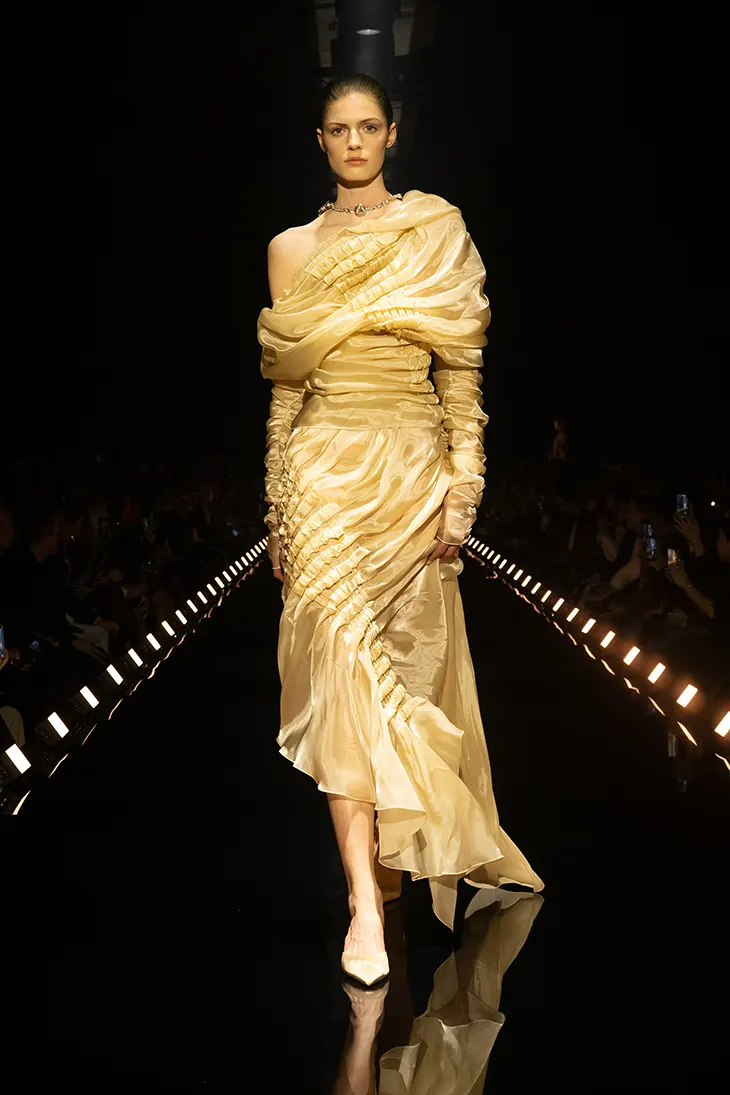
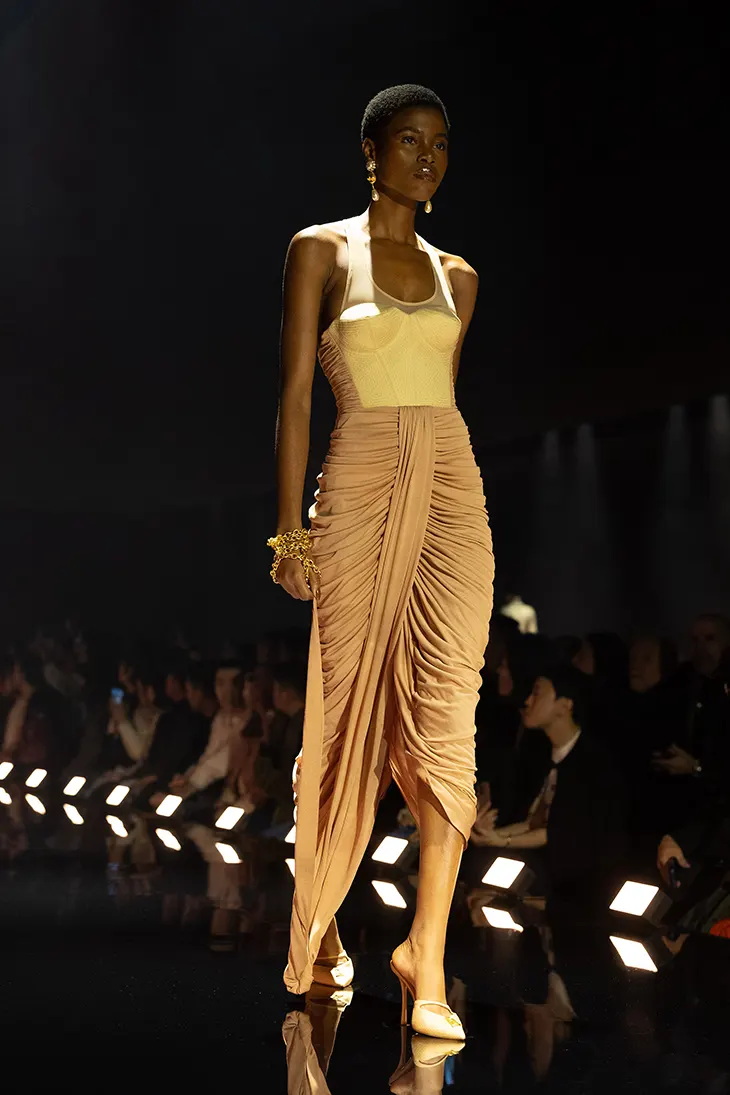
The collection develops from a series of tensions that Roseberry treats as creative material. Each piece explores a meeting between expectation and possibility. “Impossible knitwear” demonstrates this approach. Traditional Aran cable knits appear alongside panels of illusion tulle that create the visual impression of weight suspended in air. A liquid plissé silk blend receives a clear lamination before artisans cut it into spiral gowns and separates. These garments contain no boning or rigid structure, yet their forms suggest discipline and control. The shapes remain flexible and responsive to the body.
Roseberry extends the idea of visual transformation through trompe l’oeil techniques. Some fitted sheaths appear to use leather, although printed silk wool forms the surface. This technique reflects a language that has long defined Schiaparelli design. Dresses that combine stretch jersey tops with airy skirts trimmed in paillettes introduce another dialogue between structure and movement. The collection often employs performance fabrics to connect with the maison’s history. Elsa Schiaparelli welcomed jersey early in her career, which positioned the material within high fashion.
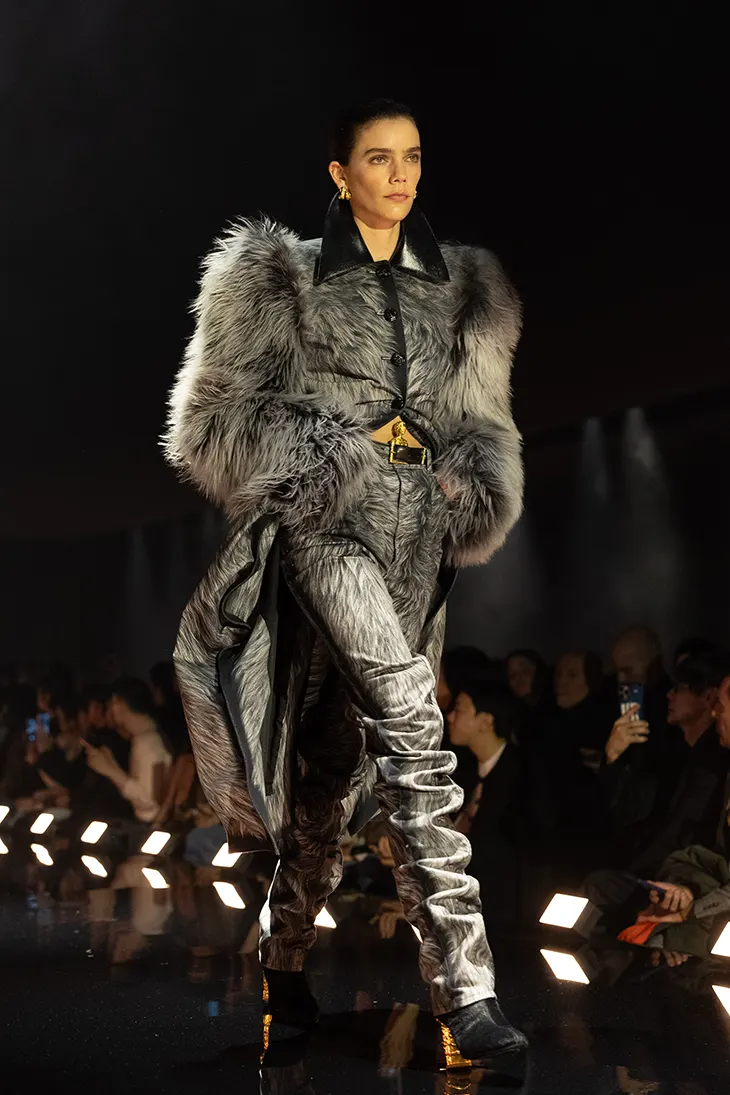
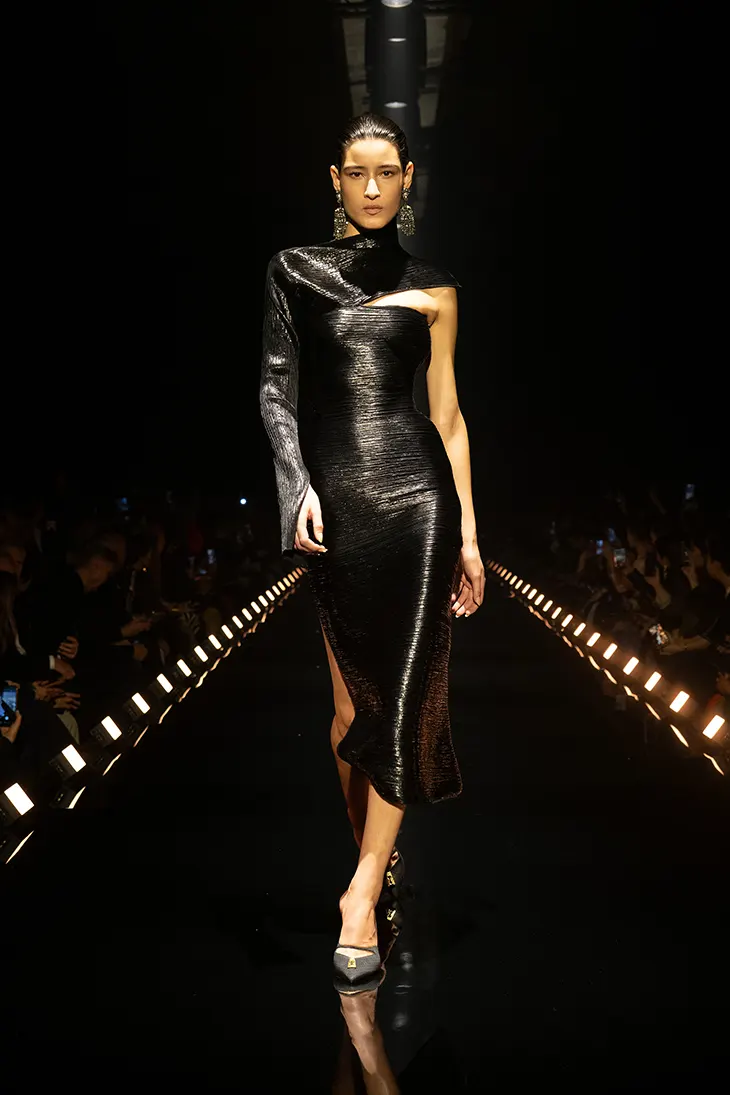
The keyhole motif expands across the Schiap bag collection. Blazers carry the same symbol on their labels through a hand-hammered plaque plated in 24-karat gold. The detail references Alberto Giacometti, who produced buttons for Elsa’s original garments. Earrings adopt the same shape, while footwear introduces a keyhole-inspired shoe. Another familiar emblem returns through the measuring tape. Roseberry applies it to the Vendôme jacket produced in stretch boiled wool. Dyed bugle beads trim the garment, and a sfumato measuring tape detail completes the design.
Jewelry trimmed with shearling references Elsa’s fascination with monkey fur while using thin sprigs of shearling in its place. Shoes and clutches shaped as dogs and cats appear in resin and felt. Hardware continues the anatomical thread that has appeared in recent Schiaparelli collections. Cast bronze egret feet anchor the base of several shearling bags.