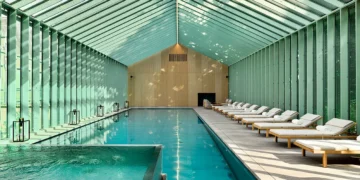



The Palace, a Luxury Collection Hotel, Madrid reopened in 2025 following a two-year restoration, returning one of the city’s most recognisable buildings to active use. The project does not attempt to reposition the hotel through novelty. It works through precision, restoring key architectural elements while refining how the building functions today. The result holds a clear balance between continuity and adjustment, where the structure retains its identity while operating with greater clarity.
HOTELS
This approach extends across the entire hotel. Architecture, interiors, and programming move together, forming a consistent environment that supports both daily use and cultural activity. The building remains closely tied to Madrid’s history while continuing to host new forms of engagement, allowing it to operate as both a hotel and an active part of the city’s cultural framework.
Location
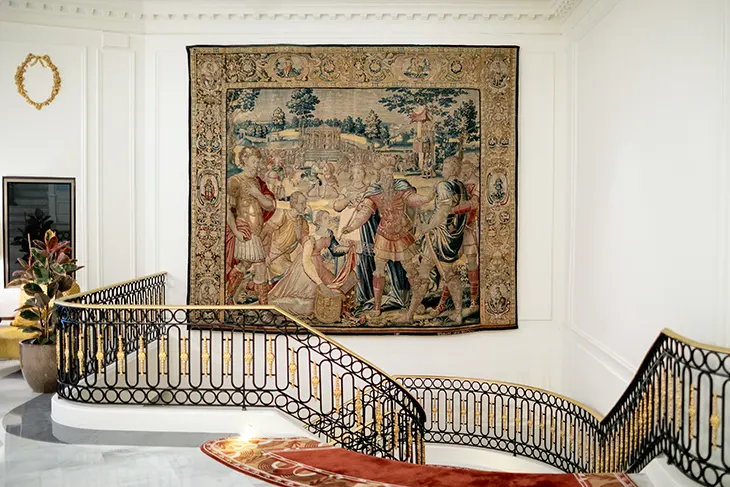
Set in Barrio de las Letras, The Palace sits within one of Madrid’s most historically layered districts. The hotel is surrounded by major cultural institutions, including the Prado and Thyssen-Bornemisza museums, as well as Retiro Park and Plaza Mayor. This position places it directly within the Paisaje de la Luz, a UNESCO-listed area, allowing guests to move easily between the hotel and the city’s cultural infrastructure.
Architecture
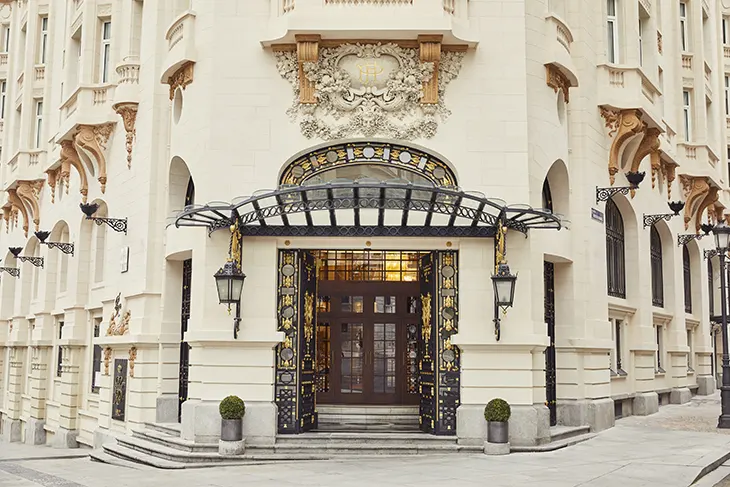
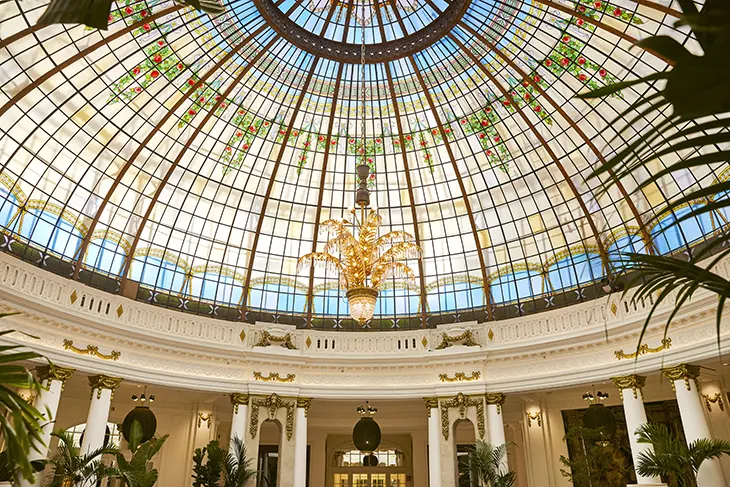
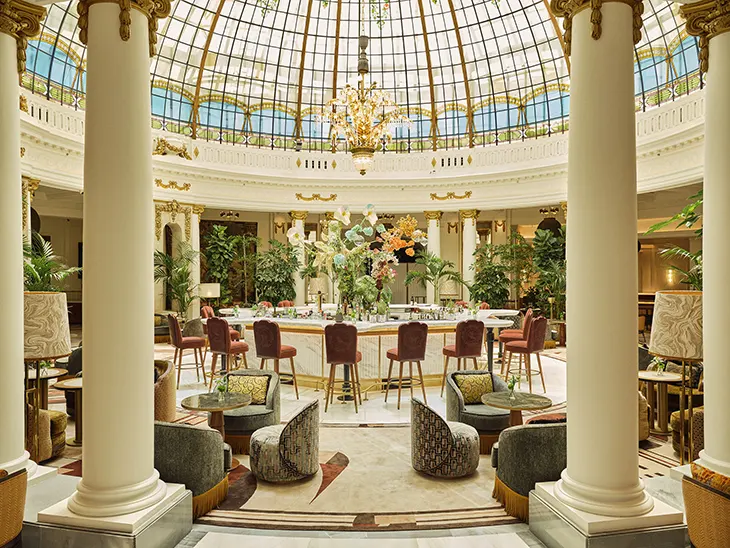
The restoration re-establishes the building’s 1912 façade, uncovering original tones and ornamental details that had been concealed over time. The “Palace colour,” a combination of warm beige and terracotta, returns the exterior to its original register. The stained-glass dome, designed by Eduardo Ferrés i Puig, remains the defining architectural element. Composed of 1,875 panes, it has been fully restored, regaining its structural clarity and visual presence as the central anchor of the hotel.
Rooms
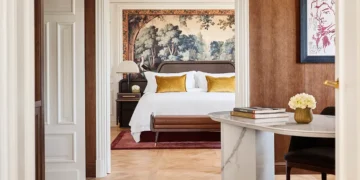
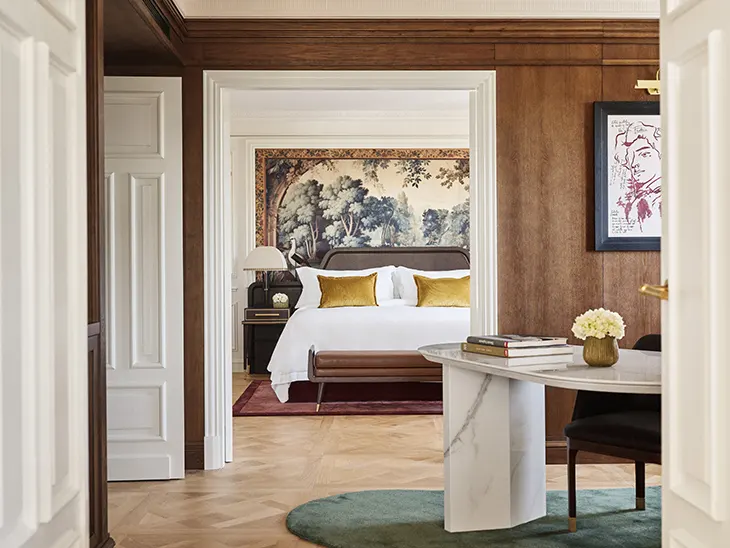
The guestrooms follow a composed, residential approach. Natural light defines the spaces, while materials such as marble, wood, and textiles introduce depth without excess. Hand-painted wallpapers reference the landscapes of El Retiro, while bathroom mosaics draw from the Royal Botanical Gardens. Mid-century lighting elements structure the rooms, maintaining a consistent relationship between historical reference and present-day use.
Design
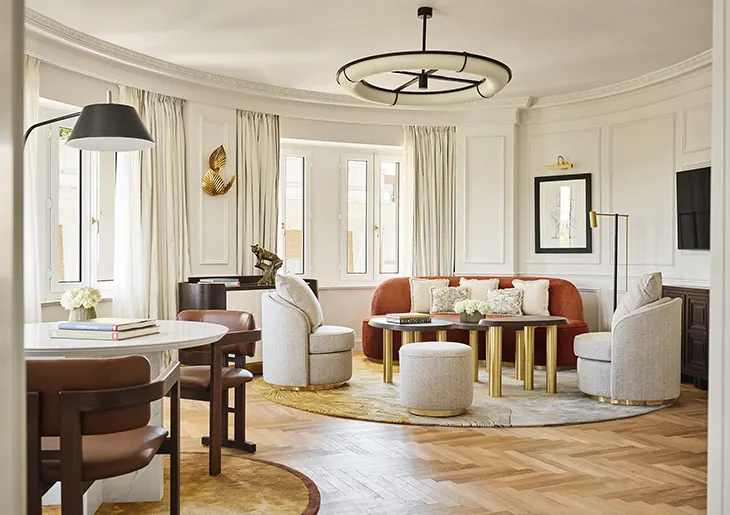
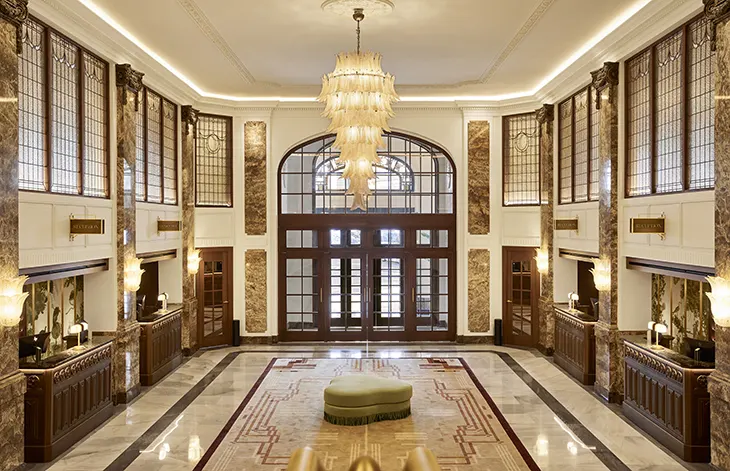
The interior design by Lázaro Rosa-Violán establishes a clear language across the hotel. Custom boiseries, wool carpets, and optical artworks define circulation areas, creating a sequence of spaces that shift perception as guests move through them. The design integrates historical references without relying on reconstruction, allowing each element to function within a contemporary framework. Staff uniforms designed by Juanjo Oliva extend this approach, aligning visual identity across different layers of the hotel.
Dining
La Cúpula operates as the central space of the hotel, positioned beneath the restored glass dome. The restaurant and bar maintain their role as a meeting point for both guests and locals. The menu draws from historical references while introducing a contemporary approach to familiar dishes. The 27 Club continues this narrative, holding archival material and illustrated elements that connect the hotel’s past with its current use, reinforcing its position as both a social and cultural space.
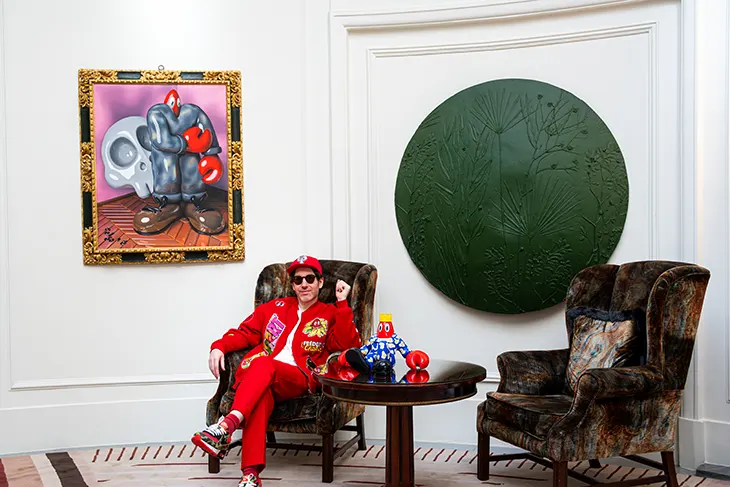
The Palace Madrid X Philip Colbert
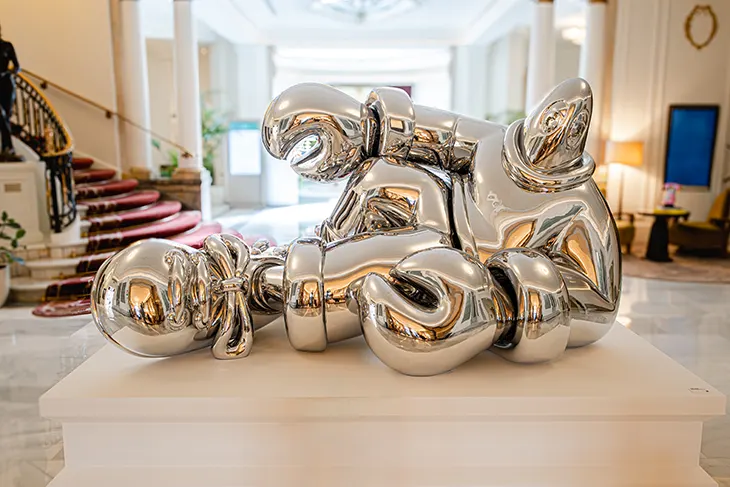
The collaboration with Philip Colbert introduces a contemporary layer into the hotel’s environment. His lobster figure appears across multiple spaces, positioned within the architecture rather than separated from it. A large stainless steel sculpture reflects its surroundings, engaging directly with the interior while maintaining a strong visual presence. Additional works extend this approach, using familiar symbols and references to construct a broader narrative around identity and visual culture.
The intervention continues within La Cúpula through a dedicated afternoon tea and cocktail program inspired by the artist’s work. Custom tableware and menu elements bring the collaboration into everyday use, allowing it to move beyond exhibition and into circulation. This integration reinforces the hotel’s ongoing relationship with art, positioning it as a space where architecture, hospitality, and contemporary practice operate together.
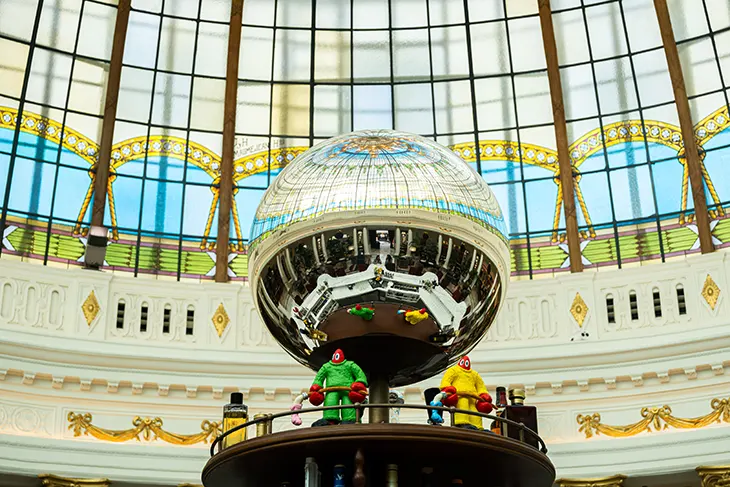
The Palace operates through continuity rather than reinvention. Its restored architecture, controlled interiors, and evolving cultural program hold together as a single system, where each layer supports the next. The Colbert intervention reinforces this condition, adding a contemporary presence without disrupting the building’s structure. The hotel remains anchored in its history while staying active within the present, functioning as both a place to stay and a space that continues to produce and absorb culture.
The Palace, a Luxury Collection Hotel
Pl. de las Cortes, 7, Centro, 28014 Madrid, Spain
reservations@thepalacemadrid.com
+34 913 60 80 00
www.thepalacehotelmadrid.com