


Most wedding dress searches begin with a folder full of saved images. You save references, try different silhouettes, and quickly notice how much changes once a dress leaves the screen and meets your body. The decision is harder than it looks from the outside. The right dress comes down to proportion, weight, and how it feels after hours of wearing it.
This guide breaks down the 2026 trends and helps you find the dress that’s right for you.
Basque and Dropped Waistlines
Lowered waistlines appear across current bridal collections, often shaped through corsetry or extended bodices. The bodice runs longer than expected, continuing past the natural waist before the skirt begins, which shifts how the dress builds.
The skirt begins lower, closer to the hips. On fuller dresses, the fabric gathers gradually, so the weight settles lower and the volume builds from that point. The shape grows outward in a more measured way. On slimmer cuts, the extended bodice keeps a continuous line from bust to hip, which lengthens the silhouette.
You see this most clearly through:
- bodices extending below the natural waist
- skirts starting closer to the upper hip
- a longer vertical line before volume appears
This direction suits bodies that benefit from added length through the upper half or when the waist should carry more presence in the overall look. It loses balance when the torso already appears long, or when a heavier skirt begins too low and drags the silhouette downward.
Sheer Layers and Visible Structure
Transparency remains present, now used to reveal construction. Sheer fabrics expose boning, seams, and internal shaping, turning structure into a visible part of the design.
Some dresses keep the effect light, with soft layers that shift as you walk. Others hold sharper lines, where the construction stays clearly visible through the fabric. The body remains part of the composition, integrated into the overall look.
This shows through details such as:
- exposed corset boning shaping the torso
- visible seam lines tracing the body
- layered sheer fabrics that reveal internal construction
This direction suits brides who feel comfortable with lighter coverage and a more direct silhouette. It works especially well in settings where light interacts with the dress. In more formal environments, heavier materials and fuller coverage tend to carry stronger presence.
Short Dresses and Second Looks
Short bridal dresses now sit alongside full-length gowns as part of the same wardrobe. Many brides build the day around multiple looks, and shorter silhouettes answer that shift directly.
Structured minis, softer knee-length dresses, and shorter silhouettes follow the same level of construction as longer gowns. The change in length shifts the energy of the look, especially later in the day when movement becomes more important.
You see this through:
- tailored mini dresses with defined structure
- fluid knee-length silhouettes that allow ease of movement
- shorter pieces designed for transitions between moments
This direction suits city weddings, smaller ceremonies, and schedules that include a shift in pace. It also works when movement plays a central part, from walking through the venue to dancing later in the evening.
Sculpted Minimalism
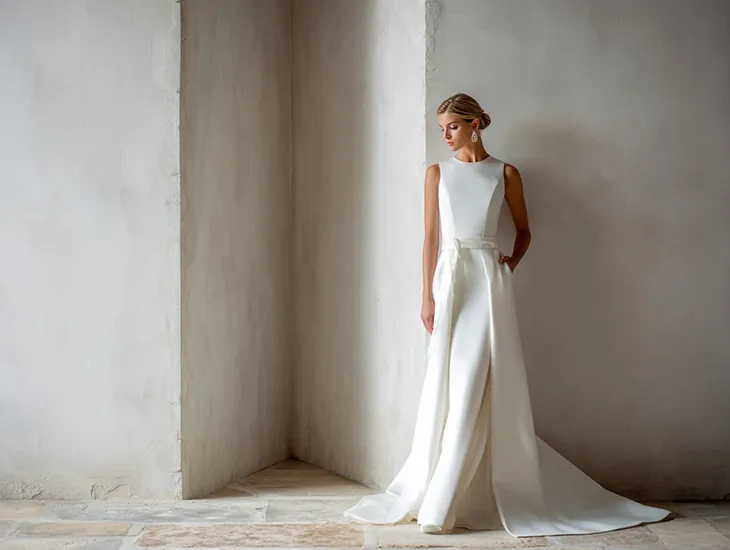
Minimal dresses rely entirely on cut, proportion, and how fabric behaves on the body.
Column silhouettes, sharp tailoring, and smooth surfaces define this direction. Every seam, curve, and edge stays visible, which places full attention on the silhouette itself. Even slight shifts in cut become noticeable, since the entire look depends on precision.
This appears through:
- uninterrupted vertical silhouettes
- sharply placed seams that shape the body
- fabrics that hold their form and keep the line intact
This direction works for brides who prefer a sharper, direct look where fit carries the entire result. It aligns with architectural spaces and modern venues. It can feel too strict for anyone drawn to softness or layered detail.
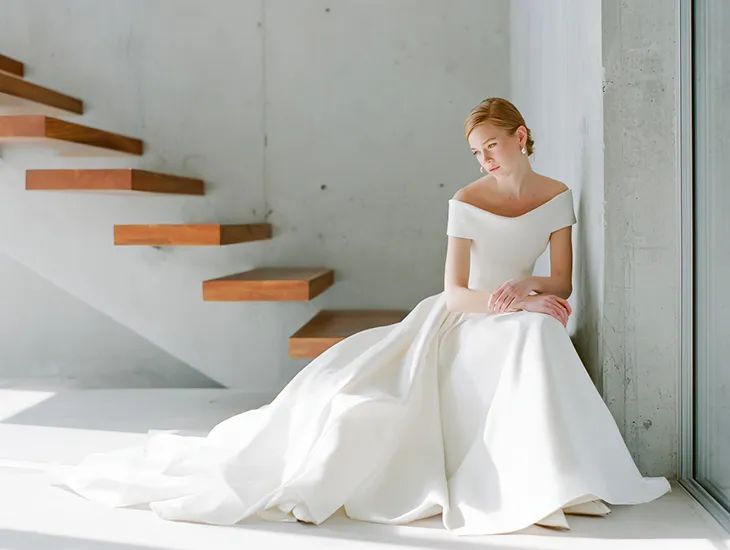
Texture as the Main Element
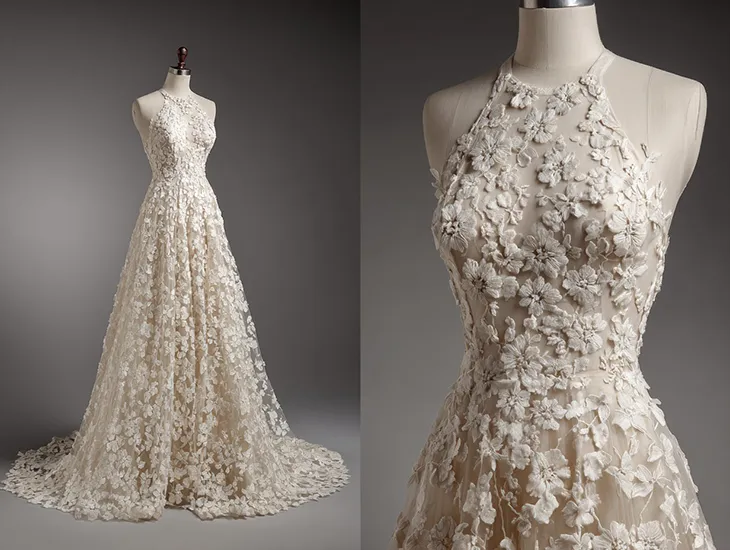
Fabric becomes the main source of visual depth, replacing heavy embellishment with surface and movement.
Crinkled silk, layered organza, sculpted tulle, and irregular finishes create variation through texture alone. As the dress shifts with the body, the surface changes with light, which keeps the look active and evolving throughout the day.
You see this clearly through:
- fabrics with crushed or irregular finishes
- layered materials that build depth through transparency
- sculpted surfaces that hold shape instead of lying flat
This direction suits brides who want dimension built into the material itself. It works especially well in settings with natural light, where texture becomes more visible over time. In more formal interiors, dresses with heavier embellishment tend to carry stronger visual presence.
Convertible and Modular Dresses
Flexibility becomes part of the design. Dresses include removable overskirts, sleeves, trains, or layered elements that allow the look to shift during the day.
The base remains consistent, while individual elements reshape the silhouette. A fuller look can transition into a slimmer line, or a more covered version can open up later in the evening. Each variation still reads as part of the same design.
This appears through:
- detachable overskirts that change volume and length
- removable sleeves or straps that alter the upper line
- layered components that adjust the silhouette in stages
This direction suits weddings that move through different settings or shifts in pace. It allows variation while keeping a consistent visual identity throughout the day.
What to Consider Before Choosing
Before choosing a specific style, base the decision on how the day actually plays out. The dress needs to work within that.
- Duration – how long the dress stays on your body
- Setting – indoor, outdoor, temperature, and space
- Movement – walking, sitting, dancing, stairs
- Weight – how the fabric feels after extended wear
- Transitions – changes in location or pace throughout the day
These factors shape the experience more directly than the first impression in the mirror.