


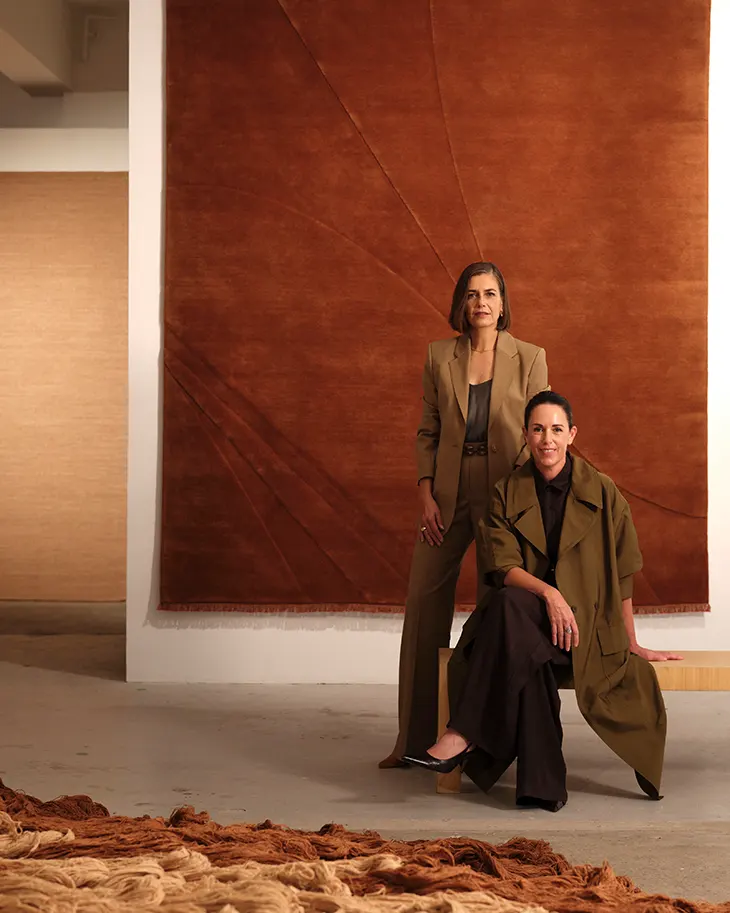
Armadillo has always positioned its rugs as objects that “lie lightly on this earth,” but the line is not a slogan, it is the operating system. Founded in 2009 by Jodie Fried and Sally Pottharst, the Australian, female-owned luxury rug brand was built in response to a market they saw as split in two, products with beauty but no conscience, or ethics without real design conviction. Armadillo set out to prove that craftsmanship, environmental integrity, and social purpose could exist in the same room, without being treated as differentiators. They were simply the non-negotiables.
INTERVIEWS
In conversation with ARCHISCENE / DSCENE Editor in Chief Zarko Davinic, the founders trace that early clarity through the decisions that still define the brand today, from natural, independently verified materials and handweaving on traditional looms, to a deliberate resistance to trend-driven production cycles. For Armadillo, “longevity” is not a marketing word, it is structural, built into how a rug is made, how it ages, and how customers are taught to care for it. The goal is to decouple interiors from disposable culture, and to return value to the people and places behind the product.
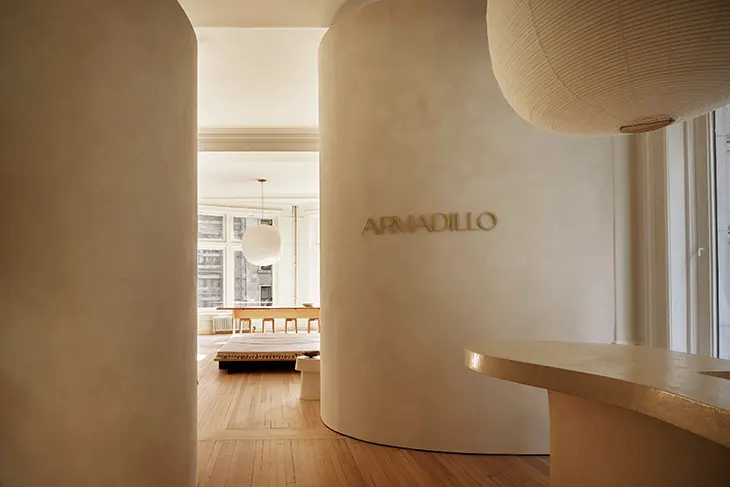
That same insistence on accountability runs through Armadillo’s latest Impact Report, covering FY24 (July 2023 to June 2024), released under new Global CEO leadership. The company achieved Carbon Neutral status in December 2023, aligned with the GHG Protocol and backed by independent verification, while also acknowledging the harder truth, that supply chain emissions dwarf operational ones, and that Scope 3 measurement demands new infrastructure, new methodologies, and deeper collaboration with partners. Growth is underway, particularly in the United States, but the brand’s position is explicit, expansion will not come at any cost.
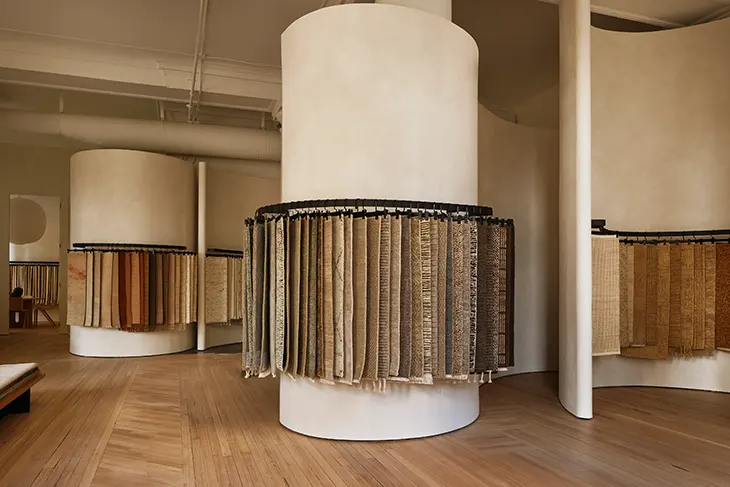
What emerges is a portrait of a business scaling with restraint, led by values that are tested precisely when speed and commercial pressure make compromise feel convenient. Armadillo’s work, from emissions tracking to waste reduction to fully subsidizing the Kantilal Vidya Mandir School in India, argues for a more rigorous definition of “responsible,” one grounded in transparency, continuity, and outcomes that compound over time.
Continue for Sally and Jodie’s conversation with Zarko:
Armadillo was founded in 2009 around artistry, sustainability, and social change. What was the original gap you saw in the market, and what were the early non-negotiables that shaped the brand? – Jodie Fried: The gap was simple: there was no handcrafted rug brand operating at the intersection of genuine quality, environmental integrity and social purpose. Most of what existed was either beautiful without conscience or ethical without soul. Our non-negotiables were that the product had to be made by true artisans, from natural materials, in a way that actively supported the communities behind the making. Those commitments were never positioned as differentiators – they were simply the only way we were willing to do it.
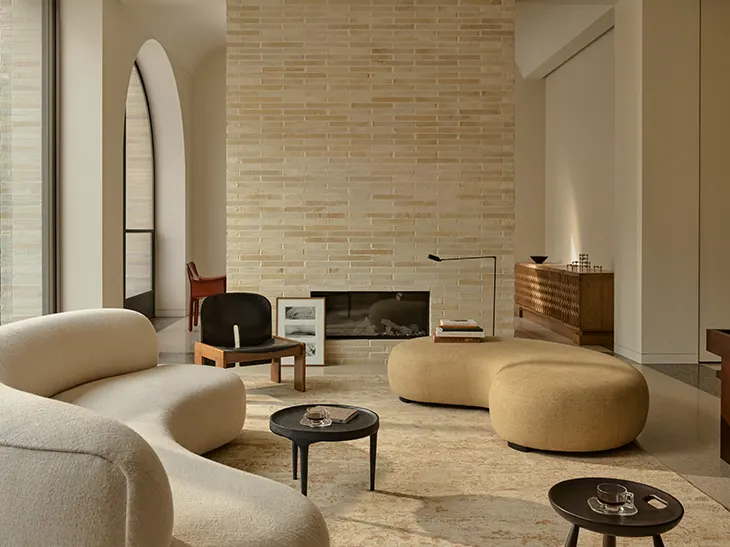
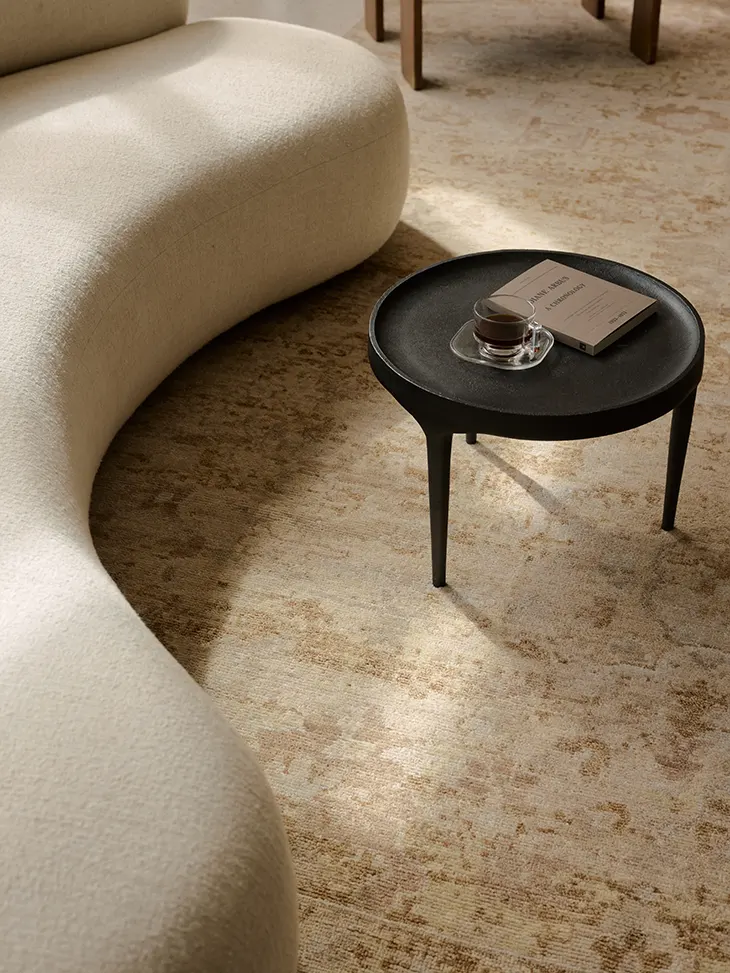
You’ve been recognized as a “Changemaker” for pairing aesthetics with a critique of disposable culture. In the rug and interiors world, what does “disposable” actually look like, and how do you design against it? – Jodie Fried: In interiors, disposable looks like trend-driven production – pieces designed to be replaced rather than kept, made from materials that neither age well nor break down responsibly. It’s a category that has largely normalized short product lifecycles without interrogating the cost of that. We design against it by decoupling our collections from seasonal trend cycles and by treating craft-led production as a structural commitment. Longevity isn’t an aspiration – it’s built into every decision from conception.
You often describe the product as “handcrafted” and built for longevity. What are the specific choices – materials, construction, repair, education – that make longevity real for the customer? – Jodie Fried: Every Armadillo rug is woven by hand on traditional looms by artisans drawing on expertise cultivated across generations – there’s no modern machinery involved, and that produces a structural integrity that mechanized production can’t replicate. Our materials are all natural, independently verified and free of harmful substances. We also invest in educating our customers about care – because a well-kept rug is the most sustainable rug there is.
We believe in local depth before global breadth – never scale something before you can verify the outcome at the other end.
Armadillo achieved Carbon Neutral status in December 2023. What did you have to change internally to get there, and what was harder than you expected? – Sally Pottharst: Getting there required building the measurement infrastructure first – you can’t reduce what you haven’t honestly counted. We began annual emissions tracking and independent verification in late 2022, and transitioning to green-powered electricity across our showrooms was central to reaching net zero operational emissions. What proved harder was confronting the scale of our value chain footprint. Supply chain emissions dwarf our operational ones, and addressing that requires collaboration across partners and suppliers we don’t fully control. That’s ongoing work, and we don’t pretend otherwise.
You’ve measured, independently verified, reduced, and offset emissions across six global showrooms, aligned with the GHG Protocol. Why was independent verification important to you, and how do you avoid carbon neutrality becoming a marketing label? – Sally Pottharst: Without independent verification, carbon neutrality is just a claim – and we were never interested in claims, only in accountability. What keeps it from becoming a label is transparency: we publish a detailed emissions inventory, show our figures by scope and acknowledge what we haven’t yet resolved. Offsetting is part of our pathway, and we’re clear that it’s a component of progress, not the destination.
In FY24 you set a goal to track Scope 3 emissions across the supply chain, including production and transportation. What were the biggest obstacles, and what did you learn once you started asking suppliers for data? – Sally Pottharst: The biggest obstacle was developing a reliable methodology to track the multiple pathways our rugs take from suppliers through to customers’ homes – an entirely new process for us that required genuine cross-functional collaboration. The quality and consistency of data from logistics partners has also been a challenge; much of it is still relatively manual and not always standardized. Our approach is still evolving, but the implementation of our new ERP system in late 2025 is already improving how we collect and track this data. The infrastructure is catching up with the ambition.
Longevity isn’t an aspiration – it’s built into every decision from conception.
You introduced a carbon footprint questionnaire for suppliers and developed a logistics methodology to measure outbound shipping distances from 3PLs to customers. What did that process reveal about the hidden emissions in “business as usual”? – Sally Pottharst: It confirmed what we suspected – that freight represents the largest share of our emissions – but it also exposed a structural gap in how those emissions are traditionally accounted for. Under prevailing reporting standards, certain freight-related emissions sat outside our operational boundary, which meant they weren’t formally captured. We recognized early on that this didn’t reflect the full picture, and we began this work ahead of evolving requirements – not because we had to, but because we believed understanding our full footprint was the only honest way to operate. We’re proud to be taking a proactive approach, and we’ll keep building on that foundation as standards and expectations evolve.
Since 2022 you’ve tracked showroom waste and set a 2% year-on-year reduction target. What are the most effective behaviors you’ve seen from teams when waste reduction is treated as a cultural practice, not a policy? – Sally Pottharst: The most effective shift comes from bringing teams on the journey and making waste reduction part of everyday behavior – when people understand the why, they take ownership rather than waiting to be directed. Practically, that means making the right choice the easy choice: clearly labeled bins, accessible recycling options, fewer general waste receptacles that encourage better sorting. Small friction points, removed. When awareness and infrastructure work together, sustainable habits follow – and that’s what’s driving our year-on-year reductions across our showrooms.
You partnered with RecycleSmart to implement soft plastic recycling in Australian showrooms, diverting soft plastic from landfill. How do you decide which operational initiatives are worth scaling globally, and which should remain local? – Jodie Fried: The question we always ask is whether the infrastructure exists to make the initiative meaningful, or whether we’d be importing a gesture. Soft plastic recycling made sense in Australia because the recovery pathway is real. Globally, that infrastructure doesn’t yet exist in the same form – and we’d rather be honest about that than create the appearance of action without the substance. We believe in local depth before global breadth – never scale something before you can verify the outcome at the other end.
Local depth before global breadth, never scale something before you can verify the outcome at the other end.
Armadillo is female-owned, with many management and global roles held by women. How has that shaped your leadership culture, decision-making, and the way the brand shows up publicly? – Jodie Fried: It shapes everything, though perhaps not always in the ways people expect. It’s less about a particular style of leadership and more about the values that follow when you build a business grounded in equity from the start. Decision-making at Armadillo tends to be consultative and values-led, and that reflects the culture Sally and I established from day one. Publicly, it means we show up with a point of view – on education, on equity, on what responsible business actually looks like.
Your team values include Respect, Commitment, Integrity, Passion, and Synergy. What does “living the values” look like in a fast-moving commercial environment, and where do those values get tested? – Sally Pottharst: The values get tested most when growth puts pressure on process – when speed and scale start to compete with the care we want to bring to every decision. Living the values looks like asking the harder question when an easier answer is available, and holding the line on purpose even when the commercial case for compromise is tempting. The moments that define a brand’s culture are rarely the easy ones.
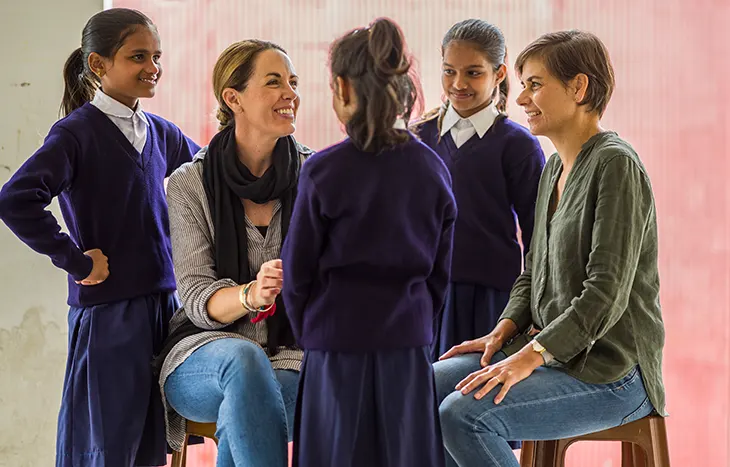
Armadillo fully subsidizes the Kantilal Vidya Mandir School in India, covering overheads from staff salaries to uniforms and maintenance. Why was it important to support a school in such a comprehensive way, and what impact have you seen that you can point to with confidence? –Jodie Fried: Partial support can sustain a program; comprehensive support can change a community. An underfunded school is a fragile school, and fragility undermines everything that follows. What we can point to with confidence is continuity – children who remain in school, and girls who have gone on through our scholarship program to access years of further education they wouldn’t otherwise have reached. That is a durable, measurable outcome, and it compounds over time.
Understanding our full footprint was the only honest way to operate.
Beyond KVM, you support Care & Fair and the Stars Foundation, including significant donations supporting Aboriginal and Torres Strait Islander girls and young women. How do you choose philanthropic partners, and how do you ensure this work is accountable, long-term, and aligned with the communities it serves? – Sally Pottharst: We choose partners who are already doing the work with rigor and community trust – we’re not looking to initiate programs, we’re looking to amplify what’s genuinely working. Our earlier partnerships, with the Stars Foundation in Australia and Girls Inc. in the US, focused on supporting initiatives close to home. But our more recent work in Nepal has deepened our thinking around what philanthropic responsibility really means. Those programs, in communities that have far fewer resources and fewer alternative sources of support, would not exist without us. That changes the nature of the commitment. Accountability, for us, means showing up consistently for the people who are counting on that support to continue