


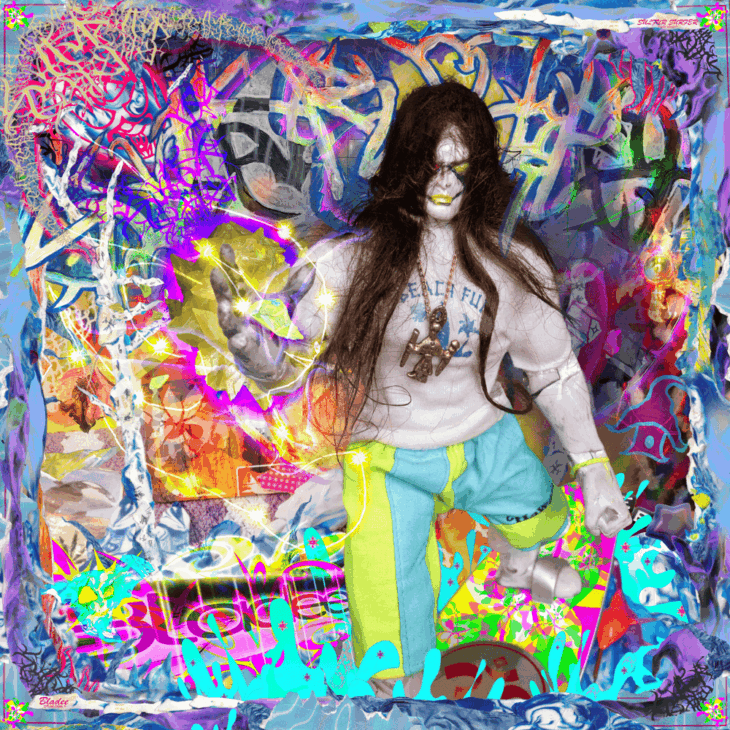
Bladee has always treated music as a coded space, but Sulfur Surfer pushes that instinct into one of his most layered projects. Released on May 20, 2026, the album arrives after Cold Visions and takes a different route through similar emotional terrain. Where that record carried a harsher force, Sulfur Surfer feels stranger, more symbolic, and more suspended. Bladee sounds caught between collapse and release, between ego and surrender, between myth and self-portrait.
MUSIC
Across 13 tracks, Sulfur Surfer builds its own internal logic. The album moves through sulfur, fire, dragons, kings, mirrors, saints, fantasy references, and spiritual language, creating a record that feels dense without losing its pulse. Bladee uses these images as emotional material. They point toward conflict, self-erasure, temptation, transformation, and the need to keep moving even when the destination remains unclear. The result is a record that feels less like a conventional album narrative and more like a sequence of tests.
Whitearmor shapes the sound with a restless precision. His production gives the album a charged synthetic body, moving through bright synths, heavy bass pressure, sharp percussive shifts, and moments of eerie stillness. Sulfur Surfer leans into electronic intensity, but it avoids clean club release. The beats often feel unstable, as if they are pushing Bladee forward while the vocals pull inward. This tension gives the album much of its power. The sound rarely settles, and that refusal suits the record’s central state of spiritual and psychological drift.
The opening title track sets the tone with a sense of motion across unstable ground. Versailles Flow follows with a sharper rush, while Highland Tyrant expands the album’s martial and mythic energy. Dolor and Killswitch bring a colder emotional weight, giving the first half a darker edge. By the time Fox & Birch arrives with Current 93, the album has already entered a more arcane zone. The feature deepens the record’s ritual quality and connects naturally to the album’s interest in mysticism, moral ambiguity, and symbolic decay.
Bladee has always blurred pop instinct with abstraction, and Sulfur Surfer works best when those two sides collide. Under my Umbrella carries a deceptive softness in its title, yet the album never lets shelter feel simple. The Dark Mirror turns reflection into threat, making identity feel like something unstable and exposed. Durins Bane pulls high fantasy into the project with full confidence, placing Bladee inside a language of monsters, fire, and confrontation. The reference could feel excessive in another artist’s hands, but here it fits the system he has built over years.
The second half pushes deeper into that burned atmosphere. Stoner, Black Fire, Blondie, and Scab all extend the album’s sense of a mind working through symbols because ordinary language feels too limited. Blondie stands as one of the most immediate tracks, giving the record a clearer emotional point of entry without simplifying its ideas. Scab closes the album with the feeling of residue, as if the transformation the record circles around has left a mark without offering full resolution.
What makes Sulfur Surfer compelling is the way Bladee turns confusion into form. The album does not explain itself, and it gains force from that decision. Its references to faith, fantasy, and alchemy function as part of a private language, but the emotional stakes remain legible. Bladee sounds like an artist examining the cost of becoming someone, especially when public image, online mythology, and personal identity begin to blur.
Sulfur Surfer demands patience. It favors atmosphere, repetition, and symbolic overload over easy hooks, though moments of melody still cut through the density. For listeners drawn to Bladee’s more immediate work, the album may feel difficult at first. For those interested in his larger creative system, it offers one of his richest statements. It turns ego into character, fantasy into emotional structure, and spiritual conflict into sound.
Bladee does not present transformation as a clean breakthrough. On Sulfur Surfer, change feels messy, unstable, and unfinished. That is what gives the album its strange charge. It captures an artist riding the edge of something, fully aware of the crash ahead, still choosing to stay in motion.