



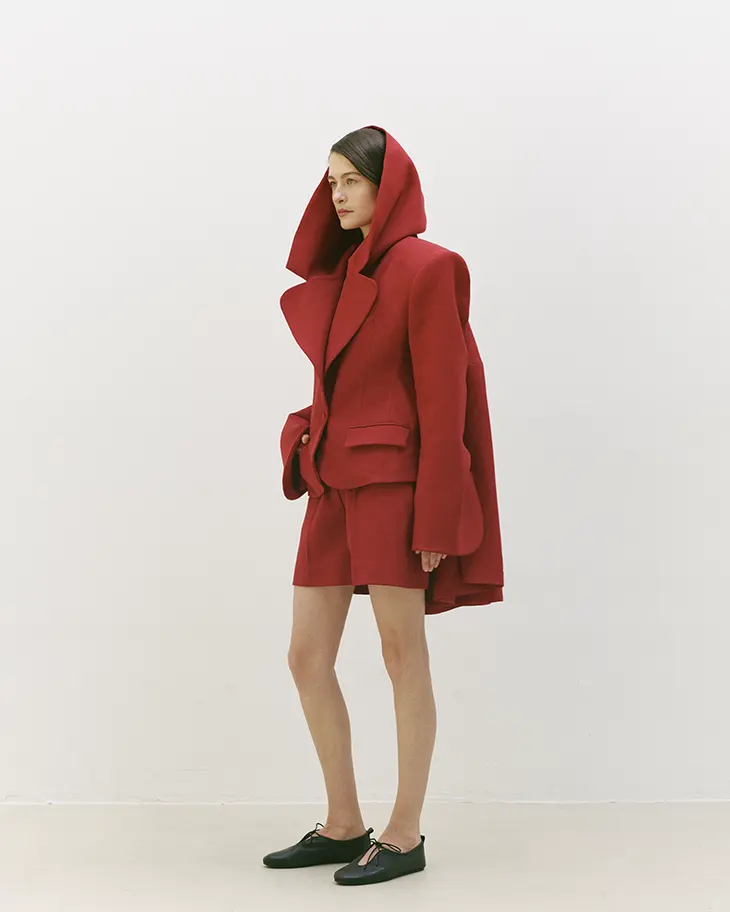
Steven Passaro introduces A Glimpse for Spring Summer 2027, a collection that brings the body back into the room after the previous chapter looked upward, beyond the self. This season narrows the focus to a single skin, a body that allows attention, then controls how much it gives away. The collection studies the tension between exposure and concealment, using tailoring and couture construction to show fragments of what the garment holds inside.
SPRING SUMMER 2027
Passaro builds each silhouette from small physical signals. A braced shoulder, a hesitant step and a guarded posture guide the line. The clothes do not force a figure onto the body. They respond to what already exists, giving shape to feelings that remain partly unspoken.
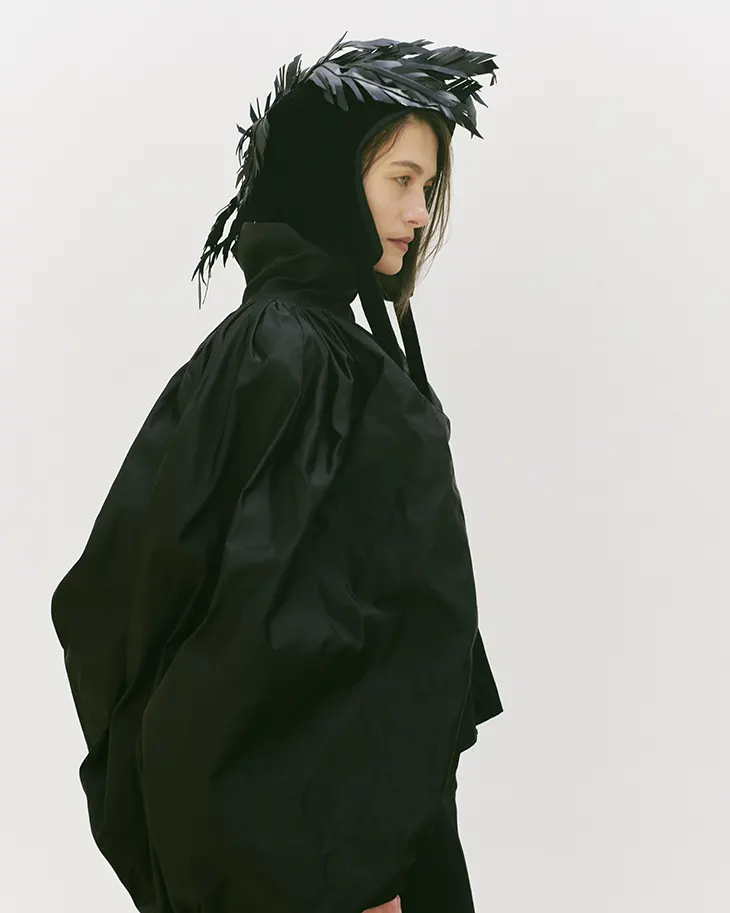
“I wanted the work to be felt before it is seen,” Passaro says. He describes a garment that can carry full couture labor and still appear almost bare, because the hours remain inside. For him, restraint becomes the highest form of craft: the designer gives everything, then shows only a little.
Tailoring closes around the figure with drawn shoulders, tight lines and long coats that seal the body. A sculpted hood frames the face and guards the eyes, turning protection into a visible part of the look.
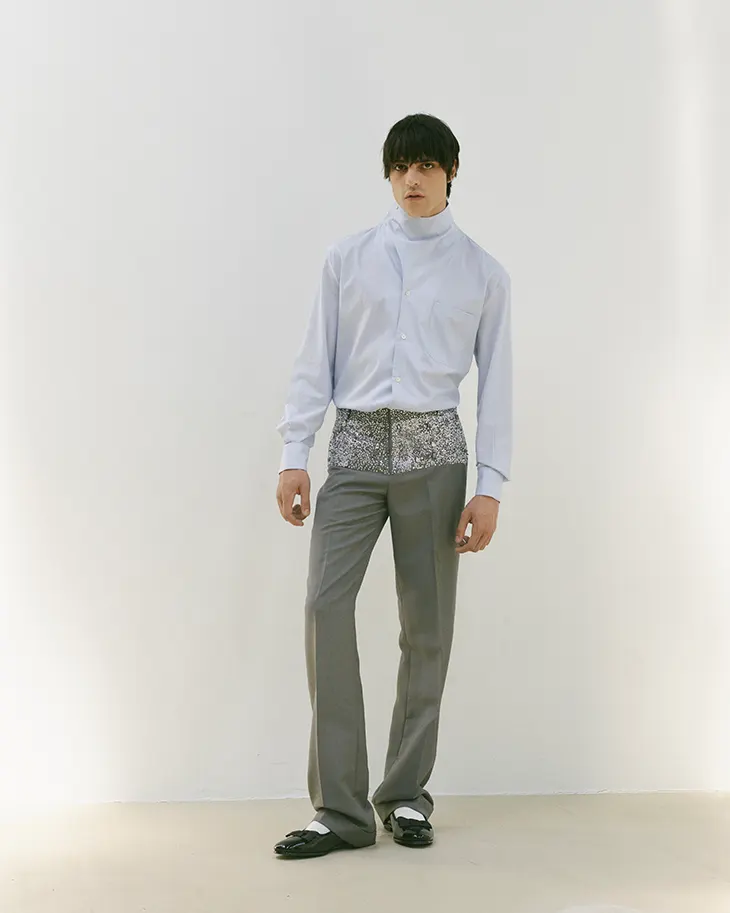
The collection reaches its clearest point in pieces that hide their making. A suit may read as plain from the outside, yet its construction follows couture logic beneath the cloth. Hand canvassing, shaping and internal work carry the same level of labor as an embroidered gown, though the surface gives little away.
Time anchors this approach. Passaro treats time as the house’s most precious material, because no shortcut can copy it. Craft refuses the speed and noise of the industry. A piece takes the hours it needs. Those hours remain inside the cloth, forming a value that the eye may miss at first glance.
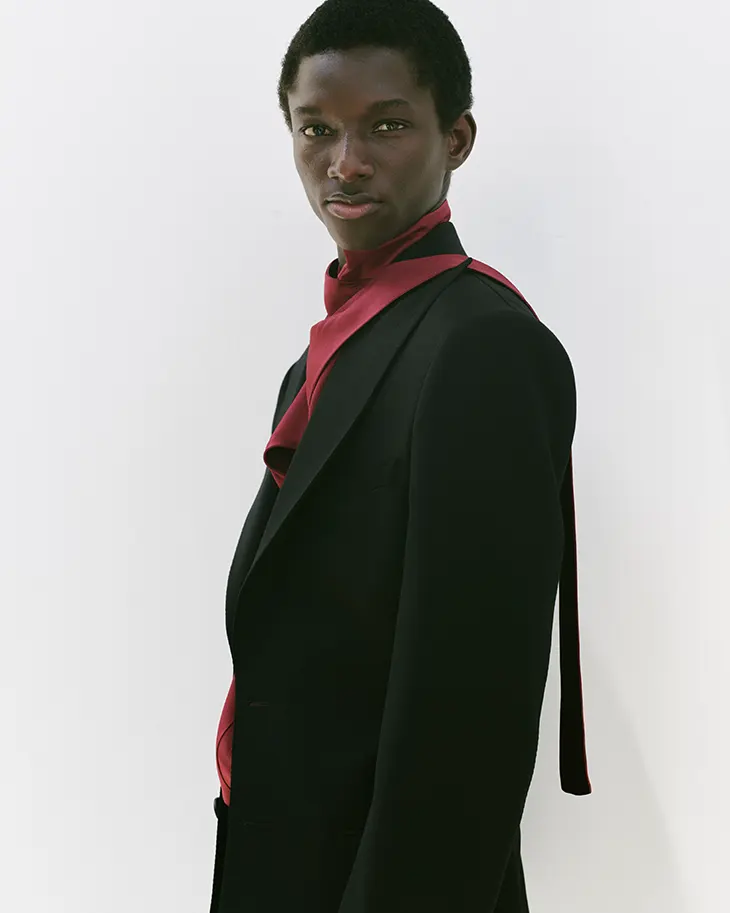
Godets open within limits. Pleats hold the memory of form, then release a single fold. A sealed silhouette begins to breathe as the body moves, offering the interior in fragments to those close enough to notice. The hand remains central across the season. The house places crystal bead by bead only where the garment parts, along the rim of a hood or the flare of a hem. These details mark moments where the interior nearly appears.
Passaro also works with dormant fabrics taken from the reserves of great houses. He unpicks and rebuilds cloth that has already lived one life, bringing it back into view only in part. Nothing sits simply on the surface. The collection builds meaning into the garment hour by hour.