


For Rita Shir Elbaum, botanical material is a way of shaping how a room feels before a person has time to analyze it. Flowers, moss, branches, preserved greenery, and living textures become part of the emotional structure of a space: they guide attention, change movement, soften scale, and create a physical response.
Across nearly two decades, Elbaum has developed this approach from classical floristry into large-scale environmental design. After training in Israel and rebuilding her practice in Canada, she now leads three brands, Elbaum Studio, ElMossDecor, and Magic Moments Event Decor, and creates immersive botanical installations for commercial, retail, event, and screen environments.
Her projects include large-scale installations for shopping centres with daily traffic of up to 50,000 visitors, collaborations with Cadillac Fairview, and set décor work for Netflix and CTV. She also developed a Hybrid Modular Biophilic Design Method, a system that reduces material waste by 60% and shortens installation time by one third through reusable structures and modular botanical components.
Behind the organic surface of her work are engineering decisions, fire safety requirements, logistics, load calculations, and teams of up to 25 people. In conversation with DSCENE, Elbaum speaks about floristry as emotional infrastructure, preserved moss as a biophilic material, and the moment botanical design moves from decoration into architecture.
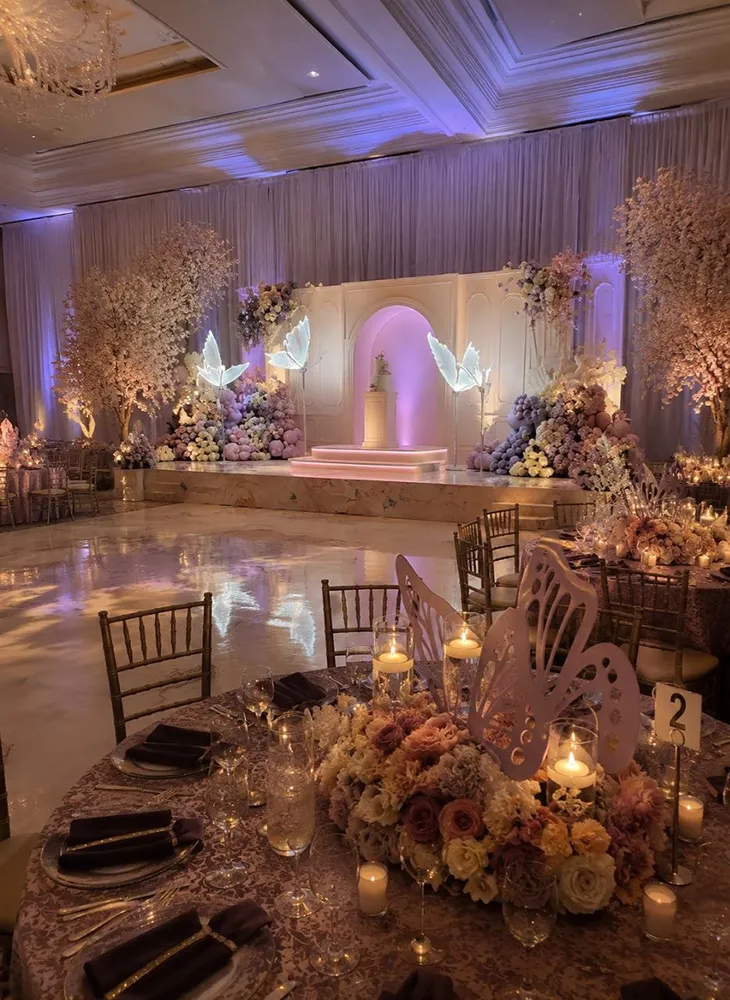
When did floristry stop being about arrangements for you?
It happened gradually. I started with classical floristry: composition, proportion, colour, balance, technique. Those foundations shaped my eye. After several years, I began to understand that the strongest part of the work was the moment a person entered a space and physically slowed down.
That pause became central to me. I wanted to understand how to design it: what scale creates it, what texture invites it, how light changes it, how botanical material affects the way people move through a room. From that point, the arrangement became one element inside a larger spatial condition.
You describe botanical design as a foundation for emotional environments. How do you define that?
I see botanical design as a discipline that works with the emotional logic of space. A room has a rhythm before anything is added to it: the height of the ceiling, the light, the movement of people, the sound, the materials. Botanical work can shift that rhythm.
For me, the first question is always: what should a person feel here? Should they slow down, feel restored, become curious, feel enclosed, feel lifted? Once that emotional direction is clear, I can choose materials, scale, structure, colour, and density. Floristry becomes a tool for designing experience.
How has the discipline changed from craft into environmental design?
The change came from materials, technology, and expectations. Preserved botanicals, moss systems, modular frames, and architectural-scale engineering opened possibilities that traditional event floristry could rarely support.
At the same time, architects, interior designers, retail developers, and brand teams started thinking about atmosphere earlier in the process. Botanical work can now enter the brief as part of the spatial concept, rather than an accessory added at the end. That shift changes the role of the florist completely. You begin to work with circulation, sightlines, durability, maintenance, safety, and brand experience.
What does biophilic design add to commercial spaces?
Biophilic design gives commercial spaces a human layer. Retail environments, offices, hotels, and event spaces often operate under pressure: people move quickly, process information, make decisions, and respond to visual noise. Botanical material can create a sense of restoration inside that intensity.
I see it very clearly in public installations. In a shopping centre with tens of thousands of visitors, movement patterns change around botanical work. People slow down, take photographs, touch textures, return to the same point, use the installation as a meeting place. That response comes from the body first. The visual effect matters, yet the deeper value is physiological and emotional.
Preserved moss is central to your work. What makes it such a powerful material?
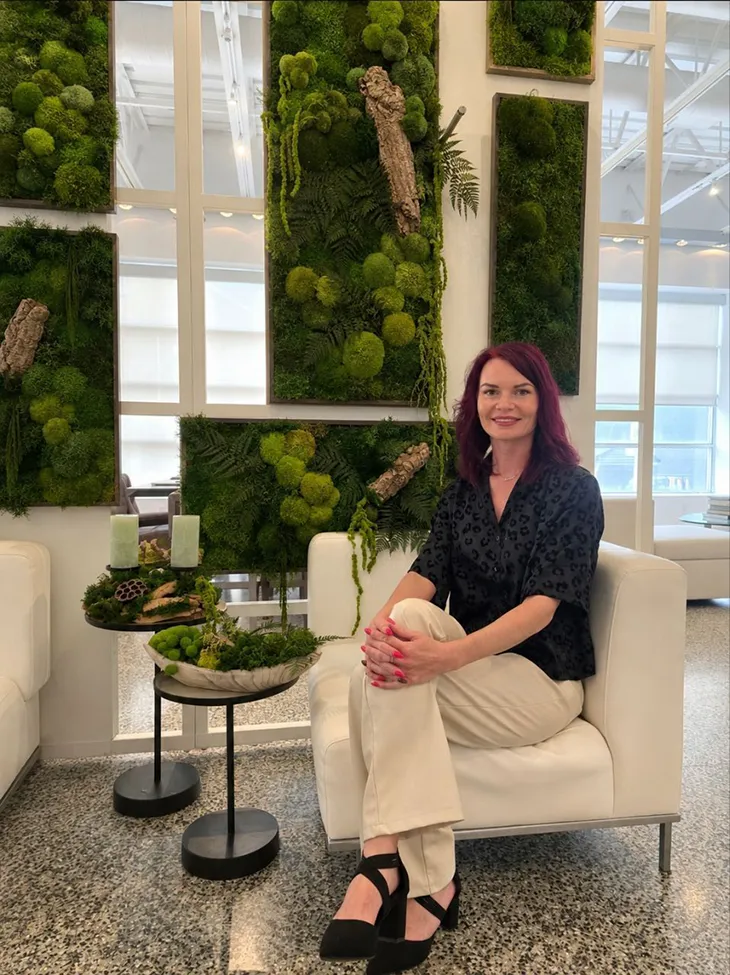
Preserved moss has a very unusual quality. It goes through a glycerin-based treatment that keeps its softness, colour, and texture for years. It requires no water, no light, and very little maintenance, which makes it practical for commercial spaces.
At the same time, the body reads it as natural. When someone stands near a moss wall, the response is close to the response people have around living greenery: calm, curiosity, a sense of softness, a connection to nature. For long-term installations, that combination is extremely valuable. It offers durability, emotional impact, and operational efficiency in one material.
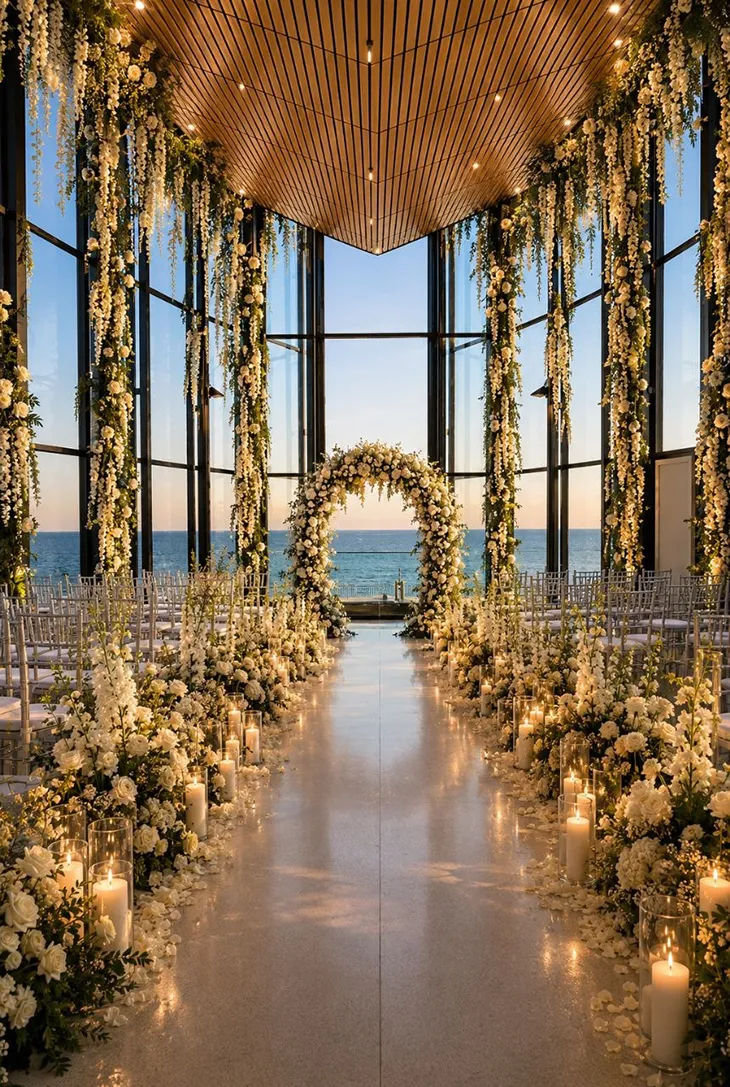
You trained in Israel and later rebuilt your career in Canada. How did that move shape your methodology?
Moving to Canada forced me to separate what belonged to a market from what belonged to me. In Israel, I had experience, relationships, a visual language, and a cultural context. In Canada, I had to translate my work for a new audience with different expectations, different commercial standards, and a different sense of scale.
That process clarified my methodology. I realized that my work was rooted in the way I think about space, structure, and emotional response. The country changed, the market changed, the clients changed, and that system of thinking came with me.
Your installations can reach 50,000 visitors a day. What changes at that scale?
Everything becomes more precise. A small arrangement can rely on intimacy and detail. A large public installation has to work from several distances at once: from the entrance, from the escalator, from the second level, from a person standing directly beside it.
The technical side also becomes much more complex. We work with structural loads, fire safety, public access, installation timing, mall operations, maintenance, storage, and team coordination. A finished piece may feel organic and effortless, yet the process behind it is highly controlled. I enjoy that tension: living forms supported by rigorous planning.
You developed a Hybrid Modular Biophilic Design Method. What problem were you solving?
I was solving three problems that appear again and again in large-scale décor: waste, time, and adaptability.
Traditional event installations often require significant material, labour, and production time for something that exists for a short period. I wanted a system that could support beauty and scale while giving clients a more responsible and flexible model.
The modular method uses reusable structures and interchangeable botanical components. A client can transform the same base into different seasonal or brand environments across several years. That reduces waste, shortens installation time, and changes the financial logic of botanical design. The installation becomes an asset rather than a one-time object.
How does classical floristry help inside contemporary biophilic architecture?
Classical floristry teaches you how organic form behaves. You learn proportion, movement, colour temperature, density, focal points, and the relationship between material and light. Those skills transfer directly into architectural and interior contexts.
The difference is the duration and scale. In classical floristry, you often design a moment. In biophilic architecture, you design a condition that people live with, work around, or pass through every day. The grammar is similar; the responsibility is larger.
You have worked on set décor for Netflix and CTV. How does the camera change botanical design?
The camera changes everything. In physical space, people move around the work. They see depth, texture, shadow, and scale from many angles. On screen, everything has to serve the frame.
Some materials that feel rich in person become flat under studio lighting. Some forms that feel unusual in real life become magnetic through the lens. Set work taught me to think about botanical material as both physical object and image. That experience strengthened the way I build installations for public spaces too, because many people first experience them through photographs.
Sustainability seems built into your process rather than added as a message. Why?
Because it comes from the reality of production. When you work at scale, you see how much material can disappear after a short event. That creates a practical, financial, and ethical problem.
For me, sustainability means designing systems that last, reconfigure, and keep value over time. A modular installation can serve many concepts across many seasons. That is better for the client, better for the team, and better for the environment. Beauty has to survive the production process around it.
What do emerging botanical designers often miss?
They often begin with the object. I encourage them to begin with the space. Before choosing flowers or textures, study the room: where people enter, where they stop, what they see first, how the light moves, where the installation can change the emotional condition.
Strong botanical design is spatial thinking. The object matters, yet it becomes stronger when it belongs to the room.
When you stand in front of a finished installation, what are you looking for?
I look at how people move. I watch whether they slow down, whether they step closer, whether they look up, whether they touch the surface, whether they take someone else to see it.
That quiet influence is the most important part of the work for me. The installation began as an idea in my head, then became a structure, then became a place inside someone’s day. When people feel something around it, even for a few seconds, the work has done what it was built to do.
Words by DSCENE Editor Maya Lane.