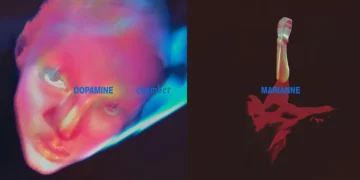



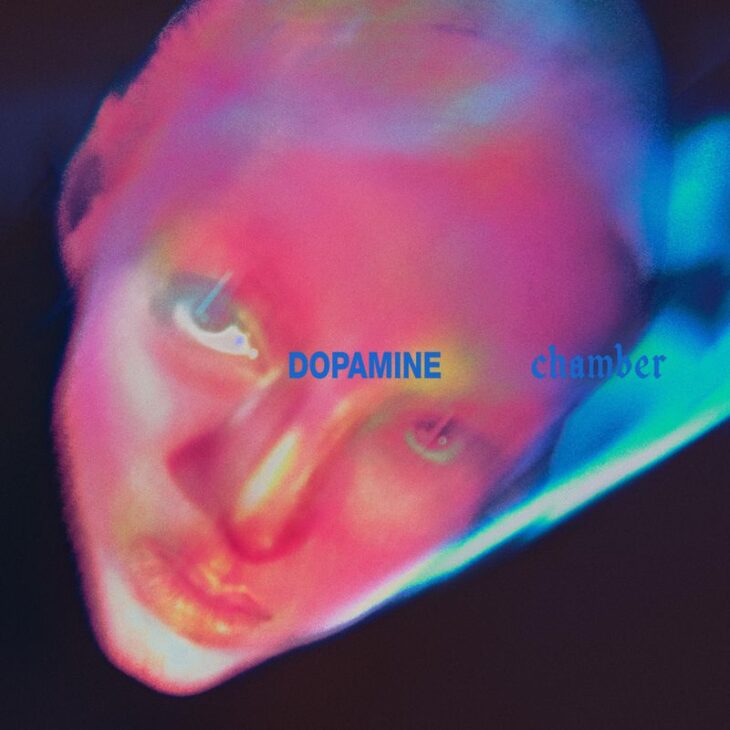
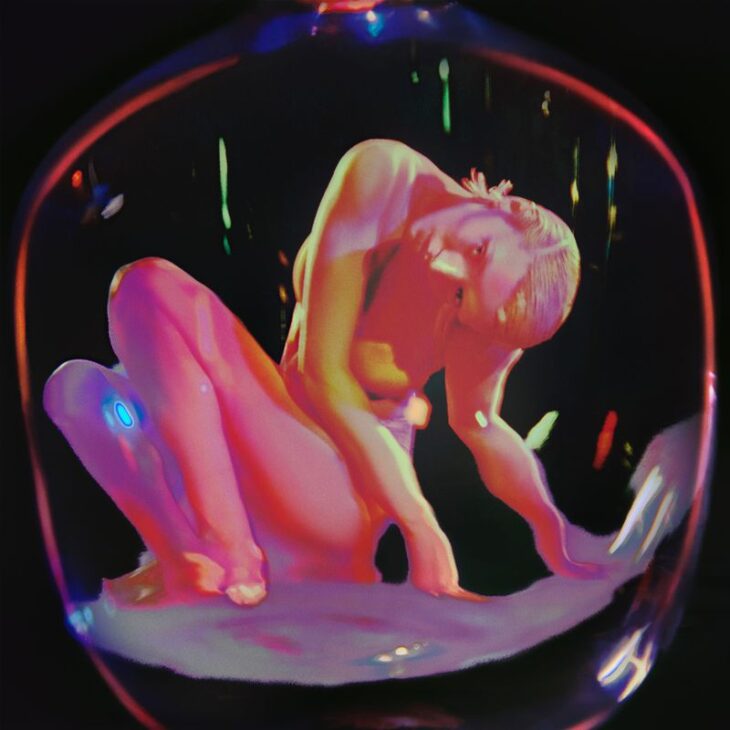
Irish band Fontaines D.C. enters a darker and increasingly synthetic era with Dopamine Chamber, its fifth studio album, arriving October 16th, 2026, through XL Recordings. Introducing the project is a striking series of images photographed by Elizaveta Porodina, whose expressive manipulation of color, light, and the human form creates an appropriately unstable visual language for the record.
For the shoot, Porodina collaborated with hair stylist Lachlan Mackie, makeup artist Porsche Poon, and set designer Miguel Bento. Together, the team places the band inside a heightened psychological space shaped by saturated hues, distorted faces, theatrical lighting, and imagery that sits somewhere between portraiture and hallucination. Rather than presenting Fontaines D.C. through straightforward promotional photography, Porodina constructs a complete visual environment around the music.
The album artwork appears to continue certain ideas introduced during the band’s Romance era. Its central face recalls the earlier album’s heart-shaped emblem, but the image now feels recognizably human, as though the symbol has evolved into a living character. That transformation becomes more unsettling in the accompanying teaser, where the dark center of the pupil expands. The gesture can be read as a physical response to pleasure, narcotics, fear, or overwhelming stimulation – a body visibly reacting to whatever is being placed before it.
That ambiguity is essential to the meaning of Dopamine Chamber. In its simplest interpretation, a dopamine chamber is an environment engineered to keep the brain’s reward system continually activated. Social media, algorithmic feeds, entertainment, technology, and chemical highs all become mechanisms through which the next moment of satisfaction is promised but never allowed to last.
The title also invites a more specific reading connected to the band’s native Dublin. In recent decades, the city has become one of Europe’s major technology centers, hosting corporations whose platforms depend heavily upon capturing and retaining attention. Seen from this perspective, Dopamine Chamber could describe a transformed Dublin: a city increasingly shaped by screens, data, automation, and systems designed to keep their users continuously engaged.
MUSIC
Even the familiar “D.C.” in the band’s name appears to have acquired a second possible meaning. Once understood as Dublin City, the initials can now be read as Dopamine Chamber. Whether this is intended as a direct statement about the band’s hometown or as a wider diagnosis of contemporary life remains deliberately unresolved. Yet the suggestion is compelling: the Dublin from which Fontaines D.C. emerged may no longer be the same city, and neither are the people living within it.
Produced by James Ford, Dopamine Chamber follows the platinum-certified Romance, the 2024 album that expanded the band’s international audience through tracks including “Starburster” and “Favourite.” The new record is expected to push further away from the guitar-driven language of their beginnings, incorporating synthesizers, samples, triggered sounds, marching percussion, and elements inspired by 1960s Italian pop. Several songs reportedly feature no guitars at all, pointing toward something colder, stranger, and more overtly artificial.
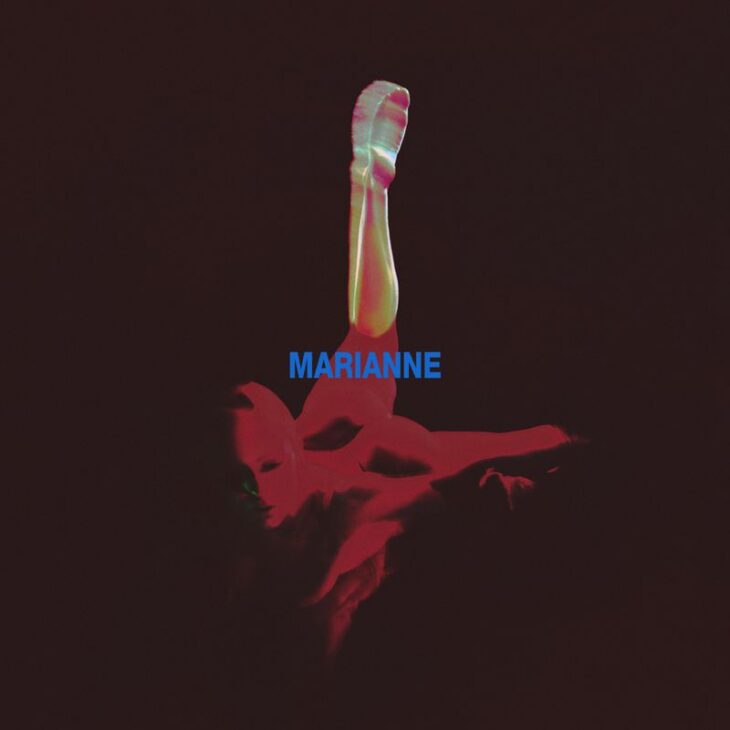
Lead single “Marianne,” accompanied by a fluorescent video directed by Dave Meyers, introduces that world through the idea of escape. Partly inspired by the 2024 series Ripley, the song asks what pleasure means when it is pursued against a backdrop of mounting cultural, political, and environmental unease. Escapism may offer temporary shelter, but the album appears interested in what happens when the shelter becomes another trap.
Grian Chatten has described Romance as “60 per cent human” and “40 per cent corrupted by automation.” On Dopamine Chamber, he reverses that balance. The mask, he suggests, is no longer merely covering the face; it has begun to wear it. Porodina’s artwork captures precisely that frightening transition, presenting humanity as something luminous, seductive, and already in the process of being altered.
With hope intentionally pushed out of the frame, Dopamine Chamber is taking shape as both an immersive musical experience and a catastrophic warning: a portrait of people chasing pleasure while the mechanisms delivering it gradually take control. For more of Elizaveta’s photography visit the photographer’s DSCENE profile page.





elizaveta proves why she is such a genious at this point she is beyond fashion photography