


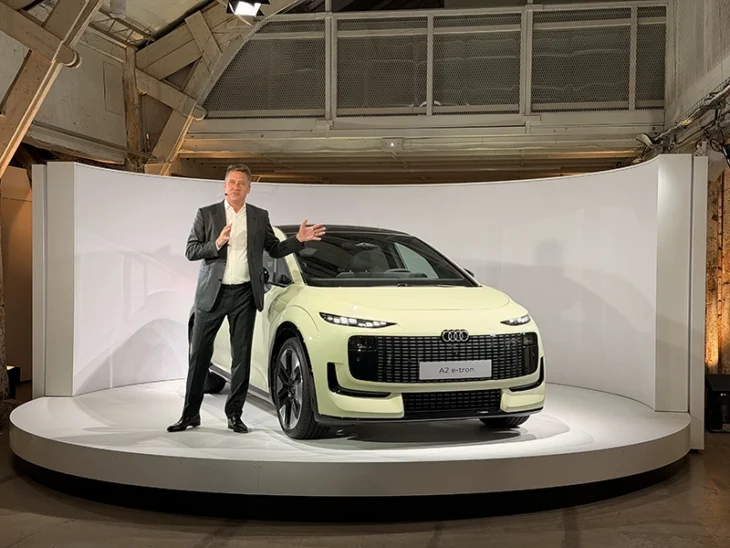
DSCENE joined a select group of international media in Paris for the unveiling of the Audi A2 e-tron, where Audi brought together members of its design and engineering teams to introduce the new fully electric compact model. Presented by Audi CEO Gernot Döllner, the A2 e-tron marks the brand’s entry into the electric compact segment and revives a name closely associated with Audi’s earlier experiments in lightweight, efficient mobility.
CARS
For Döllner, the new A2 centers on a direct question: how can electric mobility fit naturally into daily life? “Paris shows how closely mobility and quality of life are connected,” he said during the presentation. “And it reminds us that the future of mobility will be shaped by how intelligently we use space, energy and technology.”
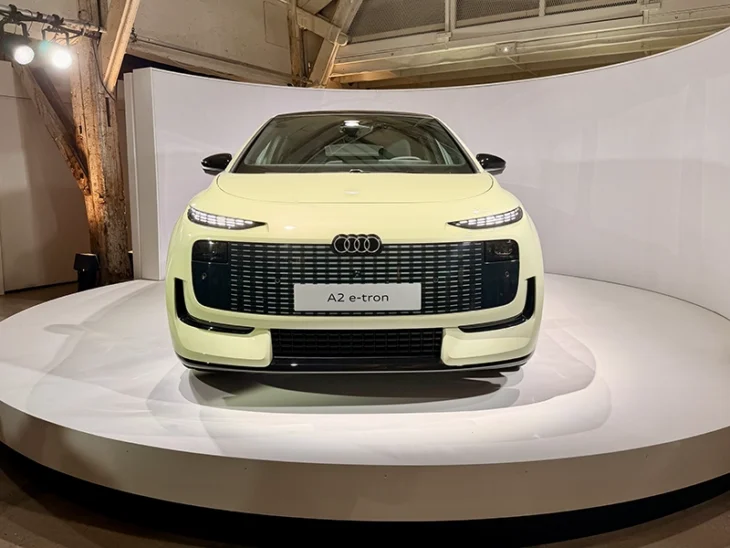
Audi developed the A2 e-tron specifically for Europe, with development taking place in Germany and production based in Ingolstadt. Its technical figures place efficiency at the center of the project. The car consumes 12.8 kWh per 100 kilometers, making it the most efficient Audi produced to date. Audi quotes a range of up to 646 kilometers according to WLTP, while a drag coefficient of 0.24 supports the aerodynamic work behind those figures.
Döllner connected that efficiency directly to usability. “If we want to bring back the idea of the A2 for a new era, efficiency cannot be one requirement among many. It has to be the leading principle,” he said. “The result is the most efficient Audi we have ever built. It translates directly into everyday usability: more range, less charging, fewer stops.”
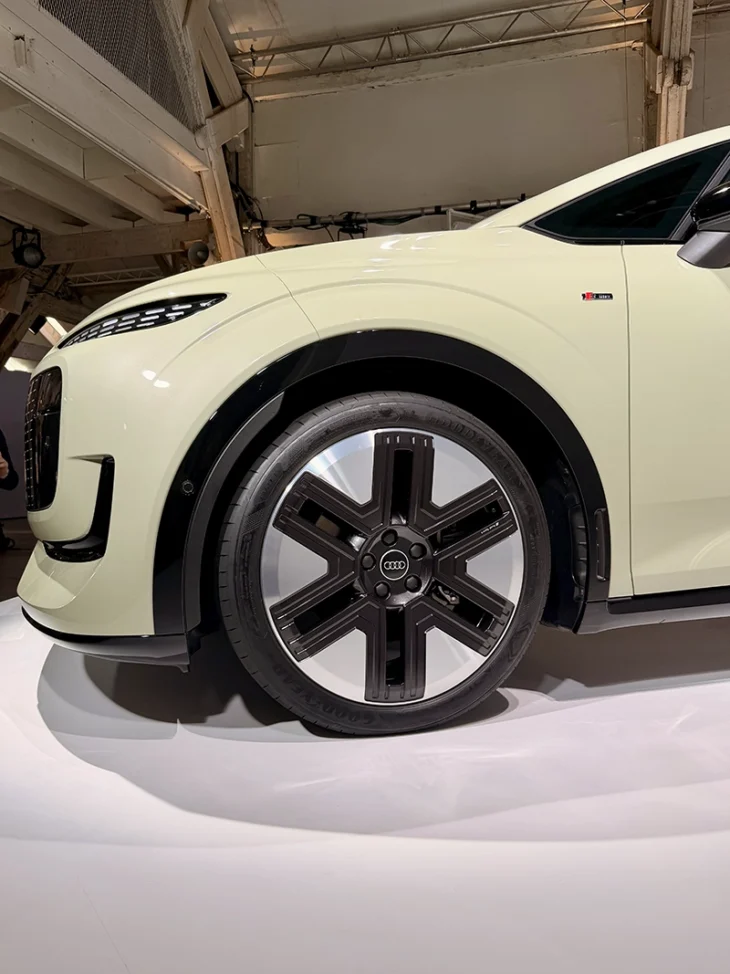
That philosophy became clearer once we spent time inside the car and spoke with Ulrich Beierlein, Head of Audi Interior Design Architecture. The A2 e-tron uses its compact exterior dimensions to create a cabin that feels considerably larger once seated inside. Beierlein described the goal as finding the right relationship between a small footprint and enough space for four or five people. He emphasized that the team wanted the interior to feel inviting and substantial despite the project’s strict focus on efficiency.
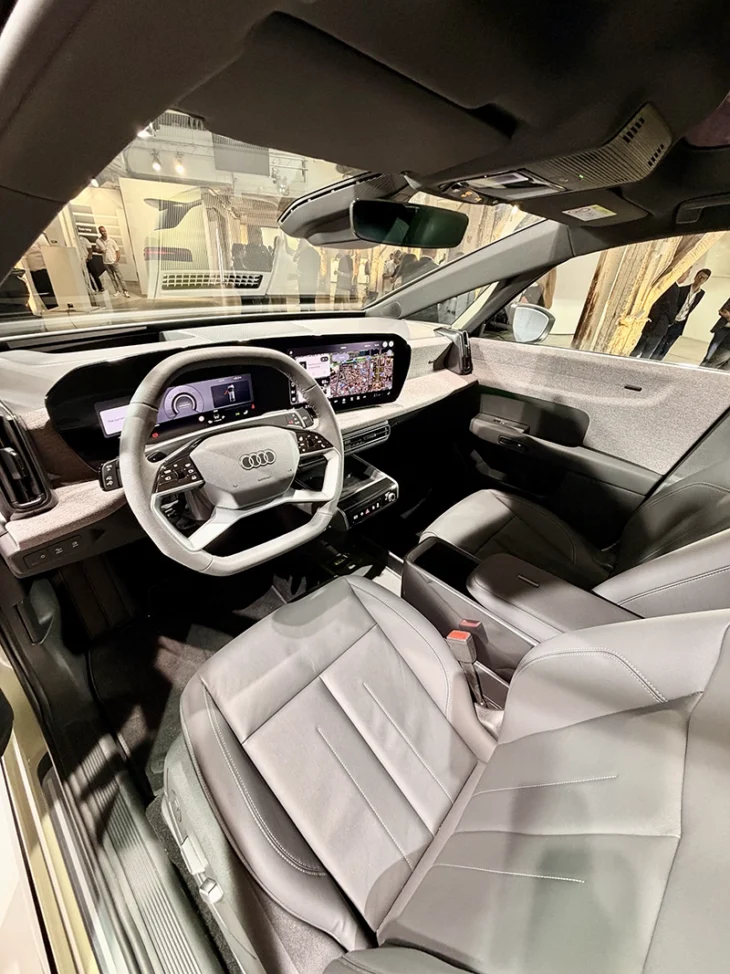
The interior reveals how closely Audi’s designers worked with its engineers. Beierlein explained that the development process brought competing priorities together, particularly design, aerodynamics and packaging. He sees that friction as productive. The roofline offers a clear example: its shape supports aerodynamic performance while increasing cabin space, allowing one line to serve both aesthetic and functional purposes.
Audi carried the same logic into the smallest contact points. A soft material wraps areas where passengers naturally touch the cabin, while the doors use an L-shaped application of fabric around the elbow area. The dashboard uses a hollow section to free additional room, and the design team examined available space millimeter by millimeter.
The center console began from an unusually simple premise. Beierlein said his team removed the conventional console concept and started again by asking what occupants actually need. Smartphones became one of the first considerations. Audi designed the area around two phones, integrated charging and cable organization, and created an open storage section that owners can configure around different daily uses.
View this post on Instagram
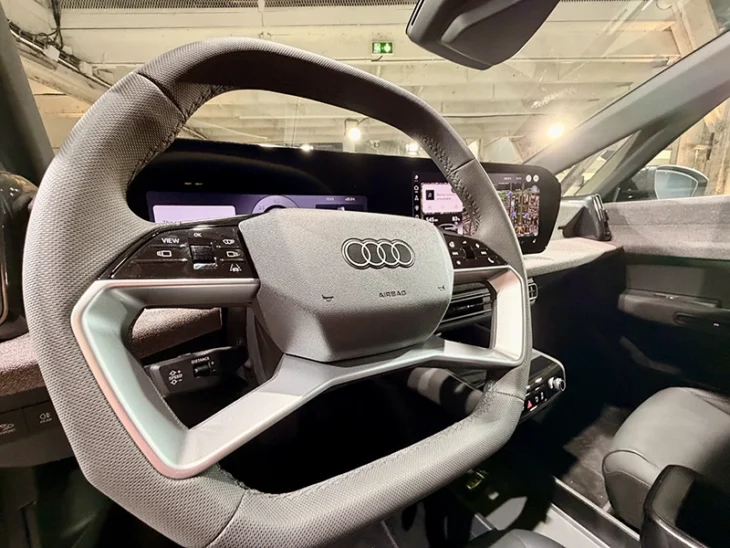
That reduction continues through the controls. The steering wheel brings back Audi’s click wheel, giving drivers physical feedback for functions that benefit from tactile operation. Beierlein acknowledged the industry’s recent emphasis on touch interfaces while arguing that driving still requires clear physical responses in certain situations. The door handle follows a similar idea: its click creates a small but deliberate interaction that communicates through touch.
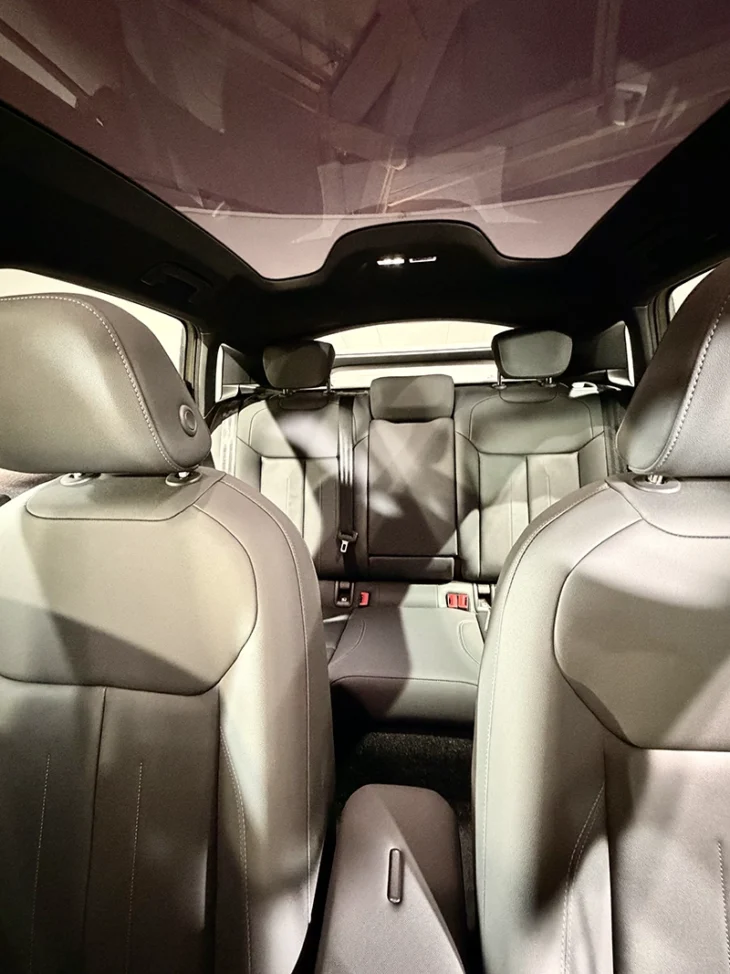
This restraint defines much of the A2 e-tron cabin. Beierlein described a design process that began by removing elements and then introducing only what the team considered necessary. The aim was to keep the interior useful without overwhelming occupants with screens, controls and competing information.
The original A2 inevitably entered the conversation. Beierlein acknowledged that the first generation may have arrived too early for a wider audience, while its unusual concept later developed a strong following. For the new car, Audi wanted to preserve efficiency as a core idea while creating something accessible to a broader group of drivers.
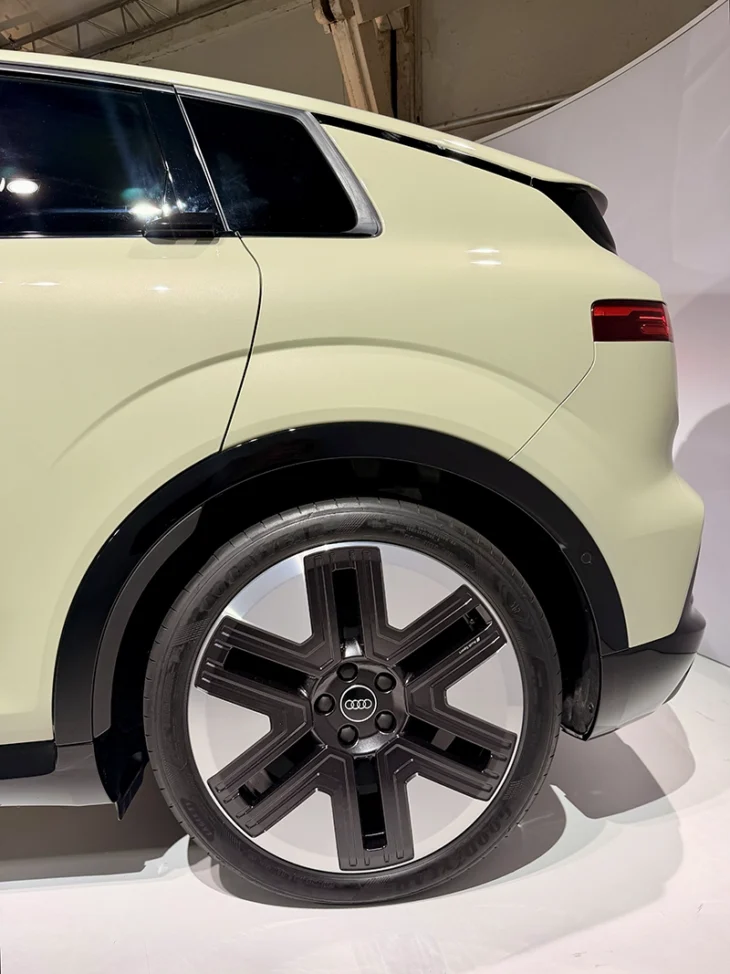
Döllner framed the same principle at company level. “Premium cannot just mean more, more power, more size, more resources. It has to mean using resources more intelligently, without compromising on quality, technology or the customer experience.”
Paris offered an appropriate place to introduce that argument. The A2 e-tron arrives as Audi reassesses what a premium electric car needs to provide in dense European cities, where space and energy matter as much as performance. Its answer relies on compact proportions, aerodynamic efficiency, usable interior space and technology that supports daily routines without dominating them.
As Döllner summarized during the unveiling: “The Audi A2 e-tron is a strong proof of what our brand can achieve when we focus on what truly matters. It does not ask customers to adapt their lives to electric mobility. It adapts electric mobility to their lives.”