


Diesel presented its Spring Summer 2027 collection in Milan, marking Glenn Martens’ final collection for the house. The show transformed the venue into a purpose-built club, placing the collection inside an atmosphere driven by intensity, pleasure and unpredictability.
SPRING SUMMER 2027
“The party always comes first at Diesel,” Martens said. “It’s about inclusivity, self-expression, pleasure and the democracy of experience. The collection is the essence of Diesel: disruptive, sexy, fluid, fun. We are all in this together: let’s take a ride one more time.”
Artist collective (LA)HORDE shaped the performance element of the evening. Two hundred performers sat among the audience, interacting with guests and one another through actions that shifted from unsettling to sensual. Their interventions appeared spontaneous while following an underlying structure. Tension increased throughout the show before the performance reached its conclusion to a reworked version of Donna Summer’s “Love to Love You Baby.”
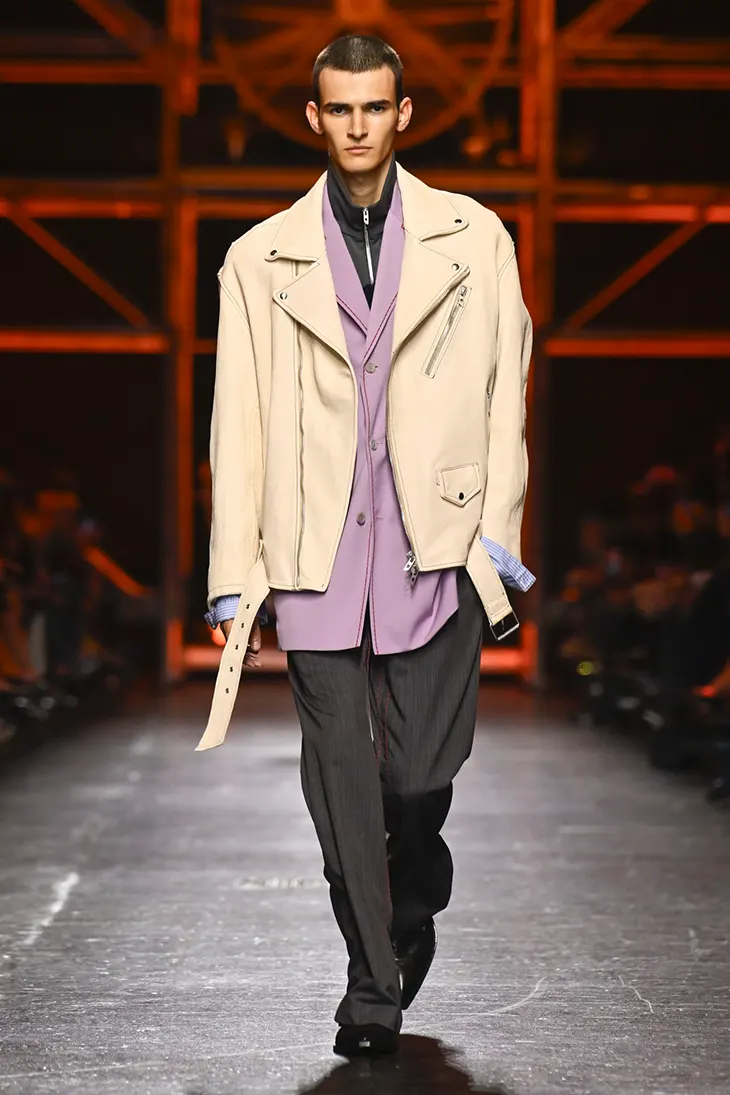
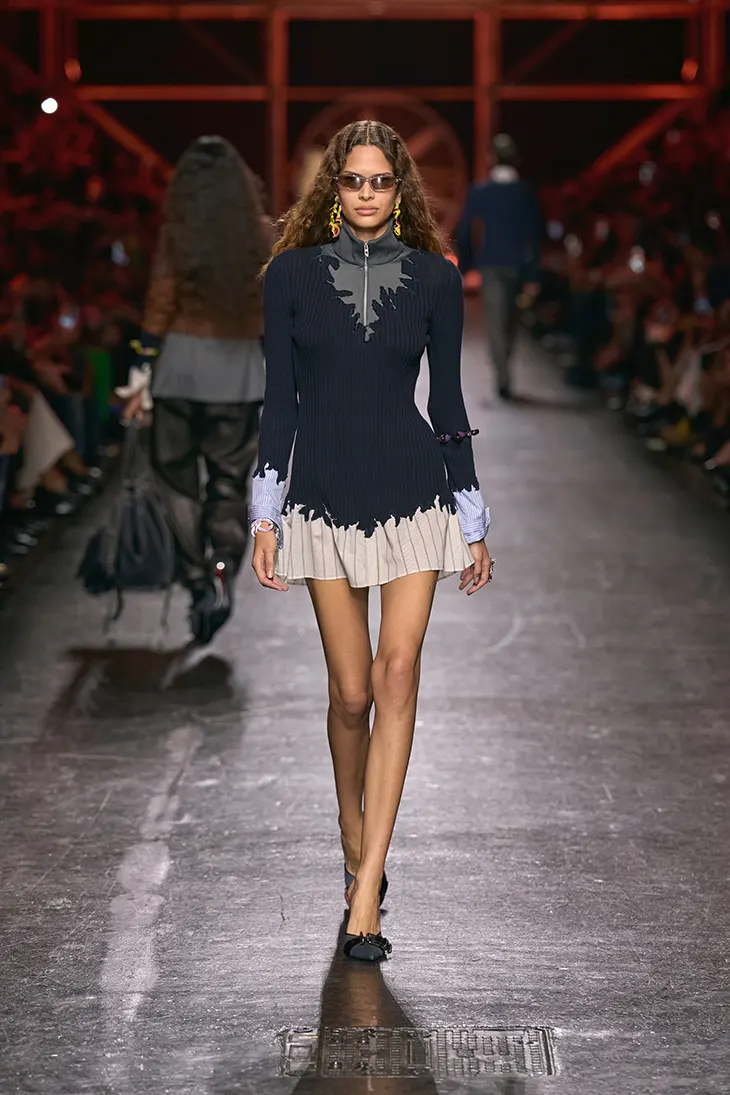
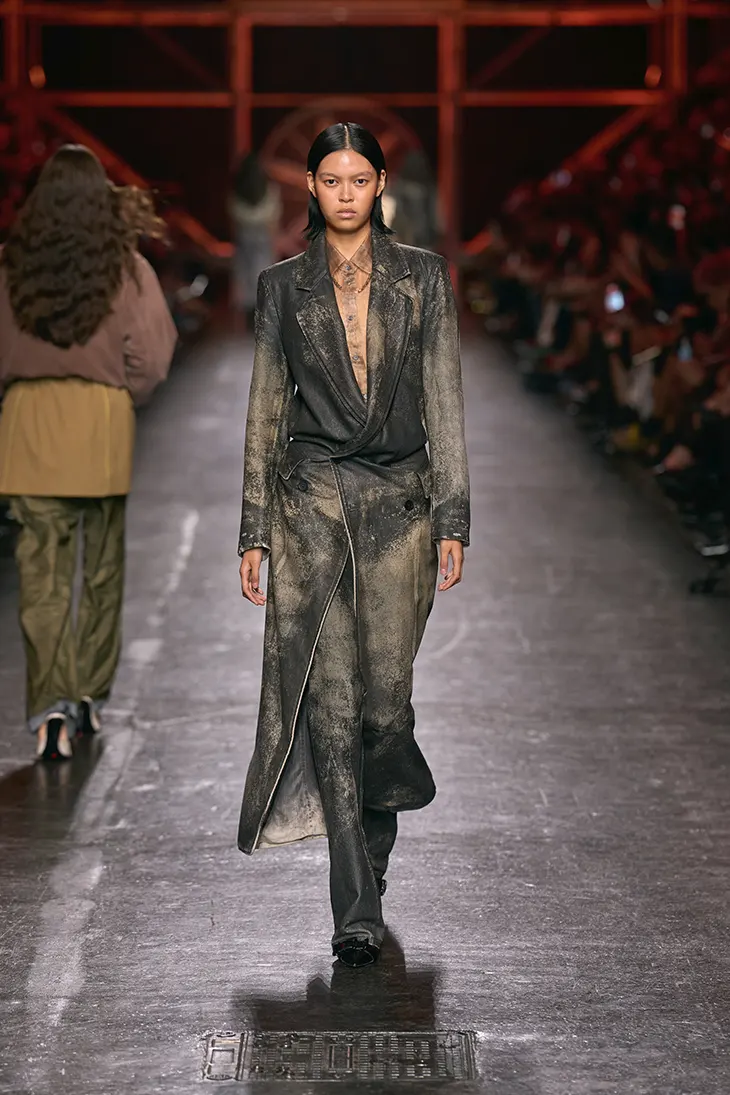
Martens approached daywear through layered constructions and garments built from multiple familiar forms. A waxed leather jacket appeared over a topstitched blazer and ribbed knit sweater combined with a tracksuit collar and shirt cuffs. Orchid-shaped cutaways marked connections between different garment sections. Leather and denim pantasocks continued the idea, while over-the-knee skirts appeared restrained from the front before opening dramatically at the back.

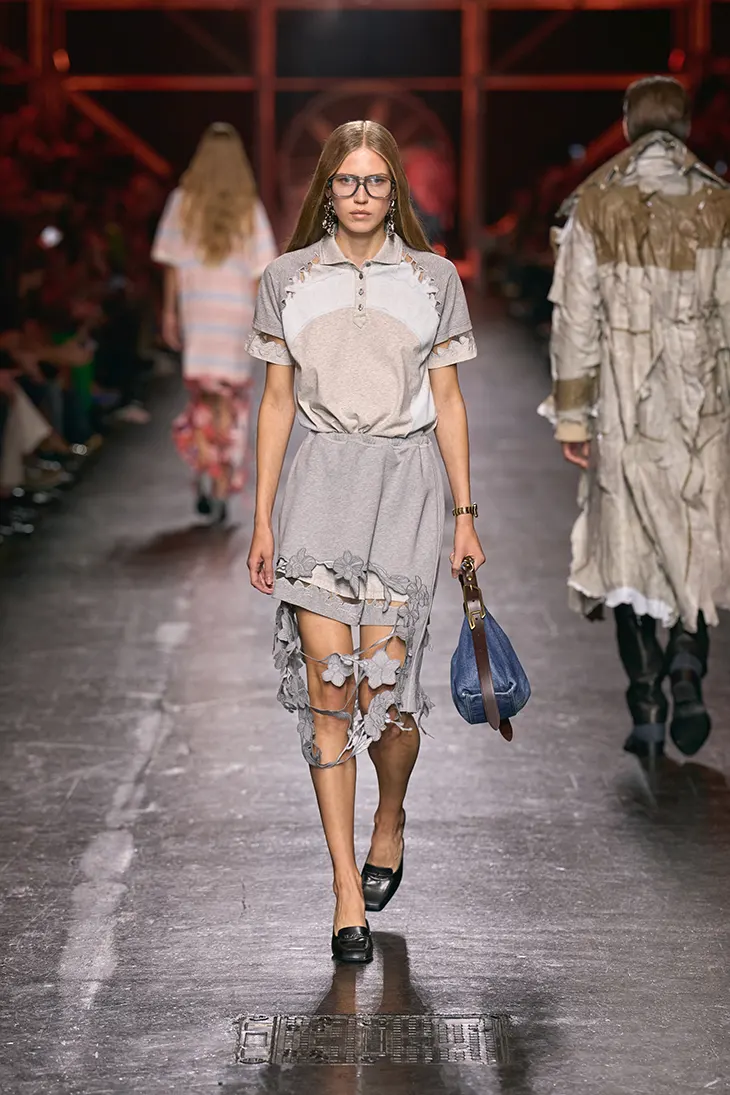
Denim received coated and lasered finishes that created the appearance of leather. Trompe l’oeil prints brought images of tweed coats and winter jackets onto lightweight shirts. Another print referenced the raw-edged shearling coat from Martens’ first Diesel runway show. Jersey shorts carried transfers that created the illusion of tiny denim shorts.
Cutaways exposed increasing amounts of skin. A polo dress featured an orchid-trimmed opening at the hem, while orchid shapes cut through striped knit jacquard sweaters. Slim trousers and tailored skirts dropped extremely low at the waist and carried embroidered orchid details. T-shirts, sweatshirts and jersey dresses reduced fabric to narrow sections around the body.
Other pieces used foil printing and trompe l’oeil effects to suggest entirely different garments. Denim bombers resembled baseball or biker jackets. Rucked-up T-shirts became bra tops, bandeaus and sundresses. Twisted floral dresses, slip dresses, shirts and tailoring appeared intentionally caught, pulled and distorted. A top secured with a belt referenced the first piece Martens showed at Diesel.
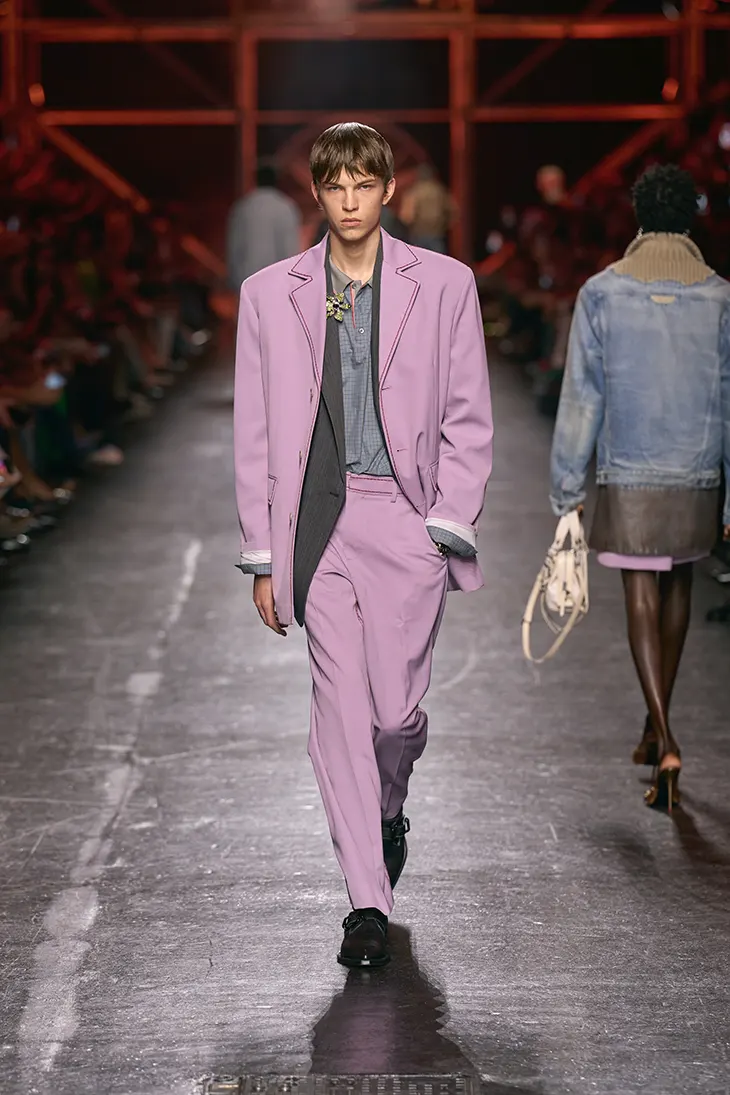
Denim remained central throughout. Bootcut jeans used inner-ankle inserts to create their shape, while straight-leg versions received coated, lasered surfaces. Other designs featured topstitching, ankle slits for stiletto heels or denim shirts attached at the waist. The smallest denim shorts appeared near the end of the show. Ella Snyder closed the collection after previously wearing the opening look of Martens’ Diesel debut.
Accessories extended the collection’s recurring hardware and motifs. The D-ONE bag appeared in multiple textures, shades and finishes, with handles continuing into buckled straps. Leather charms transformed everyday objects, including a sock pouch and newspaper clutch. The new LOCK-D bag used the Double D motif as its fastening.
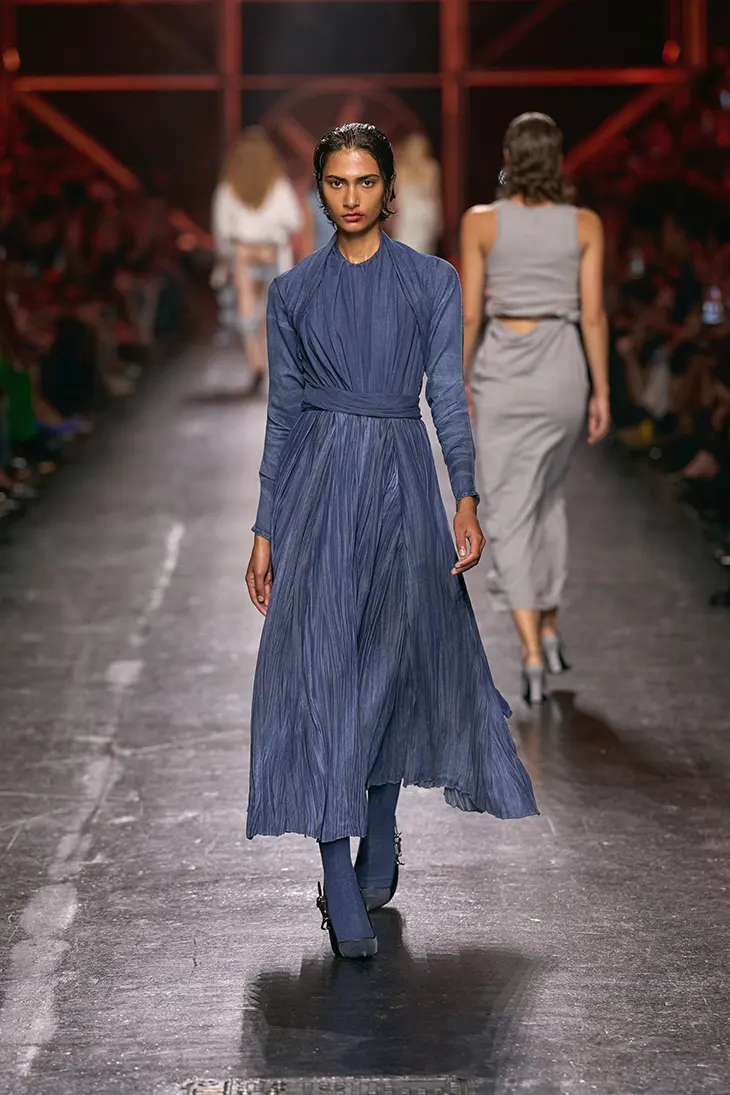
D-ONE buckles appeared across pumps, mules, boots and clogs, while the Double D marked loafers, slingback sandals, closed-toe mules and kitten-heel clogs. Men’s footwear included denim clogs and Western-inspired heeled boots.
Diesel also introduced a smaller D-RUSH watch, new TRAN-D-SPARNT eyewear shades and its first lingerie pieces with boning and orchid embroidery. Orchid earrings, bracelets, chains and body clips continued the floral motif, connecting the collection with Diesel’s Only Desire fragrance. As Martens closes his chapter at Diesel, Spring Summer 2027 returns to many of the ideas that shaped his tenure, from treated denim and trompe l’oeil to altered proportions and club-driven energy. The collection reads as a final look at the codes he developed for the house, ending with the same sense of provocation and experimentation that defined his arrival.