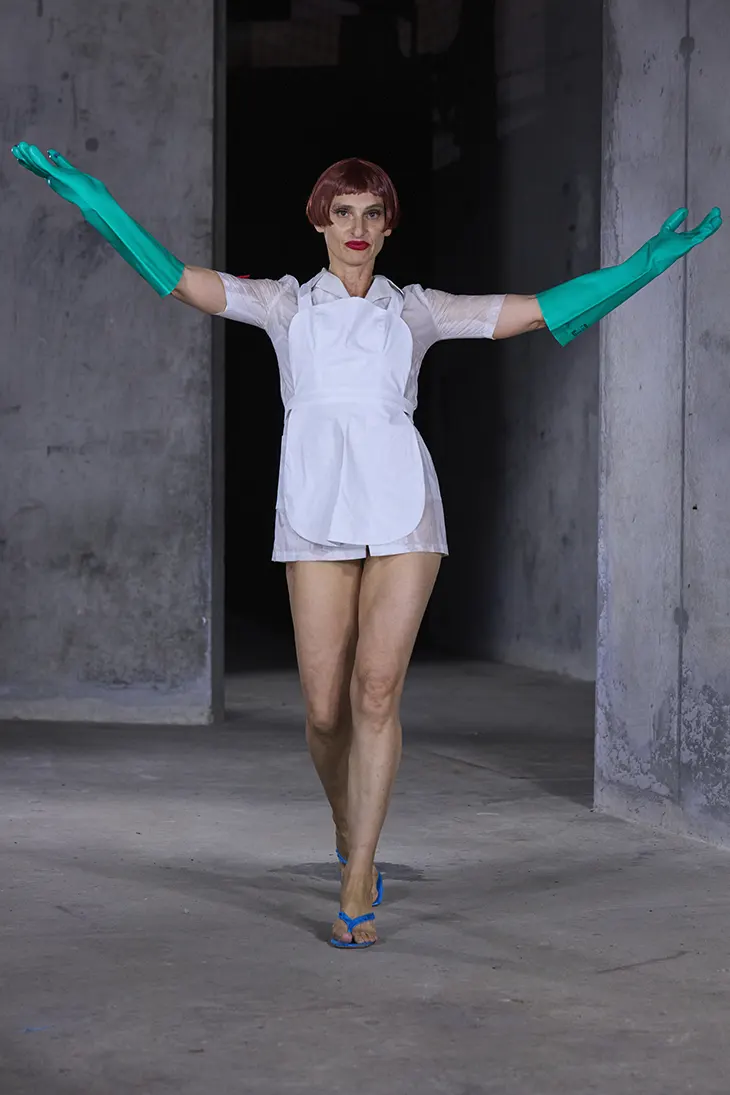




Natasha Zinko approaches Spring Summer 2027 through a question that now follows almost every public interaction: who might be watching? Titled PAY PER VIEW, the collection examines how cameras, social media and an attention-based economy affect individual behavior when people can never fully know when someone records them.
SPRING SUMMER 2027
The starting point comes from an increasingly familiar situation. A stranger approaches someone in public, asks a socially charged question and wears thick-framed glasses that may contain a camera. The person answering has little time to establish whether someone records the exchange for social media. That uncertainty immediately changes the encounter. The possibility of an unseen audience can influence an answer, encourage someone to exaggerate familiar characteristics or turn personal quirks into material that others can consume.
Zinko connects this condition to the growing popularity of Meta Glasses and the questions they raise around privacy. PAY PER VIEW draws on Michel Foucault’s theoretical panopticon, a circular prison organized around a central authority that may observe any prisoner at any moment. Prisoners regulate their own behavior because they never know when observation takes place. Zinko applies that idea to contemporary public life, where surveillance can come from institutions, individuals with cameras or people producing material for social platforms.
The collection considers what this environment does to the pursuit of authenticity. When anyone can become an audience and any interaction can become content, people may consciously adjust how they present themselves. The same question becomes especially relevant for individuals who earn money from public personas. Their personalities already function as recognizable forms of media, placing personal identity, performance and audience expectation in constant conversation.
PAY PER VIEW asks where the person ends and the public character begins. It considers whether repeated performance gradually turns an individual into an exaggerated version of themselves, or whether successful public figures identify qualities within their personalities that genuinely connect with viewers. Zinko also examines whether responding directly to audience demand can still produce an authentic form of self-expression.

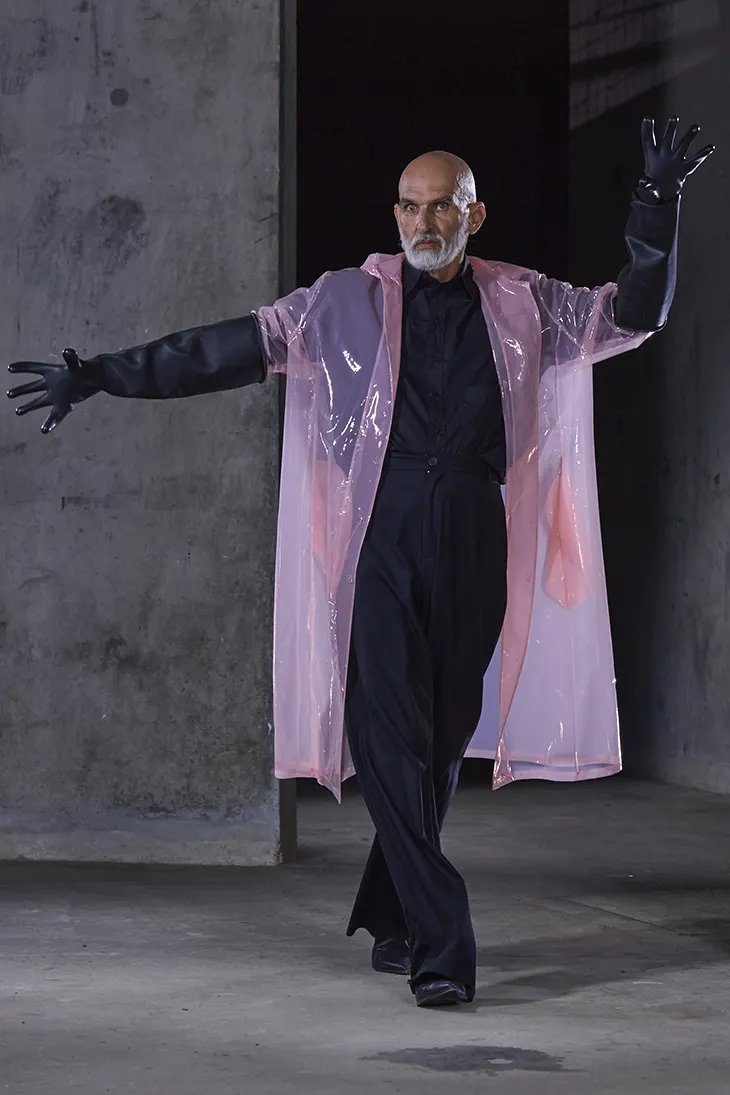
For the show, Zinko places the audience inside this contemporary version of the panopticon. She works with stylist Daliah Spiegel, casting director Sarah Meital and social media platform OnlyFans to assemble a cast of real-life personalities who understand that public observation can occur at any time.
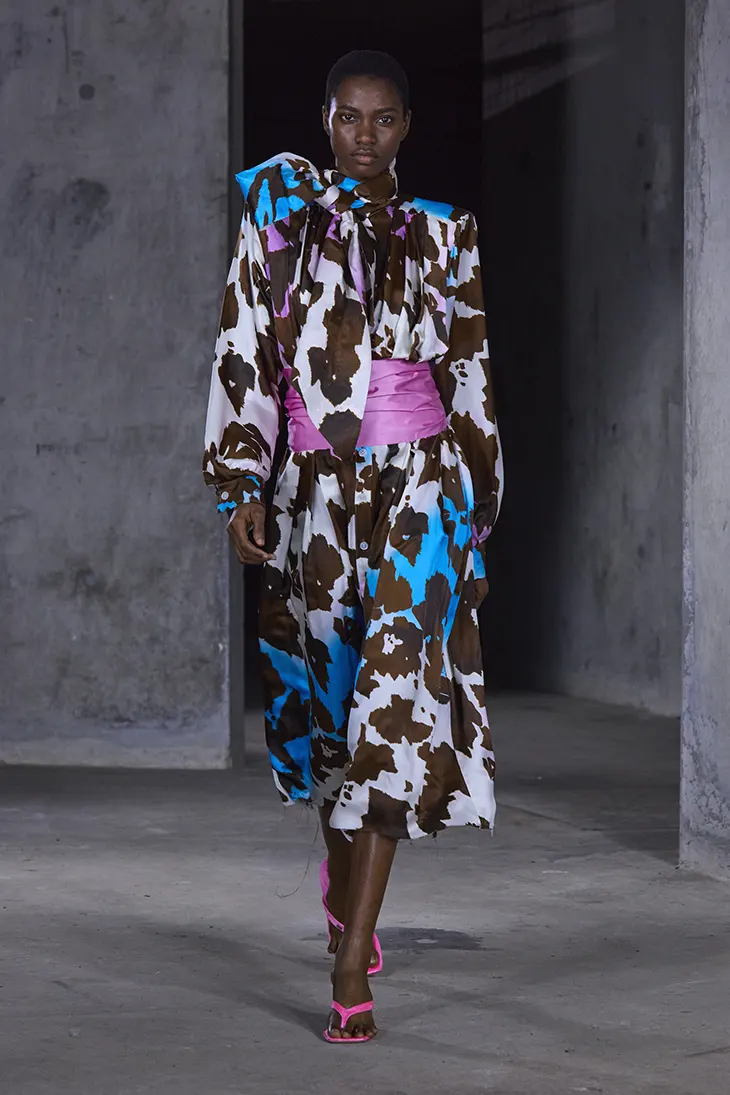
The participants engage in an exercise in self-parody. Their looks begin with elements connected to how they present themselves in everyday life, then Zinko pushes those elements into exaggerated proportions, intensified colors and recognizable cultural archetypes. The clothes turn familiar public identities into amplified visual characters, reflecting the mechanics of online attention and the pressure to remain immediately identifiable.
Some references draw from widely recognizable forms of low-budget adult entertainment, which the collection treats as direct records of commercialized desire and audience appetite. Zinko filters those references through clothing without separating them from the broader discussion of visibility, performance and monetization. Natasha Zinko uses Spring Summer 2027 to examine a culture where observation can happen anywhere and personality itself can carry commercial value. The collection asks what happens to individual identity once people learn to anticipate the camera before they even know whether it is recording.