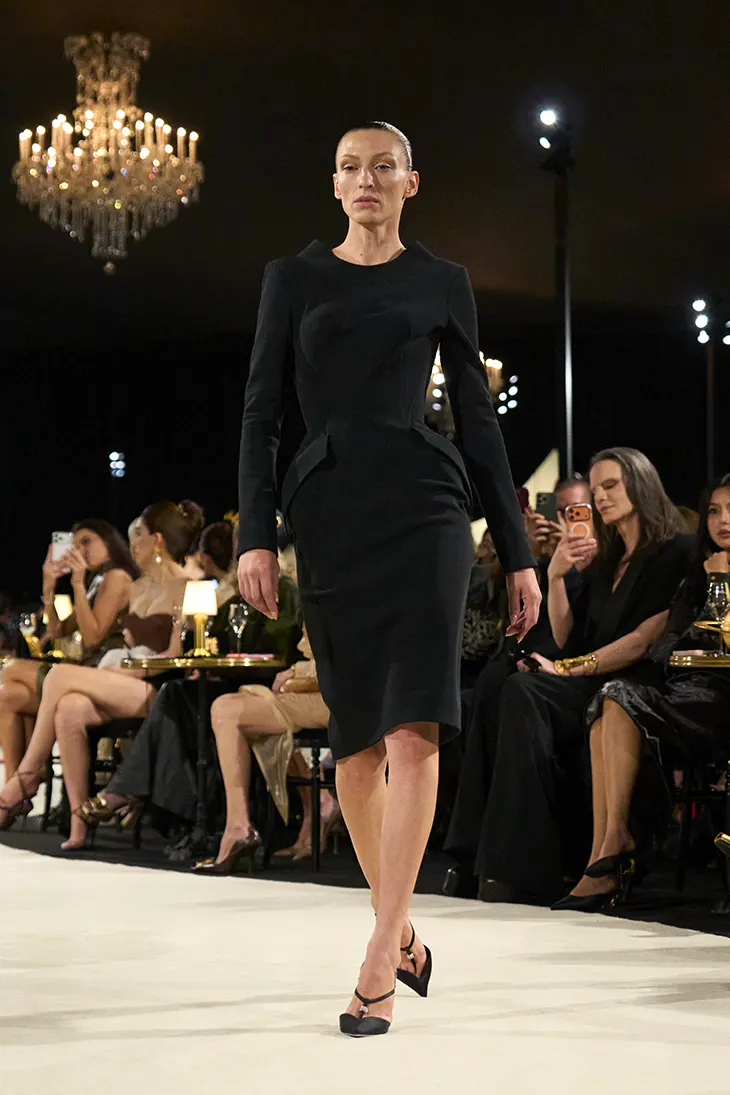



Schiaparelli sharpens its ready-to-wear identity for Spring Summer 2027, as Daniel Roseberry focuses on clarity, consistency and the relationship between couture and everyday dressing. Titled Going Clear, the collection develops ideas that have taken shape since the house began expanding its ready-to-wear offer, with Roseberry focusing on how Schiaparelli can retain its identity while giving the wearer greater freedom.
SPRING SUMMER 2027
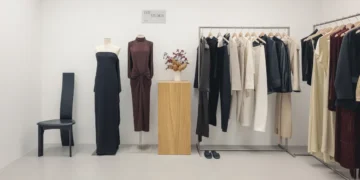
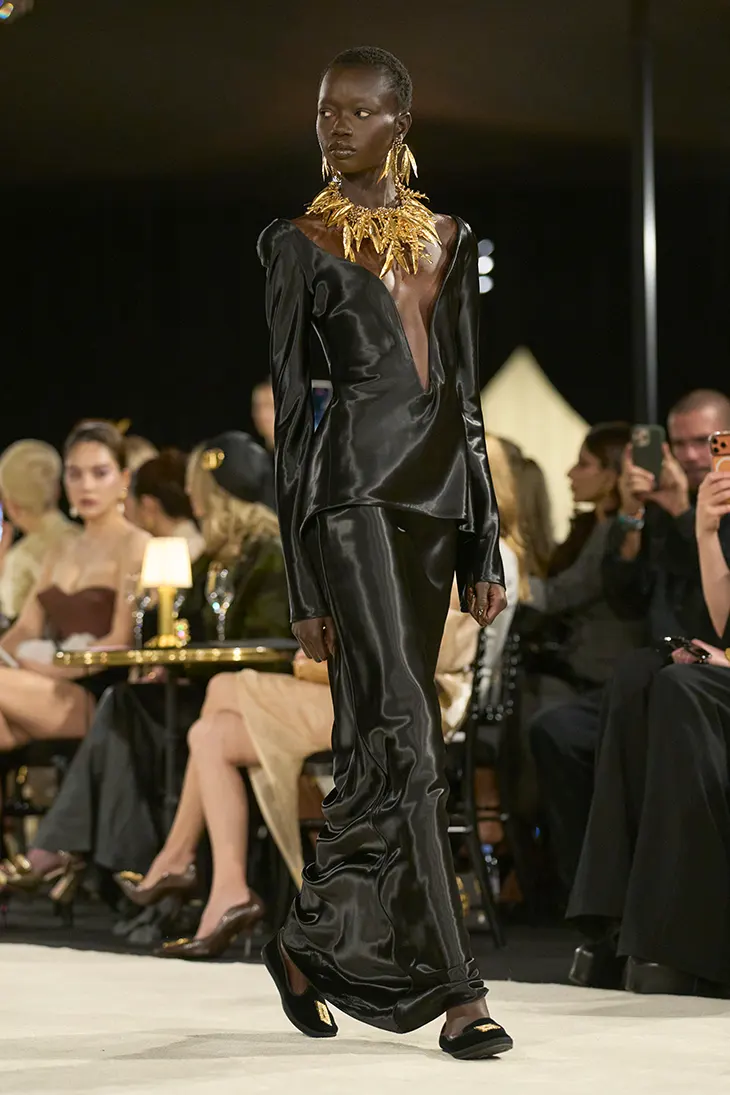
Roseberry breaks down familiar Schiaparelli silhouettes, gowns and necklines into tops and bottoms, creating a modular wardrobe informed by American sportswear and his Texas roots. The approach allows individual pieces to work in different combinations while keeping the house codes recognizable. A reduced palette of Schiap black, bone and butter establishes the foundation, with selective color appearing throughout.
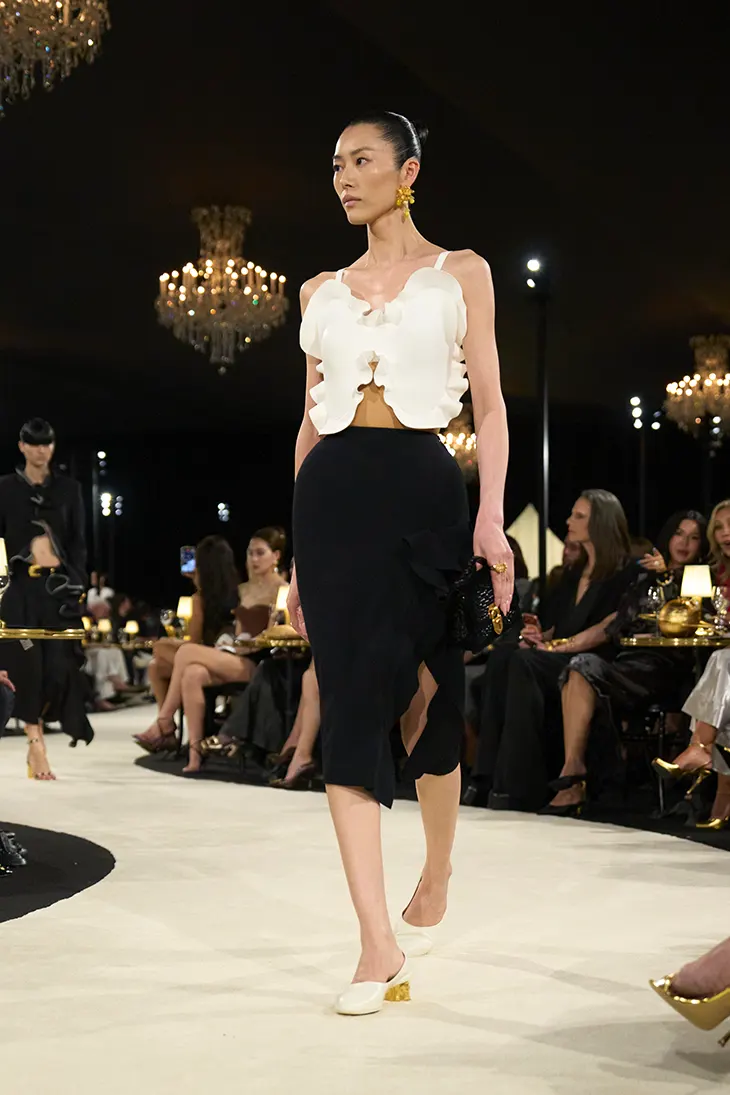
Roseberry also explores the difference between precision and severity. The collection avoids rigid construction in favor of softer details, including lettuce hems and asymmetrical openings. Ruffles appear in leather and linen, taking inspiration from the curtains that once covered the second-floor windows of Elsa Schiaparelli’s Place Vendôme atelier. Roseberry translates their slightly misplaced quality into clothes that carry the same sense of unexpected proportion and texture.
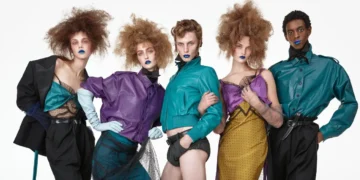
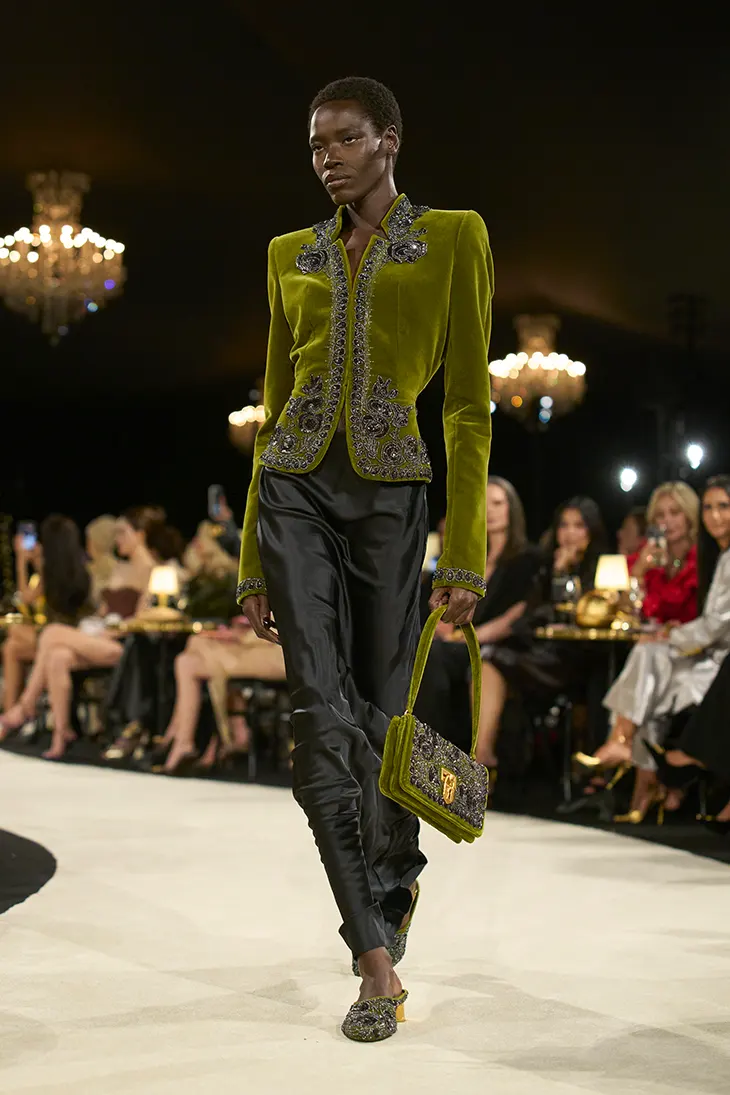
Vegetable and feather motifs cover sheer shirts, transferring techniques associated with richer couture fabrics onto transparent materials. Vegetable embroidery also appears across one of eight interpretations of the classic Schiap jacket. The jackets come in colors drawn from the archives, including kingfisher blue, moss green and salmon pink.
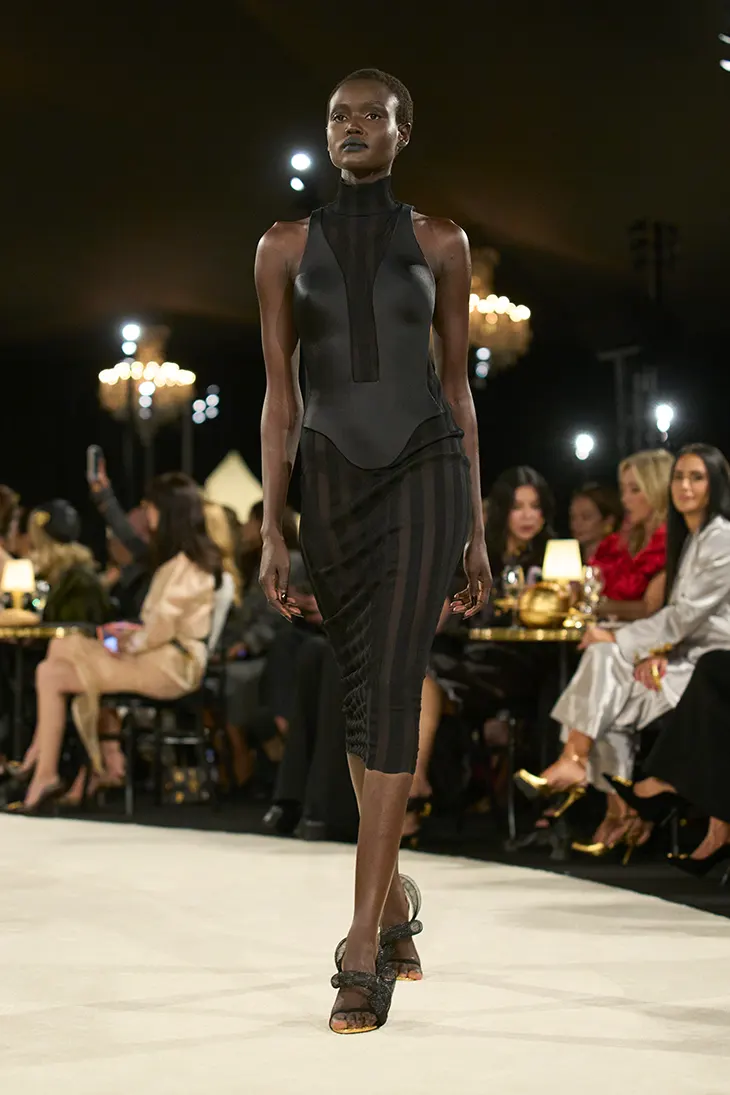
Knitwear plays a central role. A sheer viscose tree-bark knit references a fabric Elsa Schiaparelli originally developed, while broderie anglaise moves from couture into ready-to-wear. Roseberry adapts these techniques into garments that allow the house vocabulary to become lighter and more flexible.
The collection also introduces what Roseberry describes as “revenge dressing” through variations on the little black cocktail dress. He links the idea to Look 1 from the house’s recent couture collection, The Abyss, using its simplicity as a reference point.
Accessories continue the same focus on recognizable forms with unexpected details. Handbags use familiar shapes such as the hobo and pocketbook, including one design with a brass mouth that functions as a handle. Footwear introduces lower everyday styles, including a babouche, a knit bootie that refers to a style Elsa wore in the late 1930s, a mule with a ball at the toe inspired by photographs of 1950s American film stars including Marilyn Monroe, and a lower totem heel. Jewelry expands the idea of personal choice through animal forms. Earrings, cuffs and brooches take the shapes of horses, dolphins, pigs, dogs, cats and spiders. Familiar house motifs such as keyholes and lips also appear across shoes, bags and collars.
Roseberry describes Schiaparelli ready-to-wear as a direct connection between design and the person who ultimately wears it. The house does not separate its runway vision from a secondary commercial collection. What appears on the runway becomes what stores receive and customers buy. Going Clear means stripping away fashion’s noise, status and outside approval to reach a more direct creative voice.