


Han Gao is a Los Angeles–based architectural and interior designer recognized for her ability to unite analytical precision with conceptual depth. Born into a family of architects in China, she grew up surrounded by drawings, models, and conversations about space. This early immersion shaped her understanding of architecture not as a profession, but as a way of interpreting the world. Educated at The Ohio State University and later at the University of Pennsylvania, Han developed a design methodology that blends parametric experimentation with disciplined, human-centered thinking. Her work demonstrates a rare balance: the clarity of rational systems paired with the sensitivity of poetic atmosphere.
DESIGN
Rather than relying on formal spectacle, Han’s projects focus on the subtle yet powerful interplay between light, material, technology, and perception. She explores how invisible systems – from data flows to technological infrastructures – can be transformed into architectural experiences that carry cultural weight and emotional resonance. This philosophy positions her as one of the most compelling emerging voices reconsidering how architecture should respond to the sensibilities of the digital age.
Among her growing body of work, two projects stand out as defining markers of her trajectory: Data Drop, a radical reinterpretation of the data center typology, and the Autowell Technology R&D and Photovoltaic Equipment Center, a large-scale innovation campus in Wuxi, China. Both projects have earned significant international recognition, with Data Drop winning the Platinum Award at the TITAN Property Awards and Autowell receiving Gold at the London Design Awards. These accolades underscore Han’s rising presence in global design discourse and the influence of her architectural voice.
DATA DROP – Making the Invisible Tangible
TITAN Property Awards – Platinum Winner
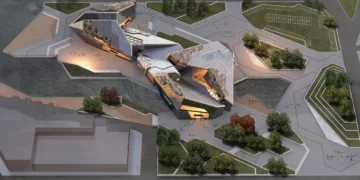
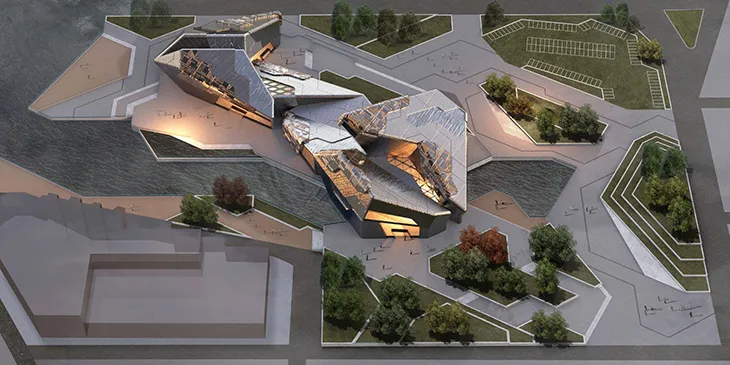
Located along the riverside of New York, Data Drop challenges the long-held notion that data centers must remain hidden, sealed, and inaccessible. Han reimagines the data center not as an opaque machine, but as a public, experiential space where visitors can sense the energy of data itself.
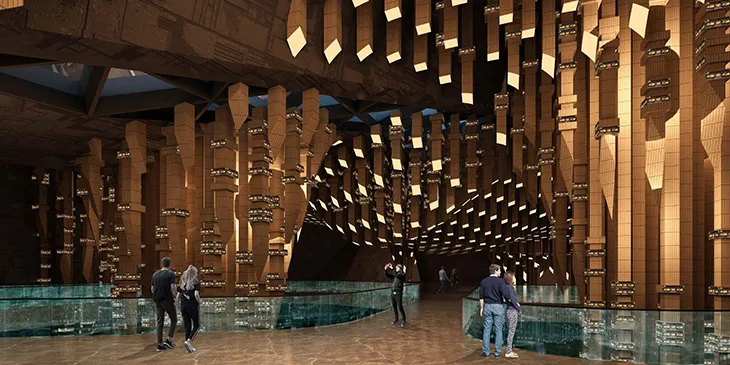
The project’s most striking gesture is the suspension of servers from the ceiling – a floating, glowing “data cloud” that transforms the entire interior into a sculptural field of information. The servers’ golden surfaces reflect light across perforated ceilings and dark architectural planes, creating a shifting choreography of brightness, shadow, and motion throughout the day. This interplay gives the building an almost atmospheric animation, as if the architecture breathes along with the flow of data.
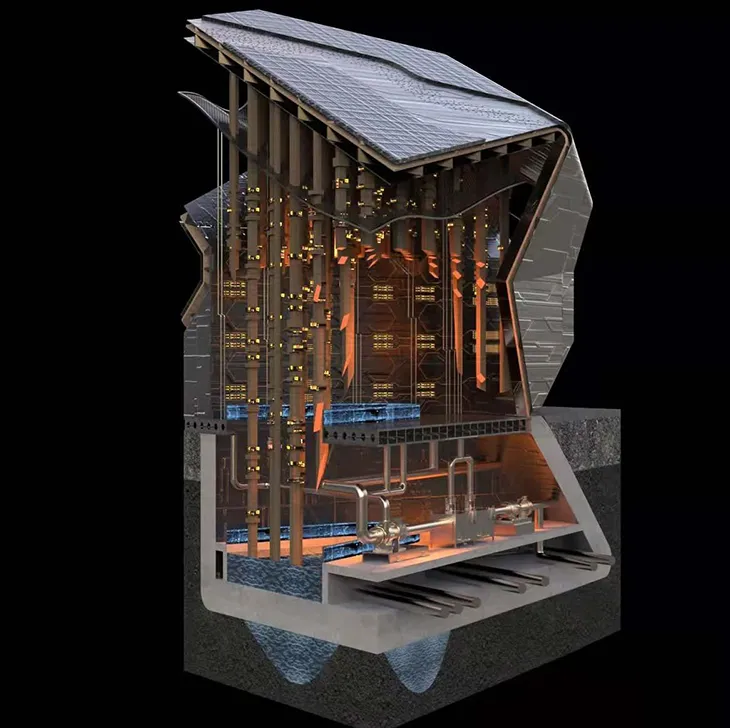
To support this unconventional spatial strategy, Han employs a diagrid structural system, producing a fully column-free interior volume. This structural clarity amplifies the openness of the space and allows the suspended infrastructure to become both the functional core and the experiential protagonist.
The building’s riverside context is integrated through natural cooling strategies, where submerged architectural components interact with the water to dissipate heat. This approach merges environmental performance with architectural narrative, illustrating Han’s commitment to ecological intelligence within technologically driven projects.
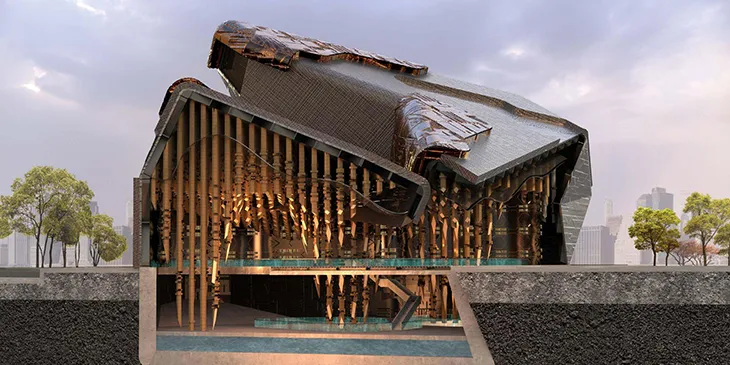
Data Drop earned the Platinum Prize at the TITAN Property Awards, with jurors praising its bold rethinking of digital infrastructure and its ability to humanize the technological systems that shape modern life. The project exemplifies Han’s unique capacity to transform complex, invisible systems into spaces of clarity and meaning.
AUTOWELL TECHNOLOGY R&D AND PHOTOVOLTAIC EQUIPMENT CENTER
London Design Awards – Gold Winner
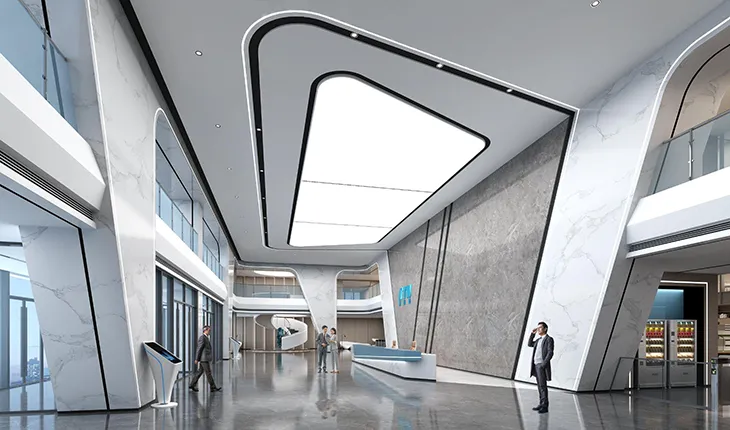
While Data Drop explores the sensorial and cultural dimensions of technology, the Autowell Technology R&D Center demonstrates Han’s mastery in designing for large-scale, system-driven environments. Conceived as a “Technology Green Valley,” the project integrates research laboratories, intelligent manufacturing facilities, collaboration zones, and social spaces into a continuous ecosystem.
Drawing inspiration from the geometric logic of photovoltaic components – silicon wafers, solar cells, and module grids – Han develops a spatial language that aligns corporate identity with architectural clarity. These abstracted geometries inform circulation patterns, façade elements, and interior sequences, creating a cohesive environment that reflects Autowell’s technological ethos.
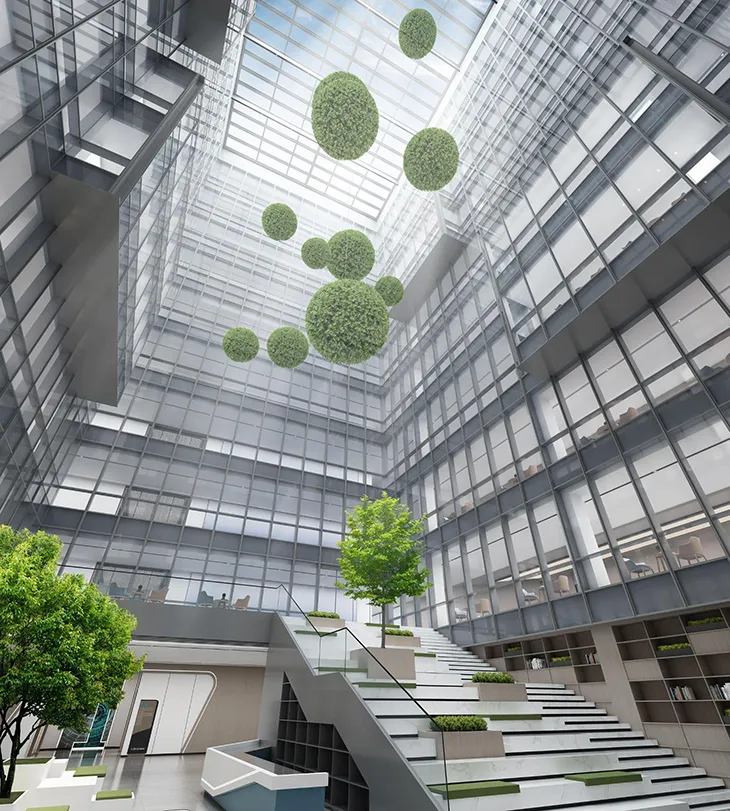
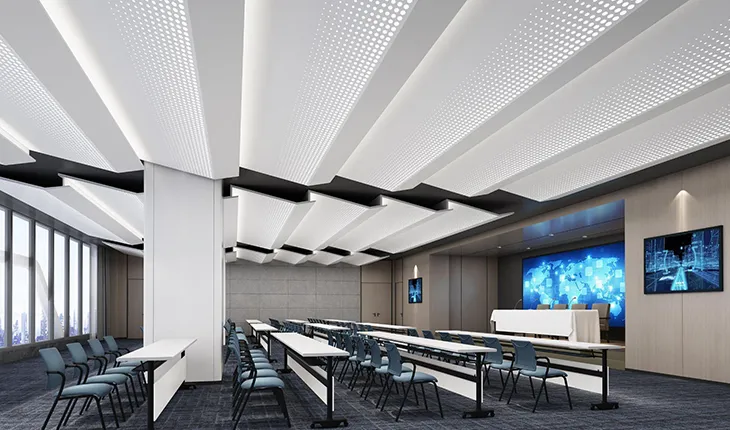
The project’s material palette centers around Autowell Blue, paired with restrained tones of black, white, and gray. This combination creates a crisp, modern atmosphere that strikes a balance between efficiency and sophistication. Within this environment, Han creates varied spatial rhythms – from expansive open offices to intimate collaboration areas – supporting innovation and communication across diverse teams.
Awarded the Gold Prize at the London Design Awards, the Autowell project was recognized for its systemic intelligence, its forward-thinking workplace strategy, and its ability to translate an industrial program into a coherent architectural vision. It further establishes Han’s reputation as a designer capable of navigating complex technological contexts while maintaining a precise and human-centered architectural voice.
TOWARD A NEW ARCHITECTURAL PARADIGM
Across these two award-winning projects, a coherent design philosophy emerges – one that positions architecture as a cultural and experiential interface between people and the increasingly complex systems that shape modern life.
Han’s work embodies an elegant tension: precision and poetry, structure and sensibility, system and atmosphere.
Her designs are not loud, but deeply intentional. They do not decorate technology – they reveal it. They do not idealize form – they orchestrate experience.
As digital infrastructures continue to redefine contemporary urban life, Han’s work offers a compelling vision for the future: an architecture that remains technologically sophisticated while preserving the quiet, human moments that give space its emotional resonance.
With a growing portfolio of recognized projects and a design voice marked by clarity and depth, Han stands at the forefront of architecture of the technological age.