


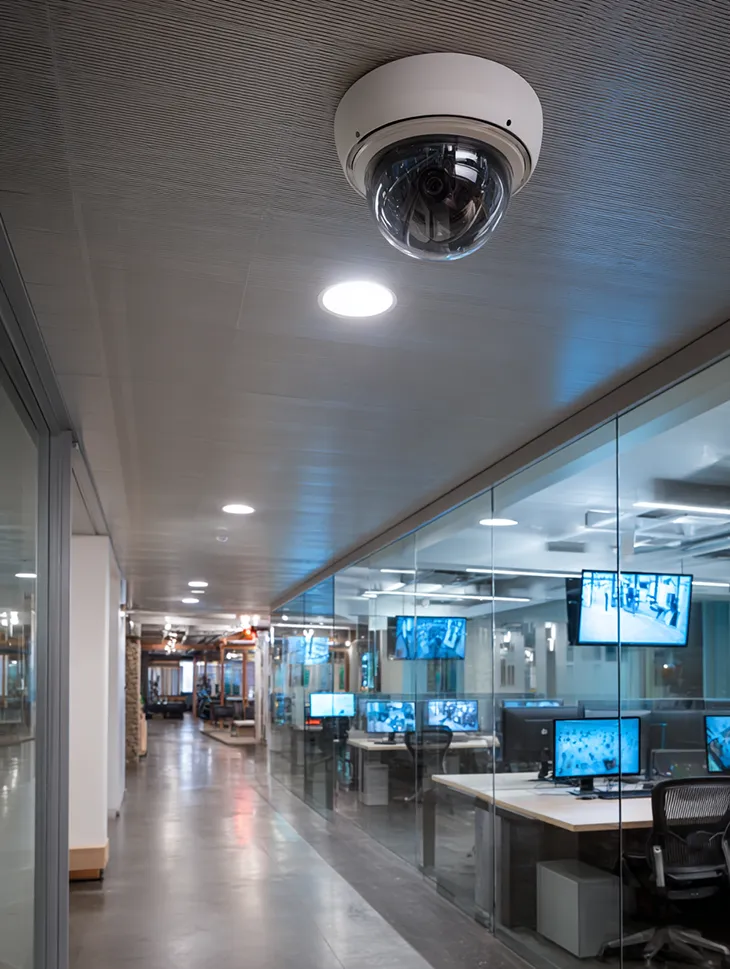
In contemporary commercial environments, security cameras are no longer treated as add-ons installed after a space is completed. They are increasingly considered during early planning, alongside layout, circulation, lighting, and access control. This reflects a shift in how safety is approached: not only as a procedural issue, but as a spatial one, shaped by how environments are designed to be observable and legible.
Retail, office, hospitality, and mixed-use projects now routinely account for where visibility is required. Entrances, transitions between public and restricted areas, service corridors, stockrooms, and points of transaction all influence how a space functions and how safely it operates. Camera placement follows these spatial decisions. It responds to how people move, where responsibility changes hands, and where incidents are most likely to occur.
The presence of security cameras influences layout in subtle but concrete ways. Ceiling heights, lighting conditions, sightlines, and material choices all affect how effectively cameras function. Highly reflective surfaces, extreme contrast lighting, or visually complex ceilings can compromise image clarity. As a result, camera systems increasingly require coordination with interior design choices rather than being treated as purely technical equipment.
What Security Cameras Actually Deliver
Installing business security cameras is much more than a “nice-to-have.” Here’s what they bring to the table:
- Deterrence of crime – visible cameras alone discourage many potential thieves. Businesses with surveillance see fewer break-ins, thefts, vandalism and shoplifting compared to those without.
- Evidence when things go wrong – in the unfortunate event of theft, damage or other incidents, footage provides valuable proof for investigations, insurance claims, or legal proceedings.
- Reduced reliance on costly guards or security staff – a well-configured camera network can cover many more angles and blind spots than a human guard, often for a lower ongoing cost.
- Operational oversight and improved accountability – cameras aren’t just about external threats. They help monitor internal processes, staff behaviour, customer interactions, and more – boosting employee accountability and discouraging internal theft/misconduct.
- Business perception, customer trust, and workplace safety – a secure, well-monitored environment reassures customers and staff. This helps in building a reputation for safety and reliability, which can translate into better customer retention, staff morale and fewer liabilities.
Safety Through Documentation and Review
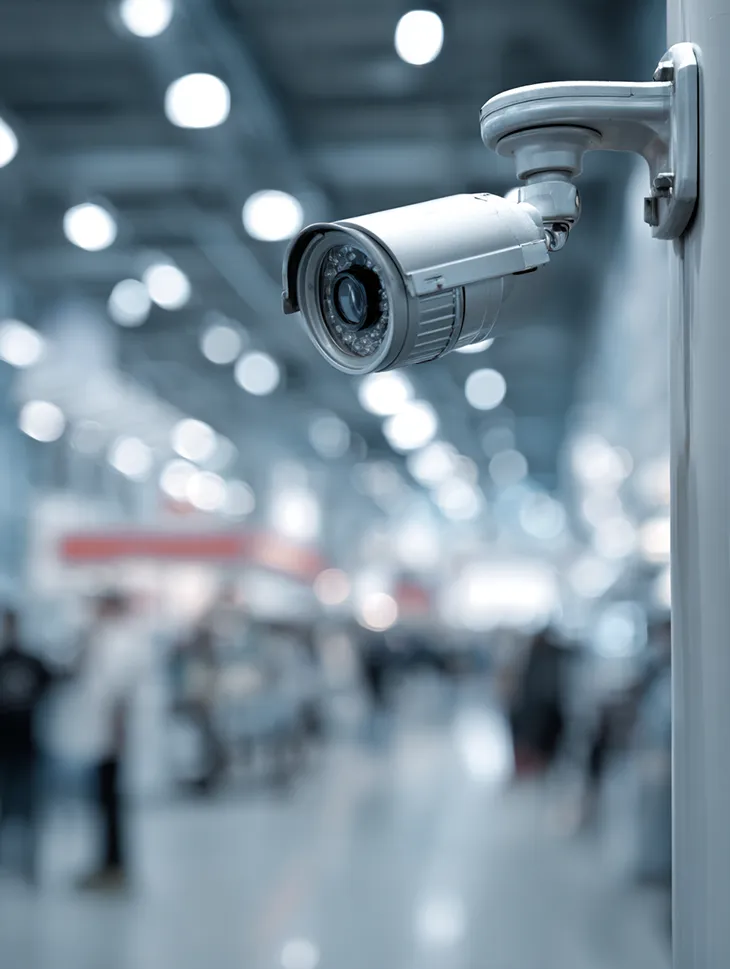
Modern security cameras contribute to safety primarily through documentation. They create a reliable record of events tied to specific locations and timeframes. When incidents occur, whether theft, damage, or disputes, this record allows operators to review what happened without relying on memory or assumption.
This shifts safety away from constant intervention and toward verification. The ability to review events after the fact often resolves issues more efficiently than immediate enforcement.
Visibility, Circulation, and Risk Zones
Certain areas consistently require closer monitoring because they sit at points of exchange or transition. These include entry and exit points, back-of-house routes, loading areas, storage spaces, and zones where goods or responsibility change hands. Cameras are positioned to reflect this logic, responding to how people and materials move through a space rather than attempting blanket coverage.
This approach aligns monitoring with circulation patterns. When visibility corresponds to actual movement and use, safety measures feel integrated rather than imposed.
The Technology Behind Modern Surveillance Systems
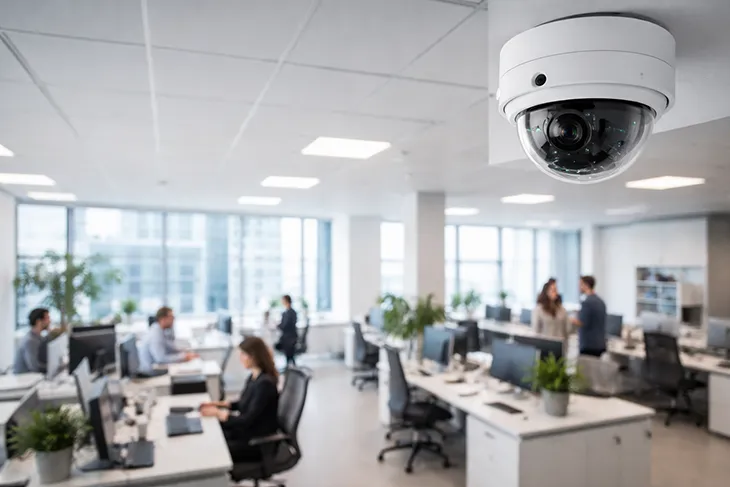
Technology plays a central role in how these systems are designed and used. Modern security cameras are part of broader monitoring systems that include video management software, access control logs, and centralized dashboards. These tools allow activity to be reviewed by zone, time, or event type. The value of the system depends less on image resolution than on how easily information can be retrieved and understood when needed.
Recent developments in analytics further influence how safety is approached through design. Motion detection, intrusion alerts, and zone-based monitoring allow systems to respond differently depending on location and context. In a retail environment, this might support monitoring of high-risk areas after hours. In an office setting, it may relate to restricted access or workplace safety. These capabilities shape how spaces are planned, encouraging clearer boundaries between zones and more deliberate circulation paths.
Privacy, Boundaries, and Responsible Use
Integrating security cameras into design also requires clear boundaries. Signage, defined zones, access permissions, and retention policies all shape how monitoring is perceived and managed. When these elements align with spatial logic, surveillance supports safety without undermining trust.
Clear rules around where cameras are placed and how footage is used are part of responsible system design.