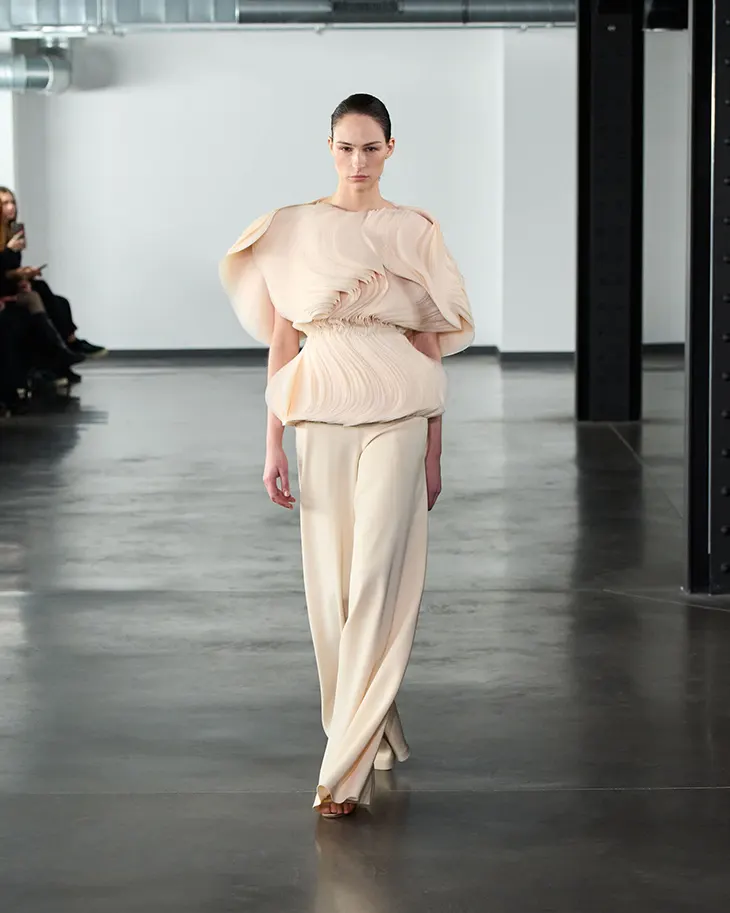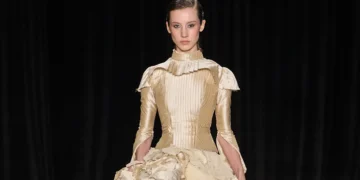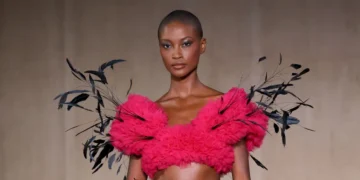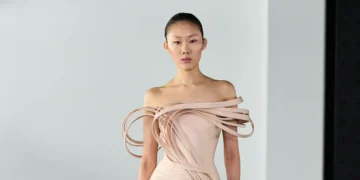



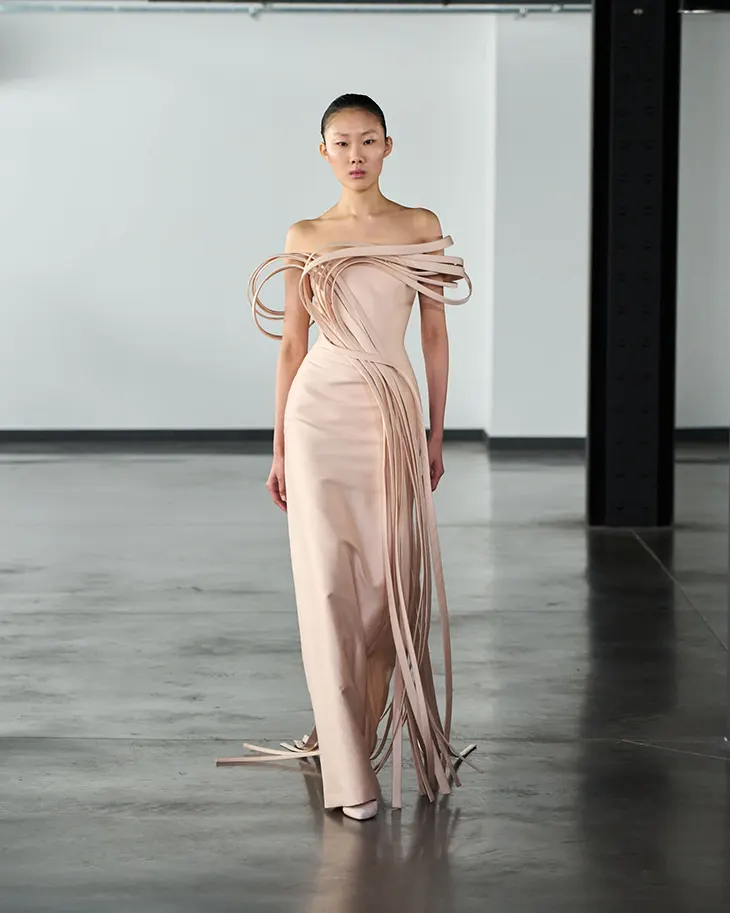
Rami Al Ali presents Fragments in Harmony as his Spring Summer 2026 Couture collection, framing the season as a study of transformation through assembly. The collection draws from the writing of the 13th-century Persian poet Rumi, whose philosophy views rupture as a condition that carries value and meaning. Al Ali approaches contrast through convergence, avoiding resolution through opposition. Forms appear divided, then gradually connect, producing silhouettes that feel calm, luminous, and resolved through process.
COUTURE COLLECTIONS
Garments respond to the body through flow and adaptability, allowing shape to shift as the wearer moves. Elongated silhouettes stretch vertically, then interrupt their own continuity before rejoining through layered construction. This rhythm gives the collection a sense of suspension and attentiveness.
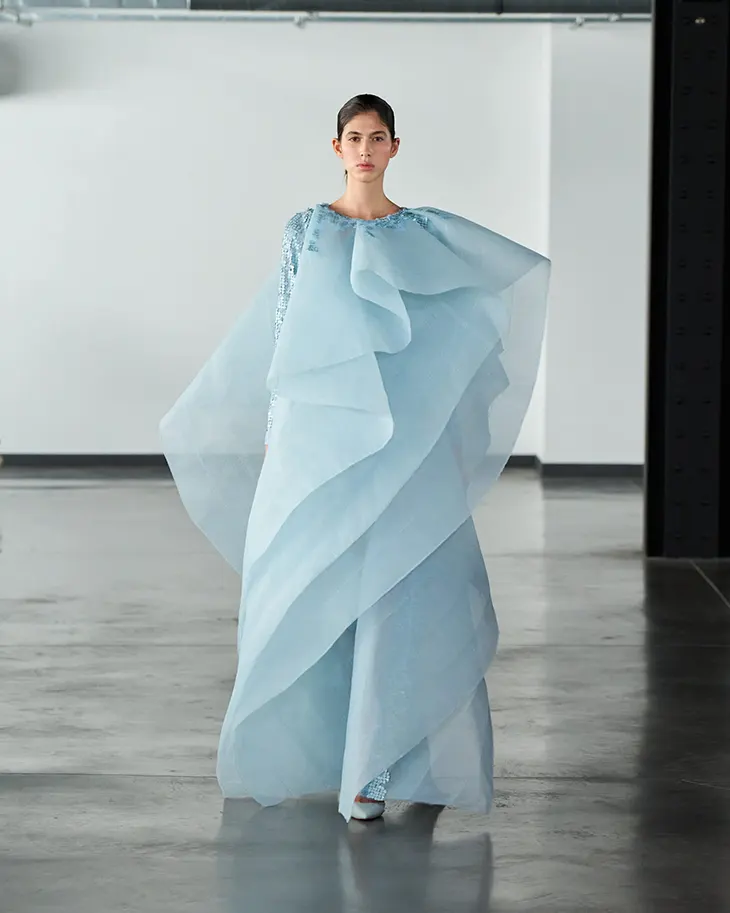
Fractured motifs appear alongside clean geometry, while layered transparencies soften precise lines. Architectural clarity exists in dialogue with fluid construction, creating garments that balance control with softness. Overlays temper structure, and visible seams act as connectors. These seams serve as points of assembly, tracing how individual elements join into cohesive forms.
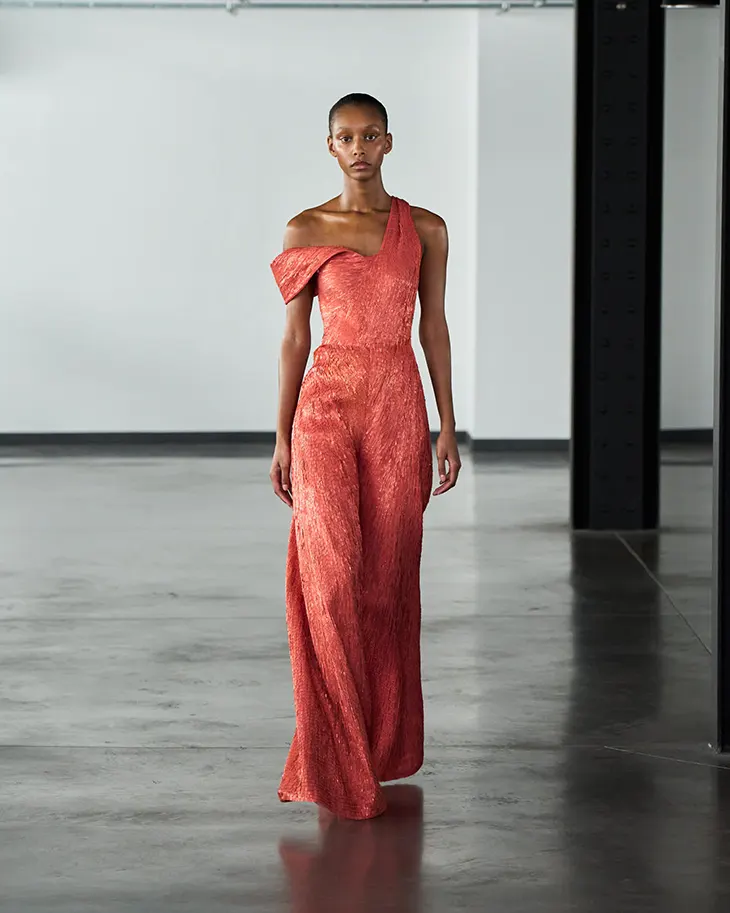
The palette opens with ivory, alabaster, pale pink, and soft peach, then deepens into powdered rose, warm beige, delicate blue, and sage green. Accents of gold, pearl, champagne, and lilac punctuate the looks with subtle contrast. Coral and amber appear sparingly, adding warmth without excess.
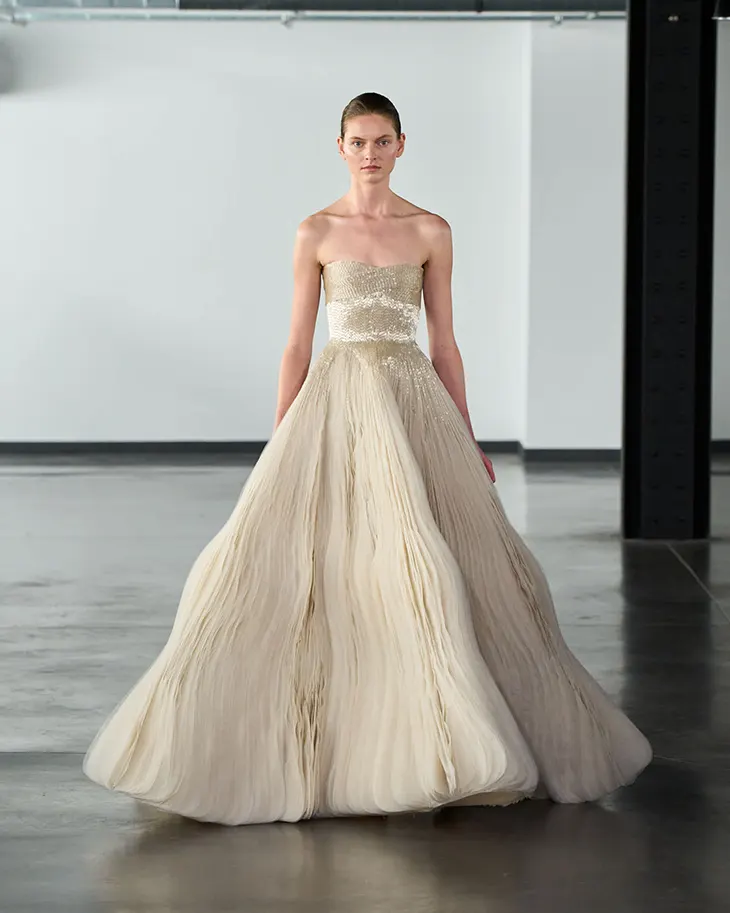
Embroidery and textile work carry narrative weight throughout the collection. Motifs reference broken glass and mosaic patterns, assembled through detailed embroidery that combines metallic threads, beads, and crystals. Lace and organza layer over one another to create depth and transparency, giving garments a sense of lightness and suspension. Visible seams remain intentional, drawing attention to acts of assembly and repair.
Sound extends the collection’s conceptual structure. For Spring Summer 2026, Rami Al Ali collaborates with Persian composer Shora Karimi, who creates an original musical composition for the show. Inspired by verses from Rumi’s Mathnawi, the composition uses live instruments and vocalists performing the poetry.
The collection treats contrast as a working condition and repair as a creative act. By translating Rumi’s philosophy into form, color, and material, Al Ali proposes a vision of femininity shaped by softness, clarity, and cohesion.