


The Olympic Winter Games Milano Cortina 2026 officially begin today, marking the start of two weeks in which sport, culture, design, and spectacle converge across Milan, the Alps, and beyond. From the Opening Ceremony tonight to the first competitions already underway, the Games launch with a clear message: this edition is as much about place and imagination as it is about medals.
EVENTS
Tonight’s Opening Ceremony takes place at San Siro, Milan’s legendary stadium and one of the city’s most charged architectural landmarks. For locals, the moment carries added weight. Built in 1926, the stadium is set for demolition after the Games, making this ceremony a symbolic farewell to a century of sporting history before a new venue rises on the same ground. For the rest of the world, it is the first look at the creative vision behind Milano Cortina 2026, led by stage director Damiano Michieletto, whose concepts of “Harmonia” and “Fantasia” frame the ceremony’s emotional arc.
Produced by Balich Wonder Studio, the ceremony brings together a high-profile lineup including Mariah Carey, Laura Pausini, and Andrea Bocelli, alongside actors Pierfrancesco Favino and Sabrina Impacciatore, positioning the event firmly at the intersection of music, cinema, and performance. Extending beyond the stadium, the ceremony activates a distributed celebration across the Olympic territories, mirrored by the lighting of two Olympic cauldrons, one in Milan at the Arco della Pace and the other in Cortina d’Ampezzo, lit in synchrony as a symbol of unity between city and mountains. Designed as kinetic structures inspired by Leonardo da Vinci’s interlaced knots, the cauldrons introduce a ritual that continues nightly in Milan with short public performances accompanied by music from Roberto Cacciapaglia, framing the Opening Ceremony as the first moment in an ongoing, city-wide experience rather than a single spectacle.
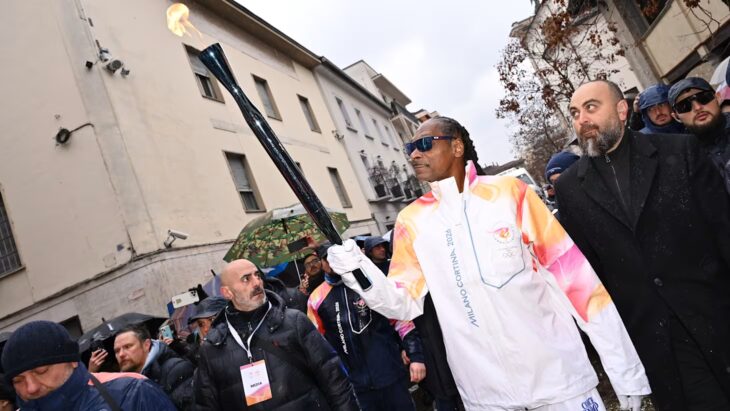
Around the city, the Games have already shifted Milan’s rhythm. Athletes, creatives, and global figures have arrived in force, with Casa Brasil opening last night and fashion and sport intersecting at private gatherings across town. Snoop Dogg, returning as an Olympic torchbearer, has emerged as one of the most unexpected presences so far, moving between training sessions, venues, and even the ice itself, turning up on a Zamboni with the ease of someone fully at home in Olympic chaos.
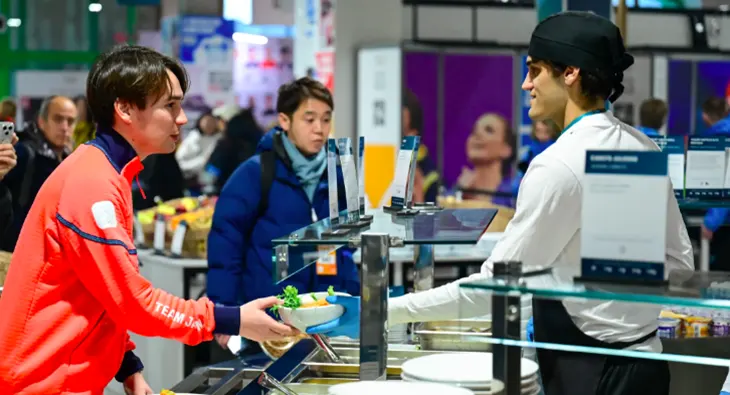
Away from the red carpet, the Games are also a logistical feat on a massive scale. Food alone tells the story. Under the direction of Elisabetta Salvadori, Head of Food and Beverage for Milano Cortina 2026, more than three million meals will be served across Olympic and Paralympic venues. Kitchens operate around the clock, balancing precise nutritional requirements with the expectations that come with being in Italy. Classic comfort dishes sit alongside regional specialties, from pizzoccheri of Valtellina to canederli dumplings from Cortina, risottos from Milan, and polenta served in its many Alpine variations. Even aperitivo has its moment, translated into alcohol-free rituals of cured meats and mountain cheeses.
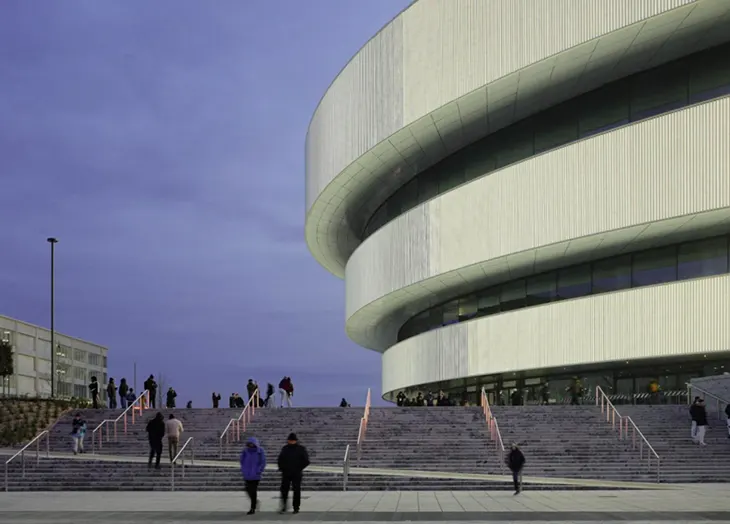
Sport also enters new architectural territory. Women’s ice hockey made its debut yesterday at Santagiulia Arena, one of two major new venues built for these Games. Designed by David Chipperfield Architects in collaboration with Arup, the arena draws on the form of a Roman amphitheatre, composed of three concentric rings wrapped in LED screens. Built on a former industrial site in south-east Milan, the 16,000-seat venue signals the city’s ambitions beyond the Olympics. With more than 4,000 solar panels powering much of the building, it stands as Italy’s most sustainable arena of its kind and is set to become a permanent cultural anchor once the Games conclude.
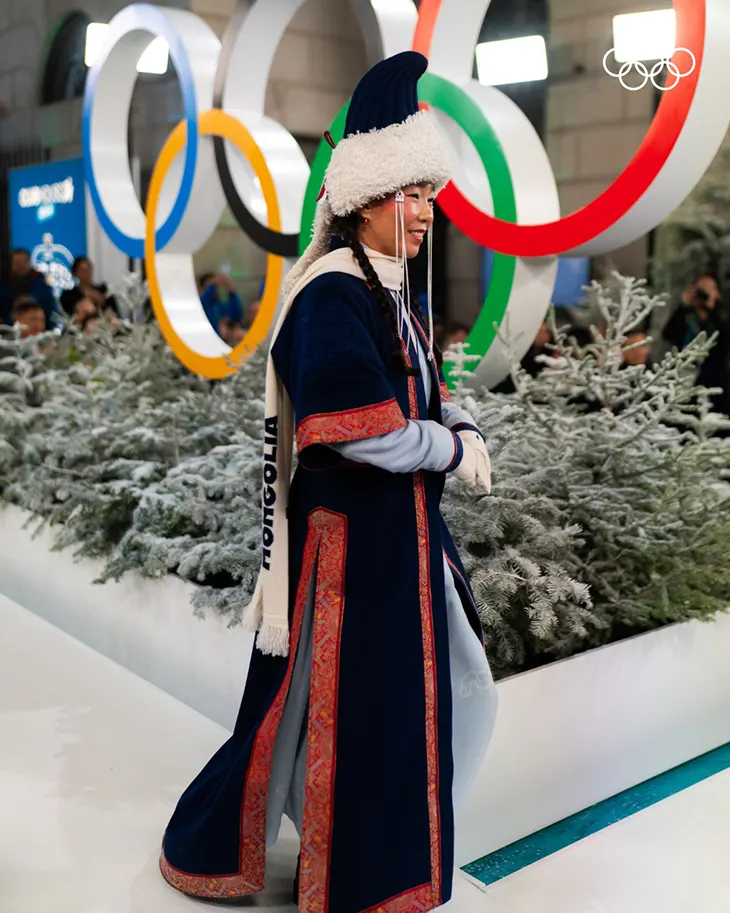
Fashion, inevitably, has taken its place alongside sport. At the Olympic Winter Games Fashion Showcase, held at Clubhouse 26, athletes stepped onto the runway wearing national performance kits and ceremonial uniforms. Mongolia drew strong reactions with its Goyol Cashmere designs, while Canada presented Lululemon’s deep red and burgundy looks, worn by Paris 2024 gold medalist Philip Kim. The showcase also introduced new Olympic Collection pieces and highlighted student designs from Accademia di Belle Arti di Brera, underscoring Italy’s ongoing investment in emerging creative talent.
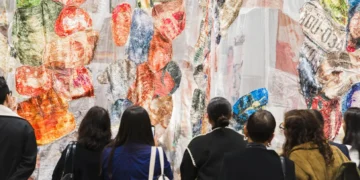
The cultural programme extends beyond Milan’s central venues. Exhibitions such as “Italy in the Snow” at Castello Sforzesco trace how winter sports reshaped the Alps through graphic design, tourism, and fashion, while international houses like House of Switzerland transform hospitality spaces into living exhibitions, concerts, and culinary hubs. Together, these moments form a parallel narrative to the competitions themselves, one rooted in heritage, design, and atmosphere.
The Closing Ceremony on February 22 will bring Milano Cortina 2026 to a measured, symbolic close, shifting the focus from competition to reflection. As athletes gather for the final time, the ritual will center on farewell rather than spectacle, marking the extinguishing of the Olympic Flame and the transition from Games-time intensity back to everyday life. Mirroring the distributed nature of this edition, the ceremony emphasizes continuity over conclusion, with the synchronized extinguishing of the cauldrons in Milan and Cortina d’Ampezzo reinforcing the dialogue between city and mountains.
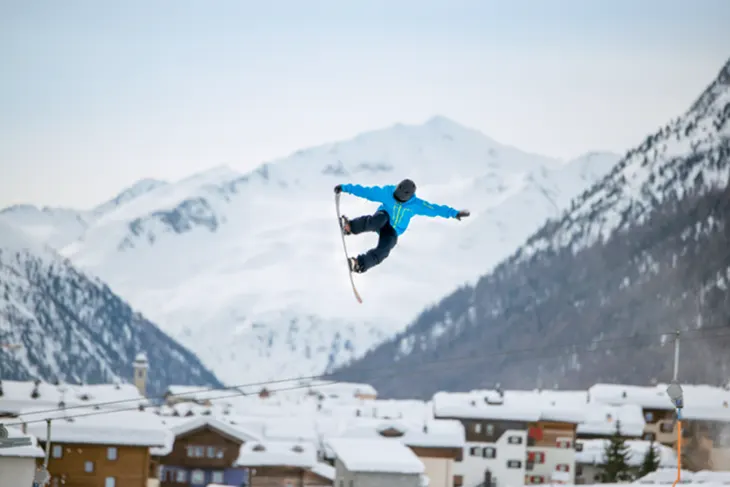
As competitions unfold from Milan to Livigno, Cortina d’Ampezzo, and Val di Fiemme, Milano Cortina 2026 begins with a tone that feels deliberately expansive. Sport remains the core, but the Games position themselves as a shared cultural experience, one that moves fluidly between stadiums, cities, and disciplines, and invites the world to see Italy not just as a host, but as a stage for imagination.