


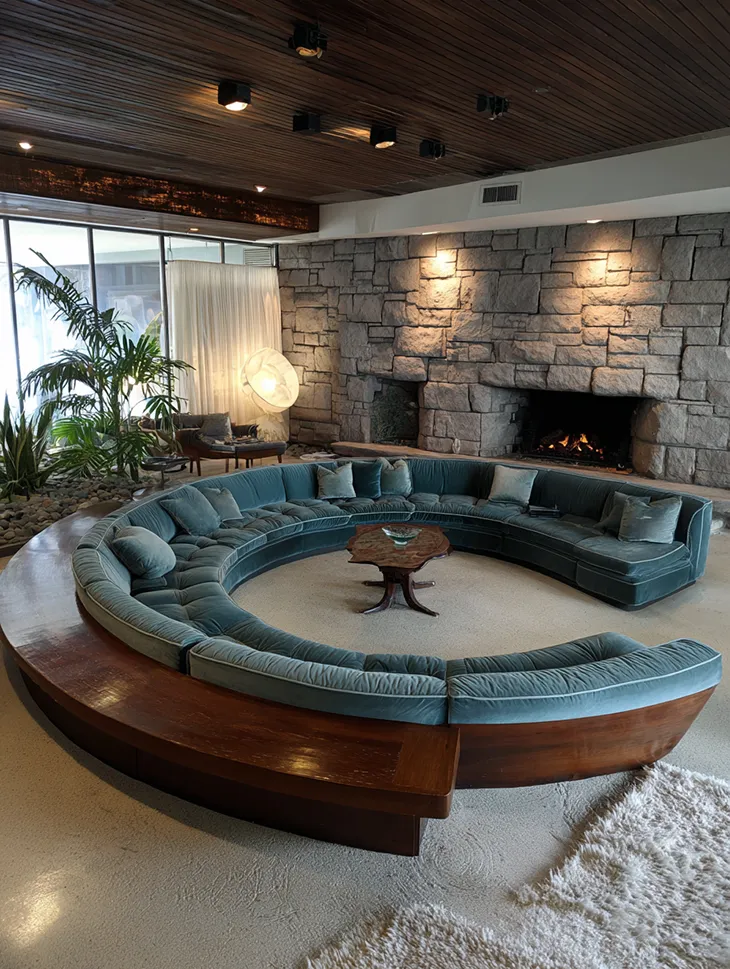
The world of home design continues to evolve in early 2026, as homeowners build on last year’s shift toward an approach that balances sustainability, functionality, and personal expression. The interior trends shaping the year so far reflect a sustained desire to create spaces that feel both luxurious and livable, sophisticated yet comfortable.
Natural Materials Take Center Stage
One of the most prominent directions continuing into 2026 is the embrace of natural materials. Homeowners are moving away from synthetic finishes and instead incorporating raw wood, stone, and organic textiles throughout their living spaces. Think chunky wooden coffee tables with live edges, limestone countertops, and jute rugs that add warmth and texture to any room. This shift isn’t just about aesthetics. There’s a growing awareness of indoor air quality and environmental impact, making natural materials an obvious choice for health-conscious families. To complement these sustainable materials, many are also integrating cutting-edge technology like a Molekule air purifier, which uses PECO technology to actively destroy indoor pollutants, ensuring the home’s atmosphere is as pure as its aesthetic.
Warm Minimalism Replaces Stark White
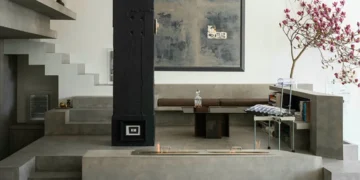
The cold, all-white minimalist aesthetic that dominated the past decade is finally giving way to warmer, more inviting spaces. Designers are calling this evolution “warm minimalism,” which maintains the clean lines and uncluttered approach of traditional minimalism while incorporating richer color palettes. Creamy beiges, soft terracottas, warm grays, and earthy browns are replacing stark white walls. The result is spaces that feel calm and uncluttered without seeming sterile or uninviting.
Curved Furniture Makes Everything Softer
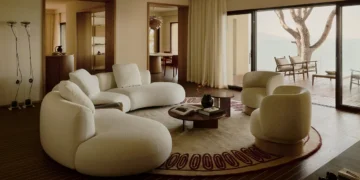
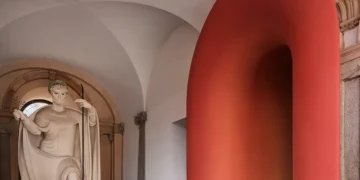
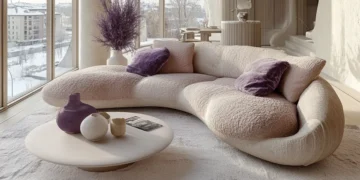
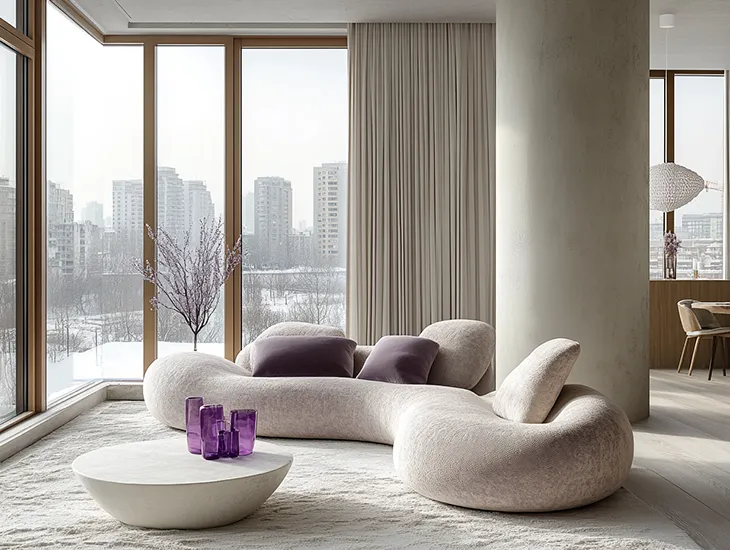
Sharp edges and geometric furniture are making way for softer, more organic shapes. Curved sofas, rounded coffee tables, and arched doorways are appearing in homes everywhere. This trend towards softer silhouettes creates a more relaxed atmosphere and actually makes spaces feel larger and more flowing. The psychological impact shouldn’t be underestimated either. Curved lines are inherently more calming than harsh angles, making your home feel like a true sanctuary from the outside world.
Functional Ceiling Design Gets Attention
For years, ceilings were an afterthought in home design, but 2026 is changing that perspective entirely. Homeowners are now treating the ceiling as the fifth wall, adding architectural interest through exposed beams, decorative molding, and statement lighting fixtures. This includes upgrading to high-quality ceiling fans that serve as both functional cooling systems and design focal points. Modern options with clean lines and premium finishes are considered the best ceiling fans for bridging the gap between practicality and style, especially in primary bedrooms and outdoor living spaces where both air circulation and visual appeal matter.
Maximalist Accents in Minimalist Spaces
While overall design schemes remain relatively pared down, homeowners are having fun with bold accent pieces that showcase personality. A single statement chair in a vibrant color, an oversized piece of abstract art, or a collection of colorful vintage glassware can transform a neutral room from boring to brilliant. This approach allows for personal expression without overwhelming the senses, and it makes it easy to refresh your space by simply swapping out a few key pieces.
Kitchens Become Multi-Functional Hubs
The kitchen continues to evolve beyond its traditional role as simply a place to cook. In 2026, kitchens are being designed as true multi-functional hubs with dedicated zones for everything from working remotely to homework help. Larger islands with built-in seating, charging stations, and even small office nooks are becoming standard features. The aesthetic is shifting too, with more homeowners choosing warmer wood tones for cabinetry instead of the ultra-modern high-gloss finishes that were popular just a few years ago.
Biophilic Design Grows Deeper Roots
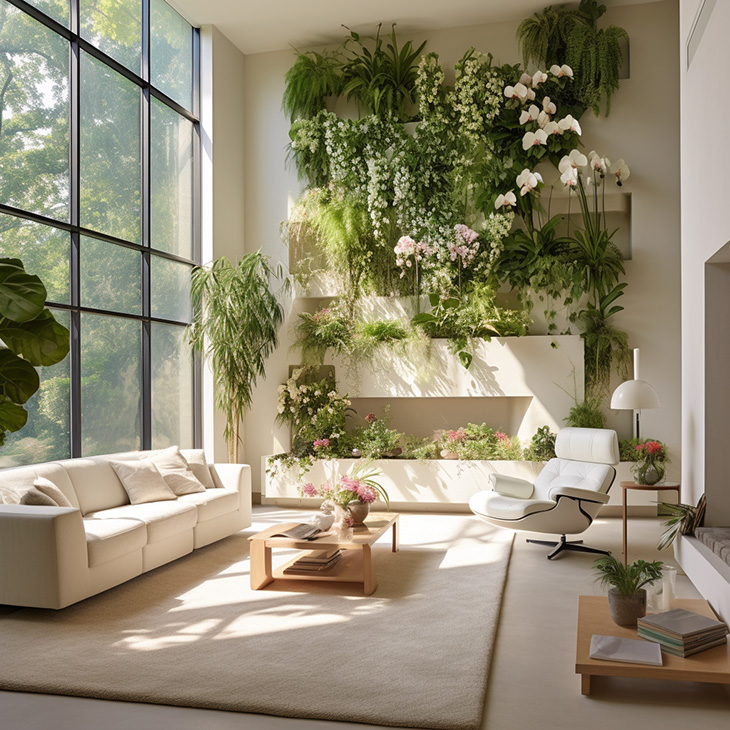
Bringing the outdoors in continues shaping interior decisions. Beyond simply adding a few houseplants, homeowners are incorporating living walls, indoor water features, and maximizing natural light through strategic window placement and glass doors. This biophilic approach has proven benefits for mental health and wellbeing, making it more than just a passing trend. The connection to nature is also being reinforced through nature-inspired color palettes and patterns that mirror organic forms.
Personalized Spaces Over Pinterest Perfect
Perhaps the most significant trend is the move away from cookie-cutter design towards truly personalized spaces. Homeowners are becoming more confident in trusting their own taste rather than simply replicating what they see on social media. This means mixing different styles, displaying meaningful collections, and creating rooms that tell a story about who actually lives there. Stylish, space-saving furniture such as Koala Couch Beds supports this movement, offering designs that shift from relaxed daytime living to practical nighttime use. The result is homes that feel authentic and lived-in rather than staged for a magazine shoot.
Sustainable Choices Become Standard
Sustainability is no longer a niche concern but a standard consideration in home design. From energy-efficient appliances to reclaimed materials and low-VOC paints, homeowners are making choices that reduce their environmental footprint. Vintage and secondhand furniture shopping has become mainstream, with many considering it not just economical but desirable to mix antique pieces with new purchases.
The interior design trends shaping early 2026 ultimately reflect a desire for homes that support wellbeing, express individuality, and respect the environment. These aren’t fleeting fads but thoughtful evolutions in how we think about the spaces where we live our daily lives. For those seeking inspiration for their own living spaces, visiting display homes in Melbourne can be a valuable way to explore contemporary design ideas, materials and layouts before starting a building or renovation project.