


There is a particular kind of fashion intelligence that cannot be taught in ateliers or incubated in accelerator programs. It is the intelligence born of scarcity, of growing up in a place and time where resourcefulness was not a brand value but a survival mechanism. For Natasha Zinko, whose Fall Winter 2026 collection debuted at London Fashion Week, that place was post-Soviet Odessa, and the time was the volatile, electric threshold of Y2K.
The collection’s origin story is disarmingly personal. Before there was a brand, before there was a runway, there were Dad’s jeans, homemade denim sold on Odessa’s bustling street markets by Natasha’s parents. These were the very first Zinko-made garments, products of necessity and ingenuity rather than commercial ambition. That distinction, between making clothes because you must and making them because you can, runs through every piece in FW26 like a structural thread.
Zinko has long operated at the intersection of absurdism and autobiography, and this season she sharpens both edges. The collection is an excavation of formative memory, a designer returning to the emotional and material conditions that shaped her understanding of what makes a garment worth wearing. The answer, it turns out, has never been about pristine construction or luxury fabrication. It is about transformation. Layer this. Cut this part off. Put this on differently. The most special garment, in the Zinko lexicon, is the one that has been reimagined by its wearer, borrowed from a relative’s closet and made new through radical personal styling.
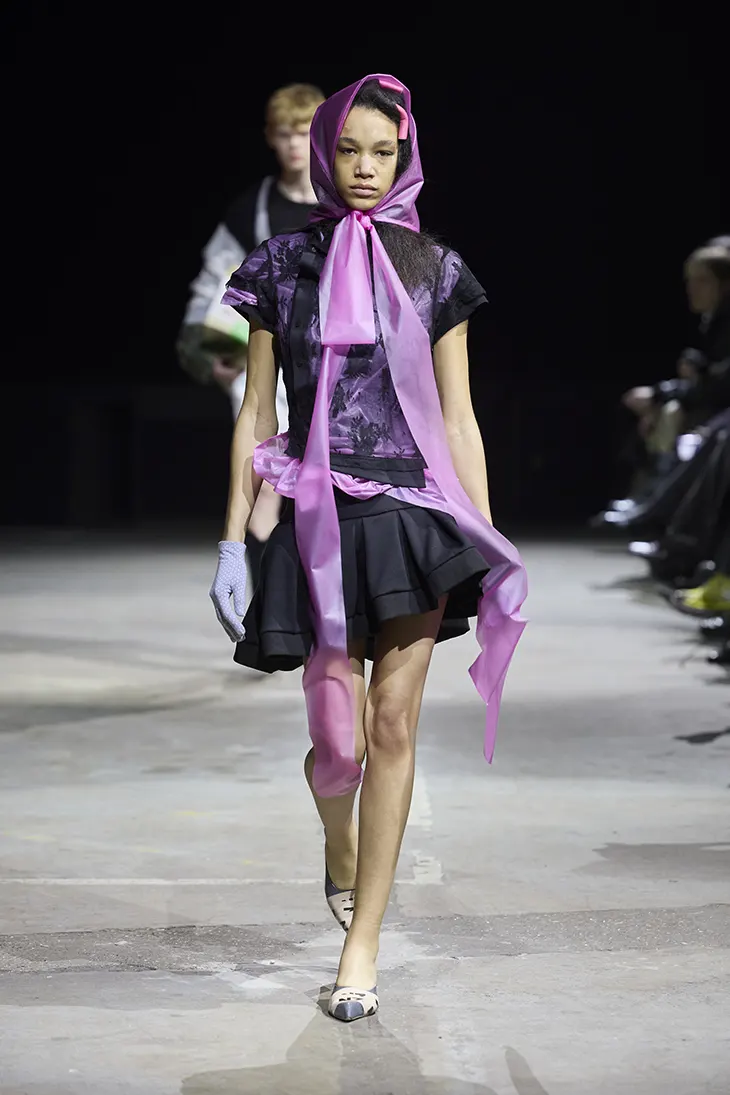
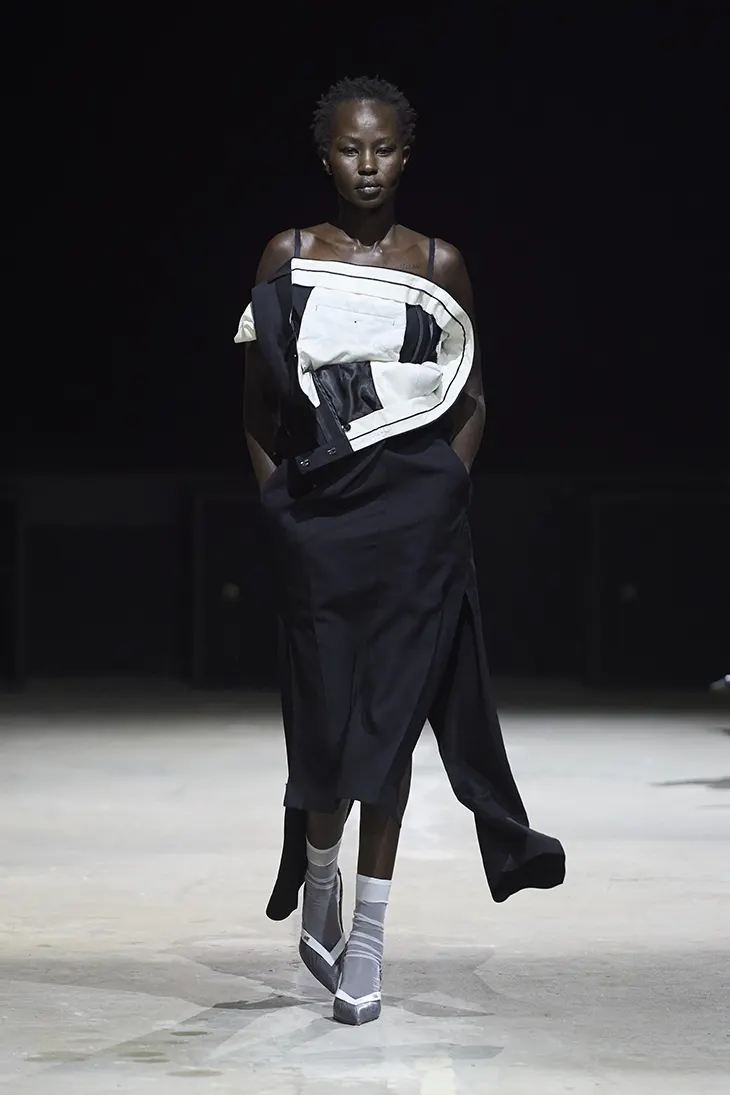
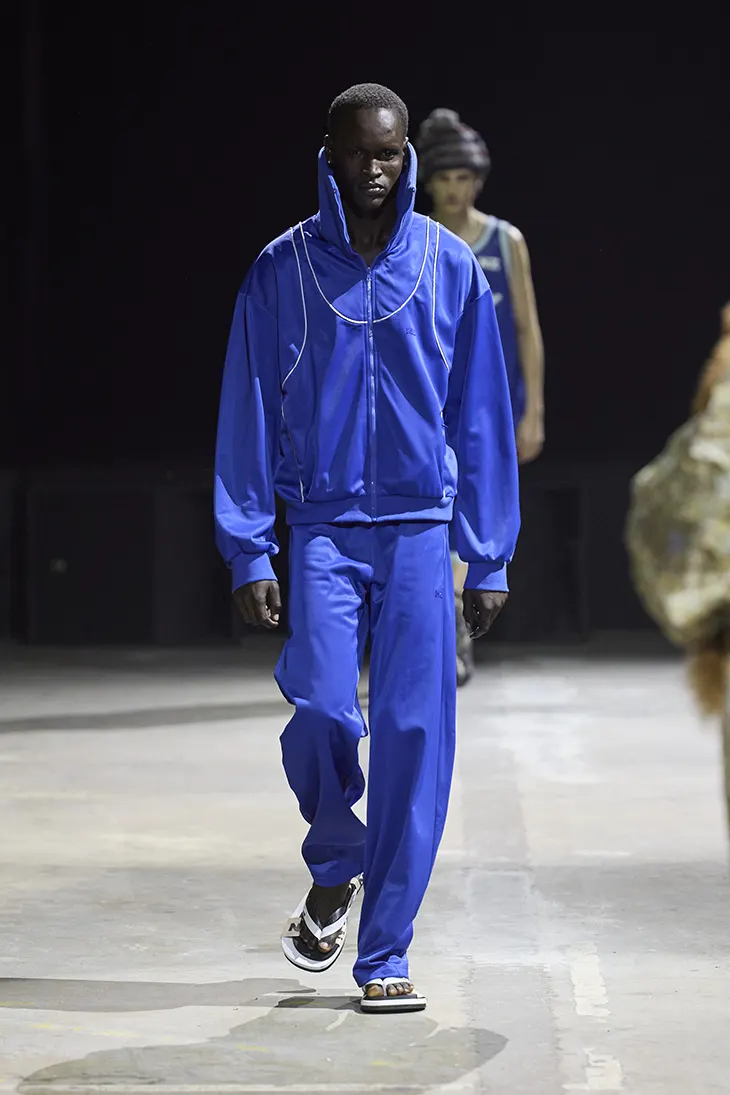
This philosophy finds its most provocative expression in the season’s recurring motif of absurdist pre-layering, pushed further than ever before. Trompe l’oeil activewear jackets are constructed from loose fleece zip-ups cinched into unlikely makeshift corsets by shrunken tank tops layered on top. The effect is simultaneously chaotic and precise, garments that look improvised but are in fact meticulously engineered to simulate improvisation. It is DIY with a couture work ethic.
The collaborative NZ x Havaianas Pancake Flops are a masterclass in Zinko’s particular brand of lateral thinking. Two different pairs of Havaianas, staples of Natasha’s own off-duty wardrobe, are “taped” together with non-sticky leather NZ tape, born from one creative solution to a lack of platform shoes. The result is footwear that is equal parts sculpture and punchline, an object that refuses to take itself seriously while making a dead-serious point about the creative potential of limitation.
That same energy animates the cardboard-brown “parcel” clutch, branded with the fictional retail website NZBUY and its tongue-in-cheek slogan: BUY NZ. The bag is a provocation disguised as an accessory. Making your own bag, Zinko suggests, can mean opening your mind to the possibility that some non-bag object already is one. It is a conceptual gesture that lands with humor and without pretension, which is precisely why it works.
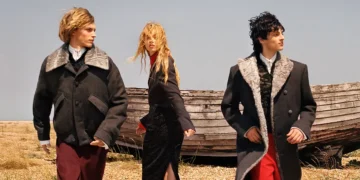
The emotional center of the collection, however, belongs to the fur coat. For Zinko, this is not merely a garment but a vessel of generational memory. She recalls the insulating, unbreakable mink passed down from her grandmother, worn through Ukrainian winters by a fashion-forward teen with radical styling ideas. In her telling, the fur coat becomes a metaphor for how each generation builds upon the progress and the fashion of the last, inheriting not just fabric but possibility.
The concept of the “eternal fur coat” is embodied by a grey faux rabbit fur piece with furry three-dimensional rabbit heads serving as epaulets. The coat is a technological recreation of an ancient garment, synthetic material standing in for animal hide, while the trophy-like rabbit head epaulets recontextualize and interrogate the original. It is interpretation through a modern-day lens, one that is acutely conscious of animal welfare without being preachy about it.
The collaborative NZ x New Rock Game Boots push these ethical questions further still, housing a doe-eyed faux fur rodent on each foot. Is it a pet? A hunter’s catch? Live? Dead? Zinko offers no answers, only the discomfort of the question itself, which is the point.
Natasha Zinko is a family business – That statement, plain and unadorned, may be the most important thing to understand about this collection. The DNA of FW26 is not trend-driven or market-tested. It is inherited, passed down like a grandmother’s mink, reshaped by each pair of hands that touches it. In a season crowded with collections chasing relevance, Zinko’s quiet insistence on personal history as creative fuel feels genuinely radical. The eternal garment is not the one that lasts forever. It is the one that keeps becoming something new.
Discover more of the collection in our gallery: