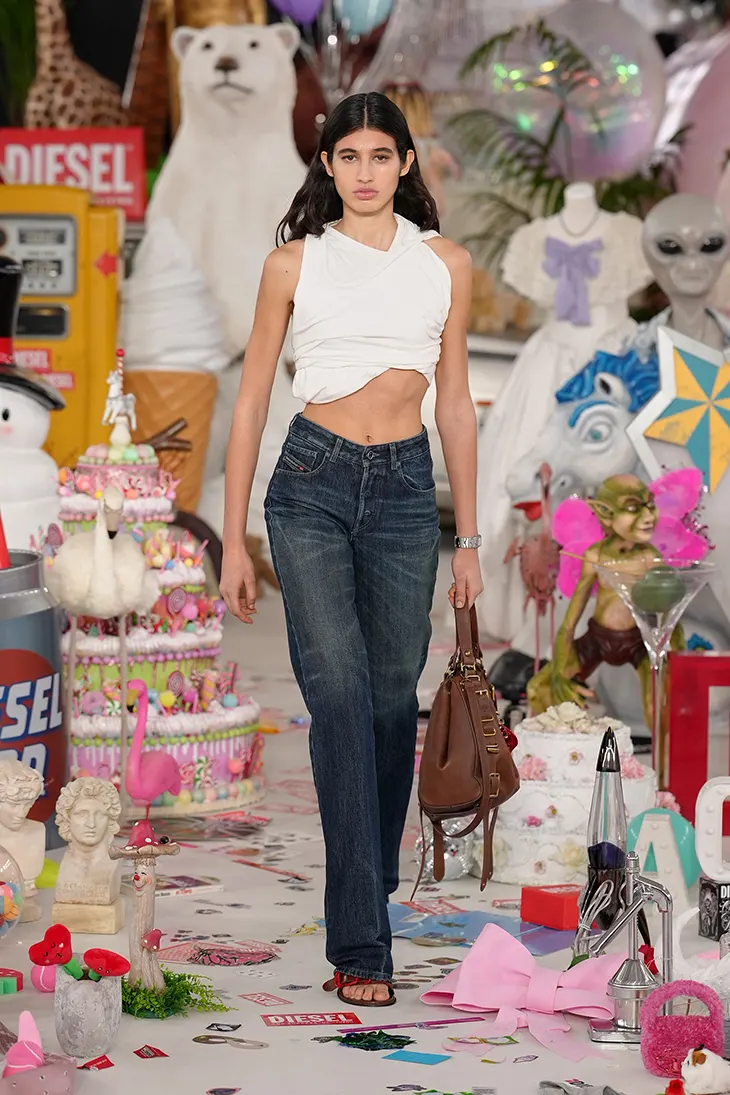



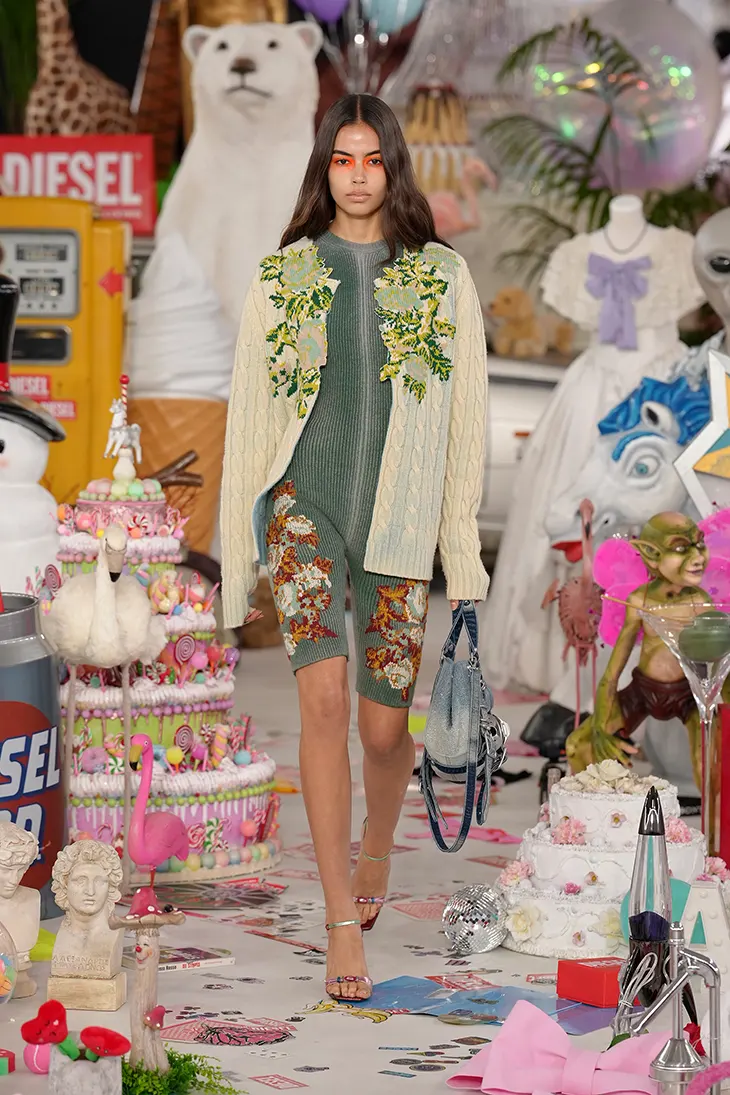
Glenn Martens presented the Diesel Fall Winter 2026 collection in Milan, transforming the show space into a dense installation built from more than 50,000 objects drawn from the brand’s archive, campaigns, and offices. Figurines, inflatables, clothing, memorabilia, and everyday items formed a chaotic environment that reflected the irreverent identity Martens has cultivated at Diesel. Guests encountered polar bears, aliens, Santa Claus figures, balloons, plush toys, branded underwear, and real pizza slices, arranged to create a universe where disparate elements existed side by side.
FALL WINTER 2026
Martens described the collection through the idea of the “walk of shame,” focusing on the disorientation and energy that follow a night without restraint. He approached clothing through distortion, twisting, and manipulation to reflect that unstable moment. Resin-treated knits and denim opened the show, their surfaces stiffened and permanently creased. Trompe-l’oeil constructions mimicked layered garments through optical illusion, while twisted skirts and distorted tops reshaped familiar silhouettes.
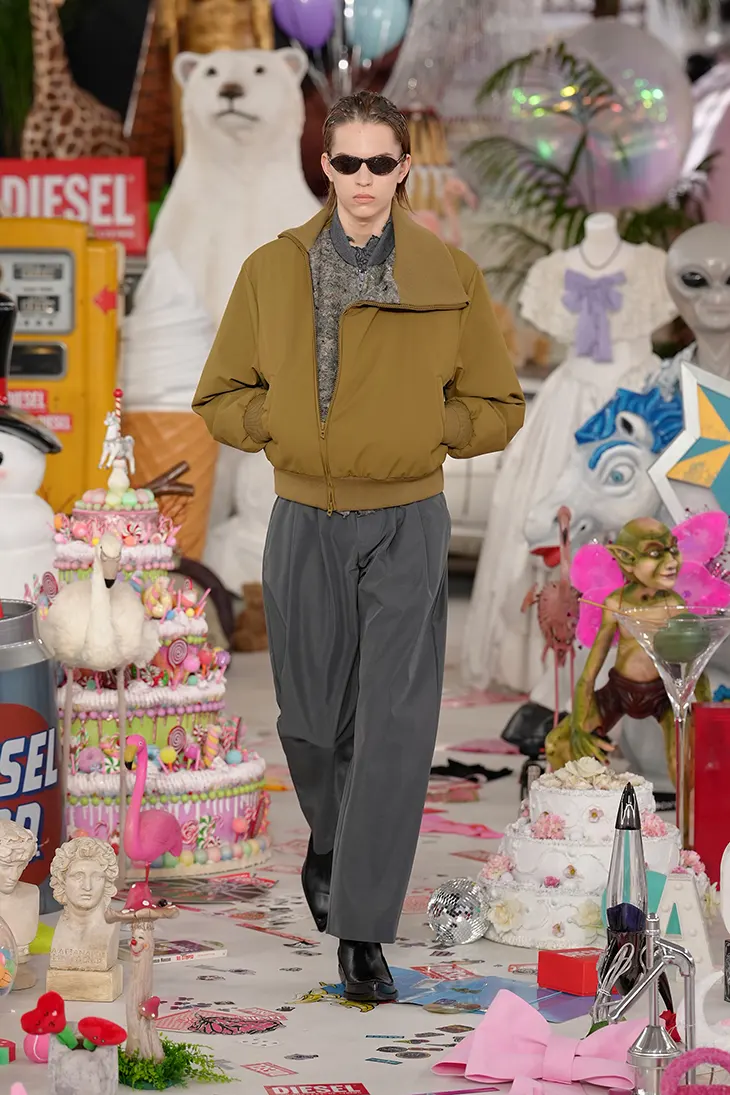
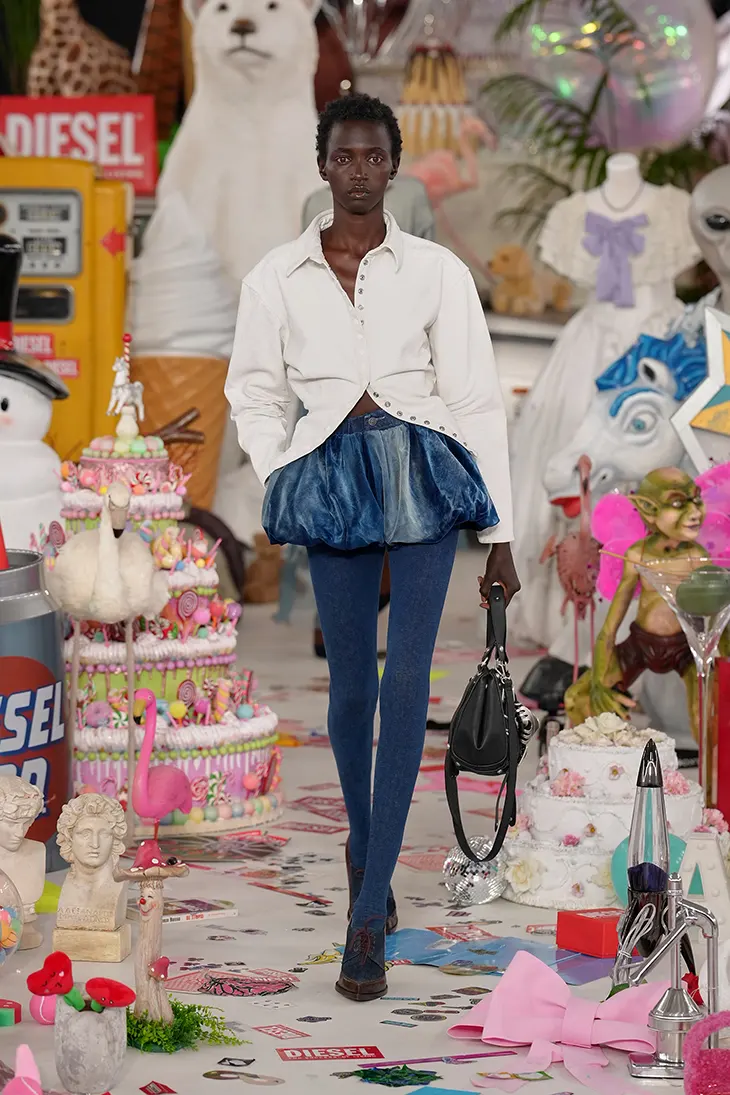
Classic Diesel jeans appeared washed, creased, and sculpted into irregular forms. Jersey basics and knitted sweaters collapsed into compressed shapes that altered the body’s outline. Martens introduced recycled felt fabrics resembling insulation, pressing the material into structured coats and two-piece tailoring. These pieces emphasized construction through layered surfaces and controlled distortion. Plaid skirts wrapped around the waist echoed flannel shirts, and ripped T-shirts and faded graphic prints appeared throughout the collection.
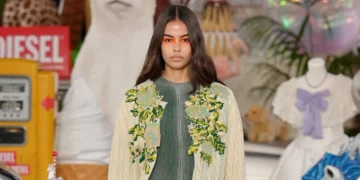
Coats and suits emerged from compressed layers of wool scraps fused into dense surfaces. Foiled garments cracked open across seams and folds, exposing underlying textures. Velvet separates and denim appeared in washed tones that softened their surface while maintaining structural clarity. Intarsia knits with floral cutouts and pleated dresses printed with botanical patterns introduced organic references within the manipulated silhouettes. Floral imagery appeared fractured and rearranged, reinforcing the collection’s focus on disruption.
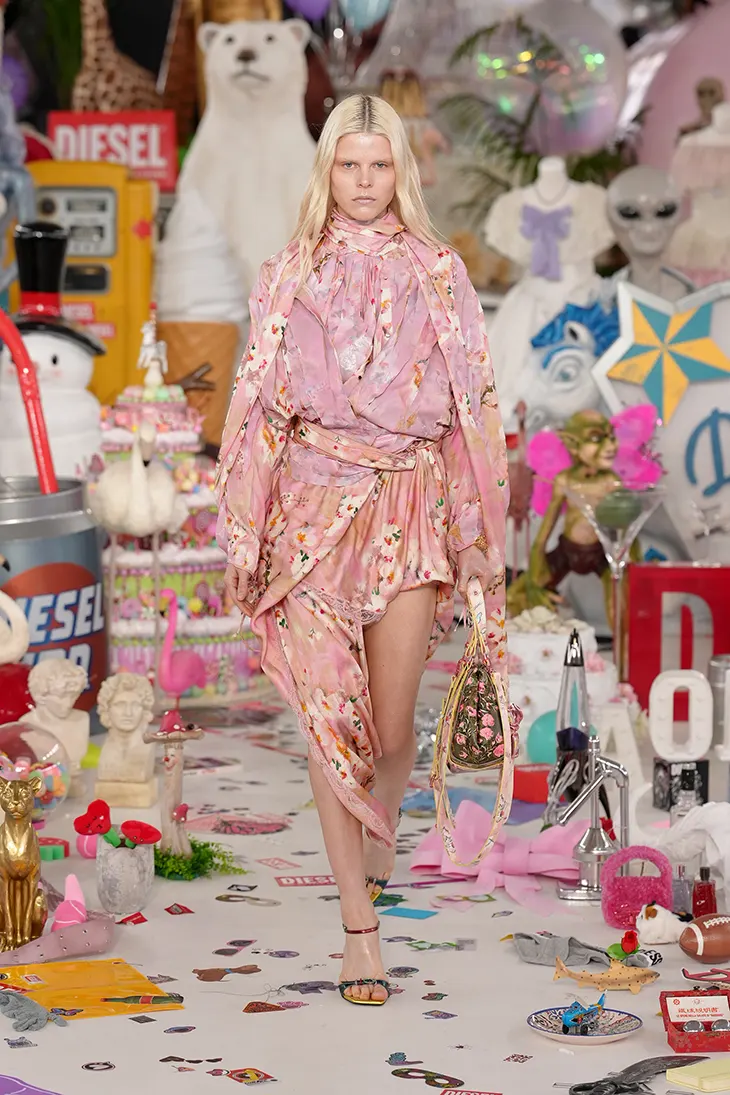
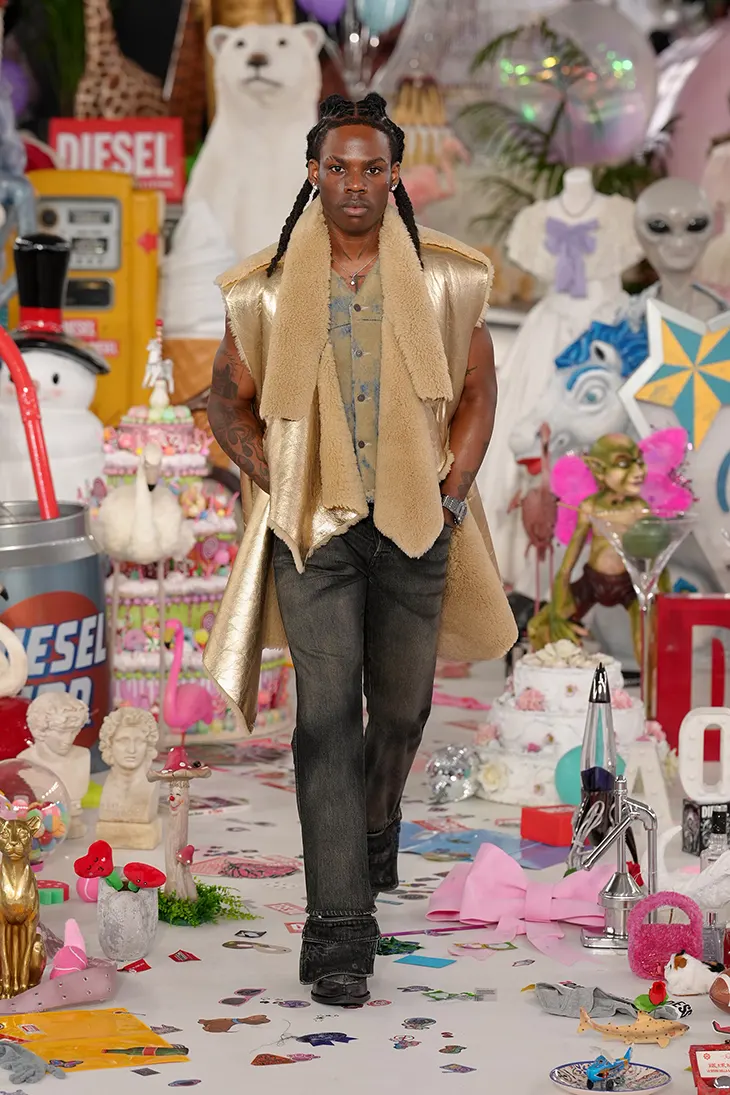
Faux fur introduced movement and color. Gray coats and tops carried bright streaks of orange, red, and blue, creating the impression of surfaces altered by heat and motion. Sheer garments and embellished denim emitted saturated tones that spread along seams and creases. Glitter-covered skin and crystal-covered garments extended this visual intensity. Printed T-shirts and denim carried crystal applications that altered their texture and reflected light.
Accessories and leather garments appeared toward the end of the presentation. Pastel leather jackets and laminated jeans arrived in baby blue, pink, yellow, and orange. These looks reworked familiar Diesel shapes through color and surface treatment. Spliced floral fabrics and pleated constructions reshaped contemporary womenswear silhouettes, combining structured and fluid elements within a single garment. Permanent creases and layered construction remained consistent throughout the closing looks.
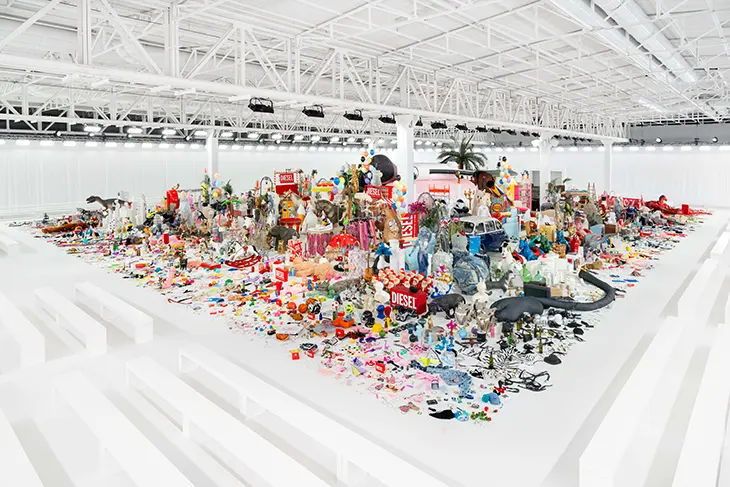
The installation surrounding the runway reflected the collection’s themes. Campaign props, archive objects, and fragments of Diesel’s past formed a physical record of the brand’s visual history. Guests navigated the installation while observing garments that reflected similar ideas of accumulation and transformation.