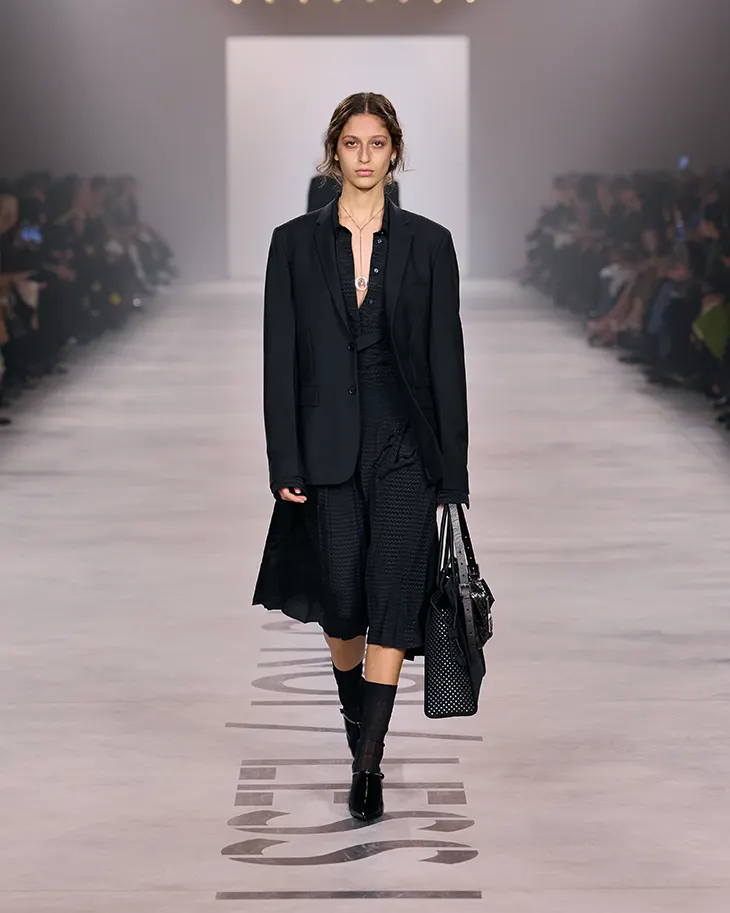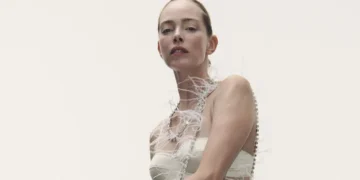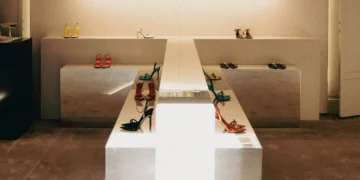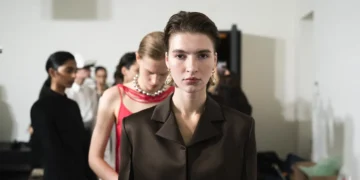



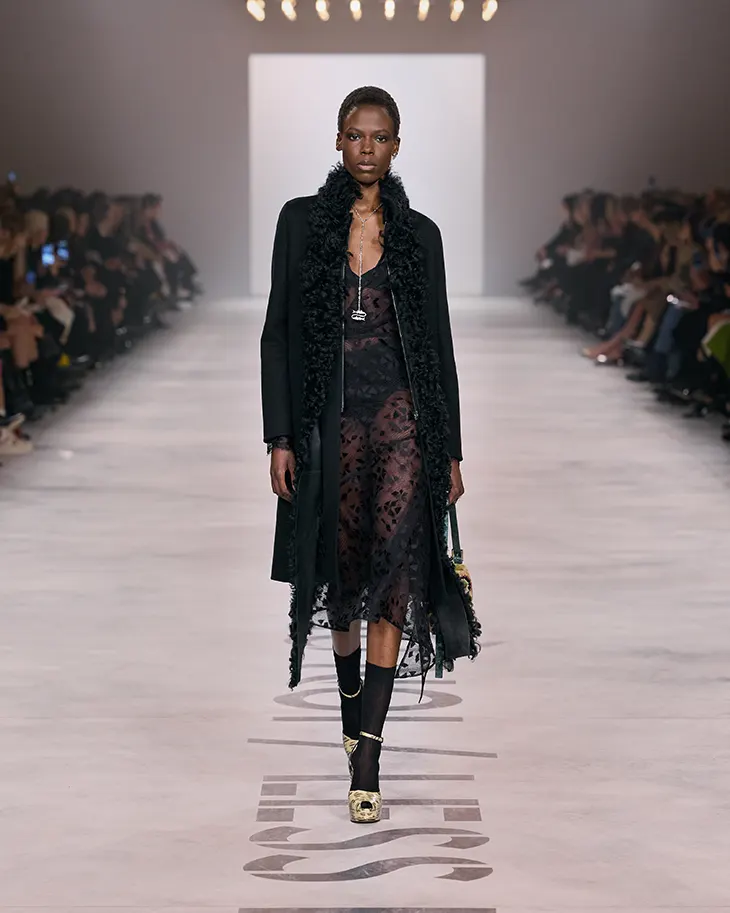
Maria Grazia Chiuri presents her first collection for FENDI for Fall Winter 2026.27 with a clear proposition. “Less I, more us” defines the foundation of her approach and connects directly to the history of the House and the legacy of the five Fendi sisters. The phrase frames fashion as a collective act shaped by shared ideas, exchanges, and relationships. Chiuri grounds the collection in cooperation, mutual understanding, and recognition of complexity within the fashion system.
FALL WINTER 2026
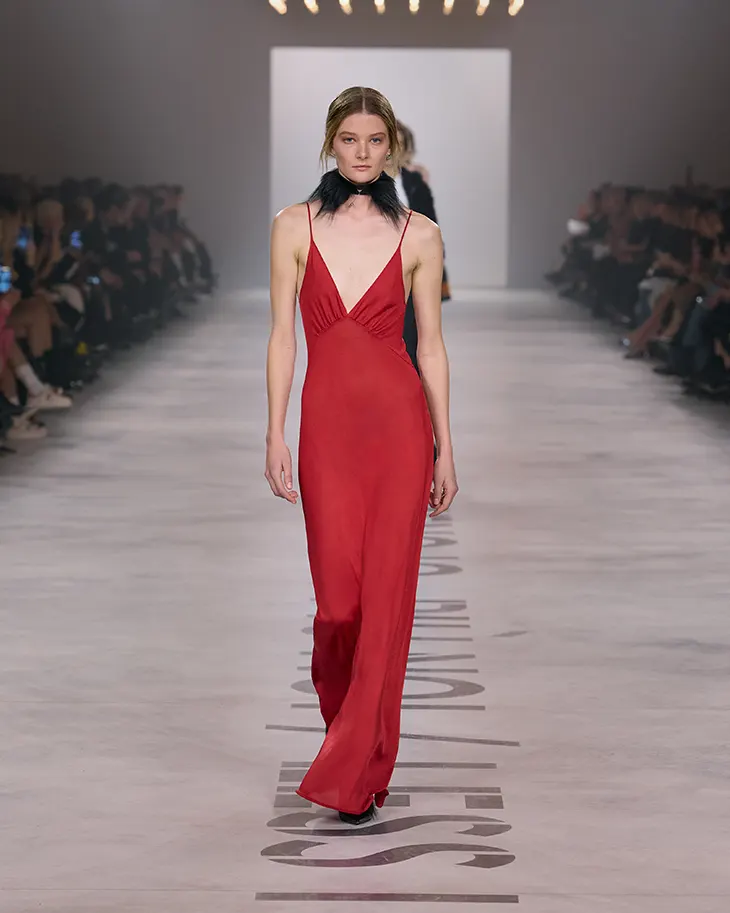
The collection restores attention to the body and its impulses. Chiuri directs the wardrobe toward accommodating physical presence and desire. Clothes respond to movement, sensation, and touch. Garments act as extensions of lived experience and remain connected to emotion and memory. This approach positions clothing within everyday life, where garments accompany people through personal and emotional realities.
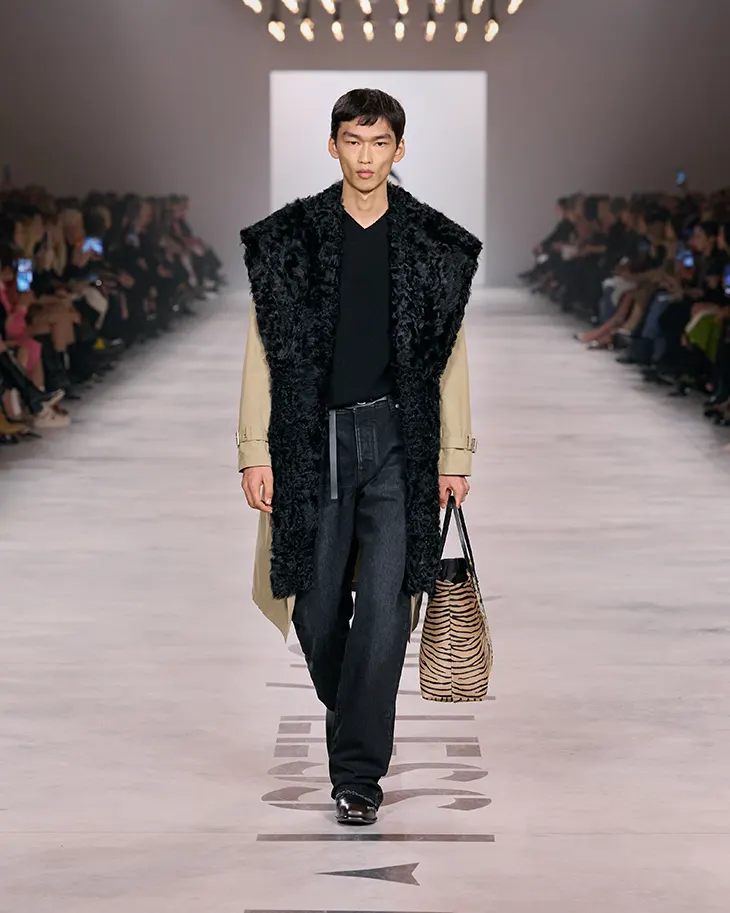
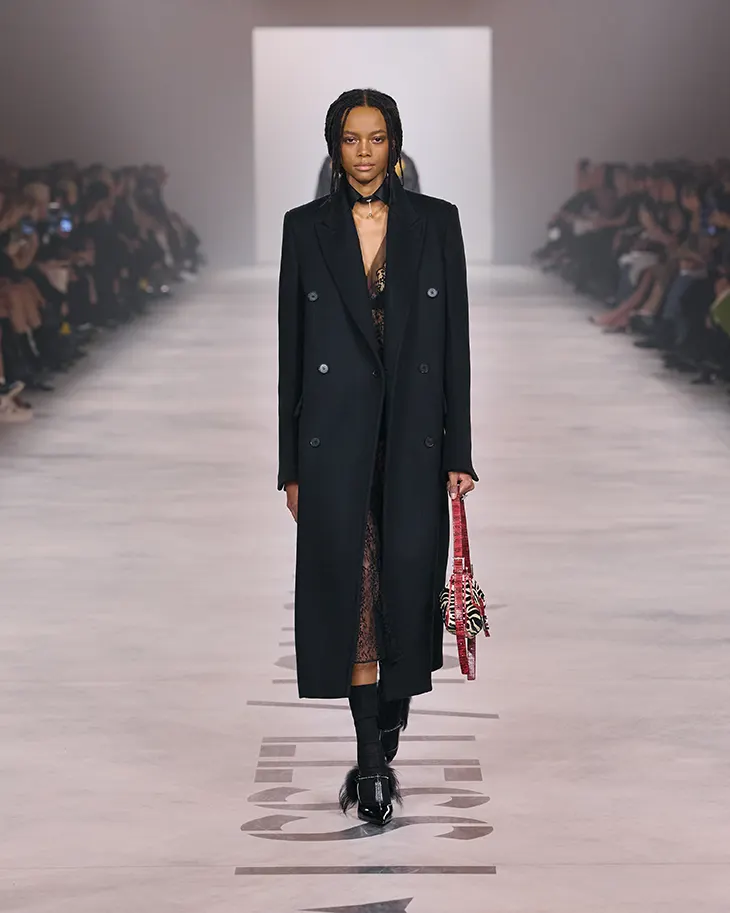
Chiuri treats the collection as a map of personal geography. Each garment represents an encounter shaped by exchanges, cultural references, and lived experience. Fashion becomes a record of movement across time and place. Contributors from different generations inform this vision, including women artists Mirella Bentivoglio and SAGG Napoli. Their participation introduces intellectual and artistic perspectives that expand the meaning of clothing beyond function.
The runway reinforces this collective framework as men and women appear together, removing rigid divisions between male and female wardrobes. Feminine and masculine operate as descriptive qualities. This shared presentation returns clothing to its role within daily life. Dresses, tailoring, and accessories accompany emotion, desire, and personal expression.
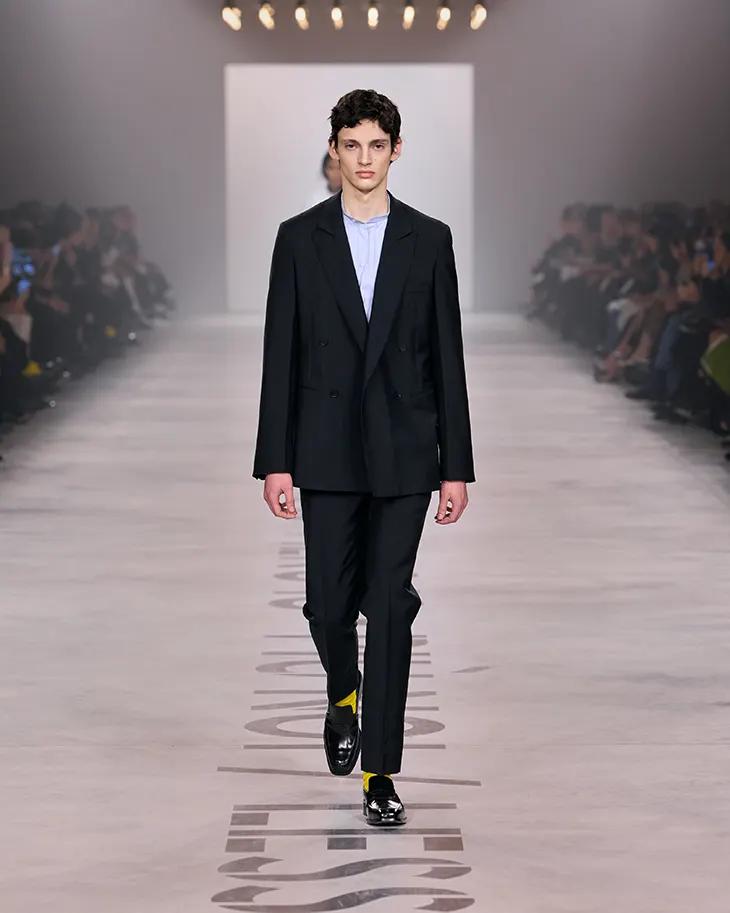
The collaboration with Archivio Mirella Bentivoglio anchors the collection in artistic research centered on language and symbolism. Bentivoglio worked across poetry, visual art, performance, and design, exploring relationships between word, object, and body. Her work examined how language shapes perception and identity through fragmentation, repetition, and reinterpretation. Letters and words functioned as visual structures and material forms, expanding language beyond communication into physical presence. This perspective informs a limited jewelry edition based on pieces Bentivoglio conceived in the early 1970s.
Bentivoglio described her jewelry as “verbal objects,” emphasizing its connection to language and symbolism. Her designs explore dual meanings and semantic shifts, including rings that rearrange letters to reveal different words and interpretations. These pieces invite wearers to engage directly with language through the body. The collaboration also extends into clothing, where phrases and graphic elements derived from Bentivoglio’s work appear on garments and textiles. Scarves, garments, and accessories transform written language into physical form, reinforcing the relationship between word and object.
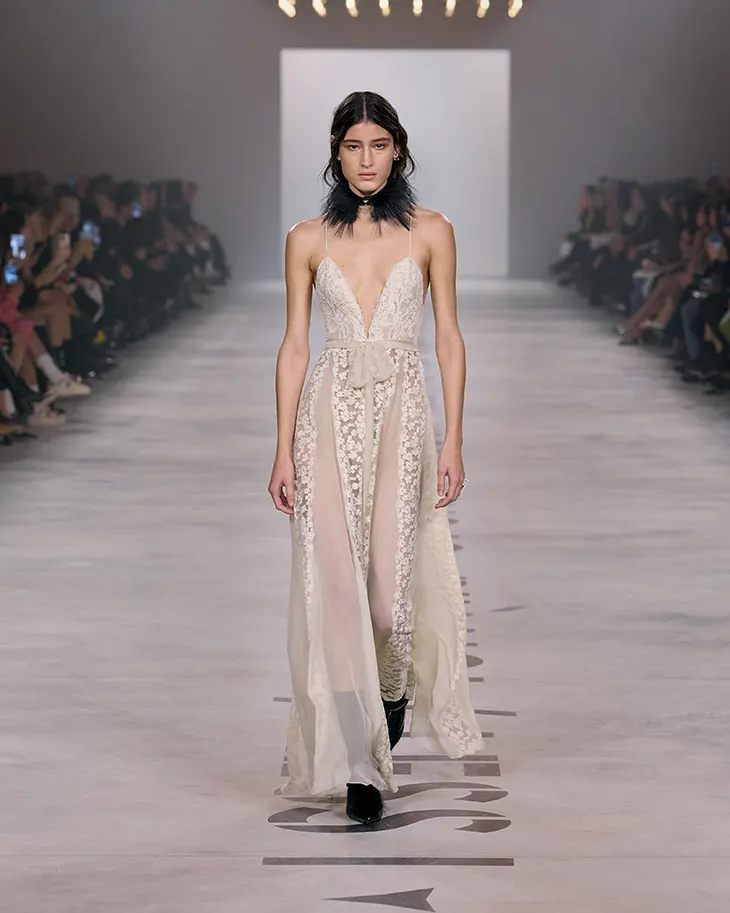
SAGG Napoli contributes a parallel artistic dimension through text-based works presented on football scarves and T-shirts. Her phrases define belonging through balance, personal boundaries, and self-definition. Statements such as “Rooted but not stuck,” “Loyal but not obedient,” and “Connected but not entangled” describe identity as active and self-directed. These lines reflect her experience as a competitive athlete, where teamwork required coordination alongside personal responsibility. Her work connects directly to Chiuri’s theme of collective identity built through individuals who maintain autonomy within a group.
The collection also examines restyling and garment transformation. Remodeling fur garments requires unpicking and reconstructing each component to reshape volume and form. This process reconnects garments to memory, extending their relevance through reinterpretation. Clothing carries emotional and personal meaning shaped through time, inheritance, and lived experience. Restyling restores these layers while adapting garments to current sensibilities.