


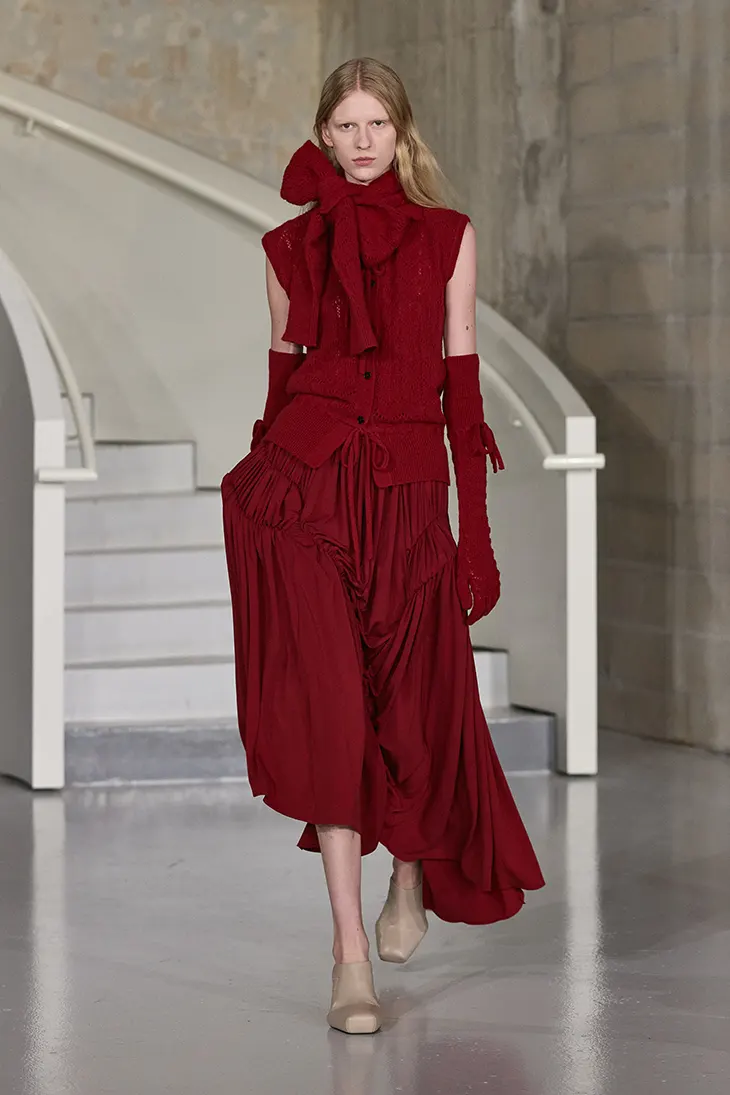
Alainpaul presents the Fall Winter 2026.27 collection, Répertoire, a concept drawn from the language of dance. A repertoire describes an evolving body of work performed repeatedly and interpreted through living bodies. Classical and contemporary choreography gains new meaning each time dancers perform it. The designer approaches clothing through the same idea. Garments return across generations and acquire new meaning as people reinterpret them through wear.
FALL WINTER 2026
The show takes place at the Musée des Arts Décoratifs in Paris. Alainpaul studied garments preserved in the museum’s archives dating from the eighteenth century to the present. These references inform the collection’s approach to proportion and structure. Historical wardrobes provide a framework through which the designer examines the body in tension with clothing. The collection also reflects contemporary habits of dressing shaped by image culture and comfort.
Tailoring anchors the collection and becomes the main site of experimentation. Coats and jackets shift forward and backward through manipulated closures and structural adjustments. Button placements cross deliberately across the body while elastic button systems appear at the back of the waist. These elements create visible tension across the silhouette. The garments appear pulled between opposing directions, resulting in a sharply defined waist that appears in coats, dresses, jackets, and shirts.
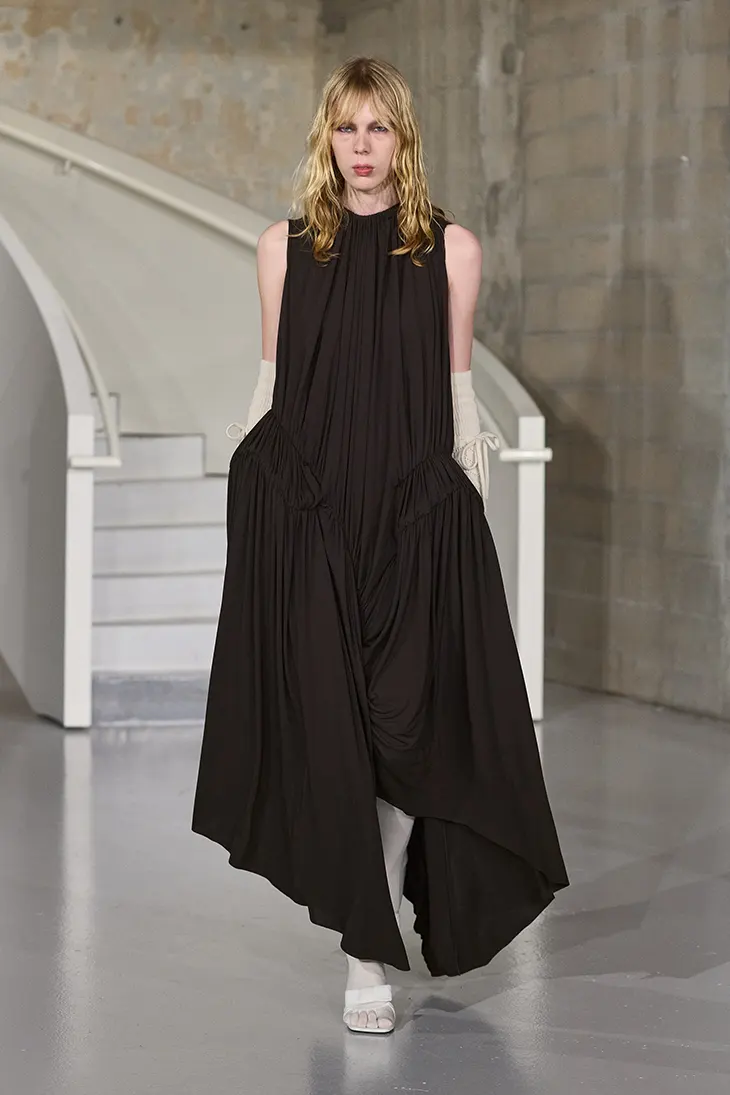
Historical references emerge through reinterpretations of eighteenth-century pannier structures. Dresses and skirts in viscose crêpe introduce architectural volume integrated into fluid silhouettes. Draped constructions allow the fabric to expand laterally from the body. Hidden internal structures support movement and preserve the shape of the garment.
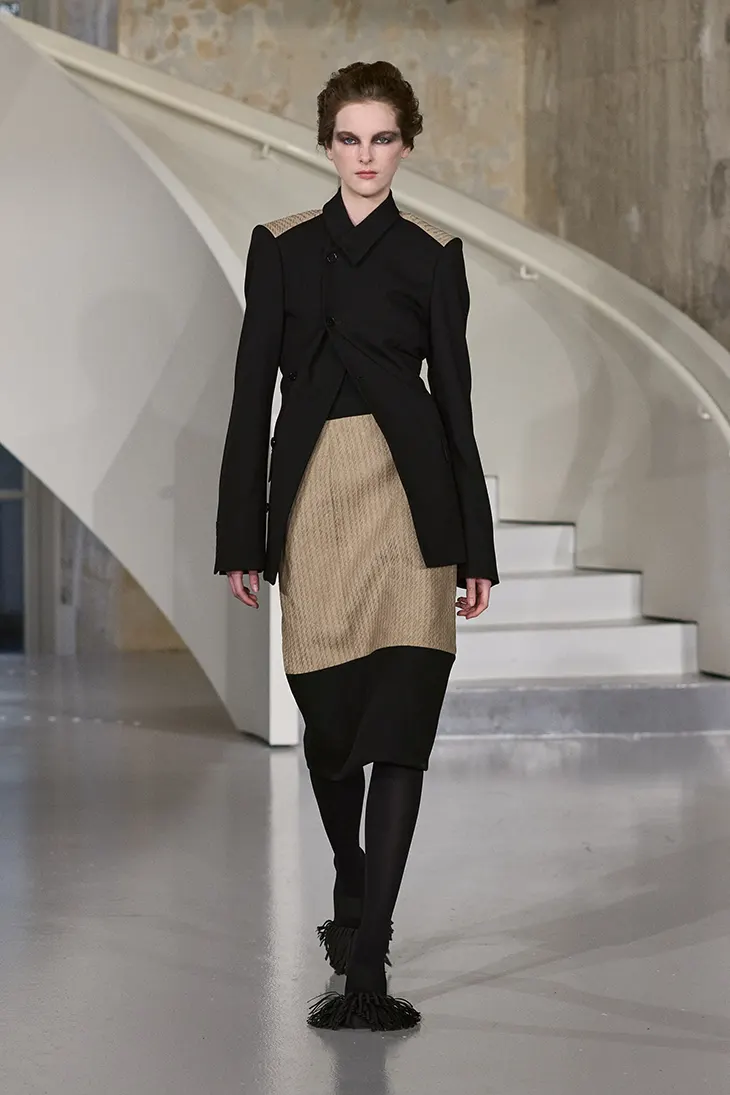
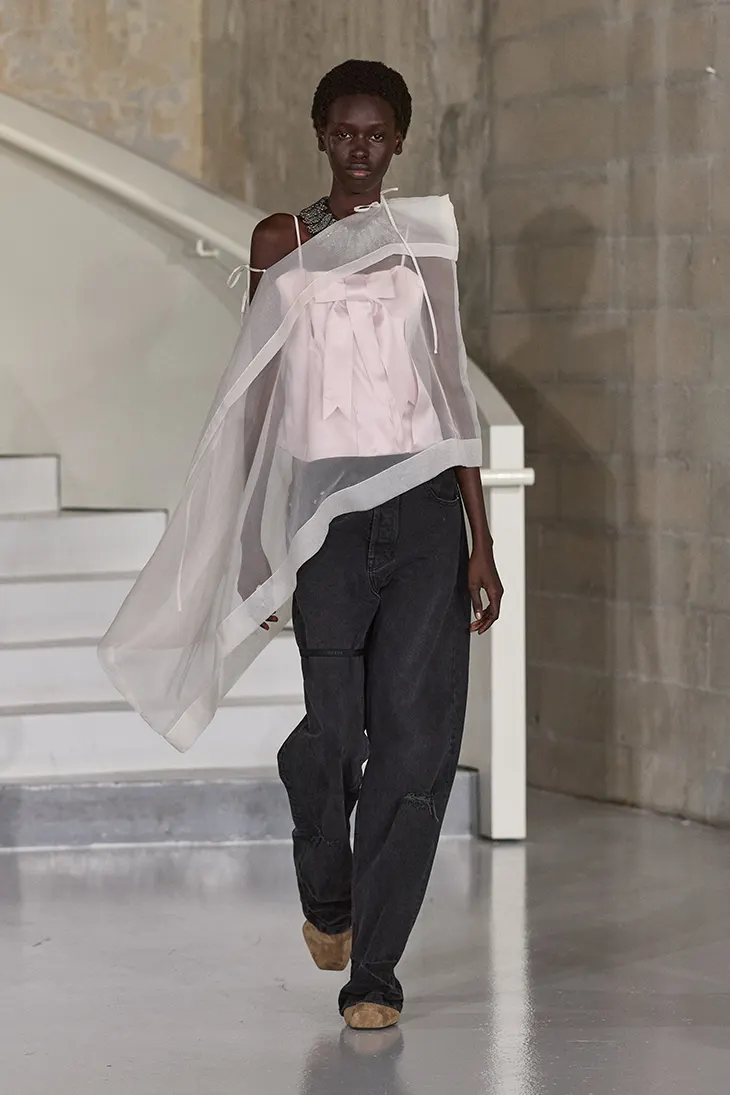
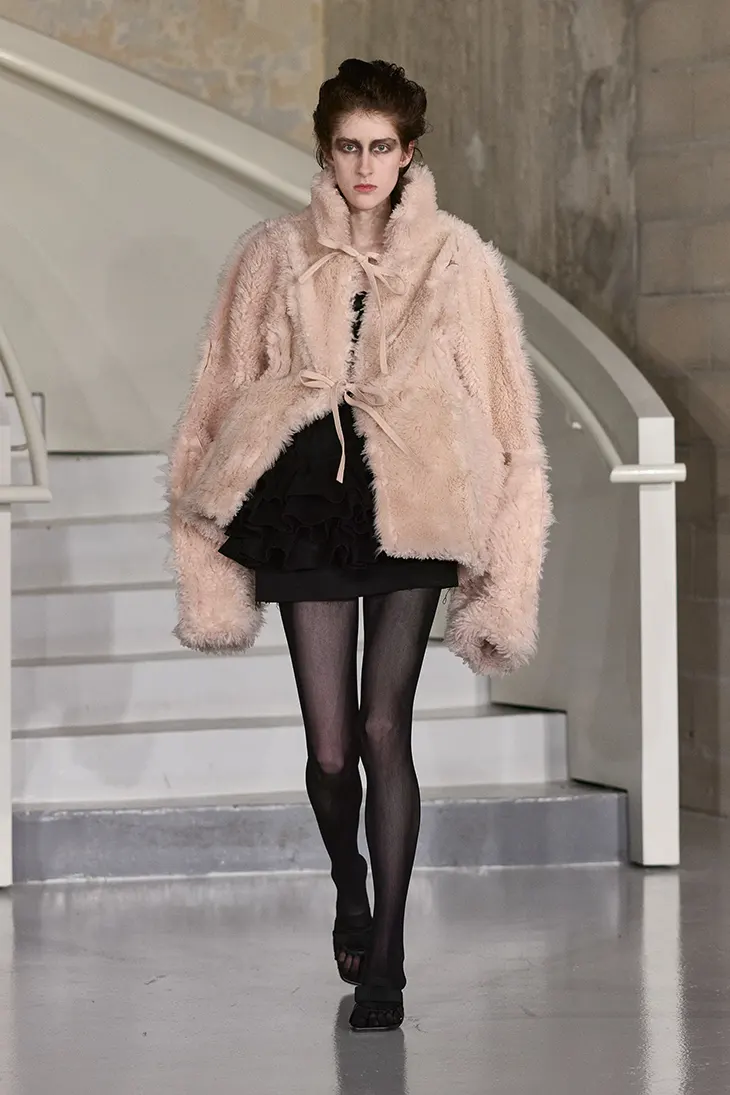
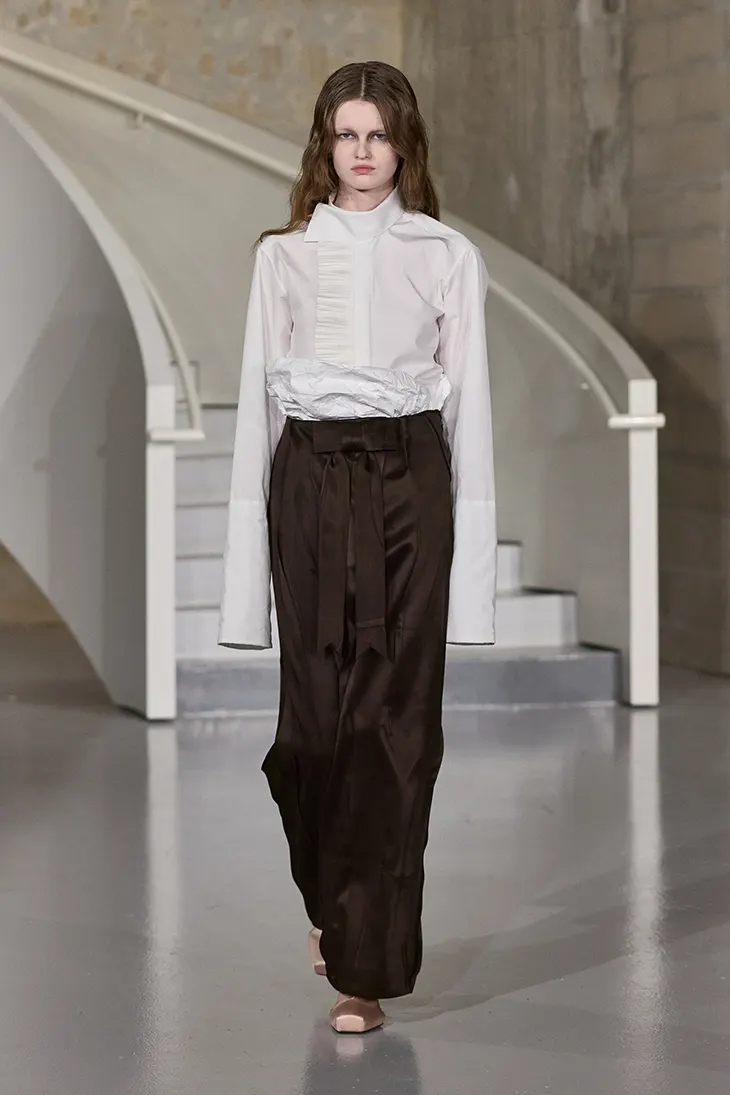
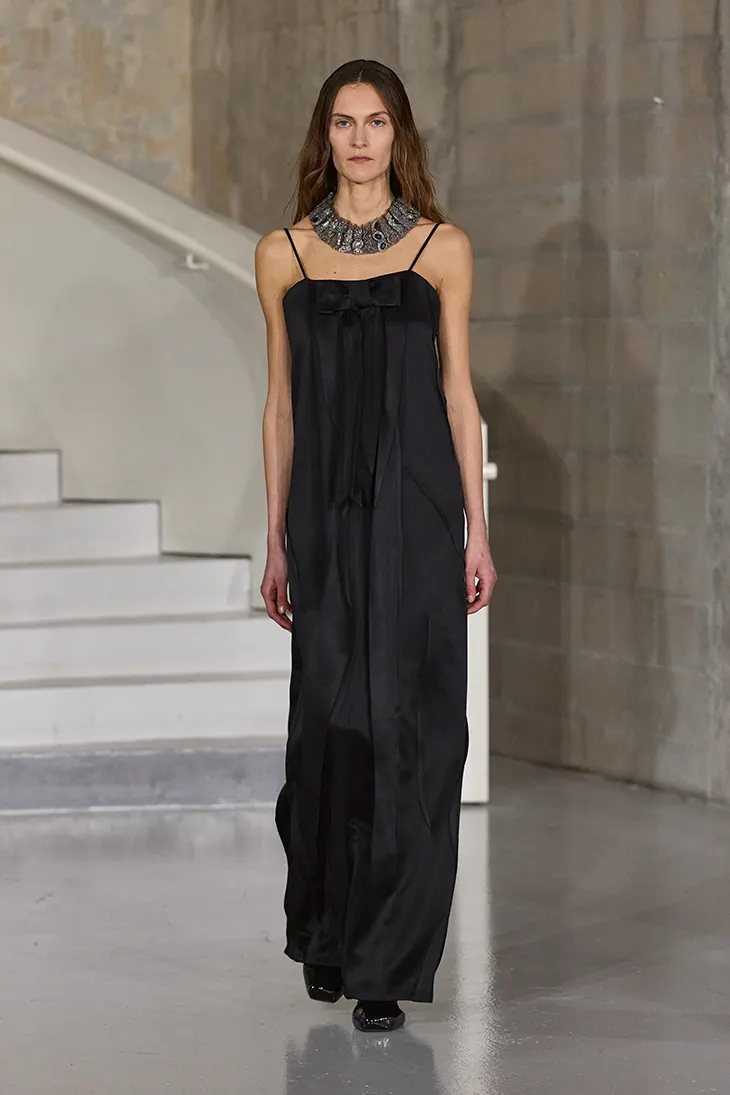
The collection also examines clothing through the passage of time. Satin dresses and skirts function as material memory. The designer compresses and pleats the fabric in irregular arrangements that create visible folds across the surface. These permanent folds evoke signs of wear associated with garments preserved in archives. Relief and texture record the effects of time on fabric. Linear silhouettes appear alongside bows and ribbons that reference feminine dress codes. Structured dresses, skirts, and tops in coating wool introduce exaggerated ruffles that displace familiar decorative gestures through construction. The concept of living conservation appears through garments wrapped in silk organza that recall protective covers used in archival storage. The transparent layer reveals the garment beneath while suggesting preservation between museum protection and contemporary wear.
Throughout the collection Alainpaul explores relationships between formal tailoring and everyday clothing. Sportswear references appear within structured silhouettes. A parka in silk and cupro translates fluid fabric into outerwear. A jacquard cardigan and a wool cashmere trucker sweater introduce the brand’s bolero sleeve code. An M65 jacket in lambskin carries a cinched waist and three-dimensional pockets that recall pannier structures.
Motifs also express the theme of time through falling flower imagery applied in print, embroidery, and three-dimensional forms. The motif appears across garments in varying scale and color while structured silhouettes compress the body. In partnership with Les Teintures de France, the designer translates an eighteenth-century tapestry motif through relief printing and digital production. A Stratasys machine produces three-dimensional prints applied to denim jackets and trousers in varying volumes. The process creates raised surfaces that recall textile ornament. A picot technique shapes the motif across garments including a dress and top printed with fragmented floral compositions inspired by eighteenth-century embroidery. The collaboration also introduces a shearling jacket assembled through tonal patchwork combining smooth and curly textures with visible seams that expose construction.
Another collaboration with Cécile Feilchenfeldt examines historical understructure. The project reinterprets Le Corps à Baleine, the early form of the corset, through engineered knitwear. Technical boning integrated into the knit allows movement while preserving shape. The collaboration also expands into jewelry inspired by trompe-l’œil stage ornaments from the Opéra Garnier. Dance costume jewelry designed for theatrical visibility informs the pieces. Technical knit structures incorporate metallic elements that appear enclosed within the textile surface.