


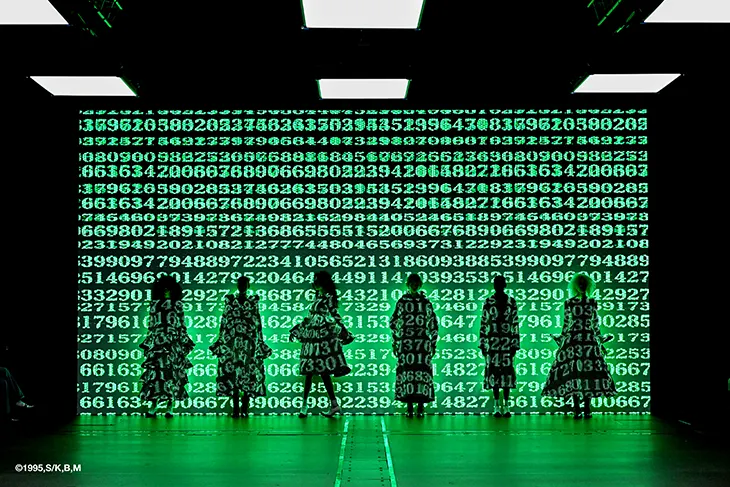
Anrealage presents the Fall Winter 2026.27 collection Ghost, a study of presence and disappearance. The concept begins with a simple question. What does it mean to exist? Something that exists can be seen. Something that does not exist cannot be seen. A ghost occupies the uncertain space between these conditions. It exists, yet it resists visibility.
FALL WINTER 2026
Designer Kunihiko Morinaga builds the collection around this tension. The project draws inspiration from Mamoru Oshii’s 1995 film Ghost in the Shell, a cyberpunk story centered on the cyborg Major Motoko Kusanagi. Through thermal optical camouflage, the character refracts and reflects light until her body dissolves into the surrounding environment. She does not conceal herself. She gradually disappears.
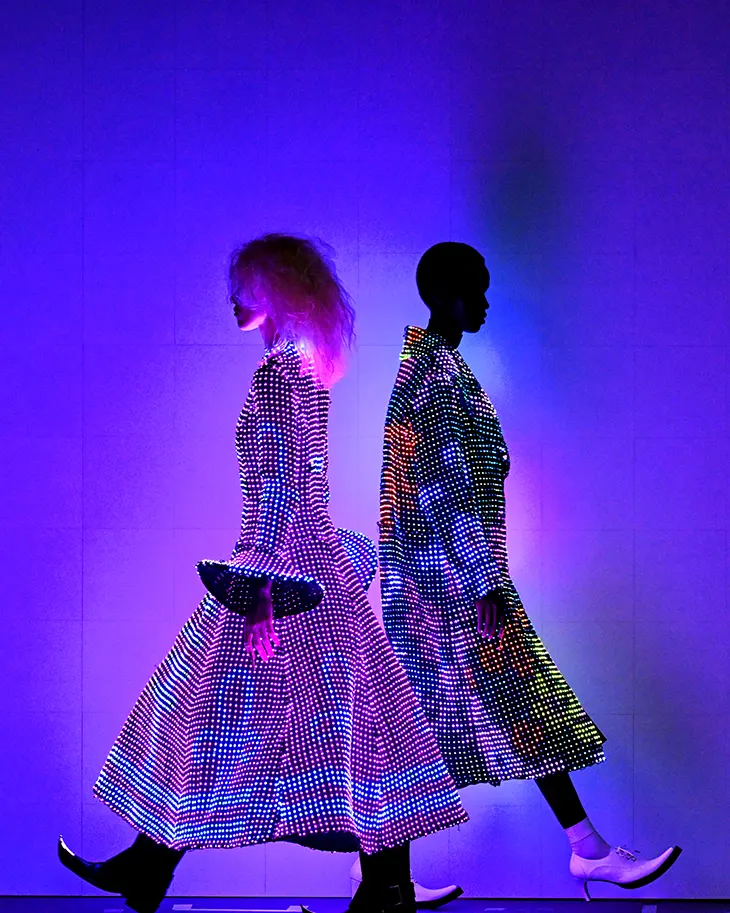
Morinaga translates this concept into clothing that interacts directly with light and visual space. Garments reflect surrounding imagery and shift color and pattern in response to their environment. As the surfaces respond, the boundary between body and city begins to blur. The silhouette weakens. The body dissolves into its surroundings until the distinction between self and environment becomes uncertain.
The show takes place at Ircam in Paris, an institute dedicated to research in sound and science. Within this setting, Morinaga examines the idea of vanishing as an abstract condition shaped by technology and perception. Contemporary life unfolds through screens, data, and constant visual flow.
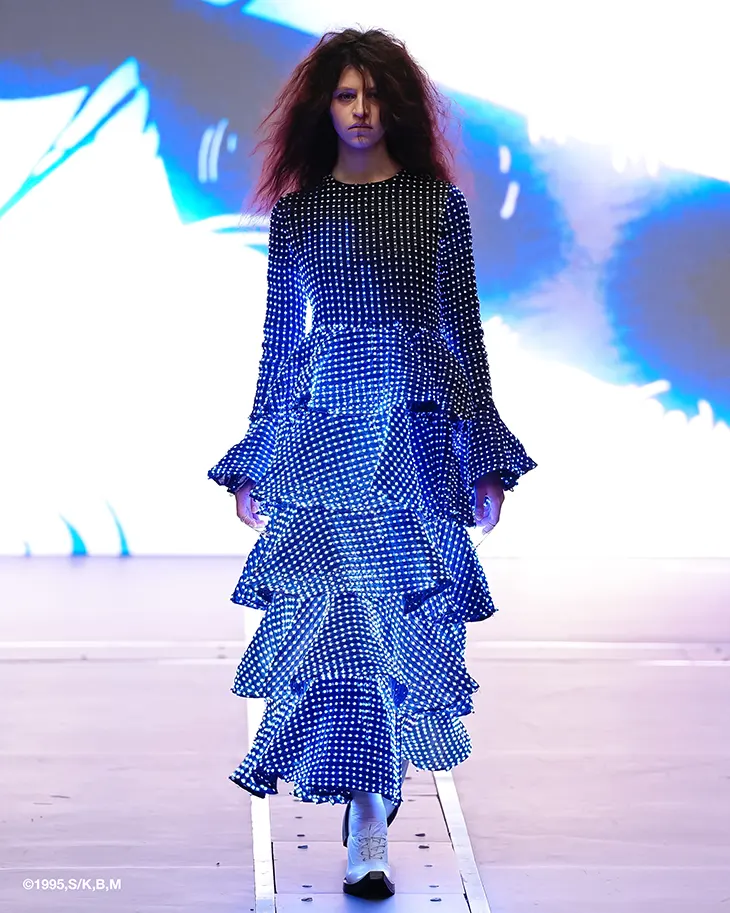
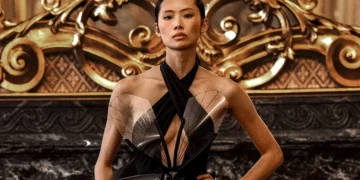
Developed in collaboration with LED TOKYO, several looks feature engineered surfaces capable of capturing and transmitting fragments of the surrounding visual field. These garments operate as dynamic screens. Patterns shift continuously as they synchronize with nearby imagery. When alignment occurs, the outline of the body disappears. Clothing, skin, and digital surface become difficult to separate. This approach challenges the traditional role of clothing. Fashion has long served as a tool for defining identity and outlining the body. In Ghost, clothing performs the opposite function. Dress becomes a mechanism for disappearance.
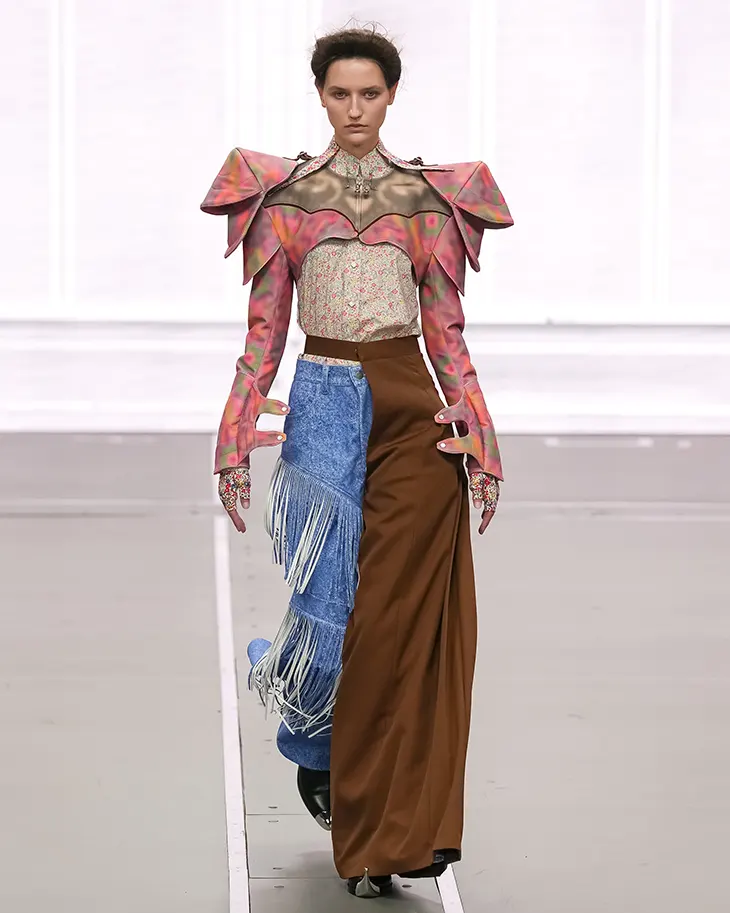
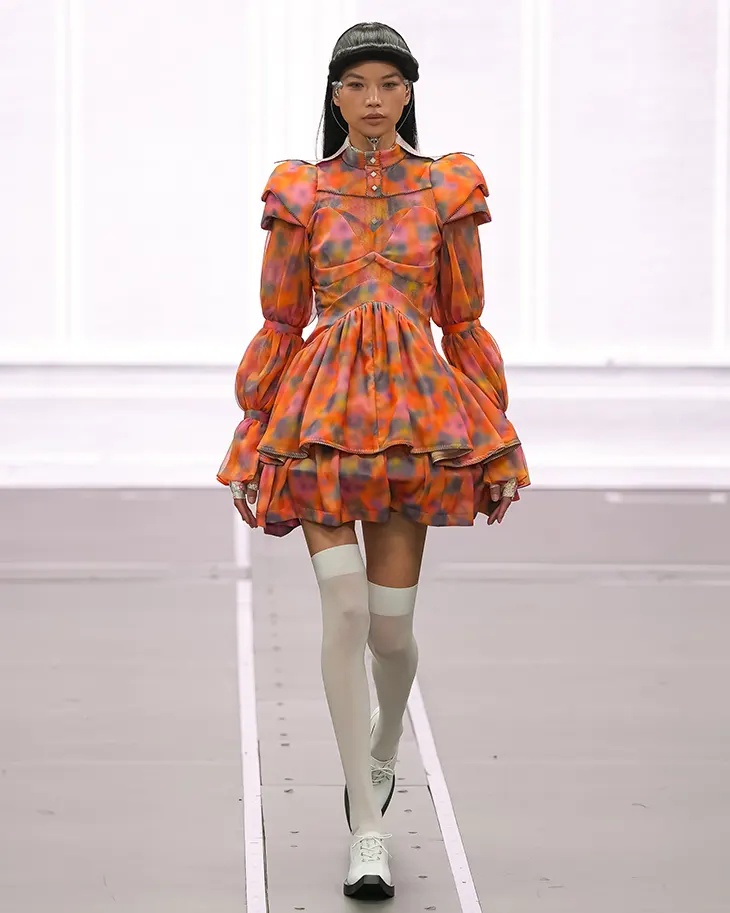
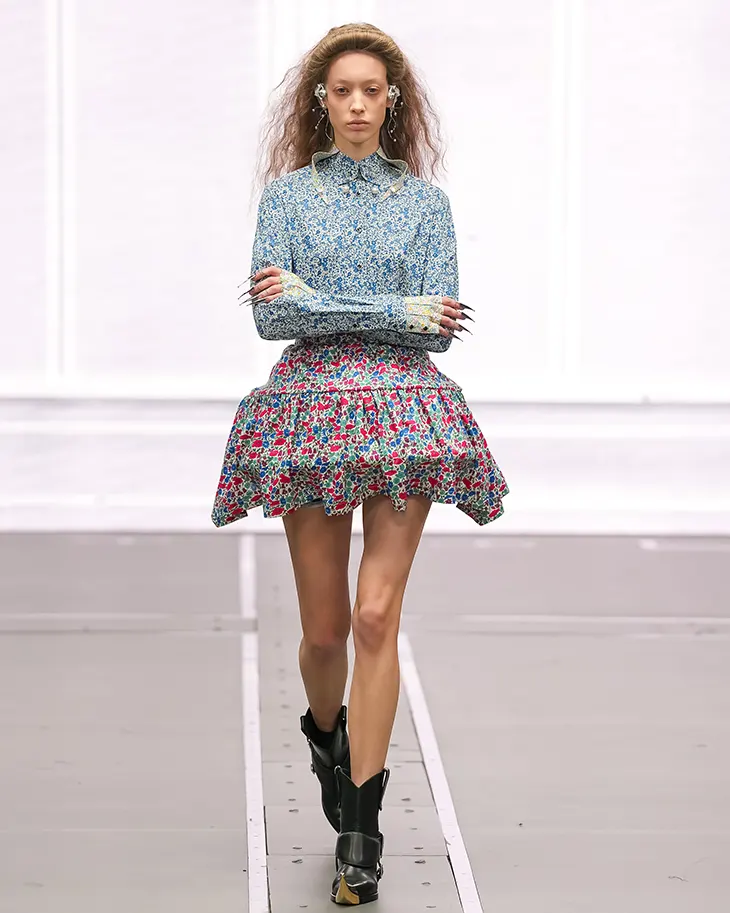
Alongside these technologically driven pieces, Morinaga introduces vivid looks inspired by the cultural energy of the 1970s. Voluminous silhouettes combine frills with rigid structures that resemble insect carapaces or mechanical armor. These hybrid forms evoke a sci-fi prairie heroine or a glam-rock performer dressed in futuristic military ornament. Jewelry extends the surreal atmosphere. Antenna-like structures rise from shoes and fingers, turning the body into a signal receiver.
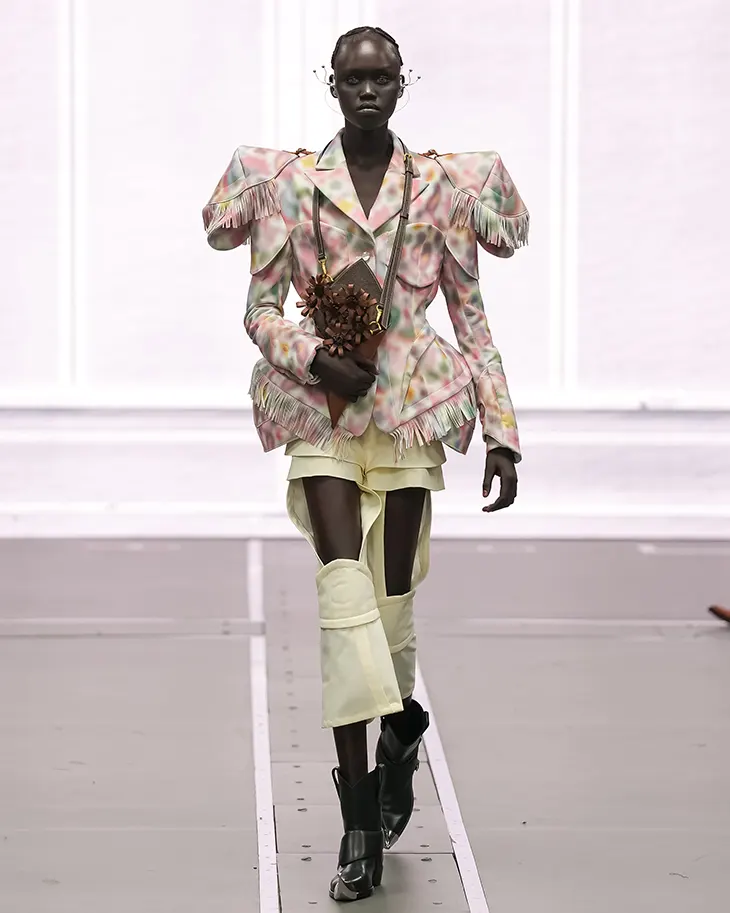
Kaleidoscopic florals appear beside patchworked stills from Ghost in the Shell. The imagery reflects the experience of multiple screens operating simultaneously. AI-generated crowds, numeric code in acid green, and circuit patterns appear within jacquard textiles.
Several prints emerge through KYOCERA’s FOREARTH textile printer. The process produces watercolor-like floral images with a soft blurred effect while avoiding water use. LED faux leather glows from within, while printed faux suede imitates denim.
During the finale, the monumental wall that served as a visual screen performs its own transformation. Image and architecture merge until they become indistinguishable. The structure gradually absorbs the surrounding environment and recedes from view.
As the final model exits, Morinaga leaves a lingering question. When body, memory, and identity remain subject to constant change, what remains visible? Does a ghost still exist within the shell, or does the self disappear entirely?