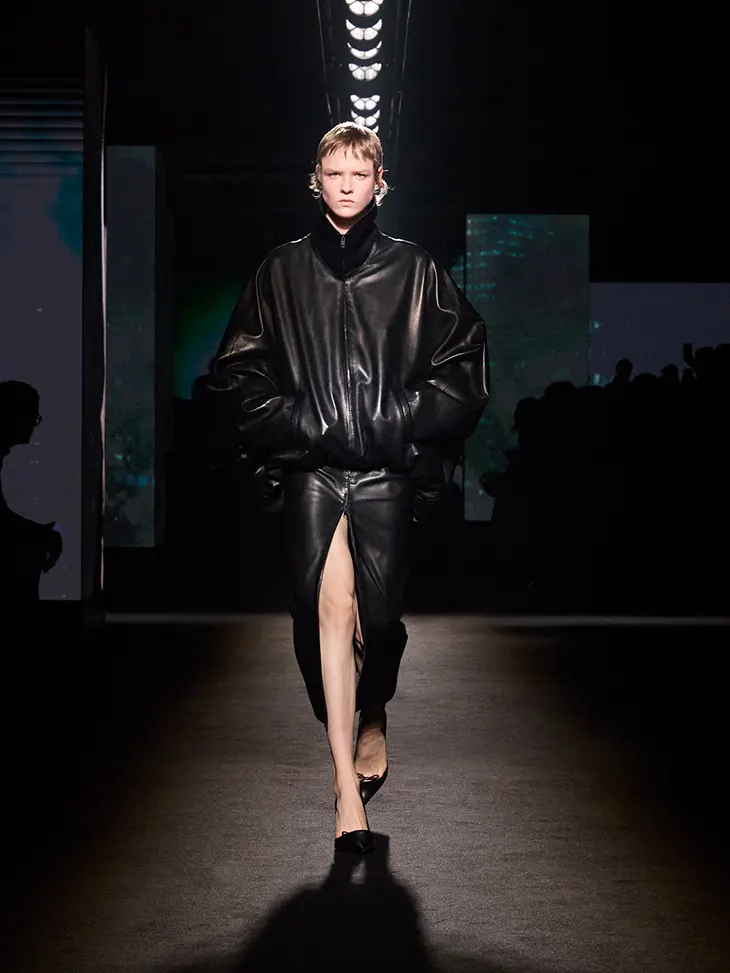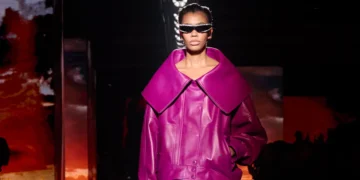



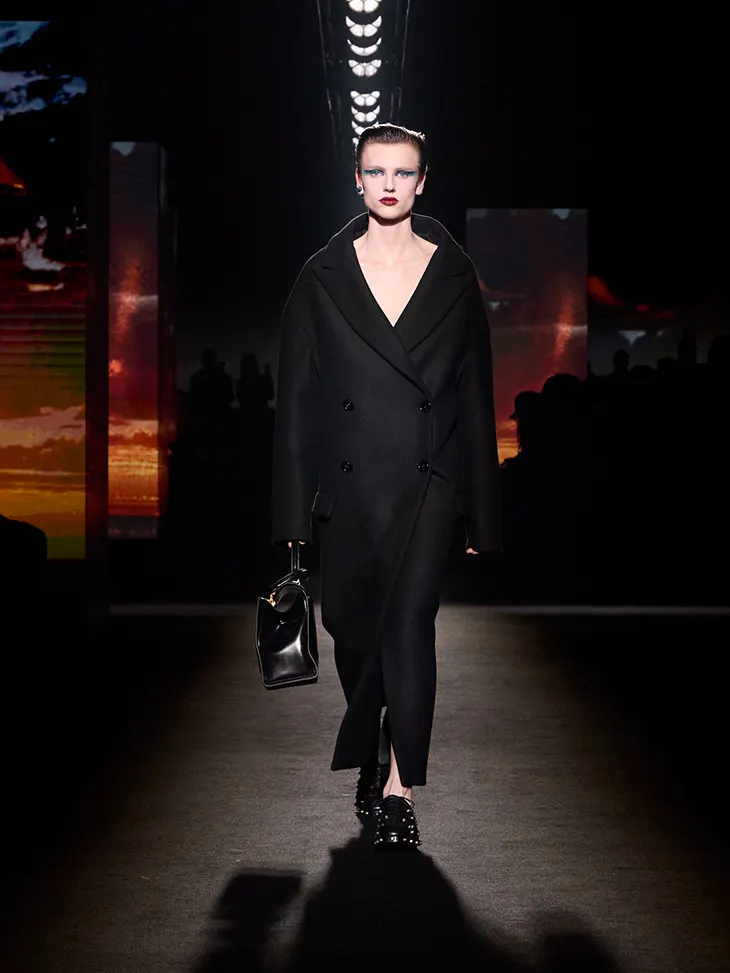
Pierpaolo Piccioli approached Balenciaga Winter 2026 through the visual logic of clair-obscur, the High Renaissance technique that defines form through the tension between darkness and light. The collection treats this contrast as both visual method and human metaphor. Piccioli explores the idea that shadow shapes light just as much as illumination reveals form. Through this lens, garments function as portraits of people, where fabric records gesture, movement, and presence in a fleeting moment.
WINTER 2026 COLLECTIONS
The concept surfaces immediately in the treatment of surfaces and embellishment. Dresses carry embroideries that reproduce frozen light effects, as if reflections had been caught and held in thread. The Midnight City bag receives similar treatment, its decoration echoing the idea of light emerging from darkness. Footwear translates the concept through gradient color transitions, most clearly visible on the D’Orsay sneakers where ombré shading suggests an imagined beam of illumination passing over the shoe.
Piccioli continues to explore the relationship between cloth and the human form, an approach that recalls the methodology established by Cristóbal Balenciaga. Garments rely on the body as an internal structure. Collars, hoods, and décolletages frame the face like painted portraits, while cuts reveal glimpses of skin. Several silhouettes maintain a deliberate sense of distance from the body. Shoes appear slightly lifted from the foot, creating a suspended effect that introduces air and light into the composition.
Accessories expand this investigation of form and movement. The new George Bag introduces a Balenciaga emblem whose shape emerges through the negative space inside it. The HG Avenue bag reflects the passage of time through its sculptural surface, as if the object had recorded the natural shifts created by wear and handling. Piccioli treats these elements as part of the same visual language as the garments, where material, volume, and reflection contribute to the reading of light.
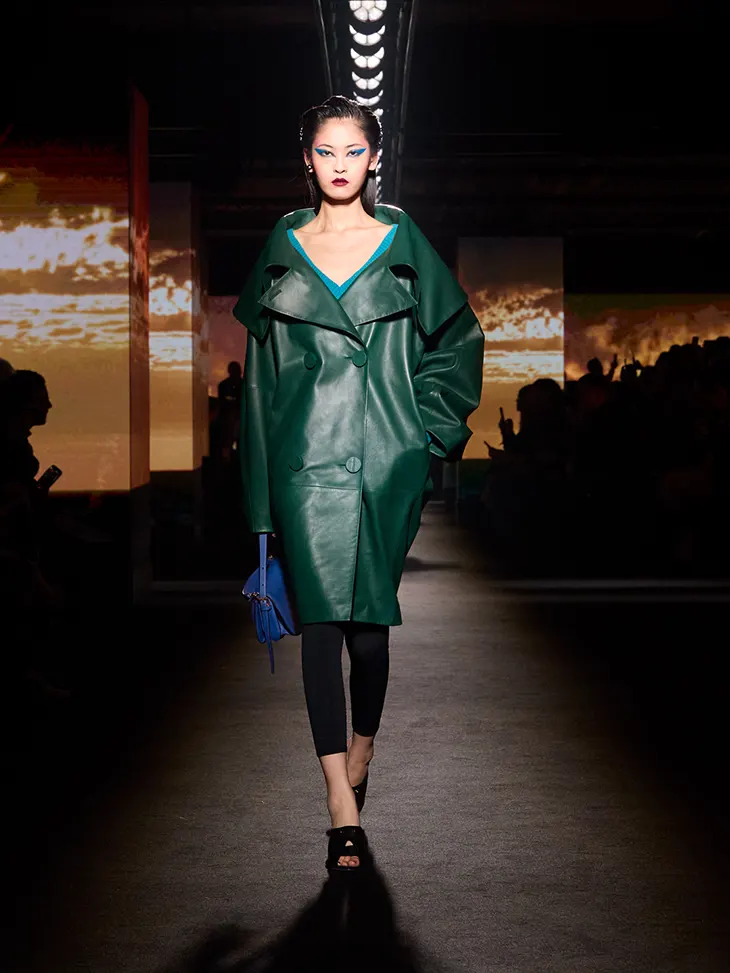
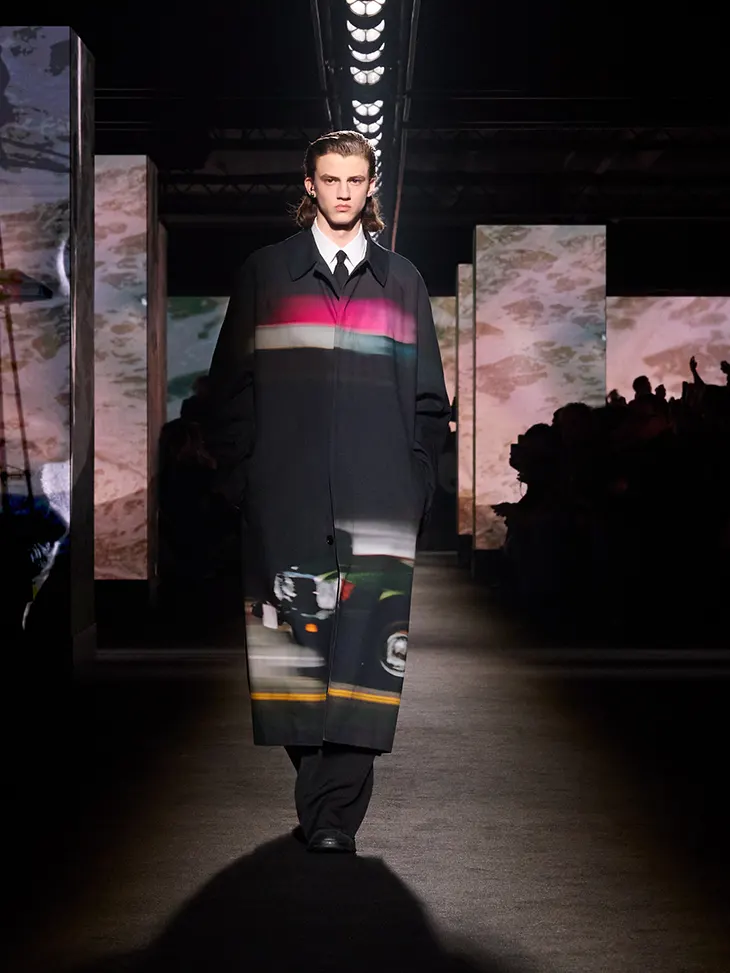
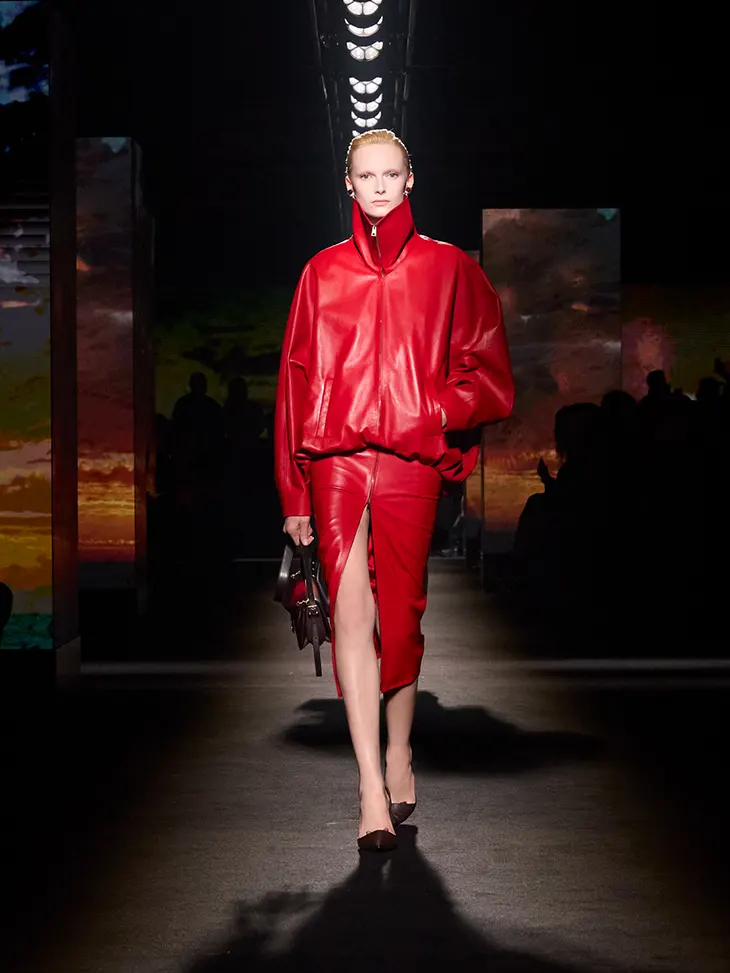
The architecture of clothing appears lighter than expected for winter. Cocoon shapes hover around the body with a sense of suspension. Piccioli selects materials that react to light in distinct ways, including supple leather, dense cashmere, silk, and sequin embroidery. Each surface absorbs or reflects illumination differently, altering how silhouettes appear in motion. The result gives the collection an optical quality, where the perception of form shifts with the angle of light.
Color reinforces the conceptual framework. Piccioli organizes the palette around emotional intensity, with hues designed to emerge from shadow. Phosphorescent tones carry a luminous quality that strengthens the presence of each garment within the collection’s visual narrative. Through this treatment, color functions less as decoration and more as a structural component that defines volume and mood.
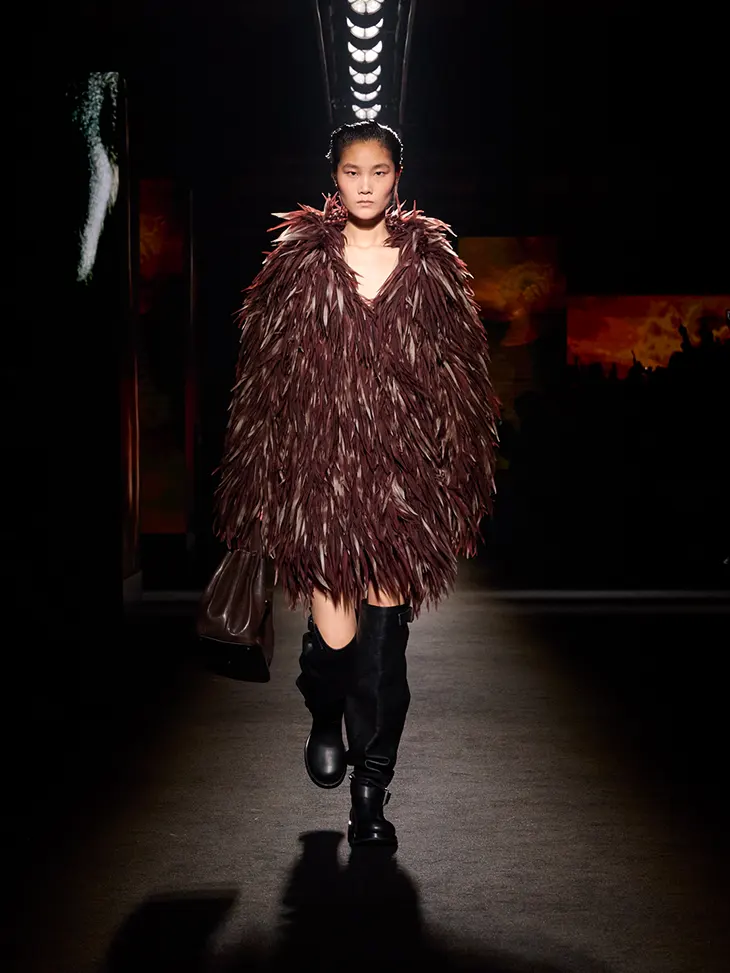
The runway environment extends the collection’s central idea through collaboration with filmmaker Sam Levinson, creator of the HBO series Euphoria. Levinson developed the show’s installation as a digital panorama that combined fragments of the series’ upcoming third season with cinematic portraits of the runway’s multi-generational cast. The imagery also included contemporary landscapes that charted the passage of a day from sunrise to sunset. Together, these elements reinforced the theme of light emerging within darkness.
This dialogue between Piccioli and Levinson builds a broader creative community around Balenciaga. Their shared focus on truth, compassion, and human fragility aligns with the collection’s emphasis on the human condition. Models of different generations walked together as a collective presence, forming what Piccioli described as a fresco of humanity. Clothing functions here as a record of individuals within that collective image.
The seat note titled ClairObscur framed the show through poetic speculation. “As if the moon is as bright as the sun. As if we could take the stars, pull them down and use them for the light.” The text imagines a space where light intensifies until it becomes permanent, echoing the collection’s attempt to capture an ephemeral moment and hold it within cloth.