



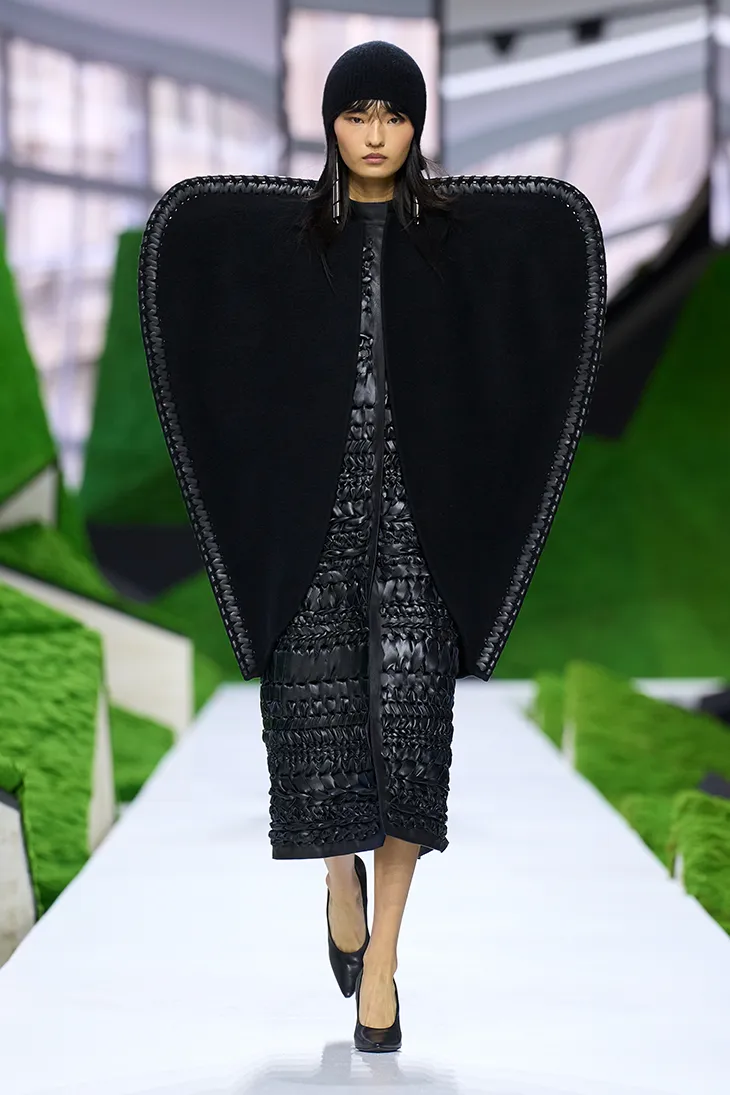
Louis Vuitton presented the Fall Winter 2026 collection titled Super Nature, on the final day of Paris Fashion Week. The collection draws inspiration from the natural environment and the ways people respond to climate and terrain through clothing. Mountains, forests, and plains inform the visual language of the collection, shaping garments through ideas connected to endurance, protection, and freedom. Nicolas Ghesquière develops clothing as a response to surroundings, translating instinctive reactions to nature into contemporary design.
FALL WINTER 2026 WOMENSWEAR
The collection approaches clothing as a form of architecture shaped by environmental influence. Natural forces such as wind, rain, and sunlight inform silhouettes and structural details. Through these influences, garments reflect the way traditional clothing often emerged from specific environments. Local climates, daily activities, and cultural customs historically shaped dress across many regions. Ghesquière reinterprets these principles through a contemporary framework that addresses present-day life within a digital era.
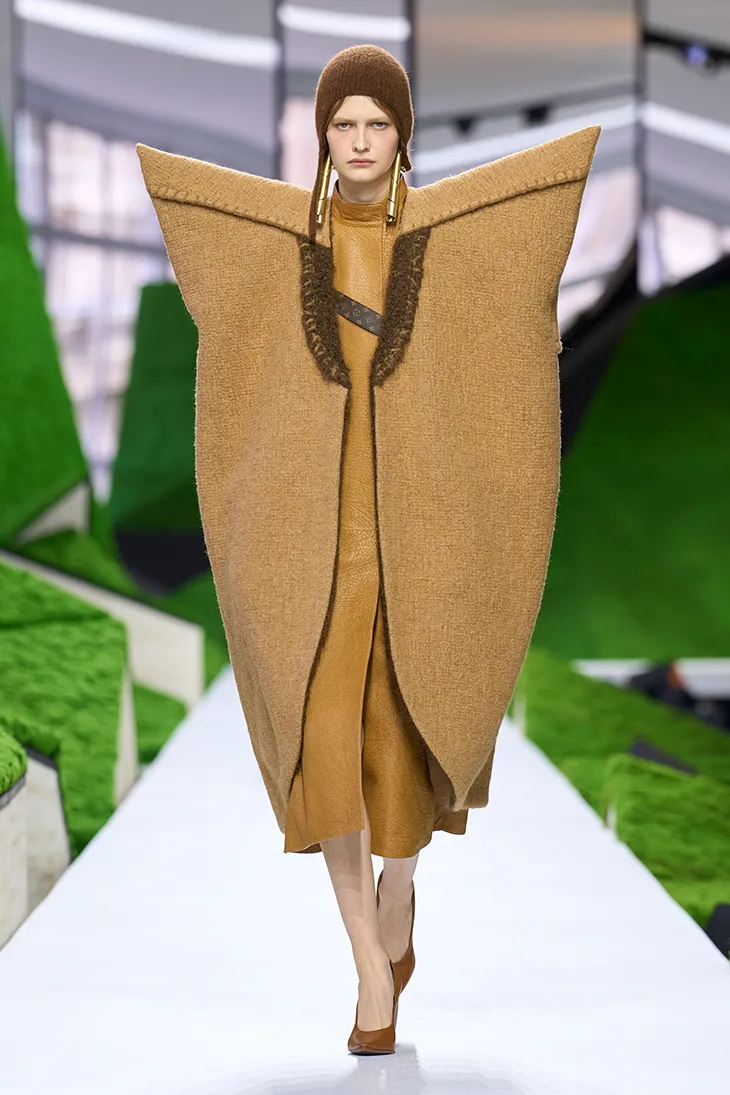
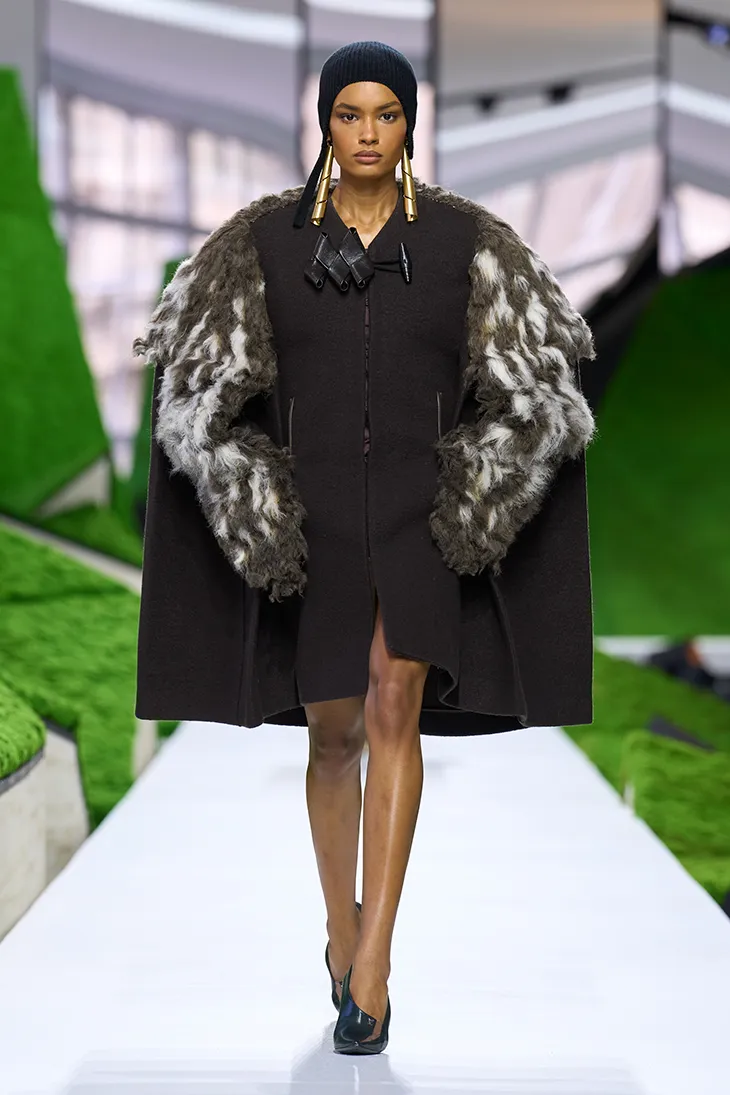
This interpretation introduces a concept of contemporary folklore. The garments reflect memories of historical dress while incorporating modern fabrication techniques. References to nature appear throughout the collection through prints, textures, and decorative elements. Flora and fauna serve as sources of visual inspiration that translate into surface treatments and material experimentation.
Animal patterns appear across canvas and denim fabrics, reinterpreting familiar motifs through new construction methods. Leather details form stylised flowers that function as decoration while introducing structural elements within garments. The collection also explores collage as a method of combining multiple references within a single piece. Through this technique, garments combine different materials and patterns that reflect the diversity of cultural influence on clothing.
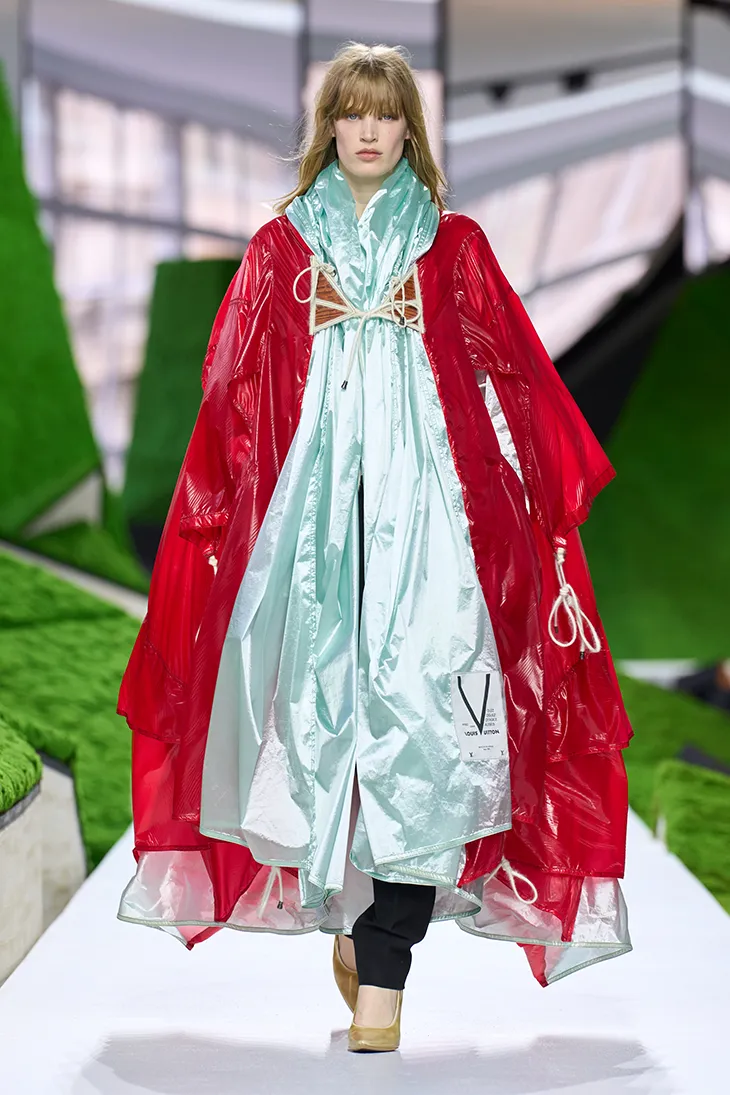
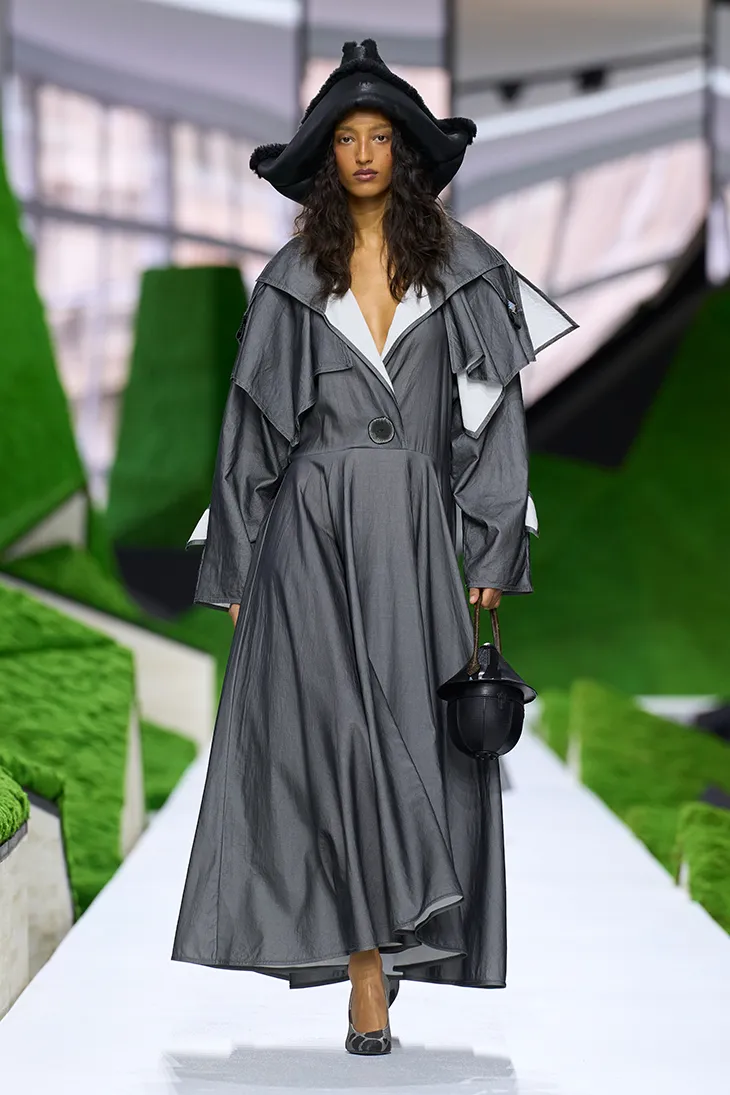
Material innovation plays an important role in the collection. Ghesquière introduces experimental techniques that combine advanced technology with traditional craft. Three-dimensional printing and resin construction appear in accessories and hardware. Buttons resemble mineral formations, while heels take inspiration from antler shapes. Vegetal furs introduce new surface textures that reinterpret natural references through fabrication.
Leather receives particular attention within the collection. Artisans treat leather through processes that create grained and grooved surfaces resembling wood. This treatment produces an unexpected material effect while maintaining flexibility and wearability. These transformations highlight the craftsmanship associated with the Louis Vuitton atelier while expanding the visual language of leather goods.
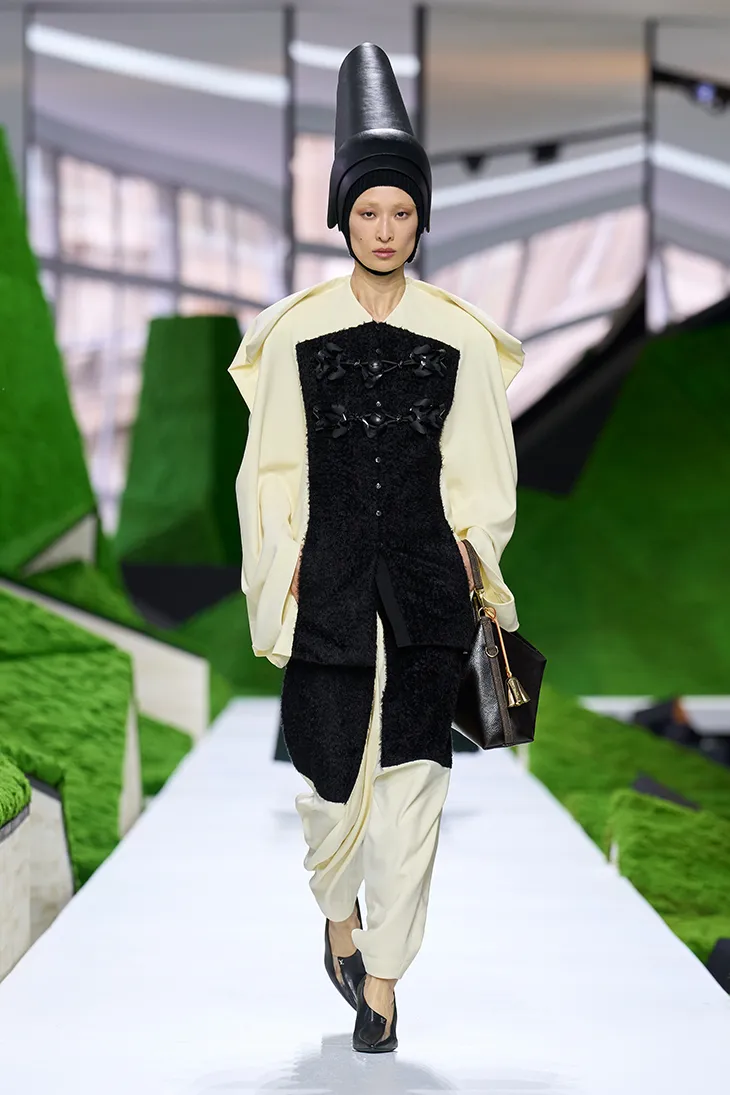
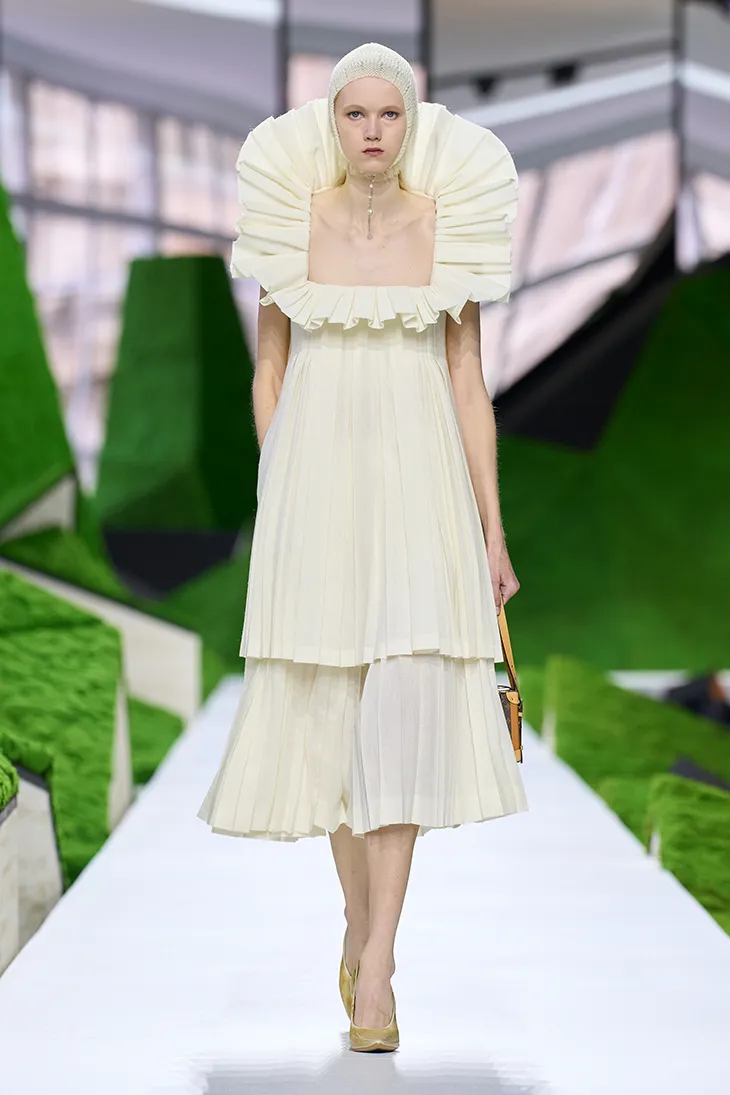
Louis Vuitton’s long-standing expertise in luggage and leather goods informs several accessories within the collection. The Noé bag returns to its original 1932 proportion and colour. This design references the historical archive while presenting the bag within a contemporary context. Additional bags evoke travel and exploration, reflecting the brand’s association with mobility and discovery.
Jewellery introduces further references to the Louis Vuitton archive. A reinterpretation of a Man Ray design appears through earrings, a ring, and a collier decorated with nail-head details inspired by the construction of Louis Vuitton trunks. These elements link artistic influence with the brand’s material vocabulary.
The show took place in the Cour carrée of the Musée du Louvre. Production designer Jeremy Hindle created the scenography as an imagined landscape that reinterprets natural environments through futuristic design. The installation combines elements of nature with abstract forms, creating a setting that frames the collection through a contemporary pastoral vision.
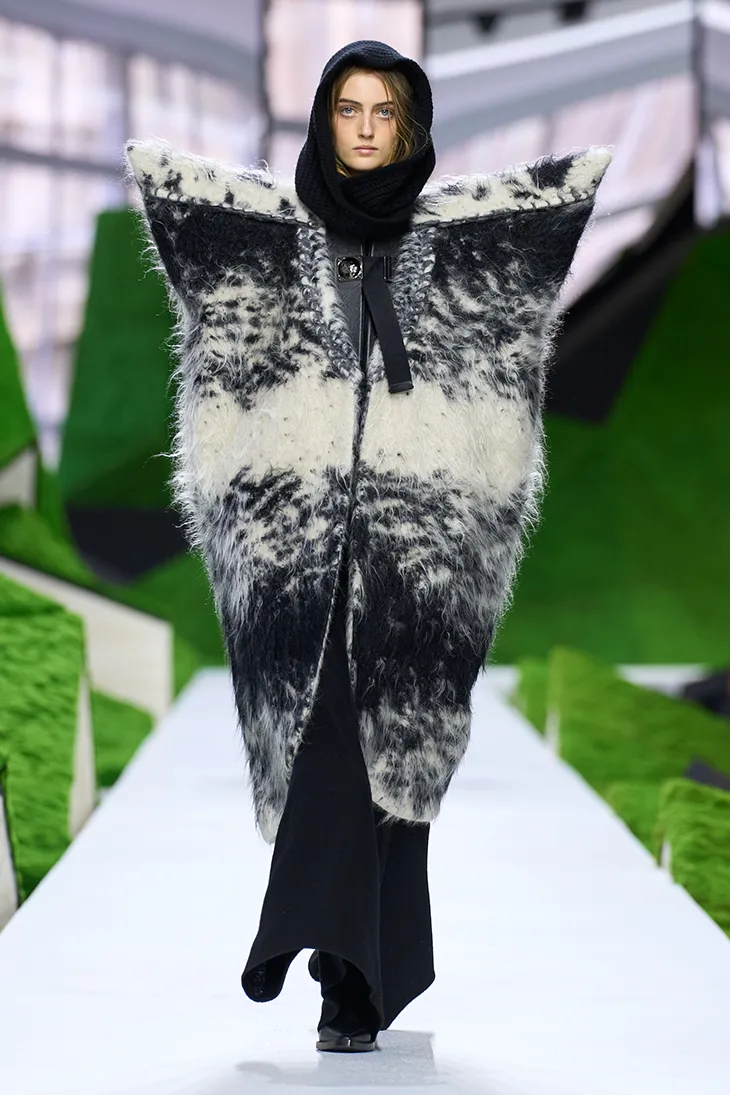



everyone is complaining how the fashion week runway shows the whole month were too commercial. Now you get this amazing collection from Nicolas, and people are not able to see the value in it, cause it is not commercial enough?