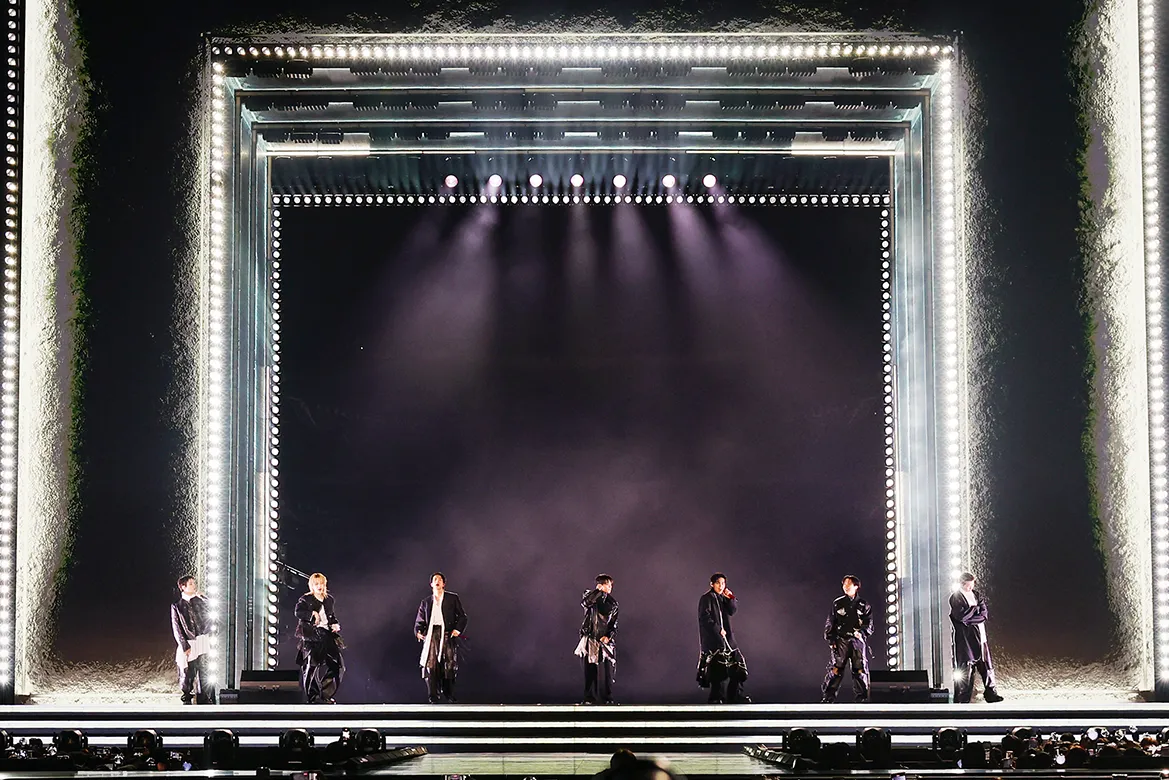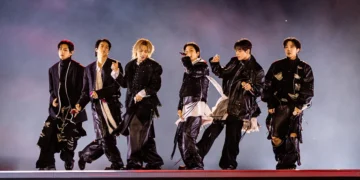



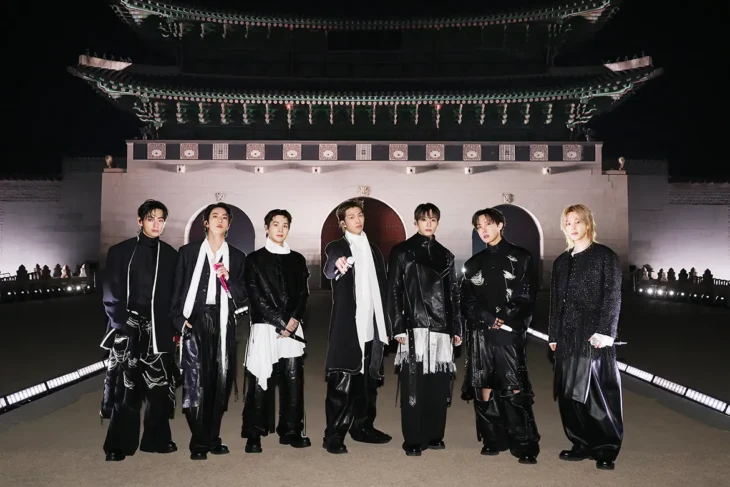
Fashion house Songzio designed the stage wardrobe for K-pop sensation BTS as the group stepped back into the spotlight with “BTS THE COMEBACK LIVE I ARIRANG.” The project came together in collaboration with Netflix. Creative Director Jay Songzio led the concept and design direction, grounding the work in Korean references and expressing it through an avant-garde design language.
EVENTS
The collection carries the title “Lyrical Armor,” framing BTS as figures shaped by cultural memory and contemporary presence. The concept draws from historical archetypes including warriors, scholars, and artists, translating their attributes into garments that reflect strength, intellect, and expression. BTS appear within this framework as a group that channels these references into a current context, where performance becomes a site for reinterpretation.
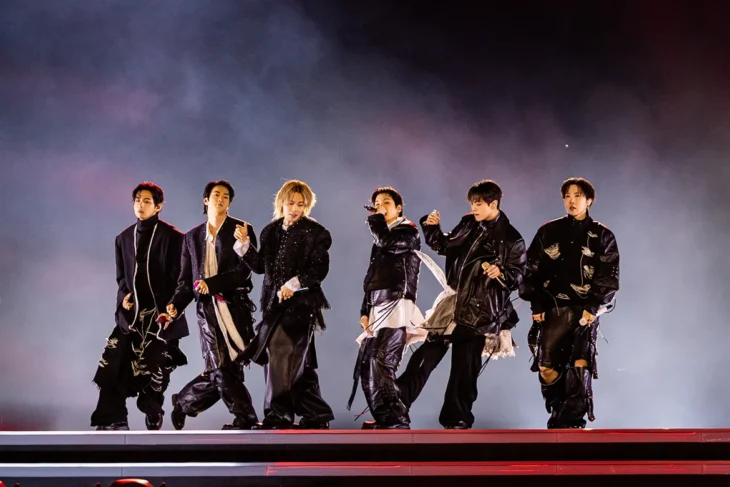
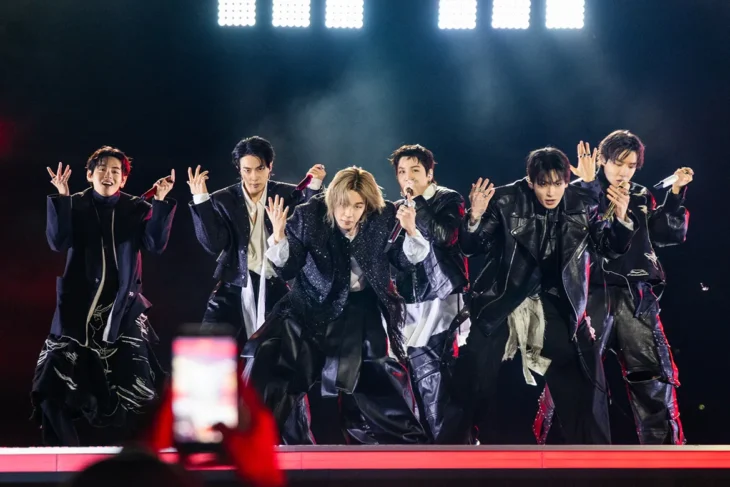
Jay Songzio established a consistent visual language across the stage. Each look reflected the identity of individual members while maintaining cohesion across the full cast. A monochromatic palette anchored the wardrobe, allowing structure and construction to define the visual field. Dancers, musicians, and singers entered the same composition, forming a unified image where costume directly contributed to the performance.
The design draws from Korean armor worn during the early Joseon dynasty, known for its studded construction and protective surfaces. It also references hanbok garments associated with artists and sorigun, traditional singers who expressed emotion through poetry and song. These sources combine into garments that suggest figures shaped by historical tension and creative output, translated into contemporary stage wear.
Courtesy of ©SONGZIO
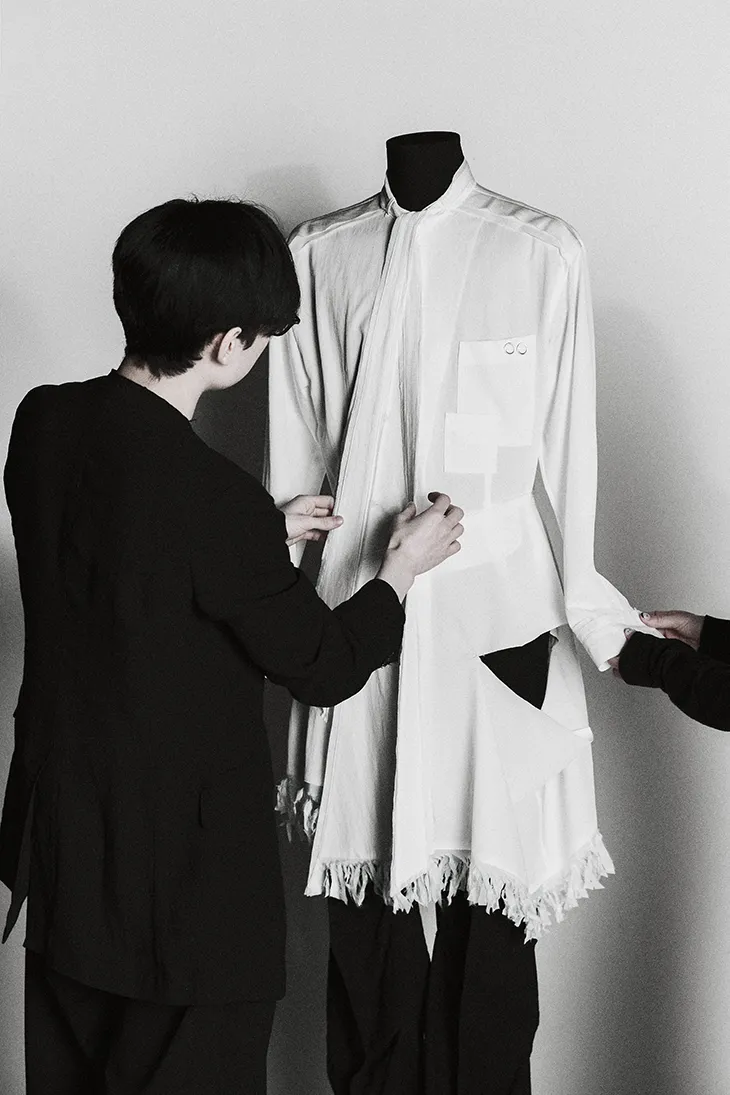
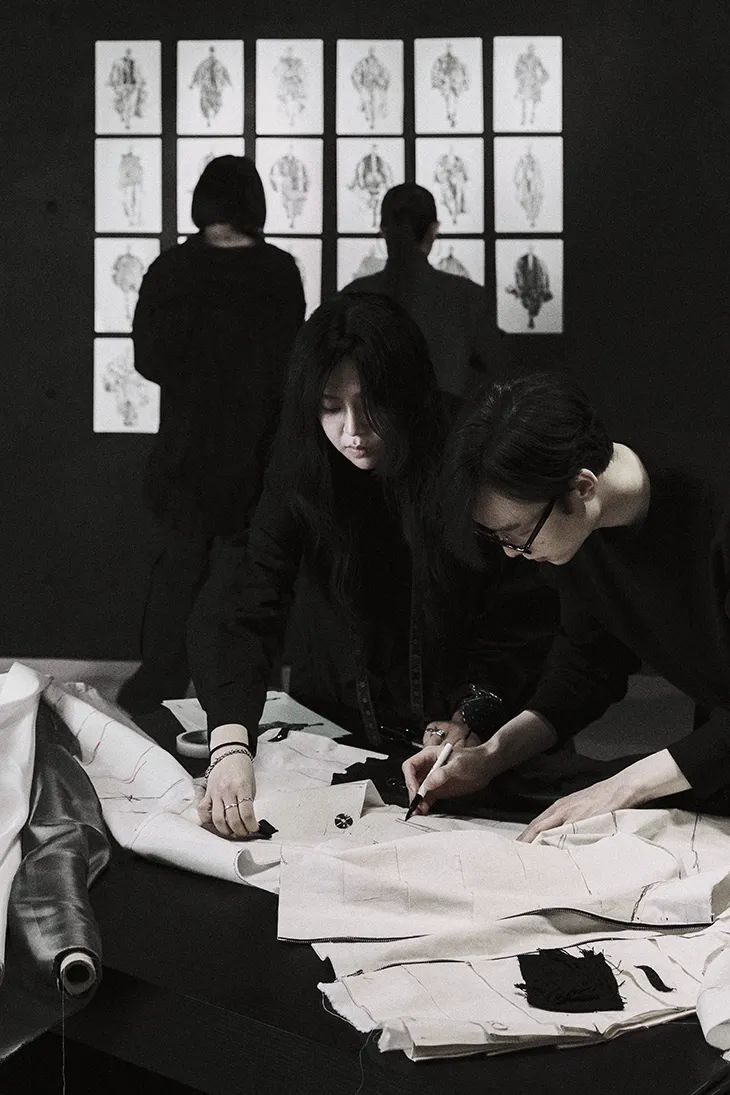
Construction begins through fragmentation. Traditional forms break into parts and return through reassembly into abstract silhouettes. Layering introduces depth, while volumes shift around the body to create sculptural presence. Fluid draping interacts with rigid elements, producing garments that extend the body’s outline and intensify visual impact under stage conditions.
Surface treatment reinforces this direction. Exposed seams remain visible, functioning as traces of process and history. Asymmetry defines many garments, with fragments that intersect and diverge. Sleeves extend into irregular forms, and hems distort into uneven edges. Vertical panels and slits divide the silhouette, introducing segmentation and continuity at once.
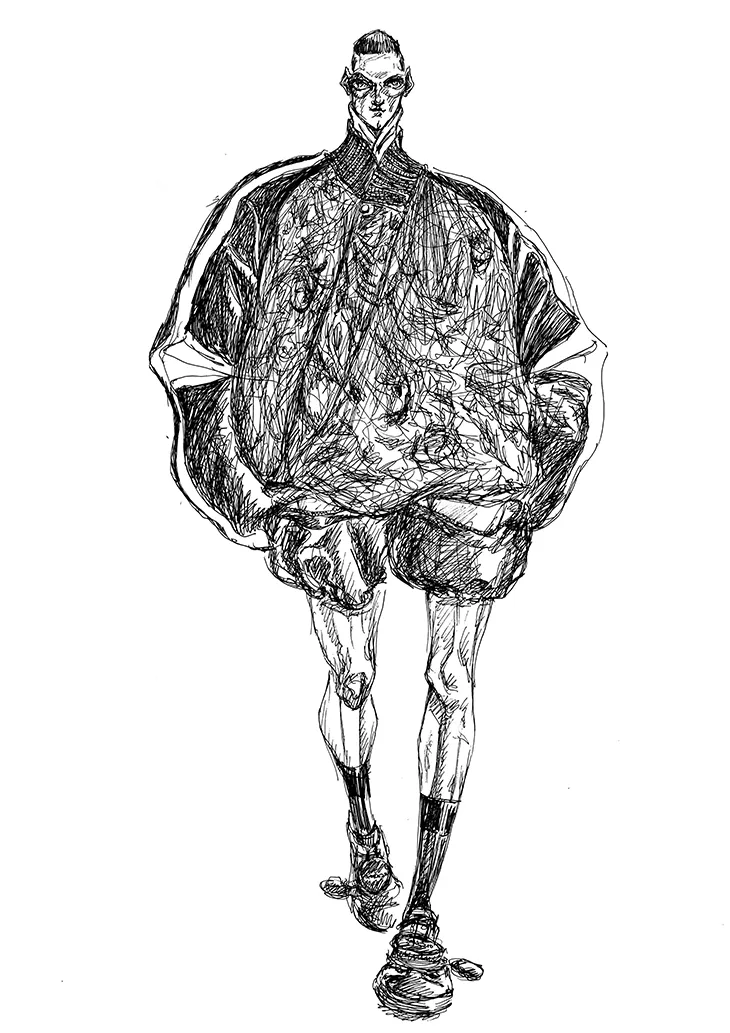
Courtesy of SONGZIO
Textiles draw from Junbeop, a technique associated with Korean landscape painting. In eighteenth-century Jingyeong Sansuhwa, painters observed real terrain and translated it through expressive brushwork. Techniques such as layered strokes and dry-brush applications revealed texture through repetition and abrasion. Songzio translates this approach into fabric, producing distressed surfaces that retain visible traces of treatment.
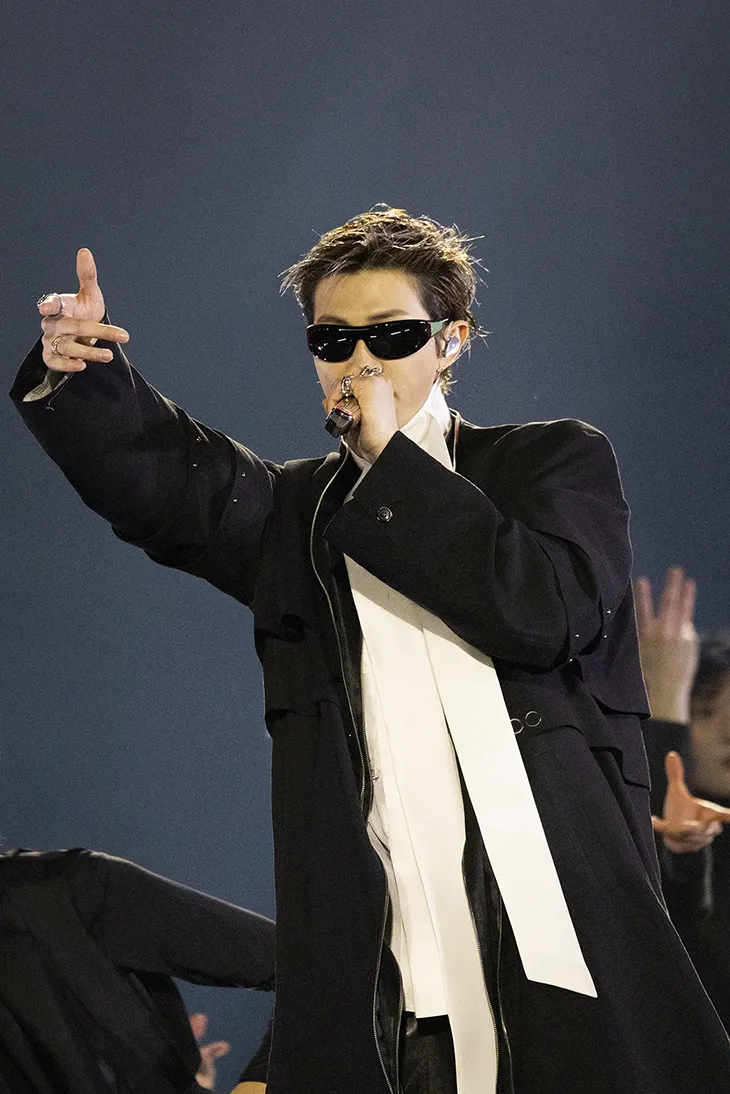
Each BTS member receives a distinct interpretation within this framework. RM’s look channels leadership through a Korean silhouette defined by curved shoulders and layered construction. A long hanbok-inspired jacket extends into a cape form, while segmented plates with studded details reference traditional armor. A high-neck shirt structured like armor and sharply cut trousers introduce contrast through structure and fragmentation.
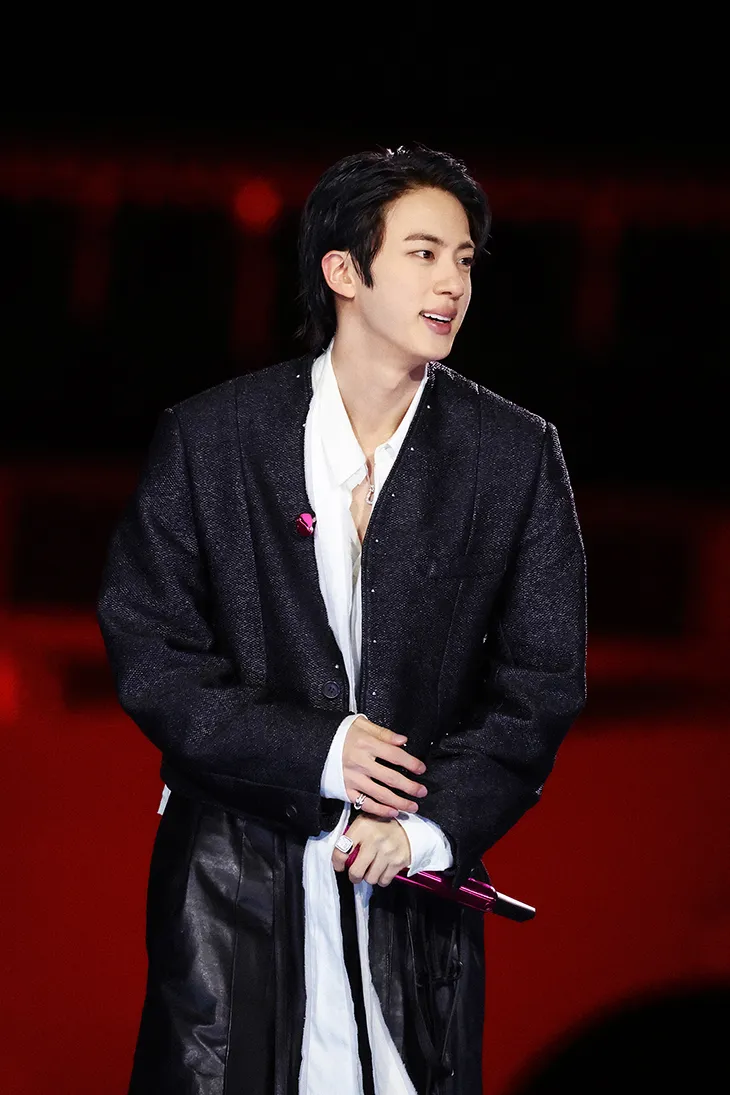
Jin’s design focuses on artistic expression. A tailored jacket follows hanbok-inspired pattern structure with a collarless shape and metallic studs. A draped shirt introduces fluidity, aligning line and plane within the garment. The look presents Jin as an artist who transforms emotion into visual form through performance.
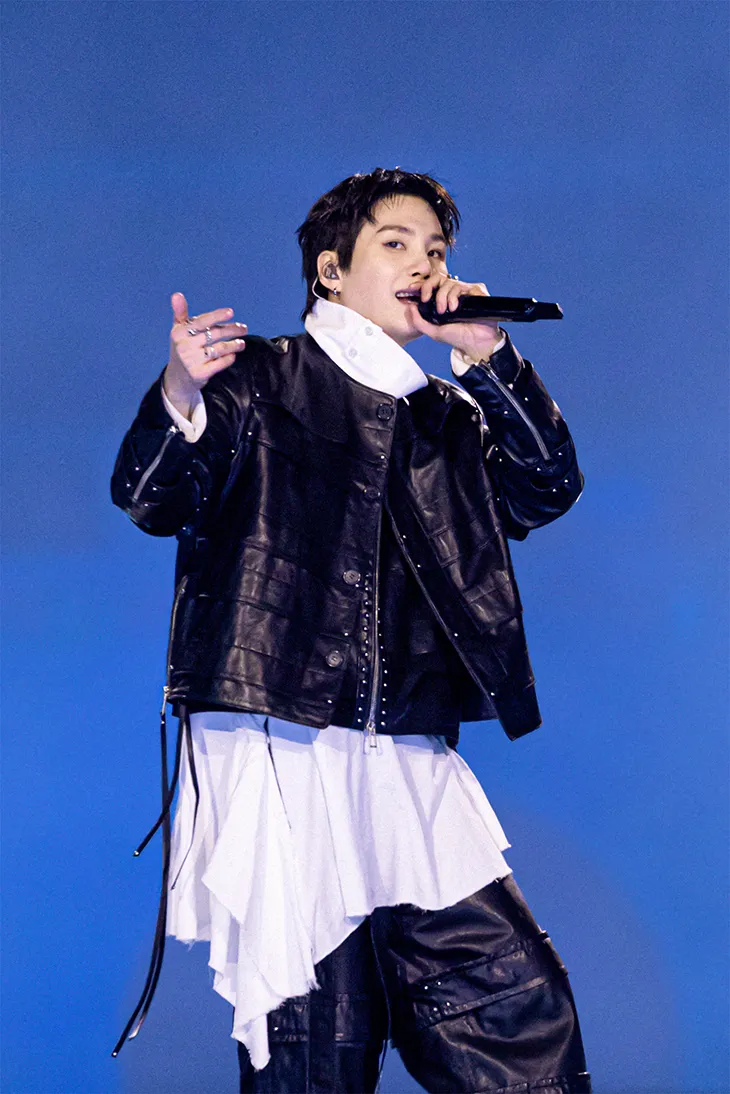
Suga’s look interprets his role as a creator through contrast between structured plating and a refined silhouette. The design reflects intensity and compositional depth associated with his work. Trousers reinterpret hanbok forms with added belt elements and stud details, reinforcing a balance between strength and restraint.
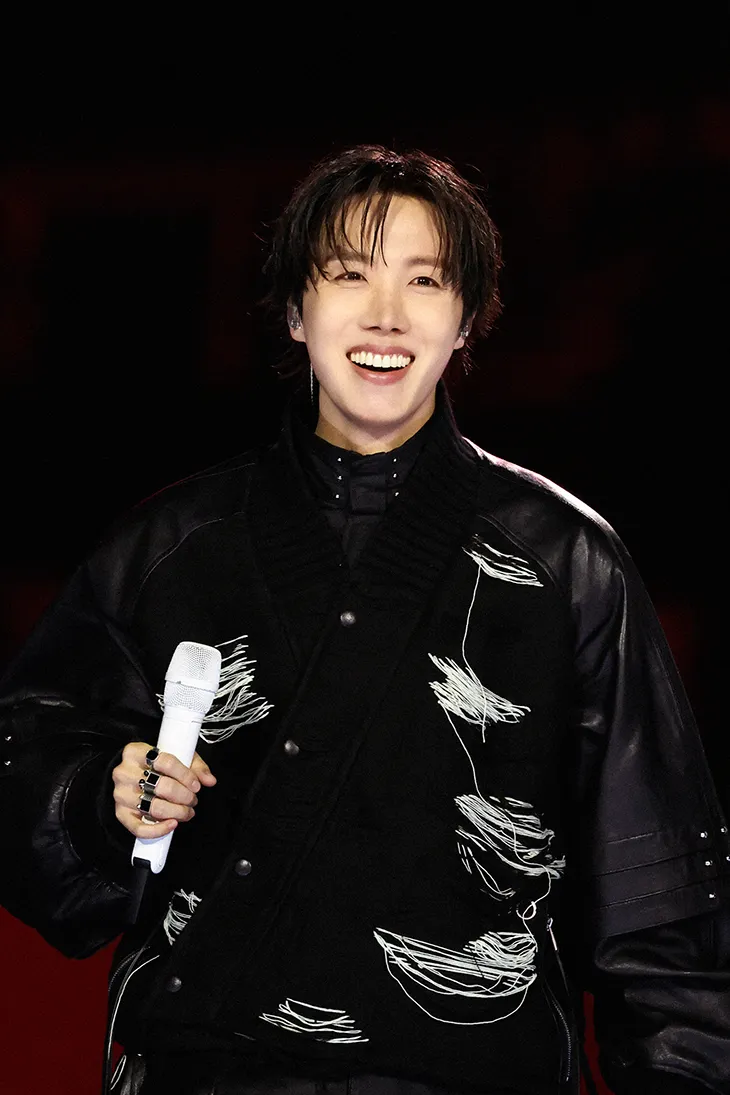
J-Hope’s design draws from the figure of the sorigun and incorporates a reinterpretation of the MA-1 jacket through dopo-inspired bias cutting. Asymmetrical lines follow the rhythm of performance, while armor-inspired elements appear through metal accents and structural detailing. Cargo trousers with belt references to martial garments reinforce the connection between movement and construction. Textile treatment reflects Junbeop techniques through distressed surfaces.
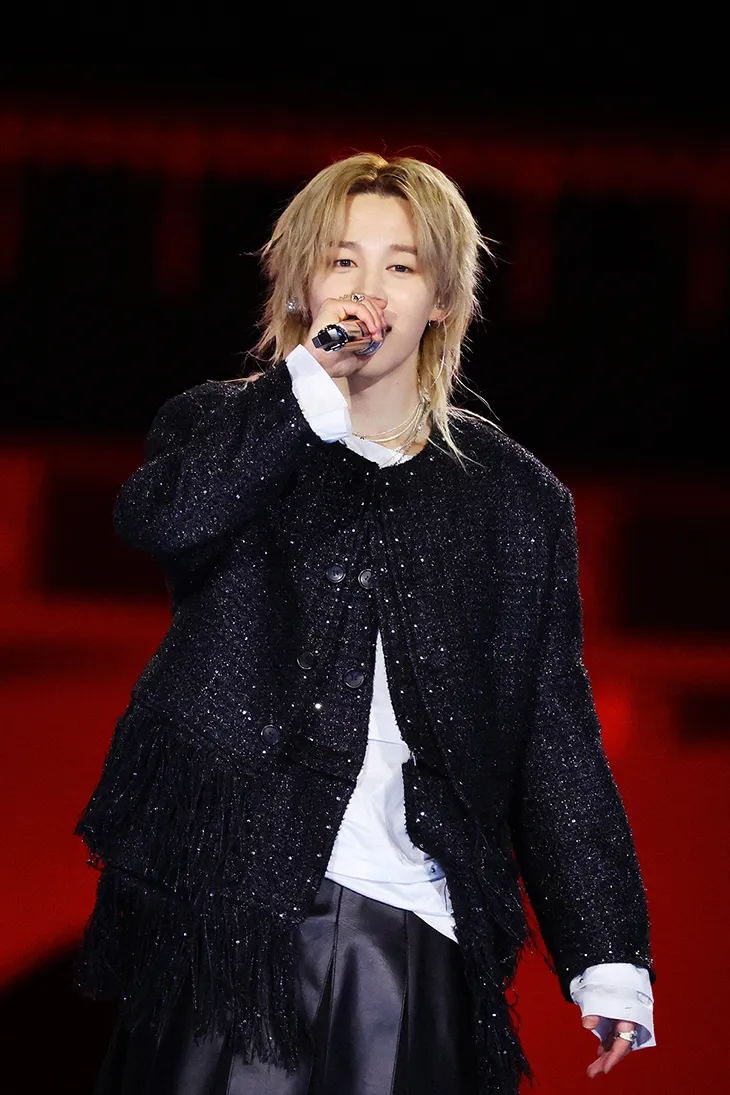
Jimin’s look centers on fluid silhouettes derived from hanbok draping. A plated jacket introduces light-reflective surfaces combined with delicate frilled details and black onyx elements. Skirt trousers extend vertical lines and enhance sculptural form. The design expresses his role as a performer who translates emotion into choreography and sound.
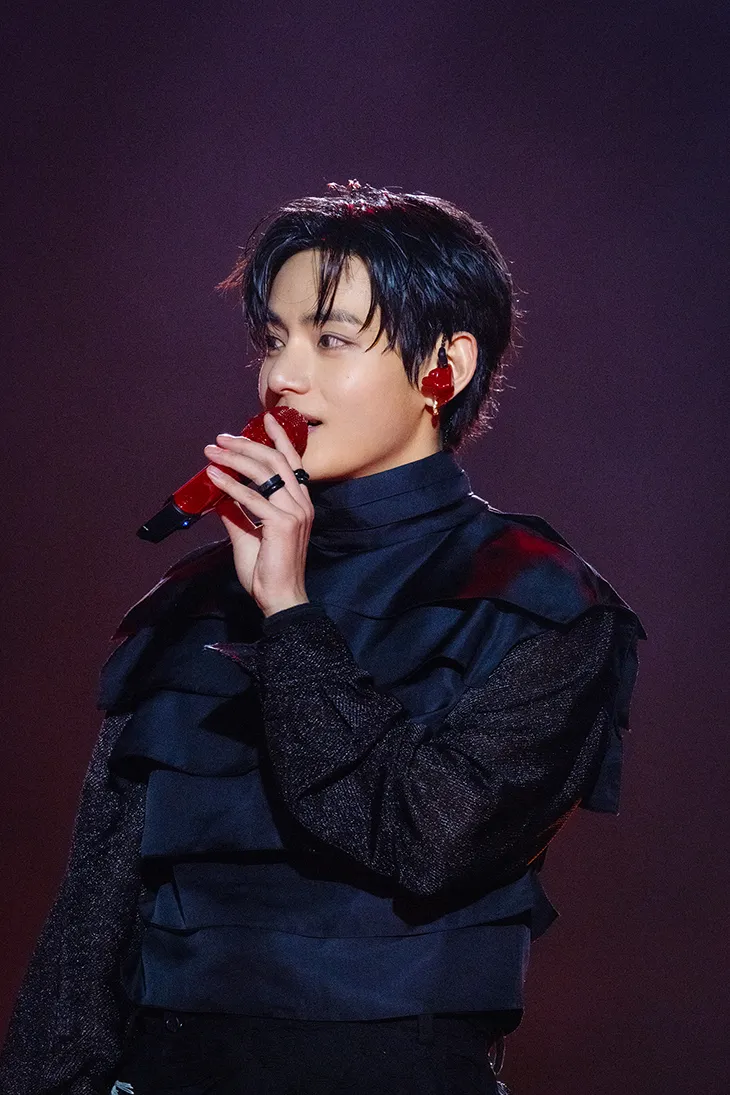
V’s design references the Seonbi, or scholar-gentleman, through restrained tailoring and layered construction. The look combines robe-inspired forms with contemporary cutting, supported by textured materials and layered detailing. Armor-influenced inner elements and draped skirt trousers incorporate hanbok structure and distressed surfaces informed by Junbeop techniques.
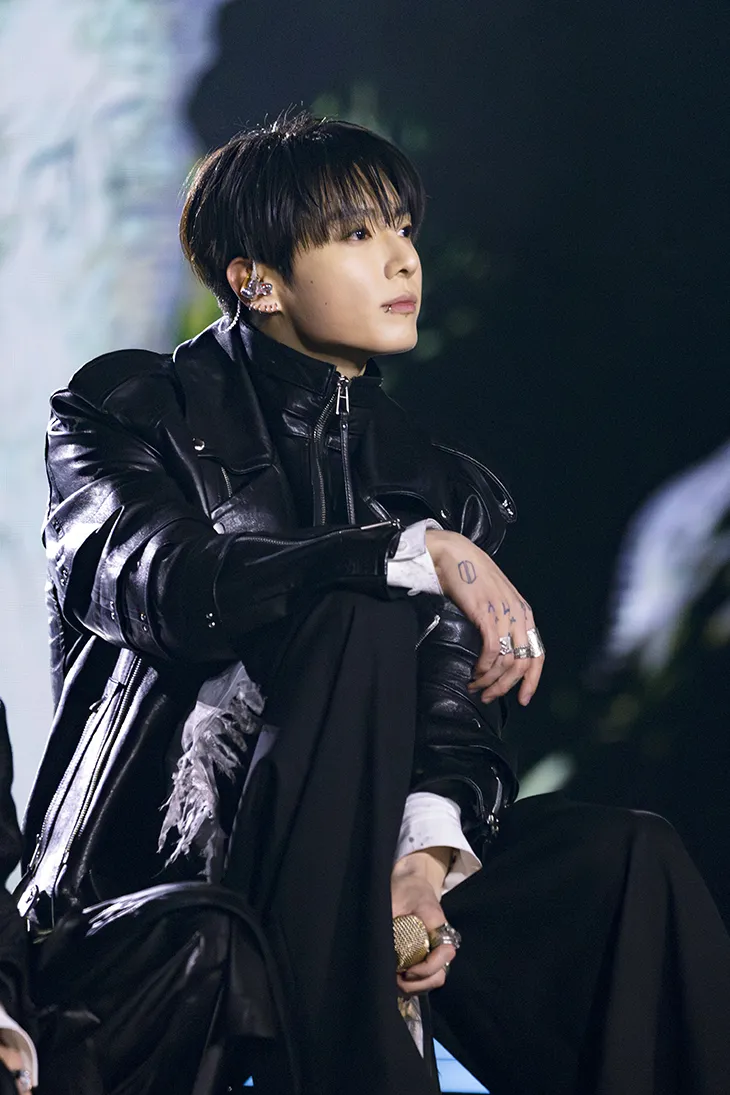
Jungkook’s look reflects versatility through a streetwear-driven approach. An asymmetrical rider jacket adapts oriental draping, paired with armor-plated inner layers and a distressed shirt. The combination of structure and fluidity reflects his range across vocal, dance, and rap performance.
Costumes for co-performers extended the visual language through references to Byeongpung, the Korean folding screen. Sculptural plates expanded outward like sequential panels, forming a continuous composition. Vertical divisions segmented the body, introducing tension within the silhouette while reinforcing narrative structure.
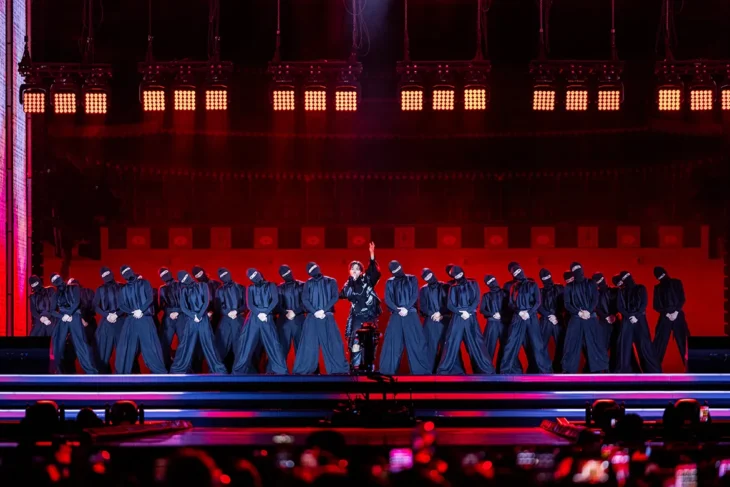
Dancers wore garments structured through layered vertical panels that echoed polyptych compositions. Horizontal layering established continuity, while vertical slits divided the form into segments. This approach translates historical visual principles into contemporary stage design, reinforcing rhythm through construction.
Songzio continues to expand its global presence with over 100 stores worldwide. Following recent flagship openings in Paris and Seoul, the brand plans a new flagship in New York City that will combine retail with an art-focused environment. The collaboration with BTS reflects the brand’s approach to design, where garments operate within a broader cultural and artistic framework tied to performance and visual storytelling.