


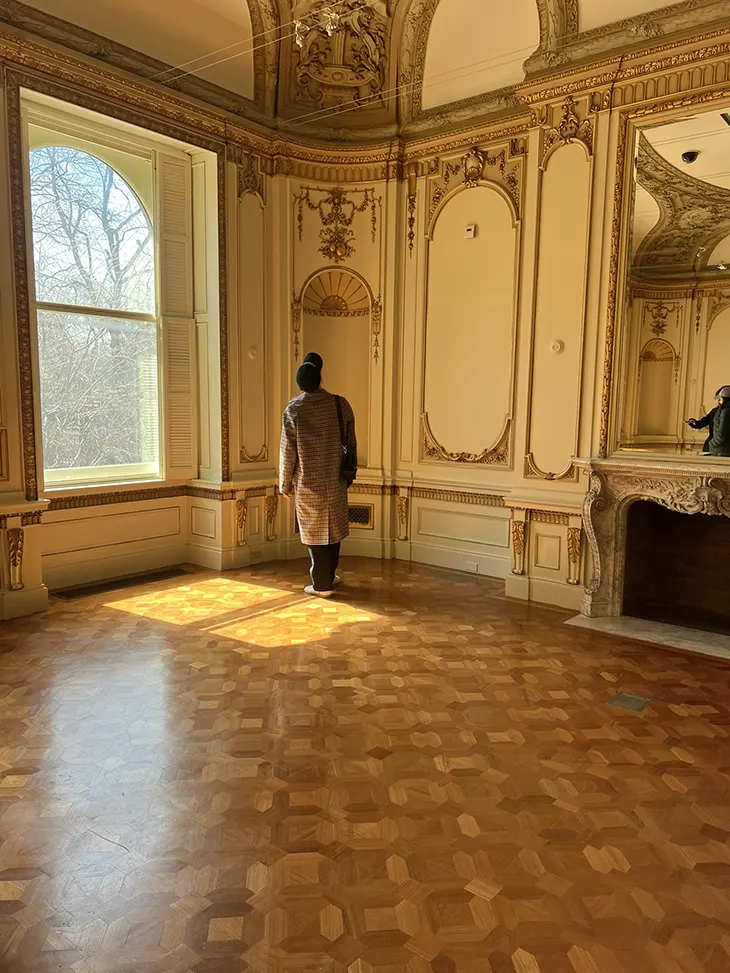
New York has no shortage of museums that announce themselves loudly. What is rarer, and increasingly valuable, is a museum that can pull off something subtler: make you look at the everyday with fresh suspicion, then send you back into the city feeling newly alert. That is the particular strength of Cooper Hewitt, Smithsonian Design Museum, tucked inside the Carnegie Mansion on the Upper East Side, a setting that could easily tip into genteel nostalgia. Instead, the museum’s current programming argues, persuasively, that design is not décor. It is infrastructure for how we live, listen, work, and remember.
Two exhibitions in particular, Art of Noise and Made in America: The Industrial Photography of Christopher Payne, land as a compact double feature. Neither is perfect. Both are worth your time, precisely because they invite critique. They are ambitious in scope, occasionally too tidy in their conclusions, and still among the more rewarding “finds” in the city’s museum circuit right now.
LATEST ART COVERAGE ON DSCENE
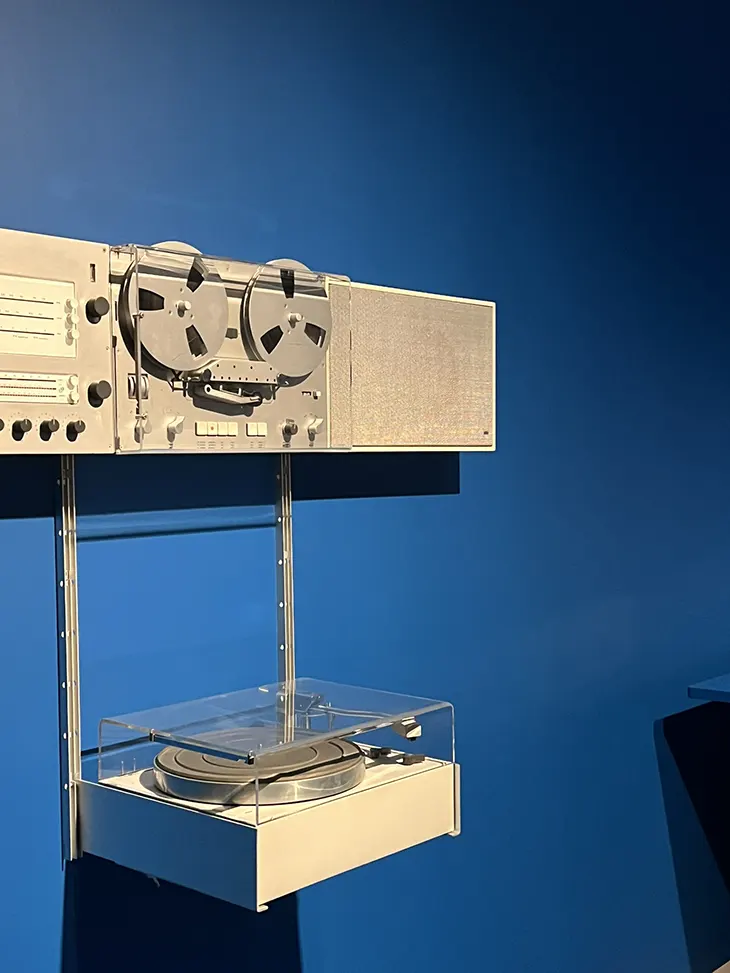
Start with Art of Noise, organized by SFMOMA and adapted to the history of the New York music scene for its East Coast presentation. The premise is straightforward and strong: design shapes how we experience music, not only through the devices we use, but through the visual language that frames sound before we ever press play. Posters, album covers, flyers, radios, stereos, boomboxes, turntables, and digital players become a timeline of how taste is manufactured, circulated, and archived.
The exhibition’s best moments are the ones that treat graphic design as more than packaging. The show makes a convincing case that typography, color palettes, and production techniques are not secondary to genre, they are part of it. A visual system can signal belonging, rebellion, intimacy, or threat. It can also flatten complexity into a marketable look. That tension is where the exhibition becomes most interesting, and it is also where it sometimes pulls its punches.
Because Art of Noise is so comprehensive, it risks becoming a museum of “greatest hits” rather than a sharper argument about power. The show tells you, correctly, that design and music are intertwined. What it only occasionally presses is the harder question: who gets to be seen, who gets to be heard, and how design participates in that sorting. When the exhibition leans into the idea that certain typographic styles or visual tropes become synonymous with entire genres, it is an opening to discuss gatekeeping and commodification. At times the presentation feels a little too celebratory, as if the sheer abundance of objects is proof enough.
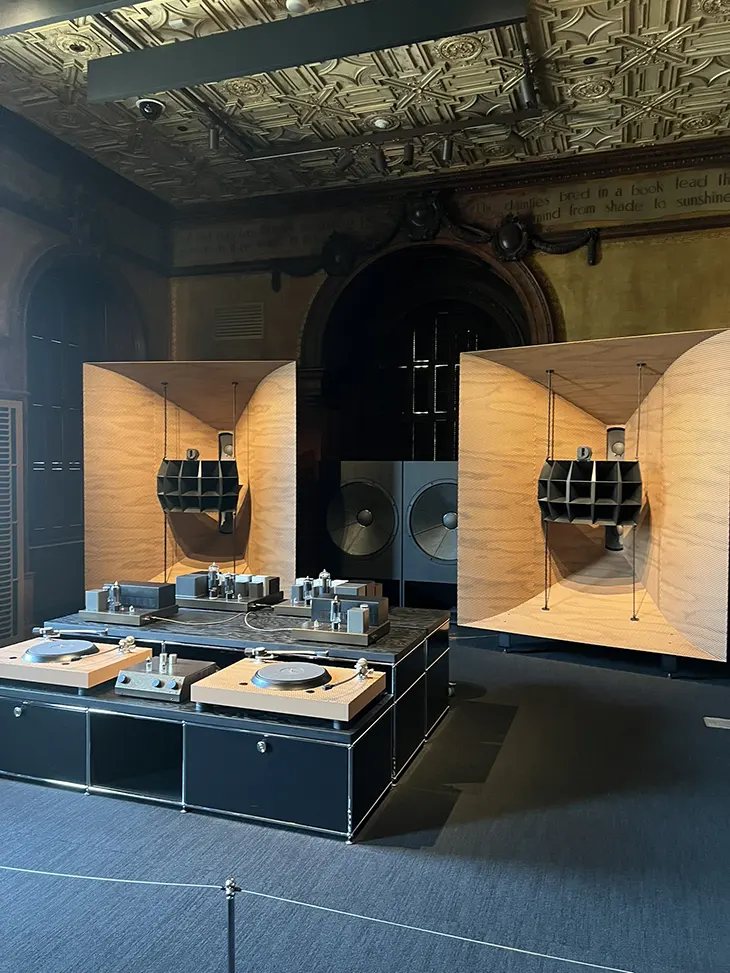
Still, the exhibition has an anchor that changes the tempo of the visit. HiFi Pursuit Listening Room Dream No. 3, a large-scale handmade audio system by Devon Turnbull, is positioned as the experiential core. It is not just a “listening room” in the lifestyle sense. It is a reminder that sound is physical, architectural, and social. The room’s programming, activated throughout the run of the exhibition with live operator appearances or genre-specific playlists, introduces a crucial variable that museums often struggle with: time. You do not simply pass through. You sit, you wait, you listen, you recalibrate.
The other smart move is the exhibition design collaboration with Stockholm-based teenage engineering, which introduces an interactive seating environment and a custom audio playback device with curated playlists focused on New York music. This is where Cooper Hewitt’s identity as a 21st-century design museum is most legible. The museum is not only displaying objects, it is staging behaviors. The critique here is that interactivity can become a substitute for interpretation. A device can be elegant and still leave the visitor without enough context. The best parts of the exhibition are the ones that connect the tactile pleasure of design to the cultural stakes of listening.
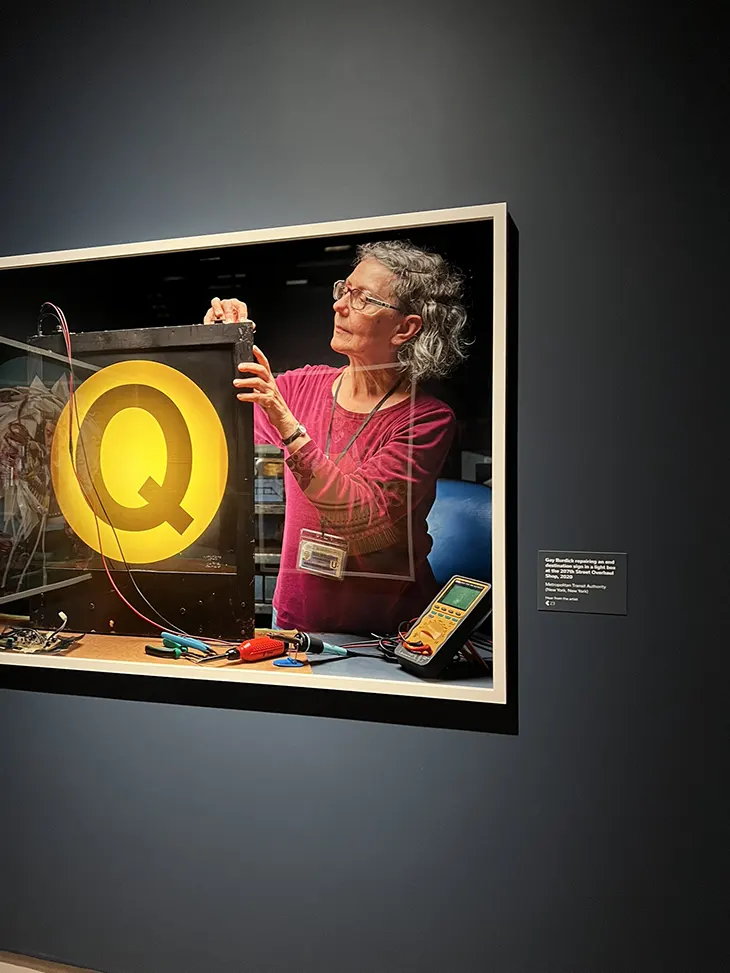
If Art of Noise is about the design of memory, Made in America: The Industrial Photography of Christopher Payne is about the design of labor, and it is the more unexpectedly affecting of the two. This is Cooper Hewitt’s first large-scale photography exhibition, and it arrives with a clear mission: to show manufacturing as a fundamental part of the design process, bringing object, machine, and hand into the same frame.
Payne’s photographs, made over more than a decade across factories in the United States, are visually arresting in a way that can feel almost cinematic. One image described as a sweeping, landscape-like scene shows rows of green commercial airplane fuselages half-submerged in the concrete floor of a heavily machined, sparsely populated factory. It reads like a contemporary ruin, except it is not a ruin. It is production, paused mid-breath. That tension, between scale and stillness, is where Payne is strongest.
The exhibition brings together more than 70 large-format photographs, and the curatorial framing positions Payne in a lineage that includes Louis Hine and Gordon Parks. The comparison is useful, but it also raises the bar. Hine and Parks did not merely document work, they documented the politics of work. Payne’s stated intent is celebratory, and the show leans into that. His photographs are described as a celebration of making, of teamwork and community, of human skill and mechanical precision. That is all present, and often moving. But celebration can be a soft focus lens.
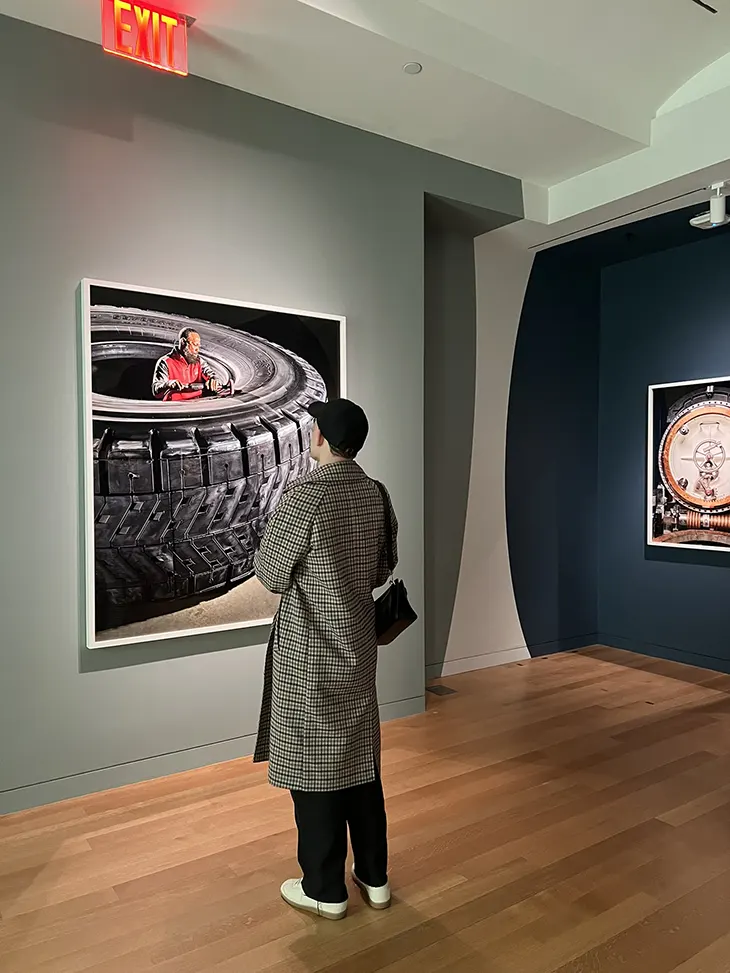
The critical question the exhibition sometimes avoids is what it means to romanticize manufacturing in 2026, and what gets left out when the factory becomes a symbol of national ingenuity. The show is presented in celebration of the nation’s 250th anniversary, which adds a layer of patriotic framing that can feel too neat for the subject. Factories are sites of innovation, yes. They are also sites of extraction, injury, automation anxiety, and economic fragility. Payne’s images hint at those realities through emptiness, through the presence of robots, through the choreography of technicians and machines. The exhibition could do more to name them.
That said, the photographs themselves carry a quiet critique simply by showing how much of “advanced” production still depends on hands. The exhibition moves from musical instruments, flags, footballs, and pinball machines to microchips and the Giant Magellan Telescope, and the throughline is not nostalgia. It is the stubborn persistence of craft inside systems we like to imagine as fully automated. In a city where so much labor is invisible, this is a powerful reframing.
Taken together, these two exhibitions make a strong case for Cooper Hewitt as a museum that rewards attention. It is not the biggest stop on a New York museum tour, and that is part of the appeal. The Carnegie Mansion setting creates a kind of calm that lets the work breathe, and the museum’s broader mission, to educate and empower through design, is not just institutional language here. It is felt in the way the exhibitions insist that design is not a surface. It is a force.
Discover more in our gallery:
The critique is simple: both shows could take bigger risks in interpretation. Art of Noise could be more explicit about how design mediates access and status in music culture. Made in America could be more honest about the costs and contradictions of industrial pride. But even with those limitations, the exhibitions succeed at something increasingly rare. They make you leave with sharper eyes and better questions.
Small, yes. Worth the visit, absolutely.