


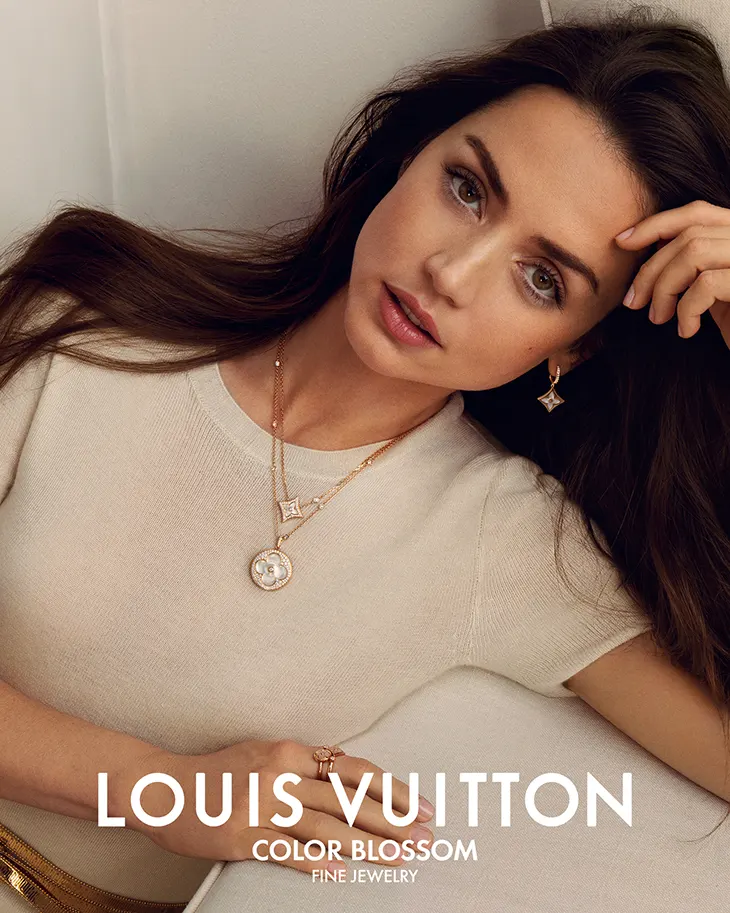
Louis Vuitton presents a new chapter of the Color Blossom Fine Jewelry collection, led by House Ambassadors Ana de Armas and Ouyang Nana. The latest campaign introduces 28 new pieces that build on the Monogram’s visual language, marking 130 years since the creation of the Louis Vuitton Monogram canvas. The release focuses on material variation and form, expanding the collection through new stones, updated structures, and refined proportions.
JEWELRY
Since its introduction in 2015, the Color Blossom line has drawn from the Monogram Flower, translating its shape into carved stones set within gold. Mother-of-pearl, onyx, and malachite have defined the collection through their polished surfaces and distinct color presence. The design centers on the floral motif, shaped with volume and depth through precise carving techniques that give the form a sculptural quality.
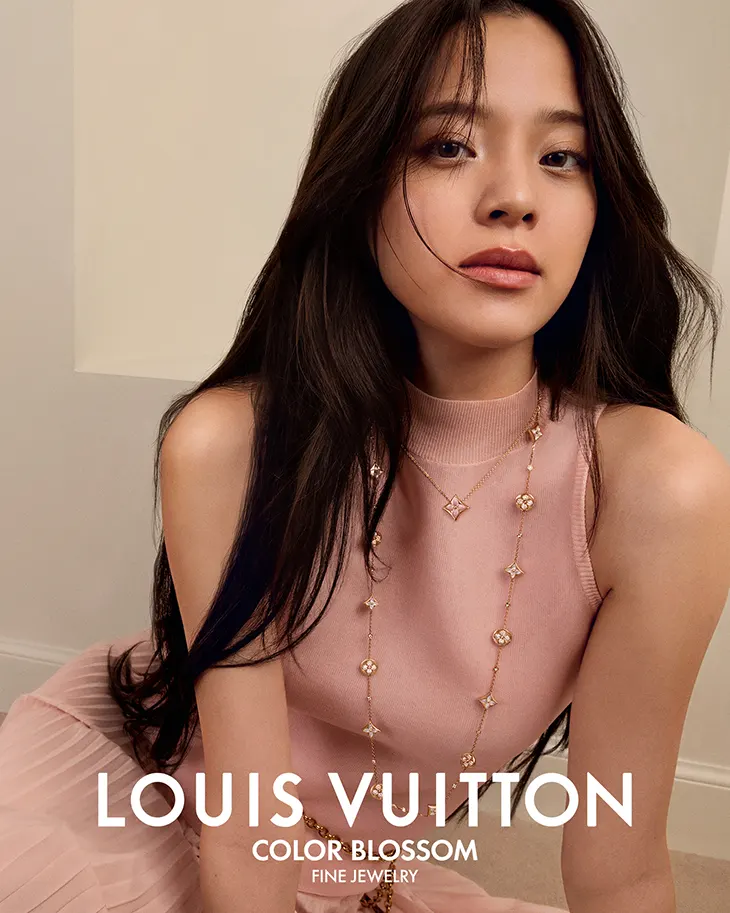
This season introduces sodalite as a new material within the range. The deep navy-blue stone appears across seven pieces, including necklaces, a multi-motif bracelet, earrings, and an open ring. Louis Vuitton shapes each stone through a detailed lapidary process that sharpens its surface and reinforces the three-dimensional structure of the Monogram Flower. The focus shifts to color saturation and clean contours, allowing the stone to define the tone of each piece.
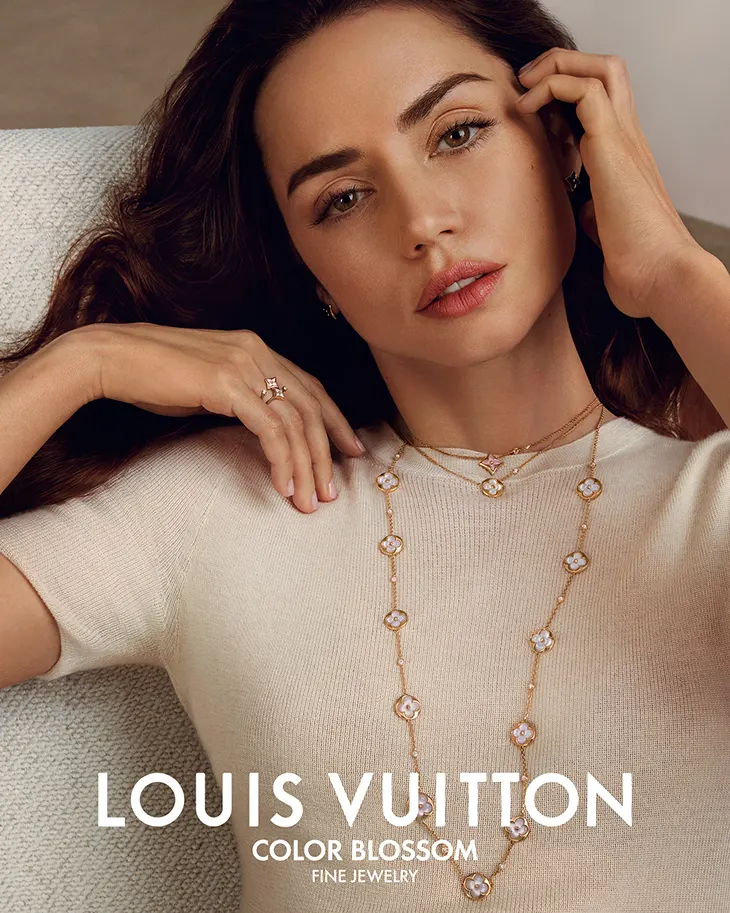
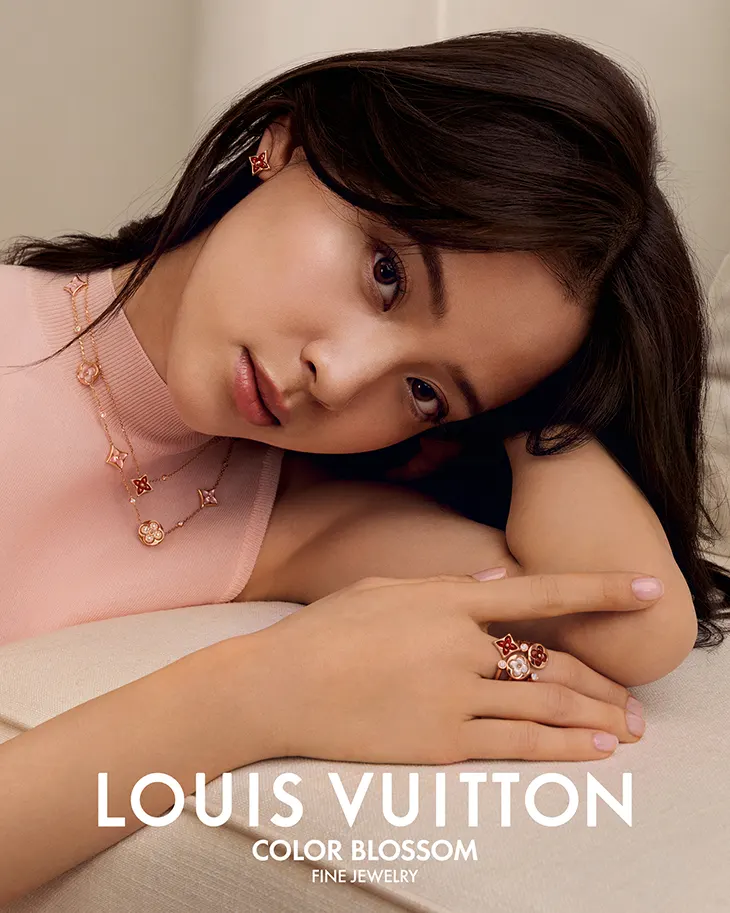
The expansion also introduces new formats that extend how the collection can be worn. Short necklaces and longer sautoirs appear with mixed motifs, offering layered combinations built within a single design. Closed rings enter the collection as stacking elements, encouraging repetition across the hand. Sleeper hoop earrings and a diamond-set ear cuff add variation to the ear category.

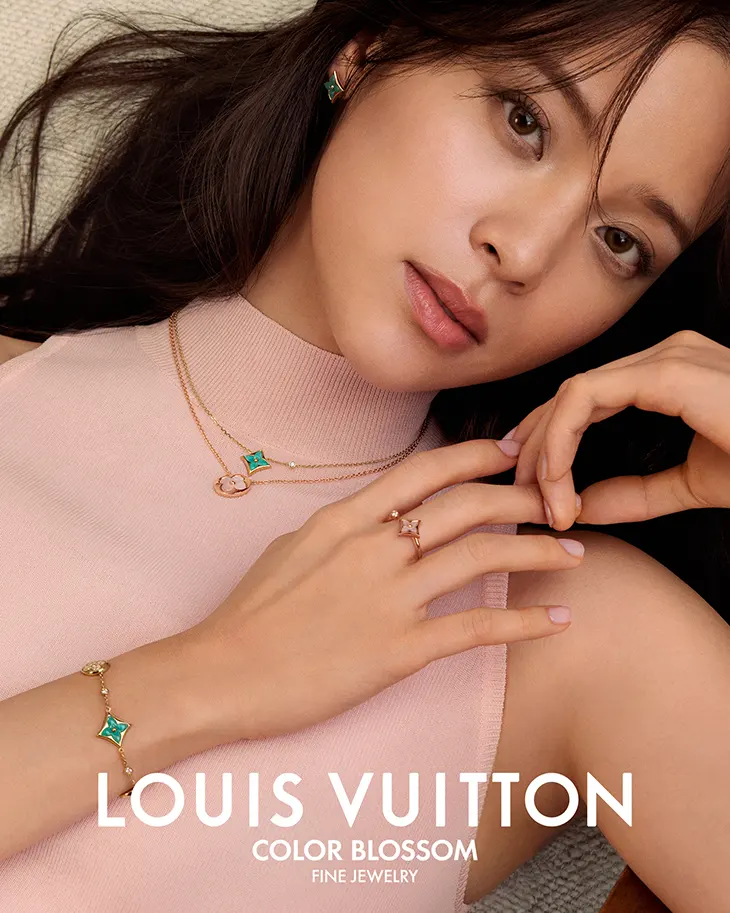
Pink mother-of-pearl returns with five additional designs. These pieces continue the established approach of carving and setting, with attention placed on surface clarity and proportion. Louis Vuitton develops the Color Blossom collection by focusing on material, form, and wearability. The addition of sodalite and new structural formats introduces further variation while maintaining continuity with the established design language.