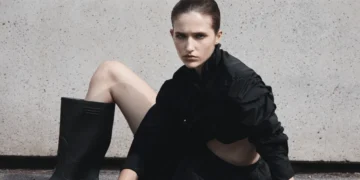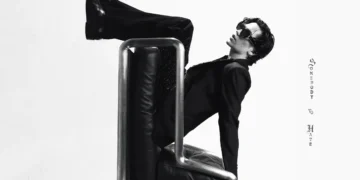



Roxana Savin carries the Romanian countryside inside her like a second heartbeat. Her new series and photobook, On Heaven’s Doorsill, rises from that inner terrain, a place where memory, myth, and the everyday fold into each other without hierarchy. The work begins with her grandmother Alexandra, whose rituals shaped Savin’s earliest understanding of life and its thresholds: baskets of pomană carried through pre-dawn silence, stories whispered with the weight of unfinished journeys, burial clothes prepared decades before they were needed. In Savin’s images, those memories do not return as nostalgia but as a living language.
ORDER IN PRINT AND DIGITAL
Across rural Romania, faith, superstition, and ancestral folklore continue to coexist in ways that feel both fragile and resilient. Savin photographs that space with clarity and reverence, yet never from a distance. Her book moves through death-weddings, the myth of Miorița, the night rituals of strigoi, and the rare Chipărușul funeral dance, as a world she knows from within. The project blurs research, personal history, and a visual imagination sharpened by her upbringing.
In conversation with DSCENE Magazine’s Katarina Doric, Savin traces how these beliefs survive in the present, how they shaped her identity after leaving Romania, and why she sees photography as both an offering and a form of continuity. Their dialogue moves from memory into ritual, from the supernatural into the intimate, capturing an artist who returns home through images while reimagining a disappearing cultural universe for a new generation.
Your book begins with a very personal story about your grandmother. How did her life and worldview shape the way you approached this project as both an artist and granddaughter? – I was raised by my grandparents in a village in Romania for the first seven years of my life, before I moved to the city with my parents. For my grandmother Alexandra, daily life was marked by ancient customs and rituals and religious celebrations in the spirit of Christian Orthodox faith. As a child, I witnessed rituals like pomană, when we had to go to the cemetery with offerings for our ancestors.
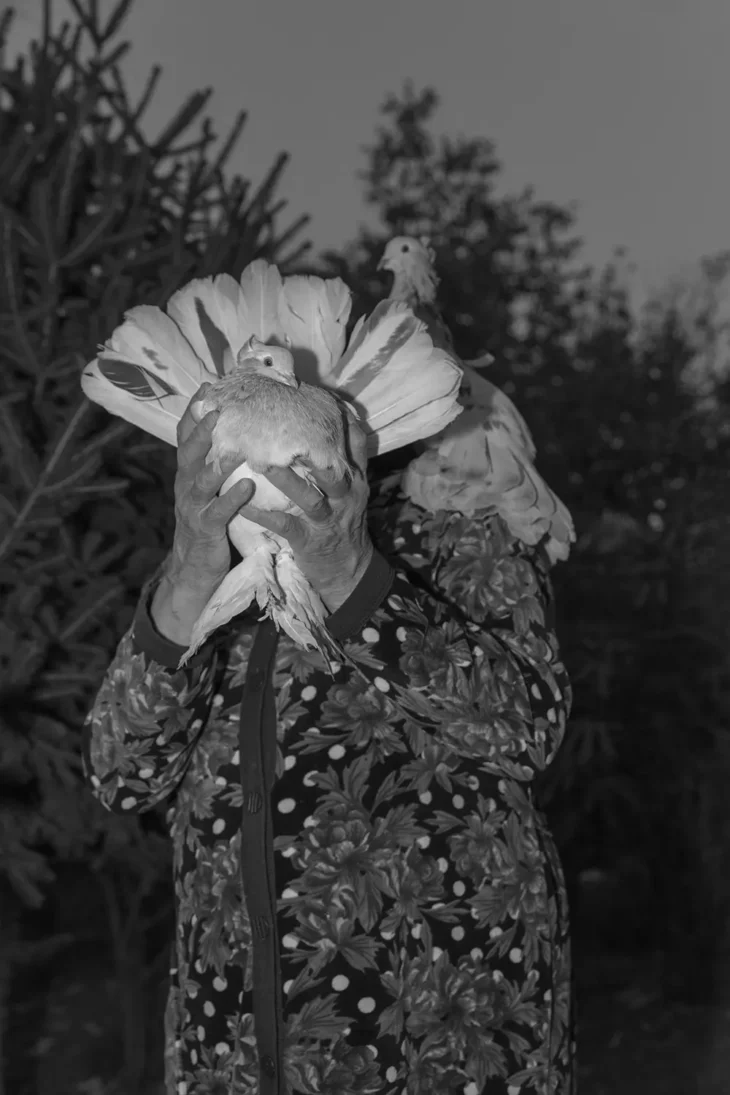
My grandmother believed that life on earth was as important as the afterlife, and she started to make preparations for her burial when she was in her forties. She had a cupboard in her bedroom with items that were supposed to be offered at her funeral, with very detailed instructions. She put aside her burial outfit and she loved to show me the burial clothes and rearrange them every time I visited her.
One summer night, long after she became a widow, my grandmother had a dream in which her late husband appeared. She asked him if he came to take her to the other side. He replied that it’s not the right time yet and he would be back for her at harvest time. And so, the same year in autumn, she passed away and rejoined him.
She died when she was 95 years old and her funeral was done according to her wishes.
When you return to photograph rural Romania, what do you notice first? – Life in rural Romania is largely organised around field work and major Christian holidays. In many respects, it feels like a return back in time. In places like Maramureș, people still preserve old crafts and traditions that have disappeared elsewhere. Orthodox beliefs are intertwined with superstitions such as those meant to drive away evil spirits or to bring a rich harvest.
How do you translate intangible things like memory, faith, and folklore into visual language? – During the initial stage of making On Heaven’s Doorsill, I’ve been researching folk ballads, tales, rituals, and customs that illustrate the ongoing relationship between the living and the dead in Romania. This helped create a framework of the main themes I wanted to explore in the work.
I was raised in a world shaped by rituals, where the connection between the living and the dead never truly ended.
Then during my travels in different parts of the countryside, I had amazing encounters with local people and had the chance to hear their stories and witness some of the rituals. Spending time with the locals and creating connections in the communities where these traditions were practiced, along with memories from my own childhood, helped create images in my mind, which I could afterwards make for the purposes of the project.
Do you see your photography as documentation, or as a reinterpretation of these traditions through your own imagination? – I usually take pictures for documentation purposes in the first research stage of my process. However, I’ve realised early on in the project that I was not drawn to making a documentary work. These ‘documentary’ images I made serve as a catalyst for reinterpreting the traditions from a personal perspective.
Pomană, the offering for the dead, is described with such vivid detail. What do you remember most about experiencing or photographing this ritual? – More than just a ritual, pomană is a gesture of compassion made in memory of the departed, marked by sacred offerings mainly of bread, wine, and candles. Round loaves of bread signify cyclic continuity while candles symbolise divine light and spiritual guidance.
I have vivid memories of my grandmother going to the village cemetery early in the morning for giving alms. It was still dark outside when she would wake up to prepare the baskets of pomană with great care. We, the children, were entrusted with carrying them to the cemetery. As we walked the village paths, the streets lit only by the faint glow of dawn, you could barely see the people around you, just the silhouettes of neighbours making their way through the hush, each carrying their offering of remembrance.
It was believed that the connection between the living and the dead did not end with burial. My grandmother thought the soul’s journey after death depended on the participation of the living: without their prayers, offerings, or remembrance the departed could not find peace. The ancestors were somehow present in our lives.
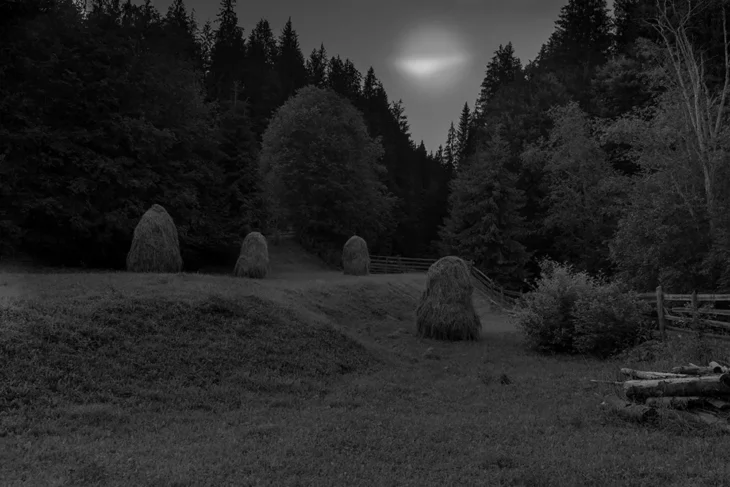
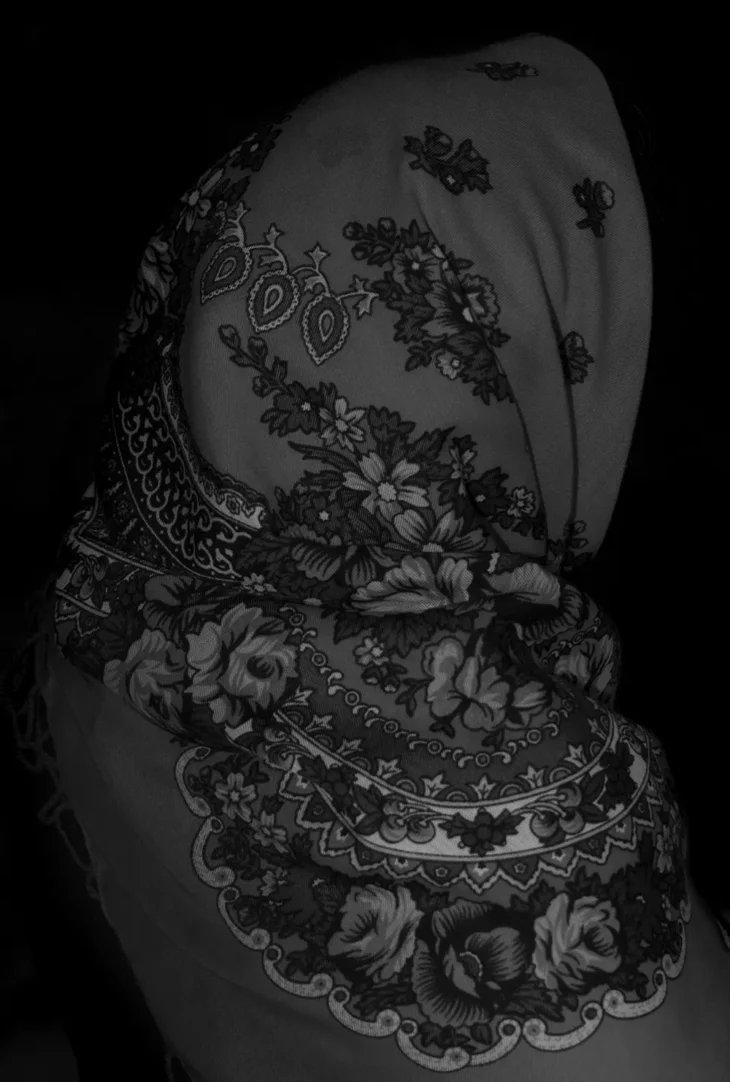
In your work, death is often reframed through traditions like the “death-wedding” or the myth of Miorița. How do you approach capturing something so heavy yet poetic? – In Romanian popular belief, every person must pass through the three great thresholds of life: baptism, marriage, and death. In rural communities, there is still the custom of burying unmarried individuals in wedding attire. To die before marrying is to leave life incomplete; hence, the death-wedding rite, which symbolically corrects this absence.
The reinterpretation of death as a form of sacred union is reflected in the myth of Miorița, The Ewe, one of Romania’s most emblematic folk ballads. The story plays in a mountainous landscape ethereally described as ‘Heaven’s doorsill’ where three shepherds graze their flocks. Faced with the news of his impending death, the Moldavian shepherd is humbly accepting his fate. He imagines his passing as a cosmic wedding. The ballad offers a symbolic vision of death, not as an end, but as an integration into the cosmic order.
I realised early on that I was not drawn to documentation, but to reinterpreting these traditions from a personal perspective.
In a different tale, the main character, a young prince, is on a quest for finding eternal life in a land where there is no old age nor sorrow, where he marries a princess.
This particular philosophical perspective on life and death, referenced in Romanian literature and folk culture, served as an inspiration when making the images: death is seen as a passage towards a superior stage of existence and not necessarily something that only causes anguish. There is the promise of paradise and the hope of reuniting with the dear ones in heaven.
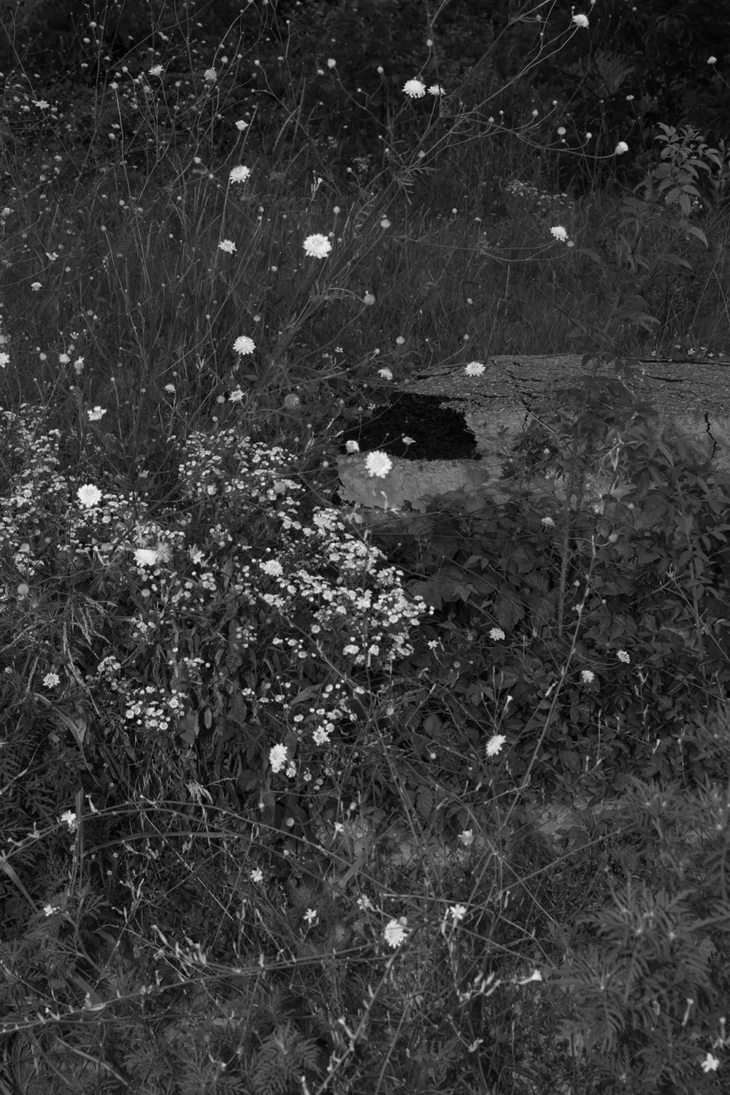
In the photobook On Heaven’s Doorsill, most of the images are black and white, except a few images in colour, which convey a different mood than the black and white pictures. They evoke the life cycles, renewal, and transformation. Nature’s vitality, its constant growth, decay, and regeneration can be emblems of life, death, and rebirth.
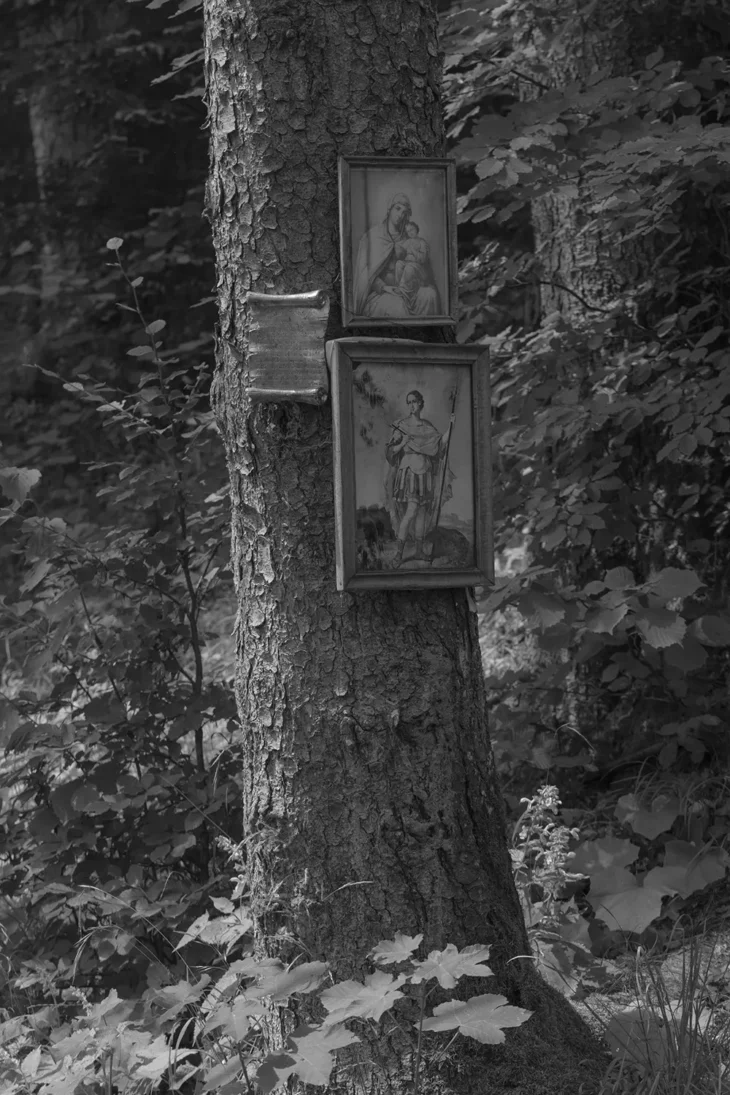
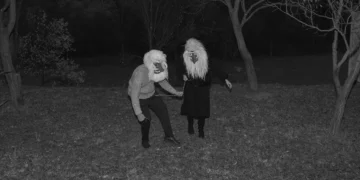
The presence of strigoi in rural belief is unsettling and fascinating. What does it mean for you to photograph traditions that still hold space for fear, chaos, and the supernatural? – In Romania, pre-Christian rites, like those for the Night of St. Andrew, are based on the belief that this is the night of the strigoi, when restless spirits rise from their graves to exact vengeance. This night marks a lifting of the veil between the realms of the living and the dead, a moment of return to primordial chaos.
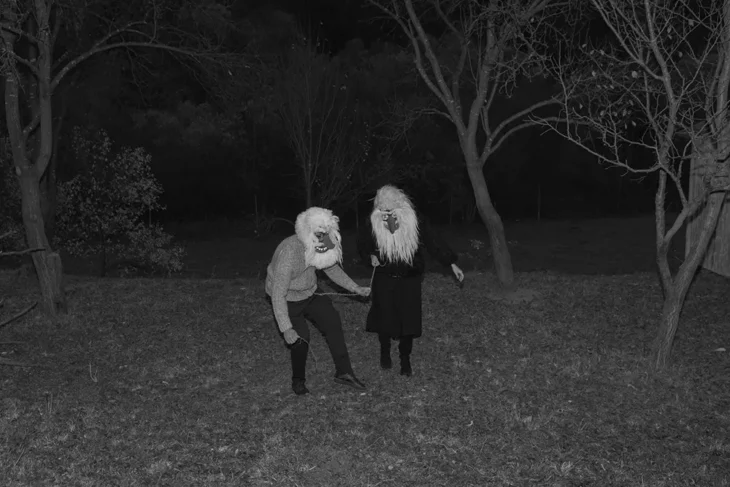
The villagers would attribute misfortune and unexplained phenomena to the presence of these spirits. Strigoi are thought to harm crops, sicken livestock, and drain the vitality of the living. These spirits were believed to travel at night to secret locations, often disguised as animals, to meet and battle one another until the rooster crowed.
People developed protective measures against the perceived threat: smearing garlic on doorways, chimneys, and windows; making the sign of the cross; lighting protective fires. In some regions of Romania, particularly Oltenia, when a recently deceased person is suspected of having become a strigoi, villagers may resort to a posthumous identification ritual where a stallion is ridden over the graves at night to locate the strigoi’s resting place. Should the horse refuse to leap over a particular grave, the body is exhumed and pierced through the heart with an iron spike to prevent further hauntings.
Such superstitions survived even in modern times. There are fairly recent cases of exhumation of deceased people on the grounds of haunting the living. For me, making images for the project and referencing these practices meant exploring a part of my cultural and spiritual heritage, where the magic and the supernatural are accepted in everyday life. The history of photography itself incorporates beliefs in ghosts and spirits of the dead, which the early photographers tried to capture.
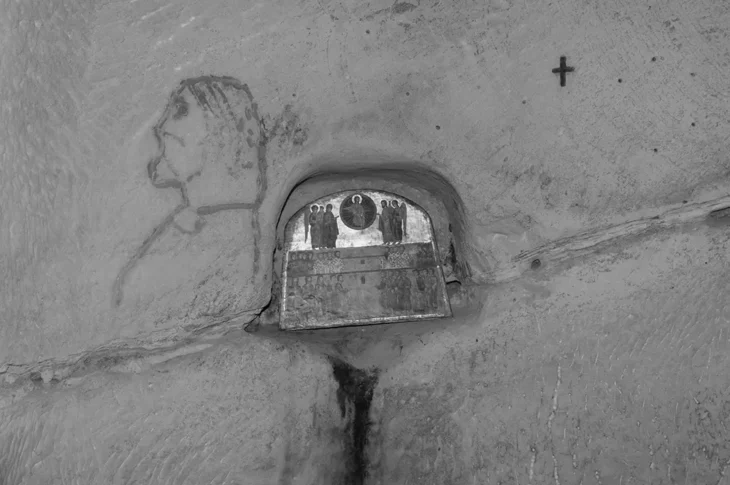
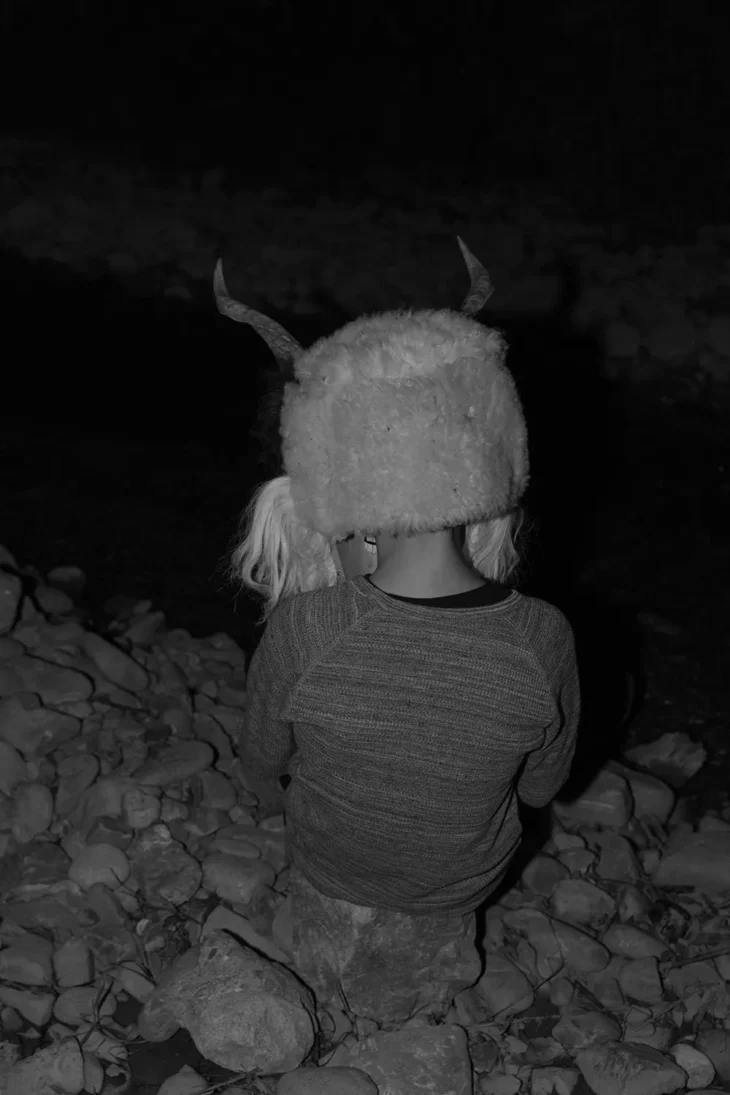
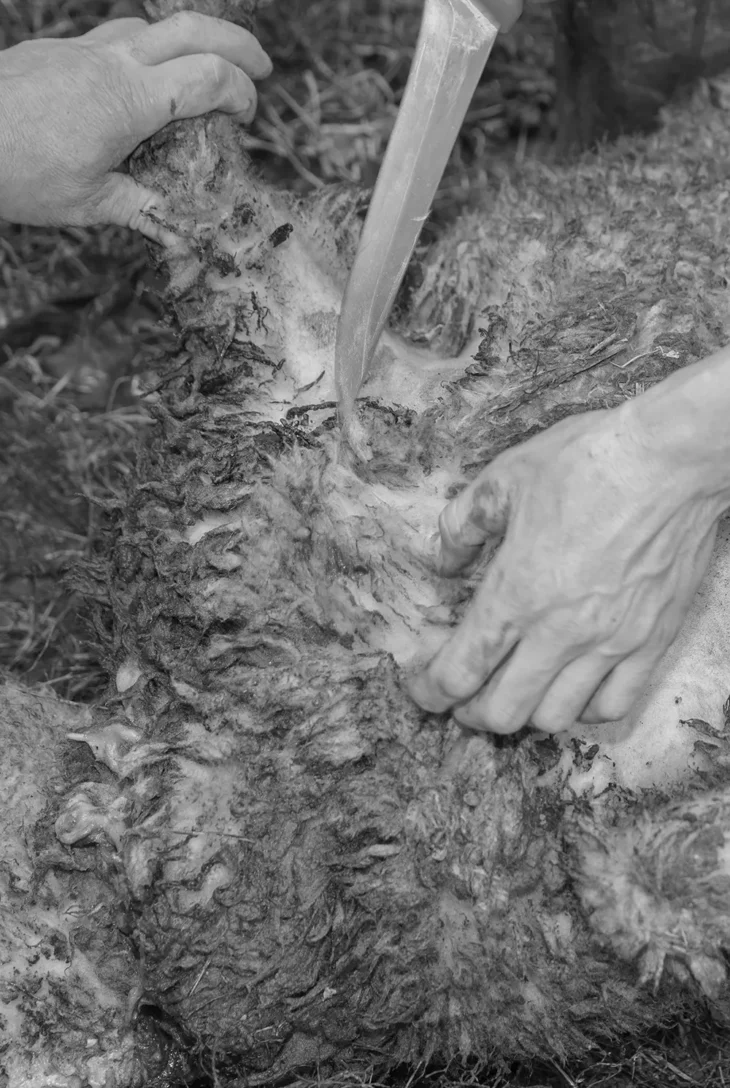
Dance rituals like Chipărușul turn mourning into performance. How do you handle the balance between the sacred and the aesthetic when photographing such practices? – Chipărușul is a funeral dance unique in Europe, according to some ethnologists, a pre-Christian ritual linked to ancient Thracian beliefs about death as a joyful rebirth. The dance was practiced in the mountainous region of Vrancea and originally involved twelve men in sheep’s wool masks. They would light a fire outside the house of the deceased and dance ceremonially, linked through a chain symbolising the “chain of life”. Their periodical leaping over the flames is a gesture thought to represent the purification of the soul and its passage into the next world. The aim of the Chipărușul is to protect the family from the return of the spirit as a harmful presence while simultaneously guiding the soul on its path to transcendence.
Death is not seen as an end, but as a passage toward another stage of existence.
Nowadays, the dance is practiced less often, only in a few remote communities at the funerals of older people. It also evolved from its original social and ritual significance in the community into a performative New Year tradition, leading to inevitable changes in aesthetics, depending on the context of the performance and its performers.
For me as a photographer, the visual language is an instrument that helps to convey a particular feeling. For On Heaven’s Doorsill I chose to make the images in black and white. At the same time, I feel quite free when composing the images, as the tradition I was depicting is evolving as well, and I’m not photographing from a documentary angle.
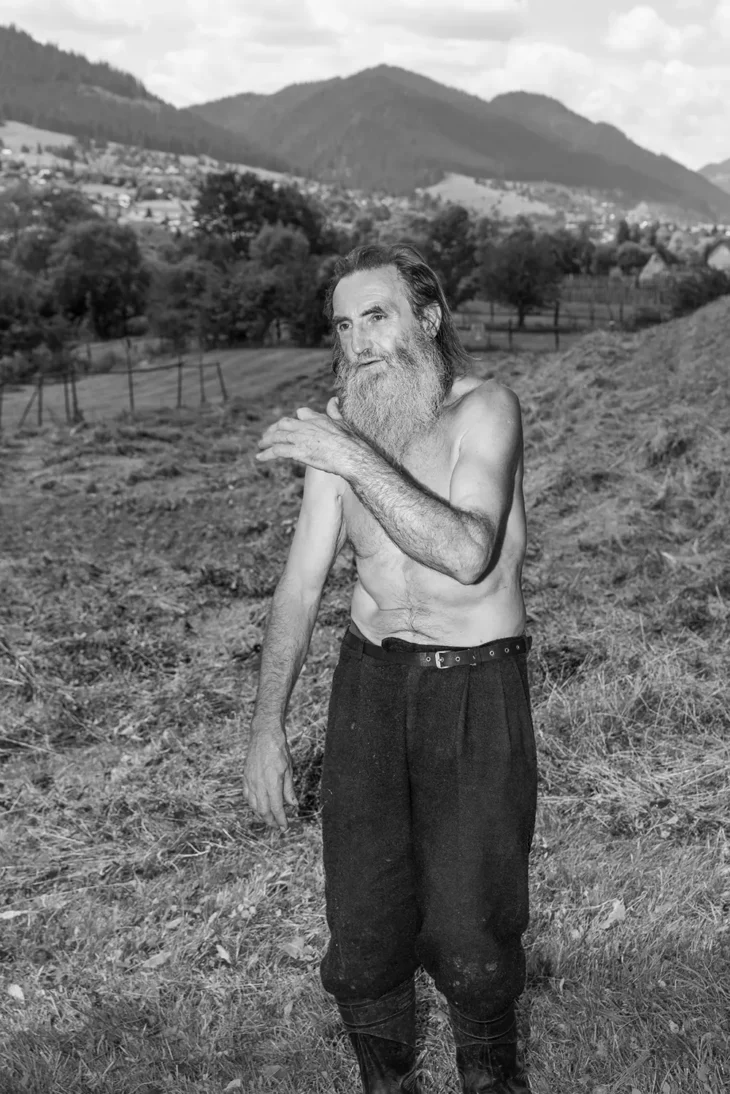
Many of these customs exist in tension with modern life. When you photograph them, are you preserving something endangered, or showing that they still live and evolve? – These traditions are unfortunately on the verge of disappearing, with young people moving to the cities and the rise of globalisation. I hope I can contribute, through my artistic project, to their preservation.
Do you feel that young generations in Romania are reconnecting with these traditions, or are they slipping away into history? – Many customs and traditions remain strong in certain parts of the country, although they tend to be upheld by older generations. Most young people choose to live in the cities, leading modern lives.
In recent years though, there is a growing interest among younger generations in folk traditions and festivals as a way to express their cultural identity. I could see young people wearing traditional costumes in the countryside when going to the church on Sundays. They also blend traditional pieces, like embroidered blouses, with modern trousers or dresses for festivals and celebrations.
How do you personally carry these beliefs and rituals into your own life? – During my childhood in the countryside, I grew up in a world shaped by traditions, customs, and rituals. My grandmother incorporated them into our daily life. I accompanied her to the cemetery for giving alms, to funerals, to religious celebrations. I witnessed rituals such as those that were supposed to bring the rain in times of drought or superstitions like dreaming of a dead relative, which foretells the death of a family member.
After I moved abroad, I continued to carry these beliefs in my memory, and at the same time, when making the project On Heaven’s Doorsill, I rediscovered them from a different perspective and came to appreciate their richness. Having my own family and living in Western Europe made me reconsider how these beliefs and rituals can help my children connect with our roots, the family, and the community in Romania.
Photographing these rituals meant engaging with a cultural space where the supernatural is part of everyday life.
What do you hope readers will take away from these stories of ritual, death, and continuity? – The project offers a different perspective, where the death of a person is not seen as the end of the relationship with them.
How did working with everyday villagers change the way you see your role behind the camera? – I felt privileged to get to know them, and I was inspired by stories of resilience and courage.
The title Sacred Offerings suggests reverence. Do you see this body of work as an offering itself? – I dedicated the book On Heaven’s Doorsill to my late grandmother. She wanted to be remembered, and that’s an opportunity to honour her memory.
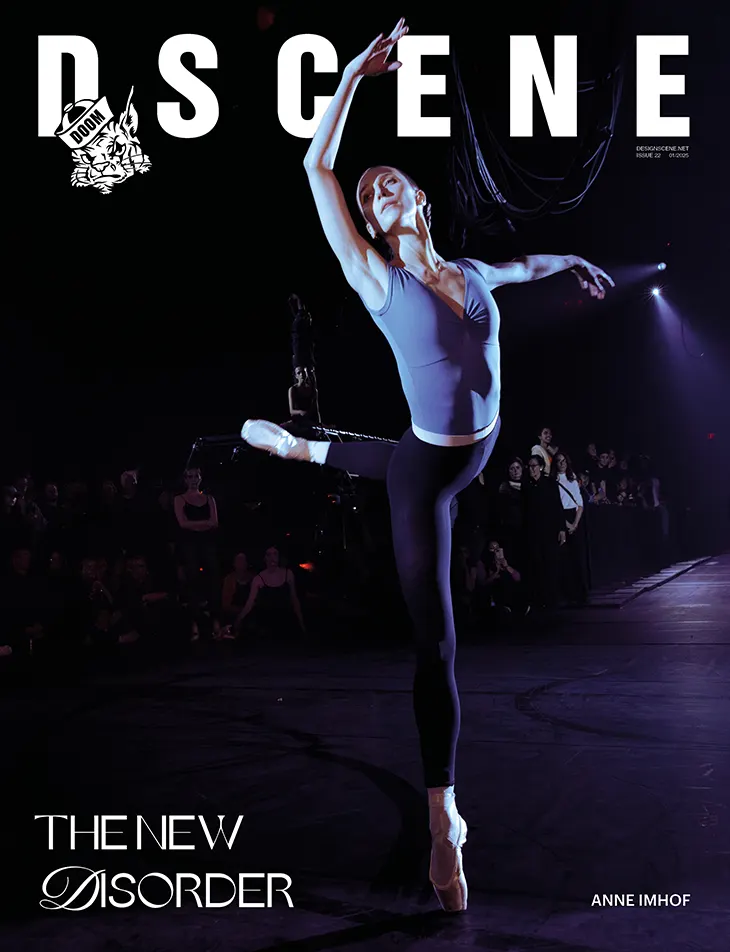
The New Disorder suggests a world in flux. How do ancestral rituals, myths, and your own photographs challenge or counterbalance this sense of instability? – For many, modern life contributes to a rise in feelings of uncertainty, which leads to a search for meaning in ancient myths, spiritual practices, and older traditions. This can be a way to find order and a sense of belonging in these times of upheaval.
Originally published in DSCENE “The New Disorder” Issue.