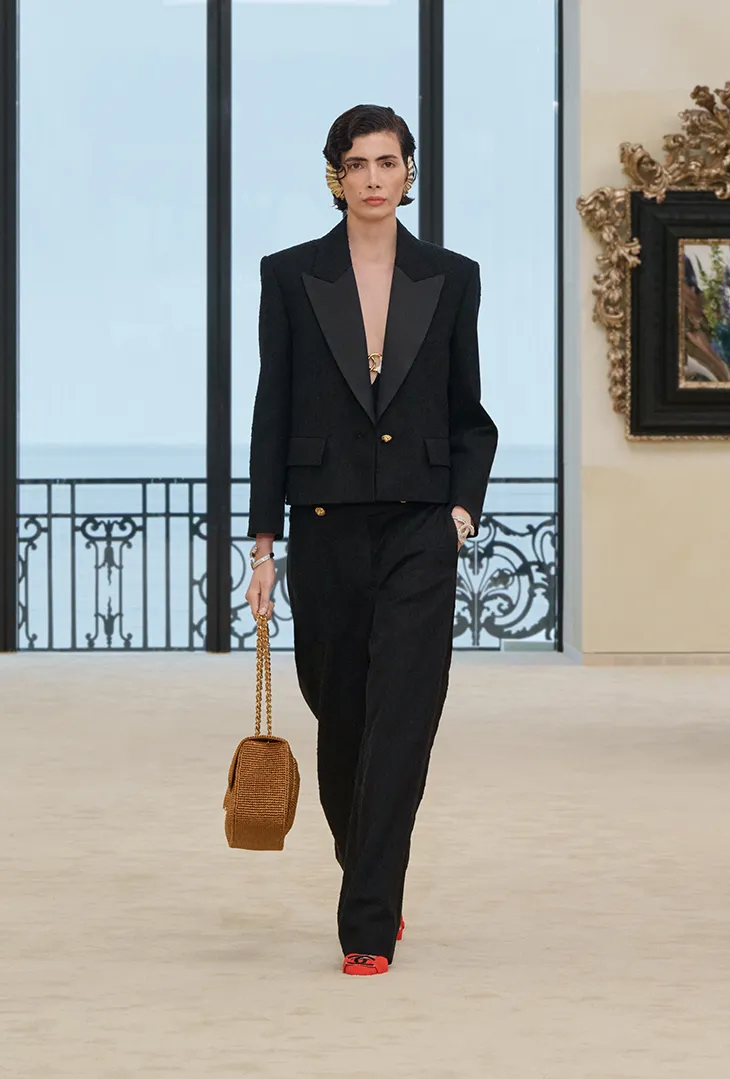



Luxury house CHANEL unveiled its Cruise 2026/27 collection in Biarritz, a location tied directly to Gabrielle Chanel’s early work and to the formation of the house’s visual and cultural codes. Matthieu Blazy builds his first Cruise collection for CHANEL on this foundation, returning to the coastal city where Chanel opened her couture house in 1915 and introduced a new approach to dressing shaped by movement, environment, and daily life.
CELEBRITY GUESTS AT CHANEL CRUISE 2027 SHOW
Biarritz offered Gabrielle Chanel a different setting from Paris. The city brought together artists, workers, sailors, and members of the upper class within the same social environment. That coexistence informed her approach to fashion. She treated clothing as part of lived experience, shaped by the outdoors and by physical activity. The beach, the sea, and changing weather conditions required garments that allowed ease and mobility. Jersey, linen, and cotton replaced restrictive materials, and silhouettes followed the body’s needs throughout the day.
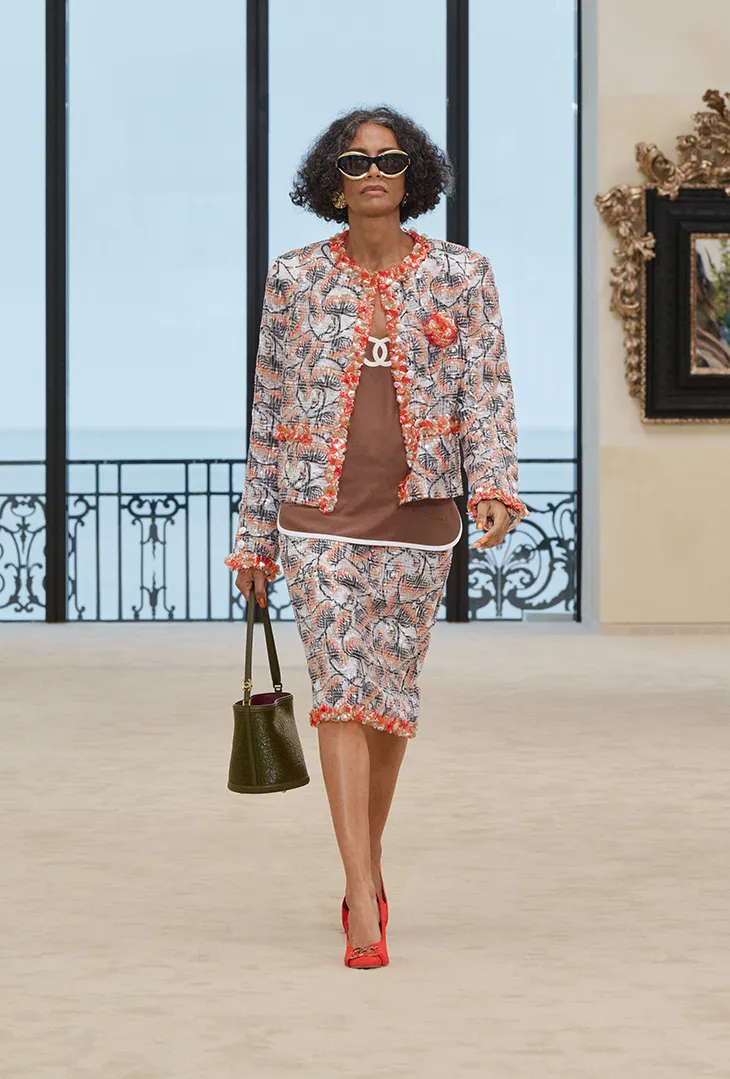
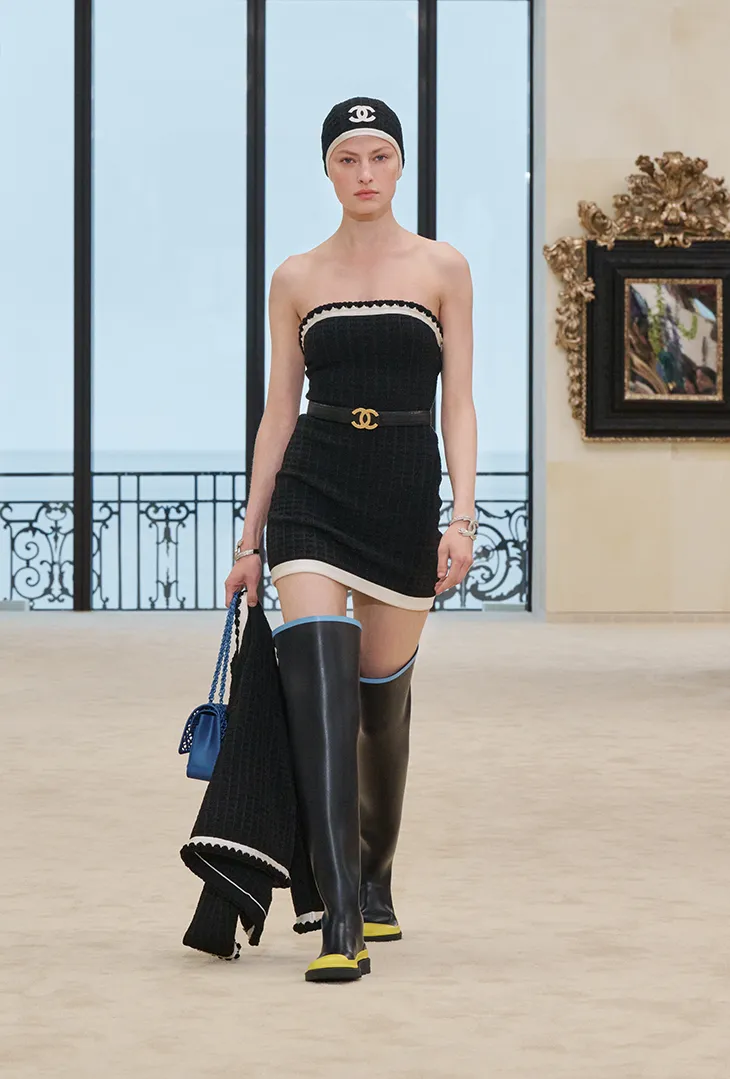
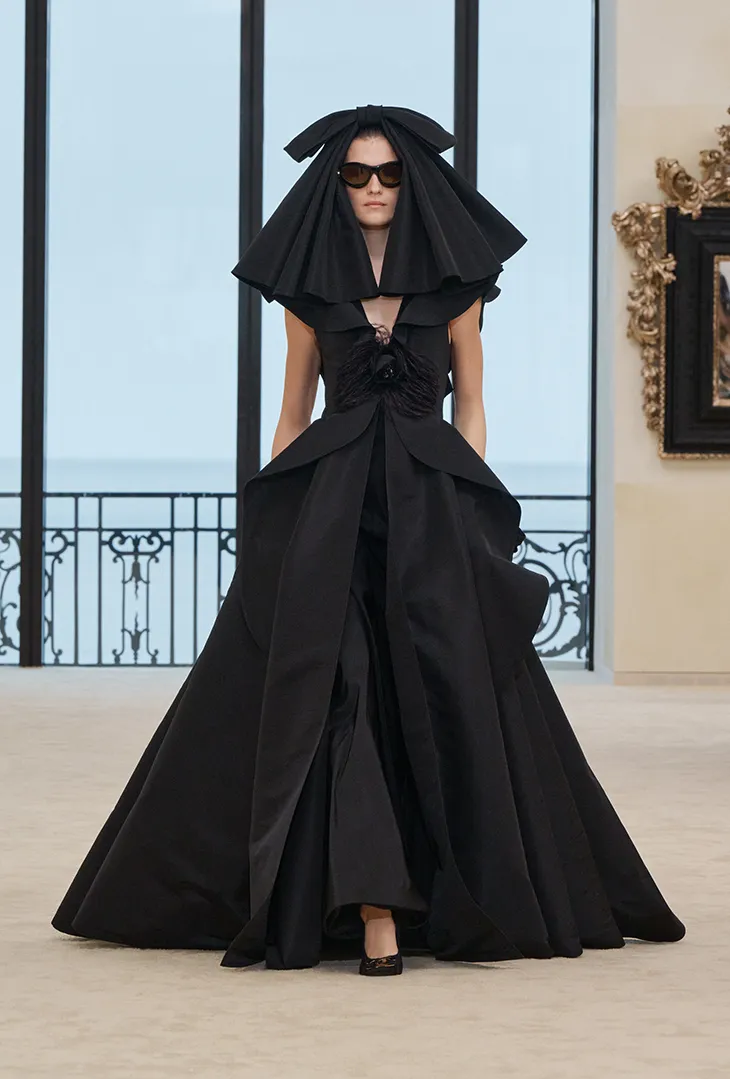
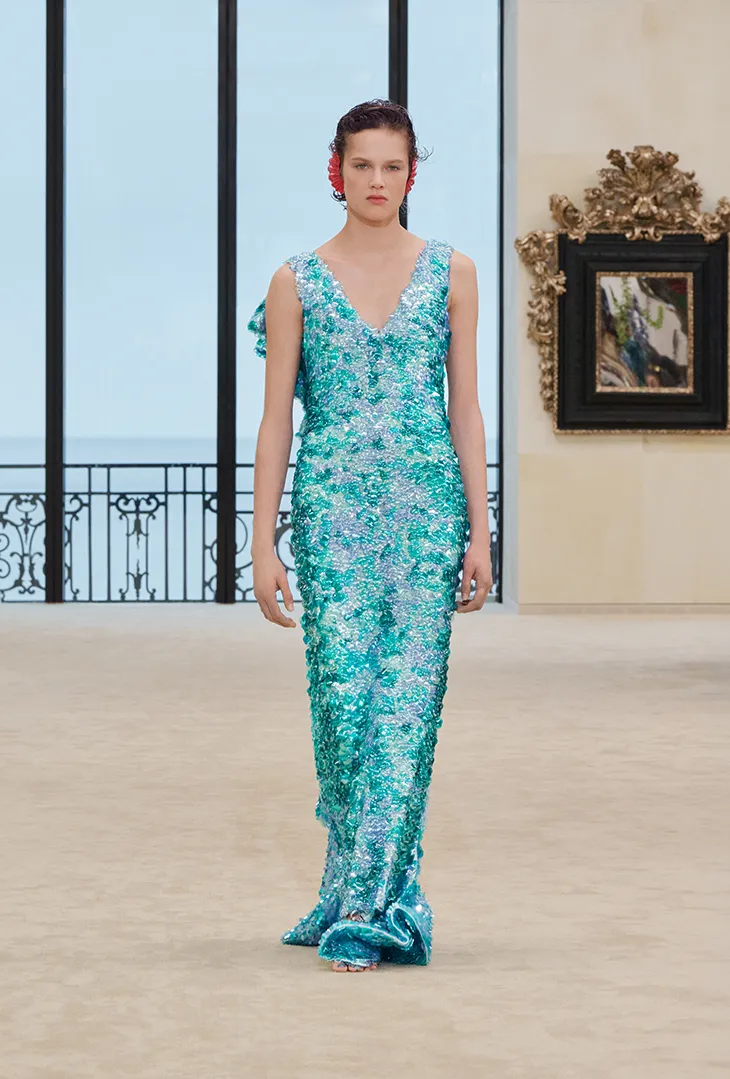
Blazy references this context directly. He builds a collection that reflects the Basque coast through both function and imagination. The black dress appears alongside references to maritime life and fantasy elements such as the mermaid. These ideas form a new visual language grounded in the history of CHANEL while allowing space for reinterpretation.
The collection draws from multiple sources of dress. French workwear, leisure garments, and formal attire appear together. Sailor uniforms connect with gowns, and practical clothing aligns with decorative pieces. This approach removes rigid distinctions between categories of dress. The Basque stripe appears throughout as a recurring visual element that links different looks.
Materials reinforce the connection to environment and movement. Silk foulards shift lightly, raffia skirts create texture, and cotton canvas tailoring adds structure. The bathing suit plays a key role, reflecting the coastal setting and the relationship between dressing and undressing. Fabric choices include fluid silk, tweed, flocked textures, beaded knits, and fish-scale paillettes. These materials reflect the sensory qualities of the surrounding natural environment.
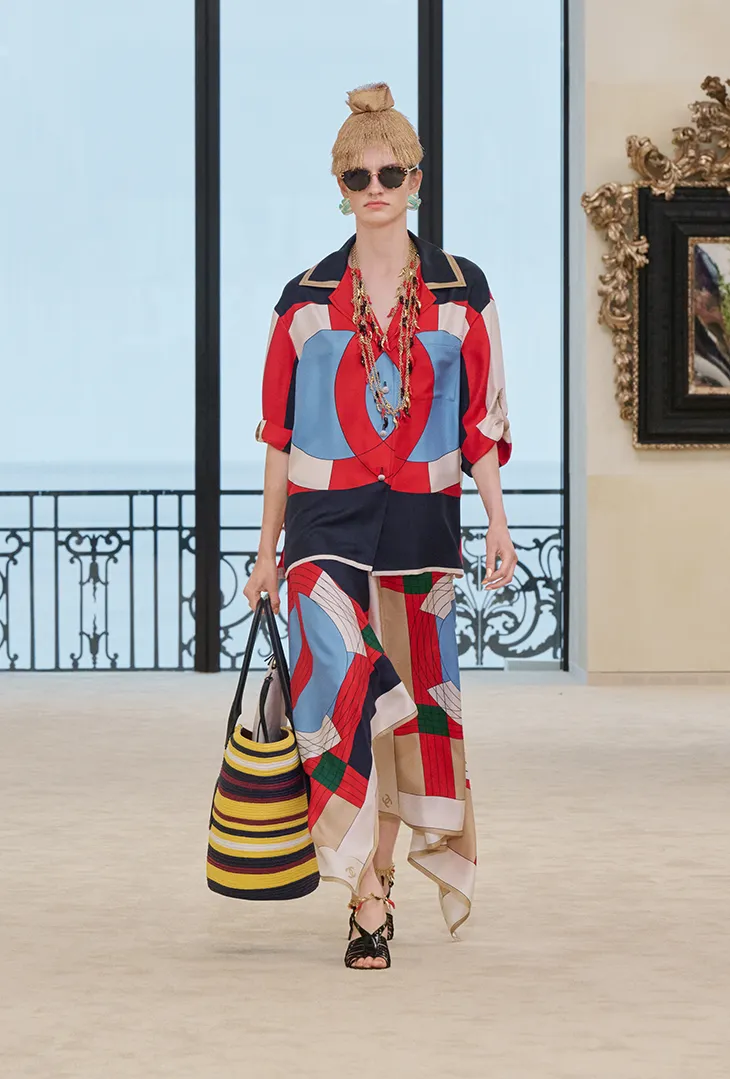
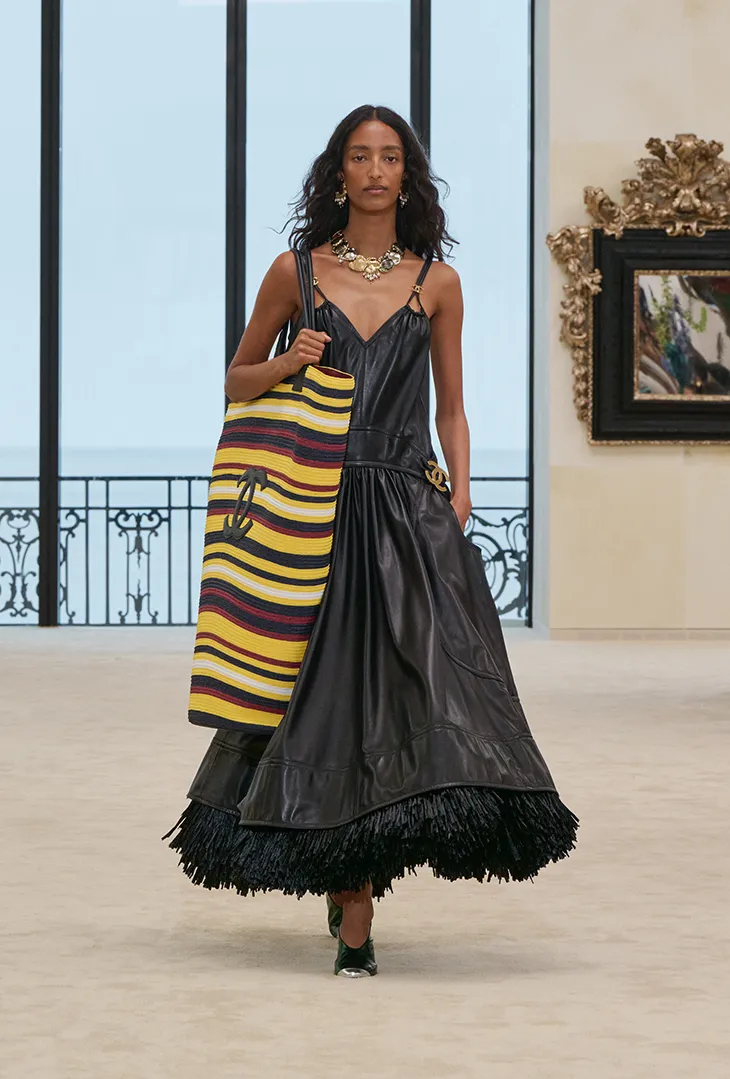
The double C motif appears as part of garment construction rather than as a surface detail. Introduced in the 1930s, its form reflects Gabrielle Chanel’s approach to design and identity. In this collection, it functions as an architectural element within clothing, linking past and present.
Accessories extend the same range of references. Bags include small valise shapes, large holdalls, waterproof flap designs, and oversized striped beach paniers. A pala carrier appears within the selection. Footwear shifts between structured heels inspired by Art Deco and minimal designs such as heel caps. Jewellery references both the architectural language of Biarritz and its coastal life, with shell earrings and pearl pieces placed within that context.
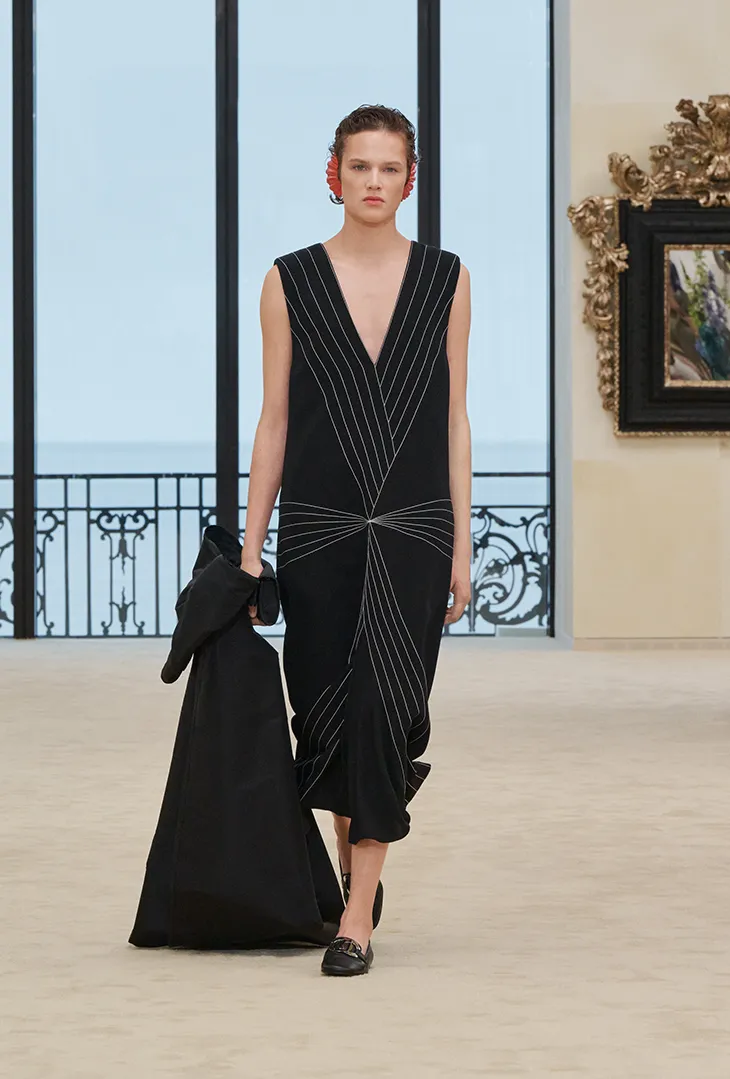
Blazy also revisits one of the most defining garments in the house’s history. Gabrielle Chanel’s black dress, introduced in 1926, appears as the opening look of the collection. The original drawing published that year did not include a large bow visible from the back. In this version, that detail becomes a clutch bag. The black dress marked a shift in how fashion operated. It took a form associated with working women and placed it within a different context, changing how it was perceived and worn.
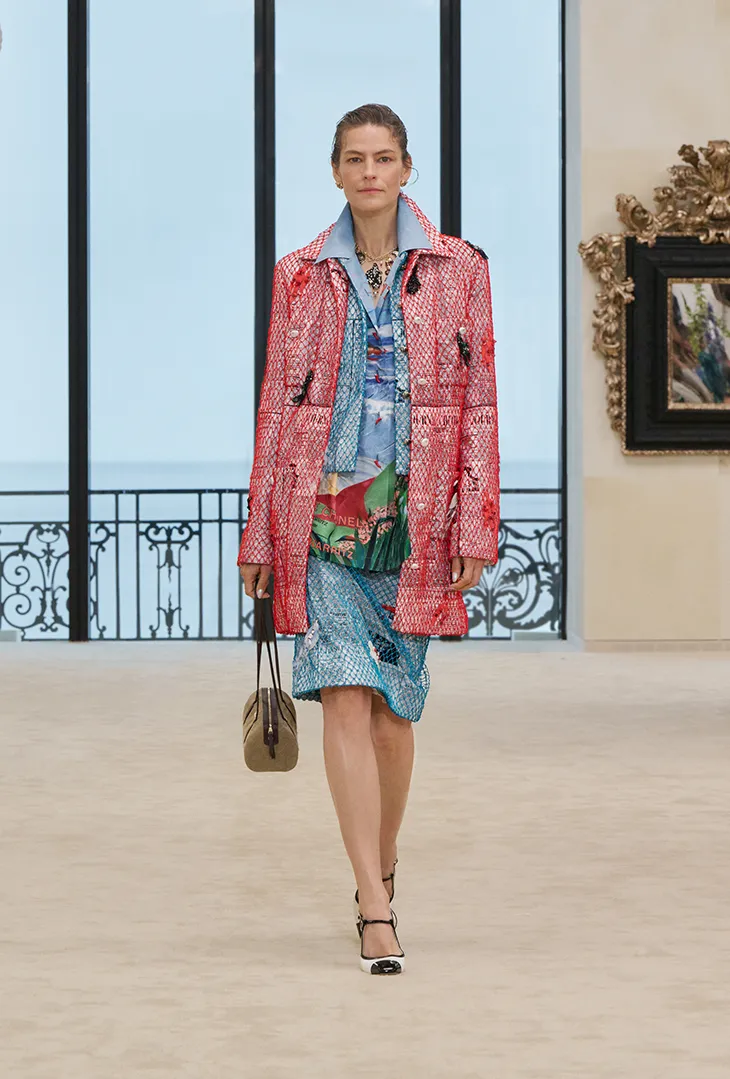
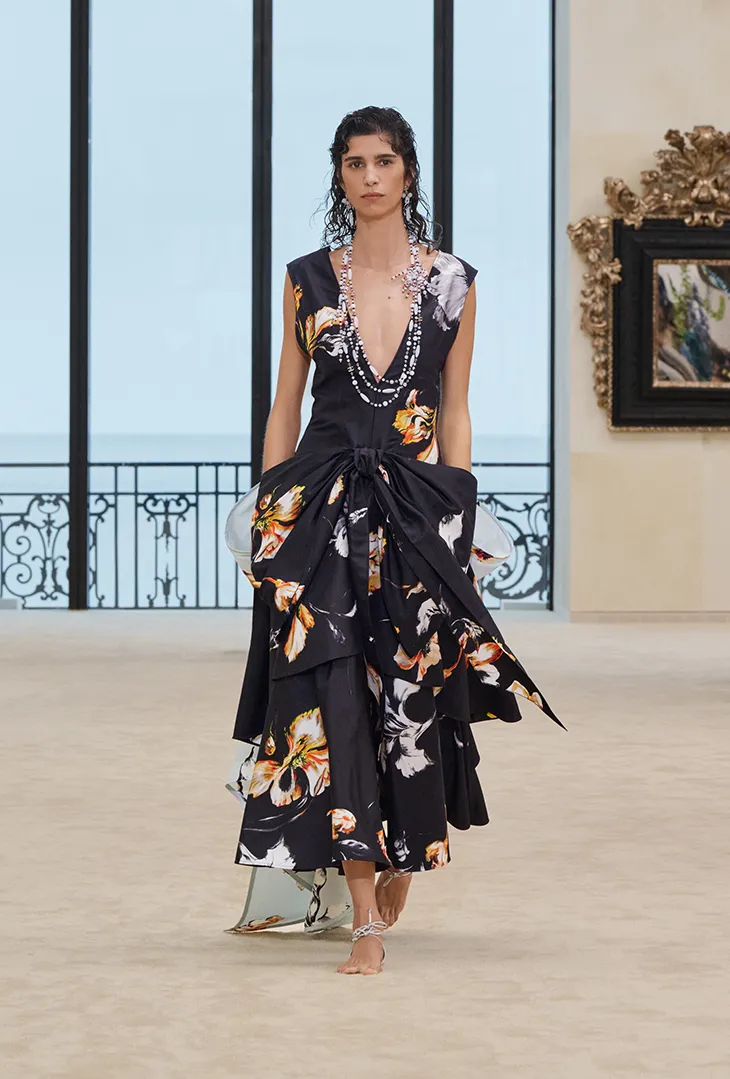
The dress connected different social groups through a shared garment. Women working as servants, shop assistants, or within religious orders already wore black as part of daily life. Gabrielle Chanel translated that visual language into a new setting. The result challenged established ideas of elegance and status. The wearer gained visibility through simplicity and directness.
Blazy continues this line of thought through references to workwear such as the sailor’s marinière and the bleu de travail. These garments carry both practical use and symbolic meaning.
Biarritz remains central to this narrative. After her early work as a milliner in Paris and the opening of boutiques in Deauville in 1912 and Monte Carlo in 1914, Gabrielle Chanel established her couture house in Biarritz in 1915. She set up her operations at the Villa de Larralde, close to the casino and the beach. The space included boutiques, ateliers, and a private apartment. Its layout anticipated the later structure of 31 Rue Cambon in Paris.
The city provided an environment free from the strict etiquette associated with Parisian fashion and European court culture. This setting allowed Gabrielle Chanel to develop a new approach based on ease, function, and graphic simplicity. Clean lines, reduced forms, and practical materials defined this direction. At the same time, the rise of Art Deco influenced both the architecture of Biarritz and the visual identity of her work.
The cultural environment of the city also contributed to this development. Figures such as Igor Stravinsky, Jean Cocteau, and Pablo Picasso spent time there. Picasso painted The Bathers in Biarritz in 1918 during his stay with Olga Khokhlova. The presence of artists reinforced the city’s role as a site of creative exchange.
The house continues its connection with Biarritz through several current initiatives. The Villa de Larralde undergoes renovation and hosts an ephemeral boutique until September 27. The collection also coincides with the Biarritz Film Festival – Nouvelles Vagues. These elements place the city within the ongoing narrative of CHANEL.
Through this collection, Matthieu Blazy builds on a foundation established in Biarritz over a century ago. The relationship between clothing, environment, and movement remains central. The garments reflect a context shaped by the sea, by daily activity, and by a mix of social and cultural influences that defined the origins of the house.