


Fashion shows once followed a fixed structure. A runway, a seated audience, a timed sequence. That format still exists, yet the shows that stay relevant tend to question it. The most influential presentations rarely depend on scale alone. They challenge how fashion is delivered, who it reaches, and what a show is expected to do.
FASHION
These moments shift attention toward the idea behind the presentation. Some remove the runway entirely. Others turn production into performance or place fashion in environments that resist control. The result feels direct and often uncomfortable. The clothes remain central, yet the format carries equal weight. These shows continue to shape how designers approach presentation today.
Helmut Lang
Spring/Summer 1998
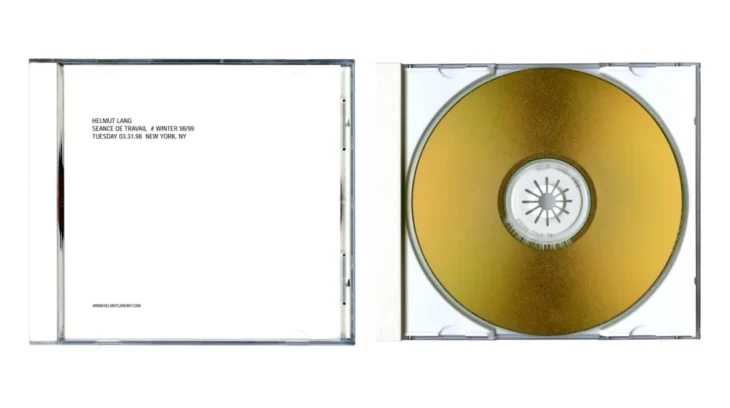
Helmut Lang rejected the traditional runway and sent the collection to press on CD-ROM. Editors received the show as a digital experience, outside the usual calendar and without a live audience. At a time when fashion relied on physical presence, this move introduced a new mode of distribution.
The decision carried long-term impact. Lang later shifted toward online releases, anticipating how fashion would circulate through screens. The show did not rely on spectacle. It changed access and timing, which proved more disruptive than any set design.
Vetements
Spring/Summer 2020
Vetements staged its show inside a McDonald’s, placing models among tables, trays, and fluorescent lighting. Guests sat within the space rather than observing from a distance. The setting removed any separation between the collection and everyday life.
The location functioned as the concept. It introduced a direct confrontation between luxury fashion and mass culture. The show did not transform the space. It used it as it was, forcing the audience to reconsider context, value, and presentation.
Sunnei
Fall/Winter 2022.23
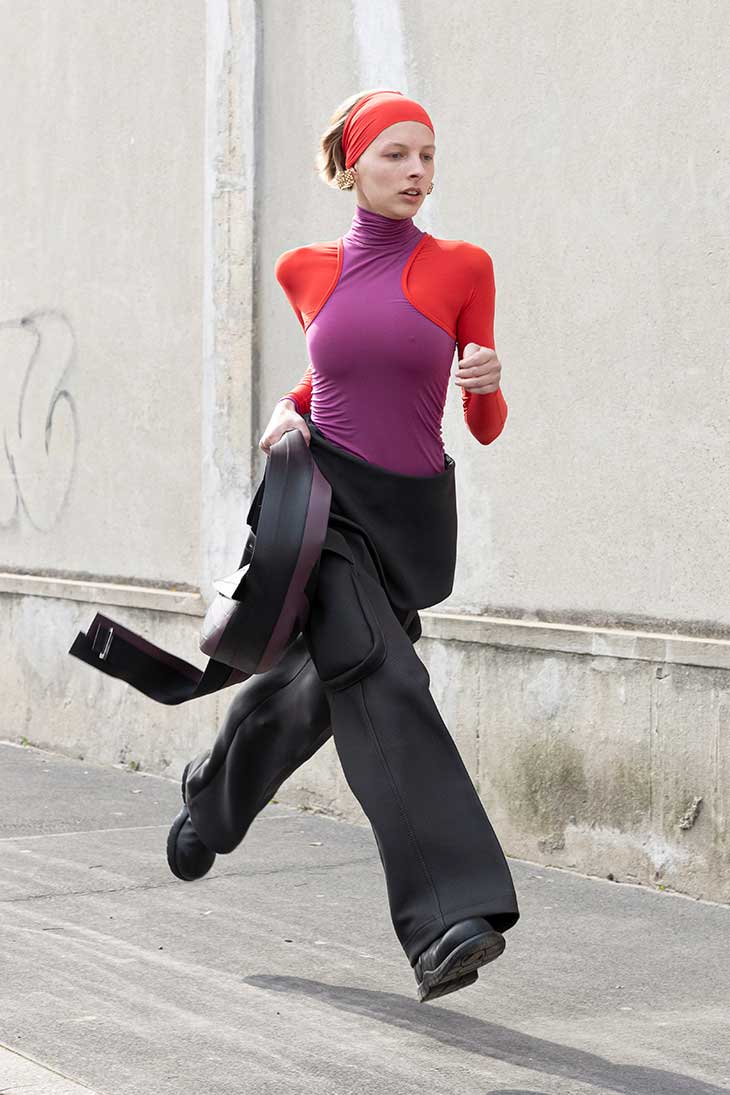
Sunnei constructed a looped runway where models ran continuously. There was no clear beginning or ending point. Guests entered and exited while the show remained in motion, without a defined structure.
This approach shifted focus from sequence to repetition. The collection existed as an ongoing cycle rather than a fixed narrative. Time became part of the design, challenging the expectation that a show must follow a linear format.
Maison Margiela
Spring/Summer 1990
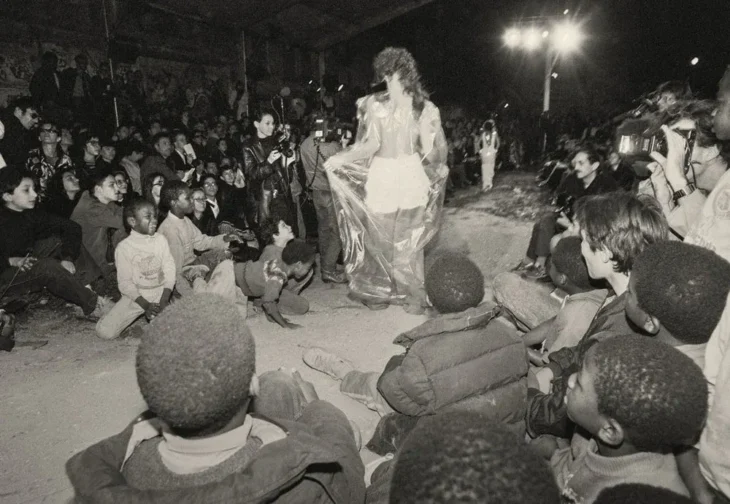
Maison Margiela staged the show in a raw outdoor setting, inviting local children and residents to sit alongside invited guests. The space felt unfiltered, with no attempt to control interaction between models and audience.
The presence of the community altered the atmosphere. Fashion lost its distance and entered a shared environment. The show rejected exclusivity and introduced a direct, almost confrontational openness that still defines the house’s early work.
Rick Owens
Spring/Summer 2016
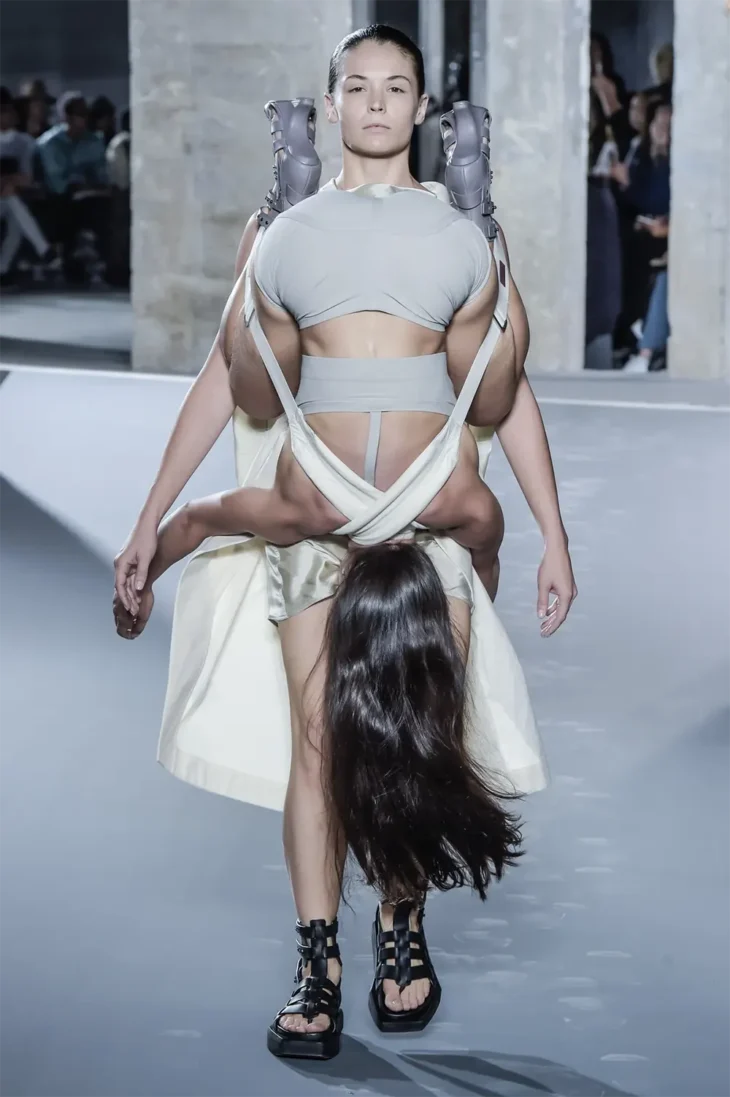
Rick Owens presented garments that incorporated other bodies. Models carried other models as part of the look, creating structures that moved as a single form. The silhouettes relied on physical connection rather than conventional tailoring.
The show introduced tension and vulnerability. Movement became slower and more deliberate, shaped by weight and balance. The body functioned as both material and support, pushing the idea of clothing beyond fabric.
Coperni
Spring/Summer 2023
During the Coperni SS23 show, a dress was sprayed directly onto Bella Hadid using liquid fiber technology. The process unfolded live, with technicians constructing the garment on her body in real time.
The moment focused on creation rather than presentation. The audience watched the transition from raw material to finished look. The show turned production into performance, making the act of making visible.
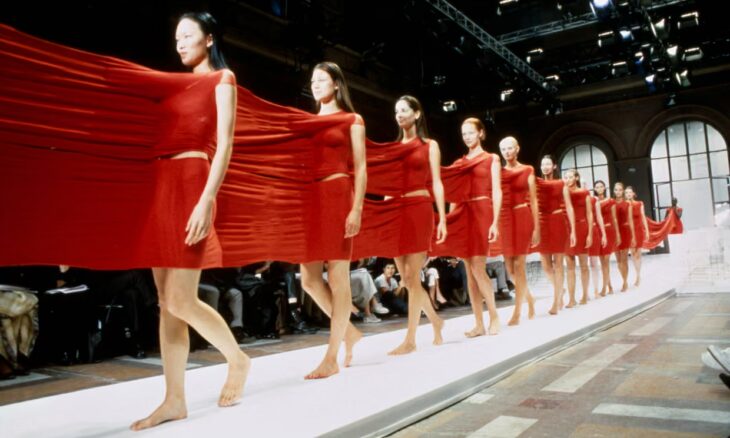
Issey Miyake
A-POC (late 1990s)
Issey Miyake introduced a system where garments emerged from a continuous tube of fabric. During presentations, pieces were cut directly from the material, allowing form to appear in real time.
This method reframed clothing as a process rather than a finished object. The show emphasized efficiency, adaptability, and immediacy. It also shifted attention toward how garments are made, rather than how they are displayed.
Hussein Chalayan
Fall/Winter 2000
Hussein Chalayan presented a set where furniture transformed into clothing. A wooden table unfolded into a skirt, while chairs converted into wearable pieces. The transformation occurred live on the runway.
The show connected design with themes of movement and displacement. Objects carried memory and function, shifting between states. The presentation relied on action, turning static forms into something fluid.
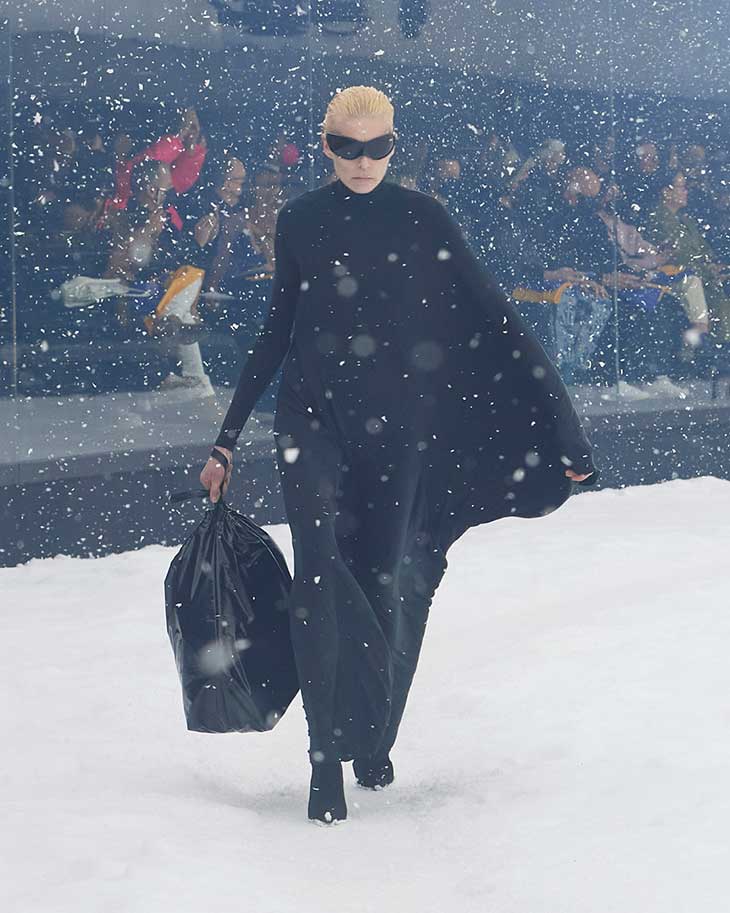
Balenciaga
Fall/Winter 2022
Balenciaga FW22 runway simulated a storm, with strong wind and debris affecting how models walked. The environment introduced resistance, forcing movement to adapt to the conditions.
The show placed garments in a hostile setting. Instead of controlling the space, it introduced instability. The atmosphere shaped perception, creating a direct link between environment and clothing.
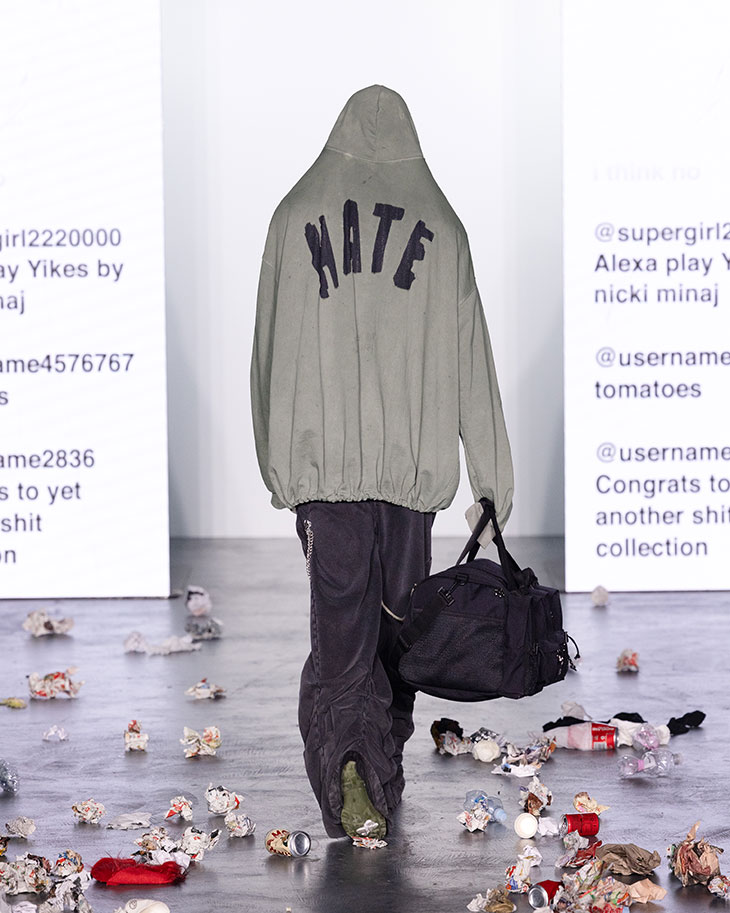
AVAVAV
Fall/Winter 2024
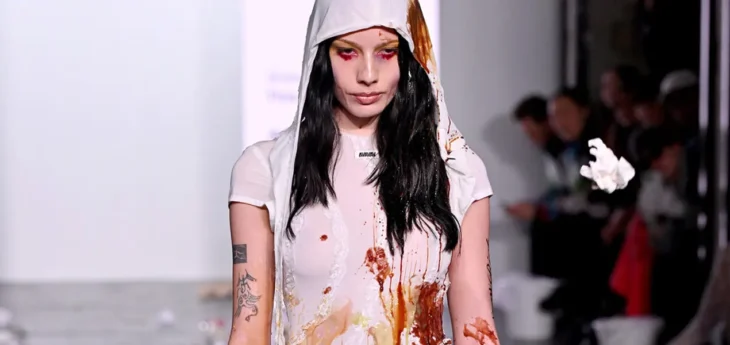
AVAVAV disrupted the expected rhythm of a runway show. Models stumbled, ran, and lost control of their movement. The sequence felt unstable, with moments that appeared accidental.
The presentation questioned the polished nature of fashion shows. It introduced humor and discomfort through physical unpredictability. The show exposed how constructed the runway format is by allowing it to break apart in front of the audience.