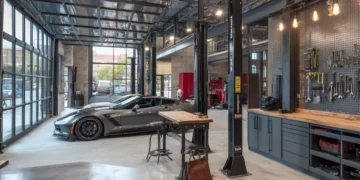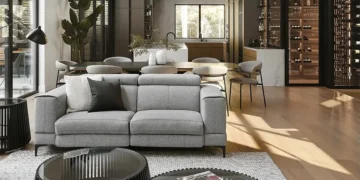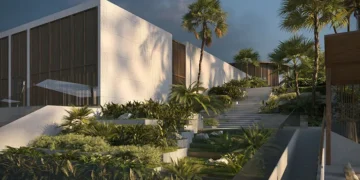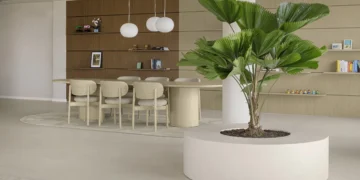



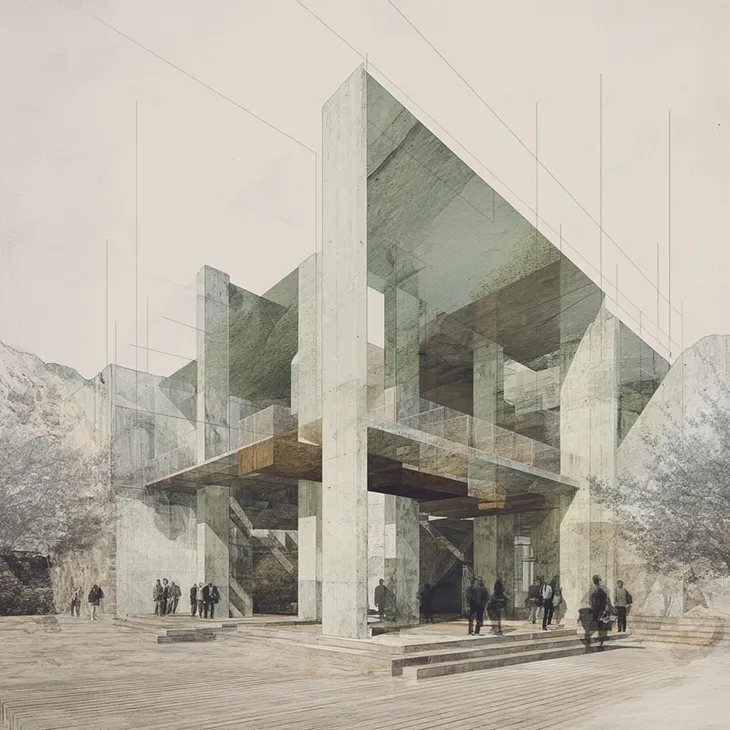
Some buildings become familiar before they’re finished. Before the concrete has cured, before the scaffolding has come down, before anyone has walked through the entrance, the project already has an audience that has formed opinions about it. People are saying it’s beautiful or wrong for the site or exactly what the neighborhood needed. None of them have been there. They’ve seen images.
This is not a recent development exactly, but the scale and speed of it is new. Architecture has always required representation, drawings, models, sketches, to exist in minds other than the architect’s. What’s changed is that those representations now circulate as broadly and as quickly as any other visual content, and they do so through the same channels as fashion editorials, travel imagery, and art. Architecture has become image culture.
Before the Building, the Image
The first encounter with a significant building is now typically a screen encounter.
A hotel appears in design media before its opening. A residential tower circulates through architecture accounts long before the site has been prepared. A cultural institution enters debate, with supporters, with critics, with people forming aesthetic positions, through a competition visual that may or may not ever be realized. The audience has already arrived by the time the building does.
This creates a particular challenge: the image is doing representational work for something that doesn’t yet have a body. It can’t be visited or touched or experienced at different times of day. What it communicates is entirely mediated, through camera angle, lighting, material representation, the selection of what to show and what to leave out.
The Visual Language That Travels
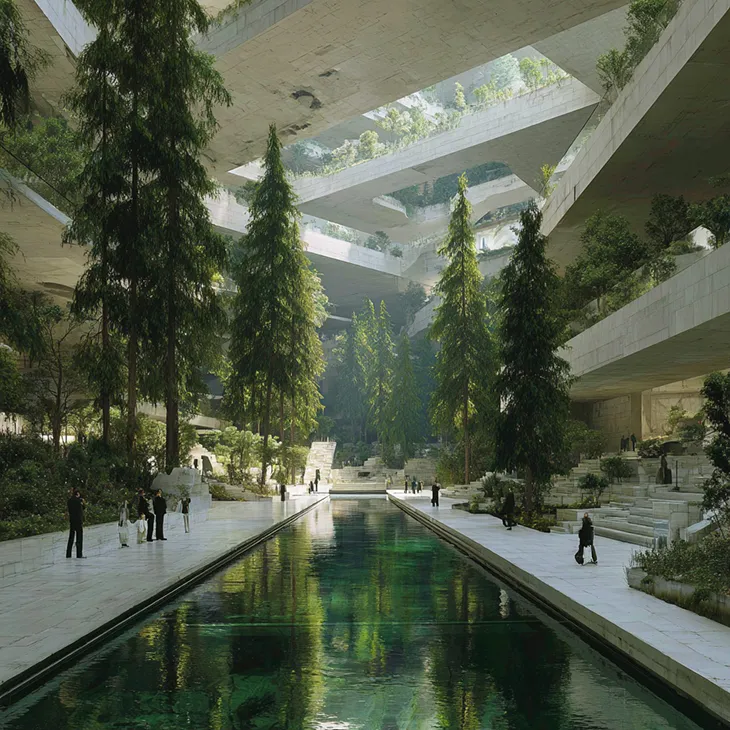
Before construction, a project needs a visual identity that can exist outside of plans and documents. Something that communicates atmosphere, materiality, scale, relationship to landscape or street, and the kind of life imagined inside it, to audiences who may not read technical drawings, to investors evaluating across different geographies, to the editorial teams deciding whether the project belongs in a particular publication.
This translation work is collaborative. Architects, creative directors, photographers, editors, and visualization studios all participate in it. Before a project is built, it often needs a visual language that can travel through presentations, digital magazines, investor decks, design portfolios, and public imagination. This is where studios such as ArchiCGI can sit within a wider creative ecosystem, helping architectural ideas become readable before the site itself is complete.
The goal is not documentation. It’s something closer to the work that a fashion editorial does: making an idea legible through image.
What Motion Shows That a Photograph Can’t
A still image is a fixed viewpoint. It captures one moment, one angle, one relationship between light and surface. What it can’t show is the building as time.
Movement through architecture is a sequence of experiences, the compression of a narrow threshold before a larger volume opens beyond it, the way daylight shifts across a material surface through the afternoon, the arrival experience of a hotel that begins before the entrance and continues through the lobby into the private zones beyond. These are the architectural qualities most connected to how buildings are actually felt.
Animation and moving-image formats address this more directly. Not by describing the building technically but by enacting it: showing how a body might move through it, what changes as that movement happens, how exterior and interior conditions relate. The architectural walkthrough, at its best, is less a product video than a spatial argument.
Interiors as Translation
If the exterior establishes a building’s presence in the world, the interior is where architecture becomes personal.
Interior imagery translates architectural intention into the textures of lived life: light at a particular angle in the morning, the surface quality of a material close to the hand, the way a room sequence accommodates and shapes the rituals of daily existence. This is where architecture and fashion most clearly share a visual register, both are concerned with how designed environments express identity, shape behavior, and communicate aspiration.
For readers of this publication, the interior image is often where architecture becomes interesting in a personal sense. The furniture, the art, the light, the view from a particular window onto a particular landscape, these aren’t decorations. They’re where the building tells you what kind of life it imagines for the people inside it.
The Language Borrowed From Fashion
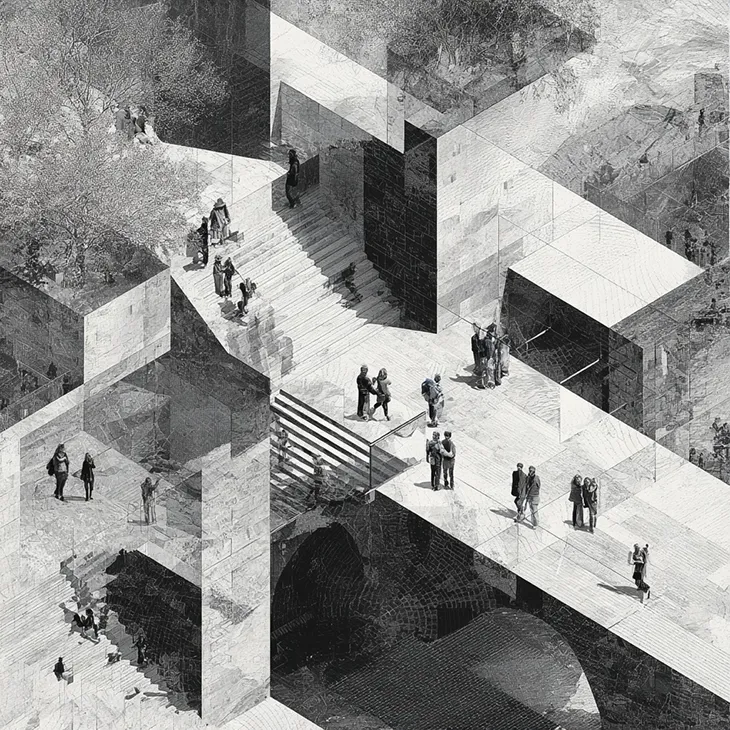
The visual conventions of contemporary architectural imagery have borrowed heavily from editorial fashion photography. And the borrowing has been productive.
Controlled lighting that gives a wall or floor a specific material quality. Close-up frames that treat texture as the subject, a concrete surface, a timber edge, a threshold between two materials. Pacing and sequence that build toward a reveal rather than presenting the project all at once. Restrained color and atmosphere. The implied presence of a figure who has just left or is about to arrive.
These are tools that fashion photography developed over decades precisely because they understand how images create desire. Not by showing everything but by showing enough, in the right quality of light, at the right distance, at a moment that implies rather than explains. Architecture adopted them because they work for the same reasons.
The Problem With Too-Perfect Images
When the tools available can produce virtually any surface quality, any lighting, any material at any resolution, images can start to resemble each other in ways that have nothing to do with the buildings they represent. Interiors that could belong to any luxury project in any geography. Light that falls from no specific direction. Stone with no particular origin. Glass reflecting no particular sky.
The most convincing architectural images are specific. They respond to the actual design concept, to the materials actually proposed, to the light conditions of the actual site. The best of them couldn’t have been made for a different building. That specificity is also what makes them useful as communication, the image that could have been anything communicates nothing in particular.
The Image as Archive
Some projects are known entirely through their visual representations and nothing else.
Competition entries that didn’t win but entered architectural consciousness anyway. Speculative residential projects from architects working at the edges of what technology or economy made possible. Museum proposals that generated serious critical discussion and were never funded. Experimental interior concepts that lived in drawings and magazines and the curricula of architecture schools.
In these cases, the image is not a preview of something that will eventually exist. The image is what exists. It becomes the archive of an idea, a record of a possible architecture that the world didn’t build but that influenced the architecture it did. The image outlasted the project and carried the idea forward.
Architecture will always require a physical encounter to be fully experienced. But its cultural life increasingly begins elsewhere, in the image that circulates before the building does, in the visual language that establishes a project’s identity before the site is ready to receive visitors. The unbuilt spaces that stay in memory do so because their images were specific enough, atmospheric enough, particular enough to feel real. Not actual, but believable, which, in visual culture, is a different thing.