


After World War II, over 60,000 looted artworks were found in France. 45,000 were returned to their rightful owners in the next handful of years. Then, over three quarters of a century until September last year, only 200 more works were returned.
Since 2013, that pace has quickened, with 87 artworks given back to their owners or rightful heirs.
Azoulay And Her Work To Return The Artwork
Audrey Azoulay, France’s minister of culture 2016-17, helped drive the improvement. Under President François Hollande’s government, Azoulay and her predecessors helped shift the perception that works housed in public collections would be sold on the private market, as she told Ynet. The state and museums cannot generally match private sale prices, but Azoulay and her colleagues encouraged them to locate heirs “rather than waiting” for them to claim the artworks.
Furthermore, Azoulay also served as the director-general of UNESCO between 2017 and 2025. Upon her re-election in 2021, France 24 said the result seemed to “confirm the strategy of depoliticization” that Azoulay had sought.
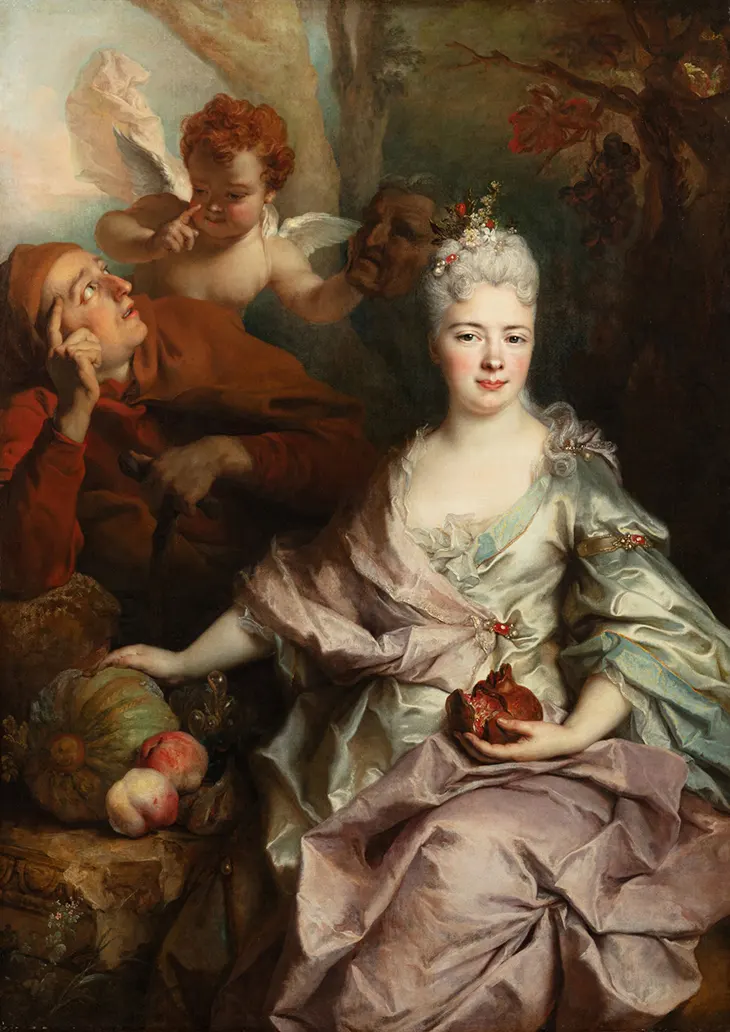
The civil servant said it was her moral duty to do justice to the crimes of confiscation and greed. Nazi Germany had confiscated those thousands of artworks from Jewish collectors and donators, among them Jules Strauss. Strauss and his wife Marie-Louise had donated works to the Louvre Museum and privately owned others such as The Portrait of a Lady as Pomona, described as a “masterpiece” by Calvine Harvey, Sotheby’s vice president and Specialist of Old Master Paintings.
Museum of Jewish Art and History, Jewish art’s influence, and rightful heirs
Paris’s Museum of Jewish Art and History houses a small exhibition, curated by Pascale Samuel, dedicated to Diane Esmond and Fédor Löwenstein. The latter’s paintings were confiscated in Bordeaux and although the artist tried to send them to the US, they arrived at the Musée Jeu de Paume; some were marked with a red cross, recalls Azoulay, indicating they were “slated for destruction”.
France is leading the way in righting these wrongs in other ways, too. David Zivie says it is the only country today that compensates victims of the looting “without a time limit” when the artworks can’t be returned.
The museum in Paris is also showing paintings by Diane Esmond, whose granddaughter and artist Adrianna Wallis says her grandparents only received 12 of their 46 confiscated works. These ongoing exhibitions, as well as contemporary artists and collections such as Nadav Art Judaica and jewelry, showcase the influence of Jewish culture’s influence on art as a whole. The representative of Jewish sculptor Chana Orloff has said that money is not the issue – it is justice. Orloff was known in the Art Deco scene and was friendly with other Jewish artists including Marc Chagall and Jules Pascin. Chagall, for one, has been called one of the greatest artists of the 20th century.
Woman in Gold and Case of Maria Altmann’s Klimt
The case of Maria Altmann is perhaps the most publicly known example of looted art restitution, brought to wide audiences through the 2015 film Woman in Gold, in which Helen Mirren portrayed her. Altmann, the niece of Adele Bloch-Bauer, spent years fighting the Austrian government for the return of five Gustav Klimt paintings confiscated by the Nazis after Austria’s annexation in 1938. The centerpiece was Portrait of Adele Bloch-Bauer I, a gilded 1907 masterpiece that had hung in Vienna’s Belvedere museum for decades, presented to the public as a national treasure. The legal battle reached the US Supreme Court before an arbitration panel in Vienna finally ruled in Altmann’s favor in 2006.
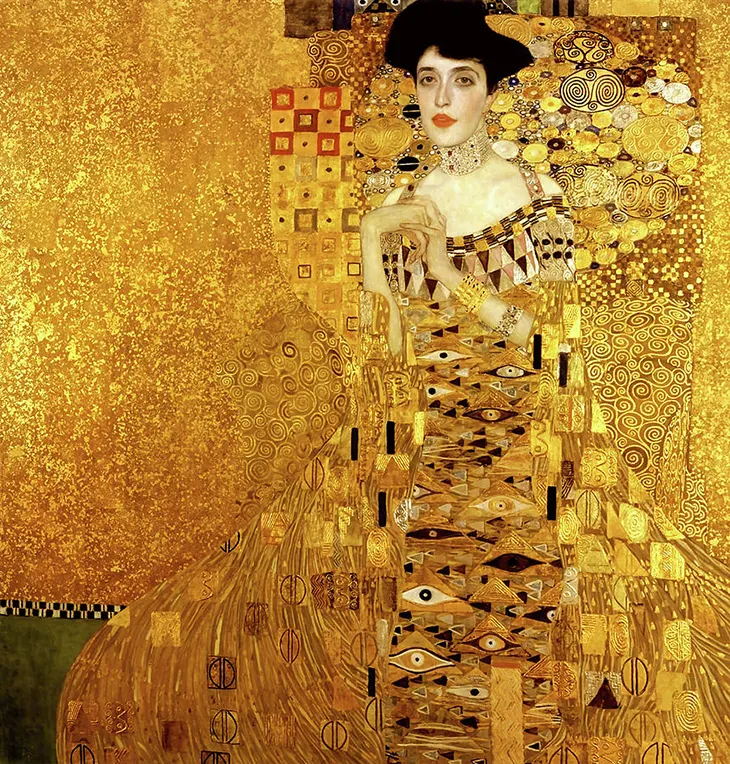
The painting sold shortly after to Ronald Lauder’s Neue Galerie in New York for $135 million, then a record price for any artwork. Altmann, who died in 2011, was not motivated by the money. She said repeatedly that what she wanted was acknowledgment, the recognition that the works had been stolen and that her family had a right to them. Klimt himself was not Jewish, but his greatest patrons were, and it was their collections, their taste, and their support that shaped much of his career. The theft was not only of canvas and paint, but of a relationship between artist and collector that the Nazis deliberately severed.
Pauline Baer de Perignon, a great granddaughter of a Jewish art collector, has advised other families to conduct research close to home. She said that often people keep papers and letters that reveal details that can help recover artworks. As recently reported by Forward, it is notoriously difficult to get looted artwork back, but with determination, more pieces are being returned to their rightful heirs.
The Scope of The Looting
The looting was indiscriminate in one sense, sweeping up works by non-Jewish artists alongside those created within Jewish artistic traditions. Among the tens of thousands of confiscated pieces were canvases by Renoir, Degas, and Cézanne, stripped from Jewish collectors who had built their holdings over generations. The Portrait of a Lady as Pomona, taken from Jules Strauss, and the paintings of Fédor Löwenstein, some marked for destruction, are not simply individual tragedies. They represent a systematic erasure of ownership, memory, and authorship. Whether the brush belonged to a Jewish hand or not, the theft was the same. And as Diane Esmond’s family,
Chana Orloff’s estate, and descendants like Pauline Baer de Perignon continue to demonstrate, the pursuit of justice does not expire. The artworks still missing, wherever they hang today, carry names, histories, and moral weight that no museum label can obscure.