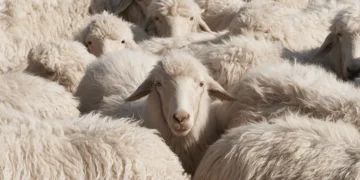




A protest at the COS Spring Summer 2027 show in New York has turned wool into one of fashion’s most contentious material debates. On September 13, PETA activists entered the runway carrying signs condemning the treatment of sheep in wool production. The demonstration became international news after Steven Kolb, then CEO and president of the CFDA, physically restrained protesters. Kolb apologized, initially took leave and subsequently resigned after 20 years at the organization.
The confrontation deserves scrutiny in its own right. Yet behind it lies a question with implications far beyond one runway: should fashion stop using wool?
SUSTAINABILITY
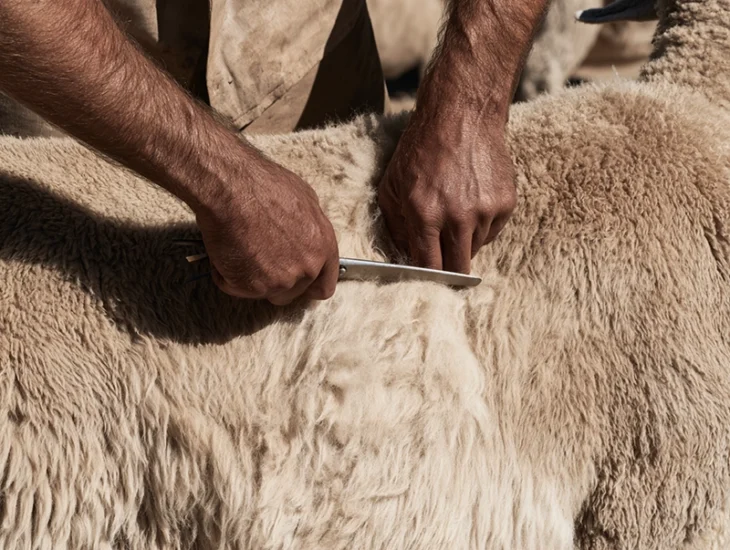
PETA argues that it should. Its position rests primarily on animal welfare, including documented cases of rough handling, injuries during shearing and procedures such as mulesing. The organization also challenges the idea that certification can guarantee that animals remain free from mistreatment throughout wool production.
Those concerns cannot simply disappear behind wool’s status as a natural fibre. Yet treating the elimination of wool as an obvious environmental solution creates another problem. Every fibre comes with consequences, and removing one material does not remove the demand for clothing. Something has to replace it.
Wool in the Global Fibre Market
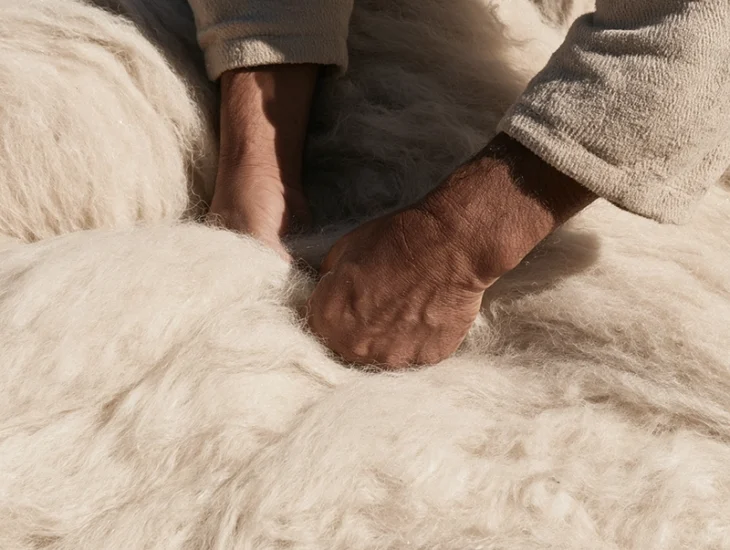
The latest numbers provide important context. Textile Exchange’s Materials Market Report 2026, released this week, estimates that the world produced around 139 million tonnes of fibre in 2025. Sheep wool accounted for roughly one million tonnes of clean fibre, or around 0.7% of the global market. Polyester accounted for 59%, reaching 82.5 million tonnes. Of that polyester, 88% came from virgin fossil-based sources.
This makes wool a surprisingly small target within fashion’s material system.
Polyester production increased by almost five million tonnes between 2024 and 2025 alone. The entire annual production of sheep wool represents a fraction of that increase. Textile Exchange also estimates that polyester contributes approximately 43% of greenhouse-gas emissions associated with global fibre and raw-material production, while sheep wool accounts for around 8%. Those figures require context: polyester exists at vastly greater scale, while wool carries a disproportionately high climate impact relative to its volume.
That last point matters. Natural does not automatically mean environmentally benign.
Wool Has a Climate Problem
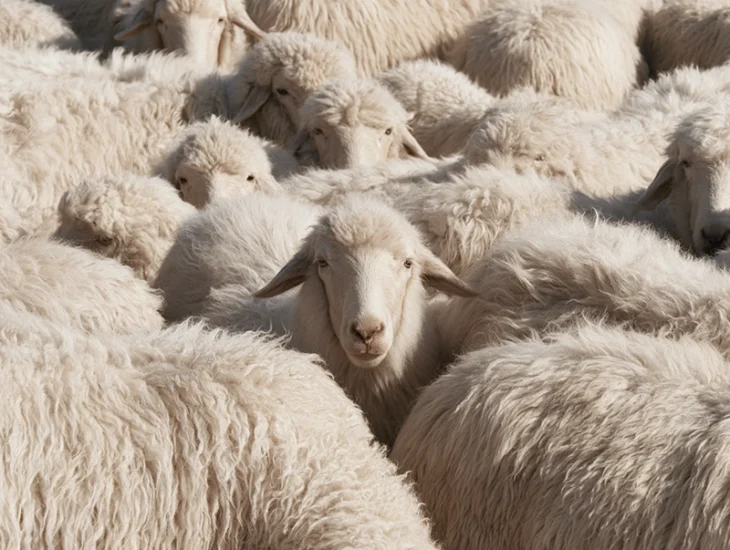
Sheep produce methane, a potent greenhouse gas, and grazing requires land. A peer-reviewed cradle-to-grave study published in The International Journal of Life Cycle Assessment examined a 300-gram wool sweater from Australian wool processed in China and sold in Europe. Researchers found that farming generated the largest share of its greenhouse-gas impact. Methane represented 53.7% of the garment’s calculated greenhouse-gas emissions. Processing, retail and garment care contributed additional impacts.
So the environmental case for wool cannot rest on biodegradability and renewability alone.
Yet that same research points toward a complication often lost when fibres receive simple good-or-bad classifications: how a garment gets used matters. Life-cycle assessment changes considerably when researchers calculate environmental impact per wear, because longevity, washing, drying and eventual reuse influence the result. A separate peer-reviewed study on Merino sweaters specifically examined how garment use and care can reduce cradle-to-grave environmental impacts.
A wool coat worn for decades presents a different material equation from a garment discarded after one season.
And Polyester Has a Different Problem
Removing wool does not necessarily mean replacing it with polyester. Cotton, linen, hemp, recycled wool and man-made cellulosic fibres provide alternatives for different applications. Yet synthetic fibres already dominate global production, which makes substitution an important part of this discussion.
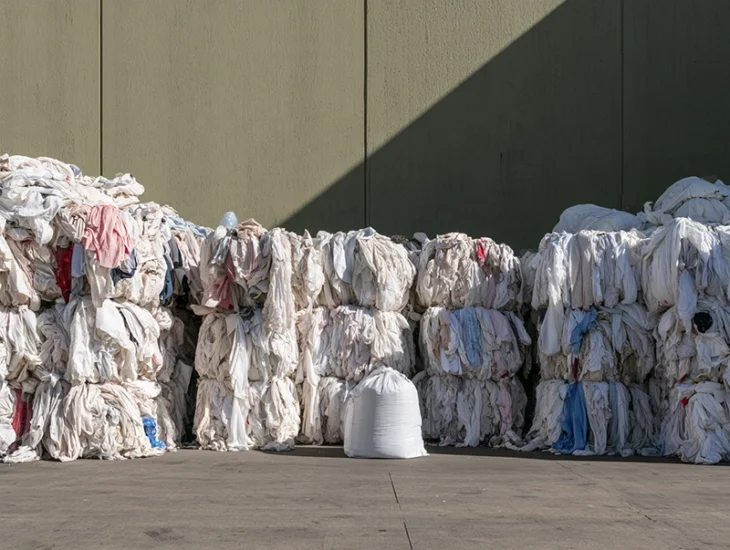
Polyester originates overwhelmingly from fossil resources and persists after disposal. Synthetic textiles can also release microplastic fibres during their life cycle. Research examining wool and polyester microfibres under UV exposure found fragmentation in both materials, while also identifying chemical additives and degradation products released from synthetic fibres. The crucial distinction lies in persistence: a natural protein fibre and a plastic polymer do not behave identically after entering the environment.
Recycling has yet to solve the synthetic problem at scale. Textile Exchange reports that recycled polyester represented only 12% of polyester production in 2025, with 97% of that recycled material coming from plastic bottles. Across all fibres, textile-to-textile recycled material accounted for approximately 0.76% of global production.
Fashion therefore cannot assume that abandoning an animal fibre automatically produces a circular alternative.
Animal Welfare Remains
the Hardest Question
Environmental calculations also cannot answer PETA’s central ethical argument. If someone believes animals should never serve as sources of clothing, improvements in methane emissions, durability or recyclability will not resolve that objection.
For brands that continue using wool, the relevant question becomes how far animal welfare and traceability can improve.
The Responsible Wool Standard provides one existing framework. RWS requires third-party certification throughout the supply chain and evaluates farms against animal welfare, land management and social criteria. Its rules prohibit mulesing and incorporate the Five Domains model of animal welfare. RWS-certified greasy wool increased from 70,389 tonnes in 2024 to 79,135 tonnes in 2025, yet it still represented only 4.5% of global greasy wool production.
Certification therefore offers a mechanism for improvement, but its limited penetration shows how much of the industry remains outside these systems. PETA also disputes whether certification can adequately protect animals, pointing to alleged abuse discovered within certified supply chains.
That disagreement should remain visible. Responsible sourcing and abolition begin from fundamentally different ethical premises.
View this post on Instagram
Perhaps Fashion Is
Asking the Wrong Question
The COS protest arrived at a moment when global fibre production has reached another record. The industry produced 139 million tonnes in 2025, seven million tonnes above 2024. Textile Exchange expects the continued growth of virgin fossil-based materials to threaten fashion’s climate goals.
Against those numbers, arguing exclusively about whether wool should exist risks narrowing a much larger problem.
Fashion needs tougher standards for animal welfare. It needs traceable wool, wider adoption of credible certification, recycled and surplus wool, and serious scrutiny of farming practices. It also needs to confront methane and land use instead of presenting every natural fibre as inherently sustainable.
But replacing wool indiscriminately with fossil-derived synthetics would exchange one set of environmental and ethical questions for another.
The useful question, then, may not be whether fashion should abolish wool. It is what conditions should govern its continued use: which wool, from which farms, under which welfare standards, made into what kind of garment, and intended to remain in use for how long?
A material cannot become responsible simply because it comes from nature. Nor does eliminating an animal-derived fibre automatically make the garment replacing it responsible. Fashion’s material problem is considerably harder than choosing between those two labels.