


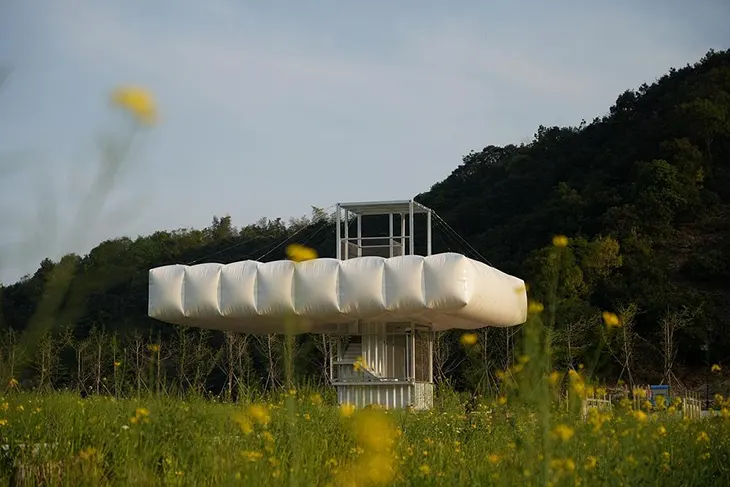
Set within the low hills of Dun’ao Village near Ningbo, Down in the Clouds introduces an unexpected architectural language into an active agricultural landscape. Designed by Practice on Earth together with Increments Studio, the project replaces abandoned farm structures with three compact interventions that invite rest, gathering, and curiosity.
ARCHITECTURE
The site’s name and character stem from the word 岙 (ào), describing a small valley enclosed by hills. Rather than imposing conventional forms, the designers began with poems and drawings that explored calm, movement, and bodily presence in nature. This mindset shaped a series of lightweight structures that sit gently within the rice fields, keeping the farmland legible and active.
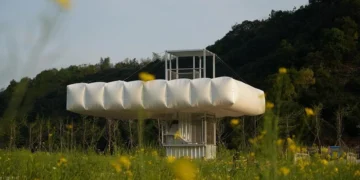
At the entrance, the Cloud Cafe introduces the project through an inflatable canopy hovering above a customized steel container. The “cloud” creates shade and shelter while allowing daily agricultural routines to continue uninterrupted. Inside the container, a small coffee station supports visitors, while a viewing deck above offers elevated views across the fields and surrounding hills.
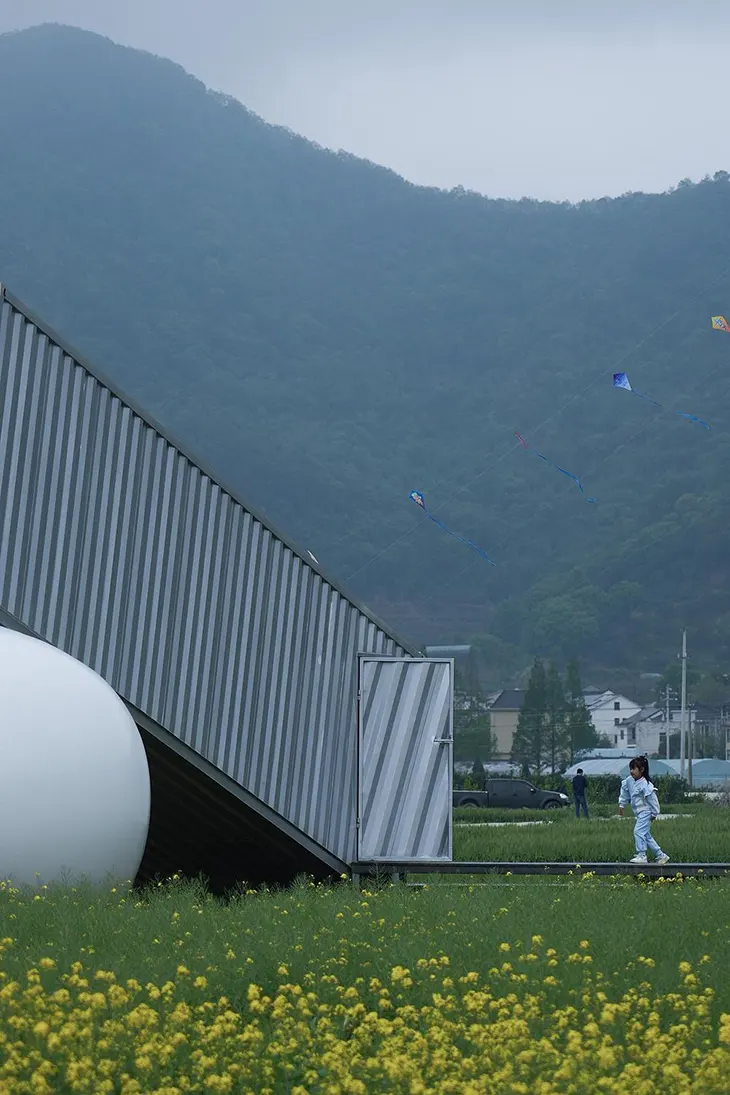
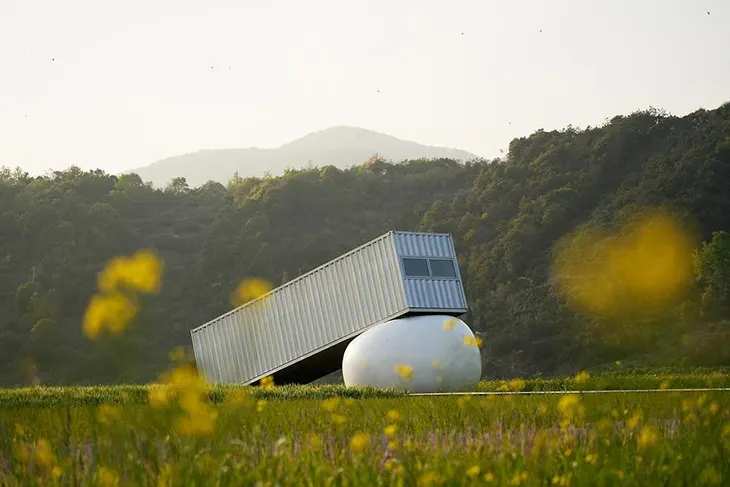
Deeper into the site, the Leaning Cinema transforms an old billboard location into a compact screening room. A tilted container rests on minimal supports, visually balanced by inflatable rings that soften its industrial presence. Despite its small footprint, the interior integrates seating, projection, acoustics, and climate control for year-round use.
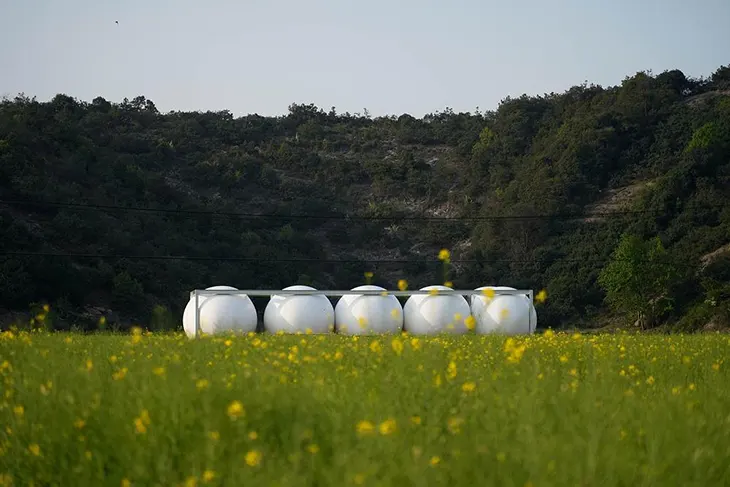
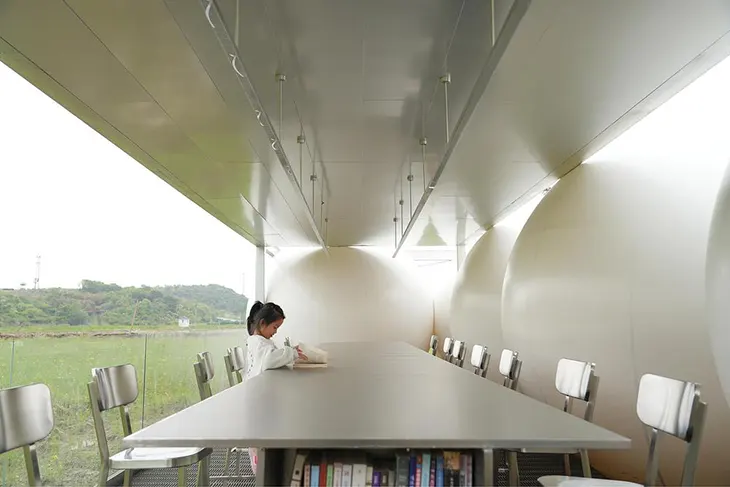
The final intervention, the Secret Reading Room, sits quietly at the foot of the hills. Spherical inflatables form a soft enclosure within a steel frame, requiring visitors to physically engage with the structure to enter. Inside, reflective metal surfaces contrast with the tactile inflatables, producing shifting light and shadow throughout the day.
Down in the Clouds shows how modest means and experimental materials can reshape rural space. Through play, touch, and restraint, the project creates moments of pause within the working landscape.
See more of the project on ArchiSCENE.