



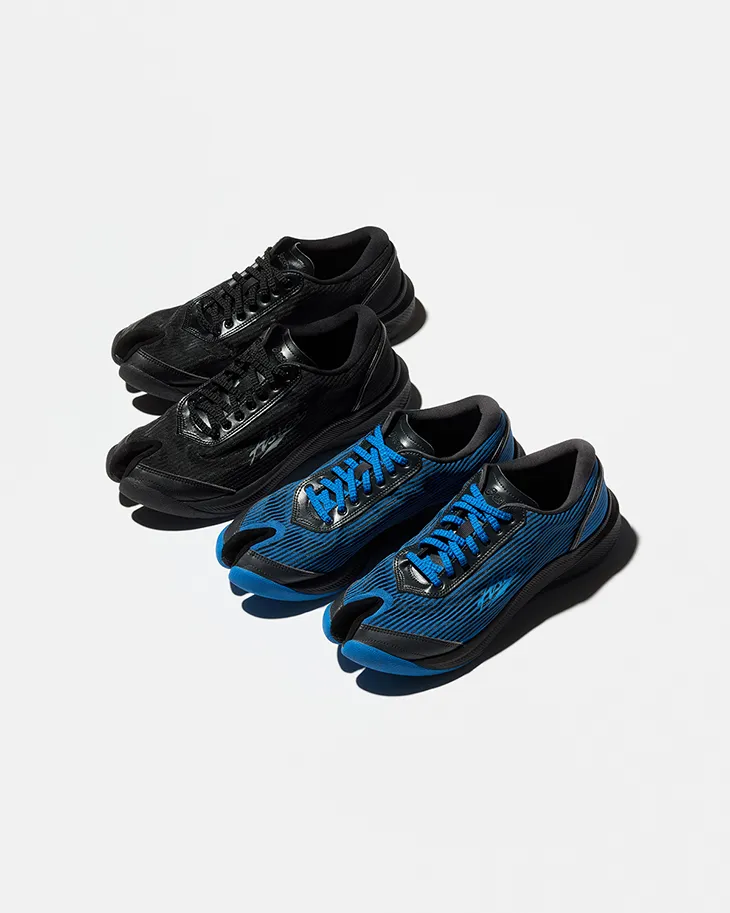
Kiko Kostadinov and ASICS introduce the ILARGI FF shoe as the latest chapter in their ongoing collaboration. The model integrates a split-toe construction inspired by traditional Japanese Tabi socks. This design allows the toes to separate naturally, supporting foot articulation and fit. The silhouette draws from the legacy of ASICS’ Tabi marathon shoe developed in Japan during the 1950s, while incorporating contemporary materials and updated performance functionality.
SNEAKERS
The ILARGI FF maintains a lightweight structure that reflects its historical reference point. The split-toe form defines the shoe’s visual identity and functional framework. By revisiting the Tabi structure, the collaboration connects archival running design with present-day material innovation. The result links historical Japanese athletic footwear with current design engineering through proportion, construction, and surface treatment.
The release of the ILARGI FF coincides with the debut of BUCKLE YUP, an art project conceived and directed by American artist Ryan Trecartin. The experimental film series was shot across Tokyo and Okinawa. The project examines relationships between fashion, visual art, and commercial culture. BUCKLE YUP consists of multiple chapters scheduled for release throughout 2026, establishing a parallel creative platform that accompanies the footwear launch.

This timing reflects the ongoing exchange between Kiko Kostadinov and ASICS, whose collaboration approaches a decade in duration. Their partnership continues to explore technical design and conceptual alignment through footwear development. The ILARGI FF marks the first in a series of upcoming Tabi-based releases planned for the coming months. Each model will extend their shared design philosophy through reinterpretation of split-toe construction and performance-driven structure.

Kiko Kostadinov offers the ILARGI FF at its retail stores and online. General sales will begin on Saturday, March 7, 2026. BUCKLE YUP will continue throughout 2026 with events scheduled in Los Angeles, Tokyo, and London, aligning each chapter of the project with public programming.