


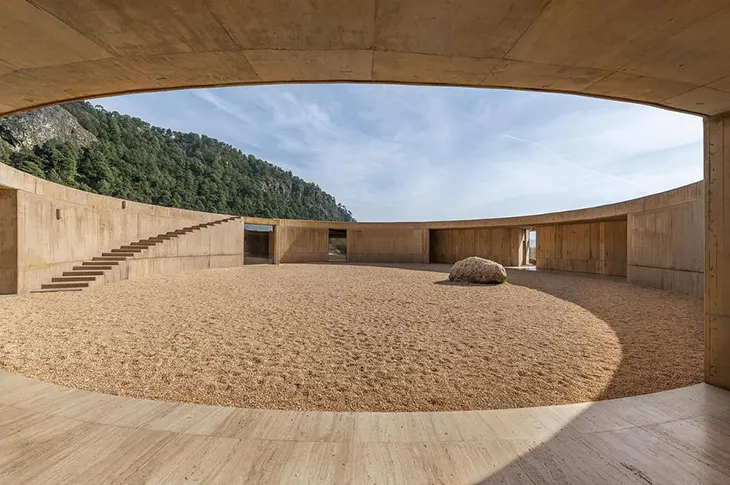
House 720 Degrees, designed by Fernanda Canales, is conceived as an architectural device rather than a conventional home. Located in Valle de Bravo, the project doubles the logic of 360-degree vision, creating a spatial system that responds to time, movement, and the shifting relationship between interior and exterior life. The house functions as both shelter and instrument, registering daily and seasonal change through its form.
ARCHITECTURE
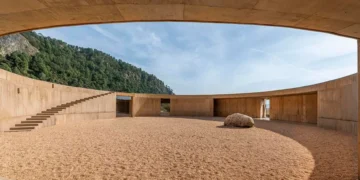
At the center of the design is a circular plan organized around an open courtyard. This patio anchors the house and establishes its dual orientation. During the day, the structure opens outward, framing views of the surrounding mountains and a nearby volcano along the perimeter of the circle. As night falls, the house turns inward, concentrating domestic life around the protected interior void. The result is a living environment that operates like a solar clock, where time becomes legible through spatial transition.
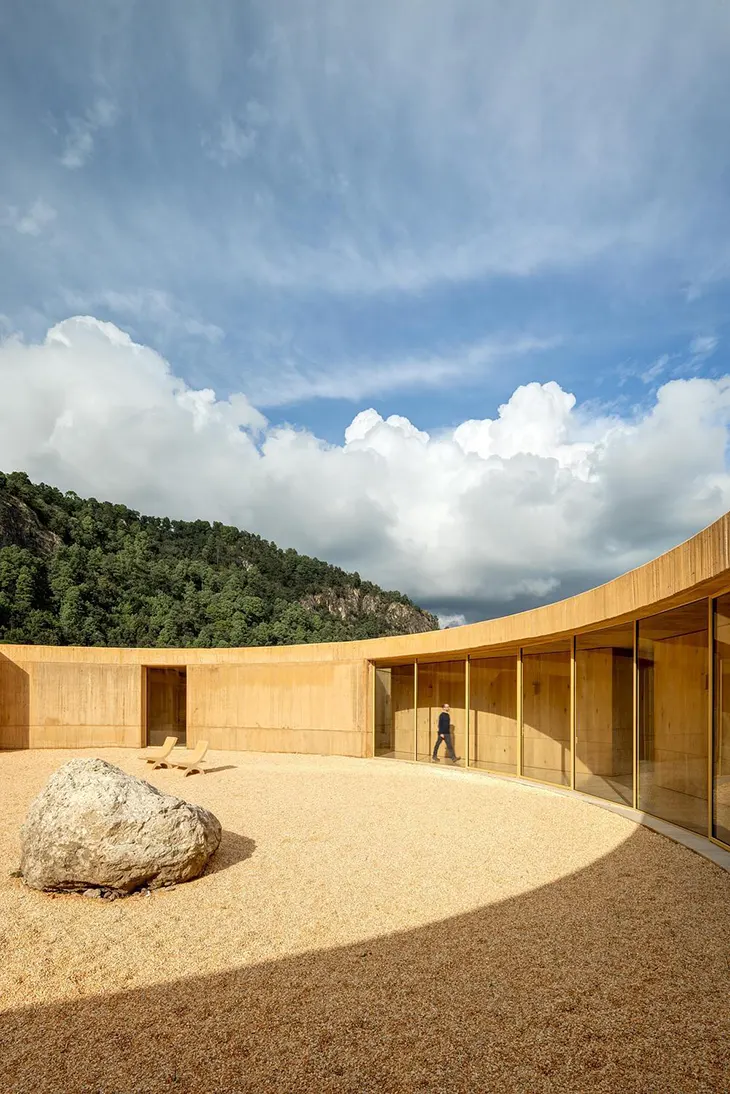
The project is divided into three distinct volumes. The main circular house contains the primary living spaces. A detached studio or guest room provides independence for visitors, while a rectangular volume with its own patio accommodates additional bedrooms, storage, and service areas. This separation responds directly to the steep topography of the site and allows existing vegetation to remain largely intact. Designed for two families, the layout supports extended stays while maintaining privacy and autonomy.
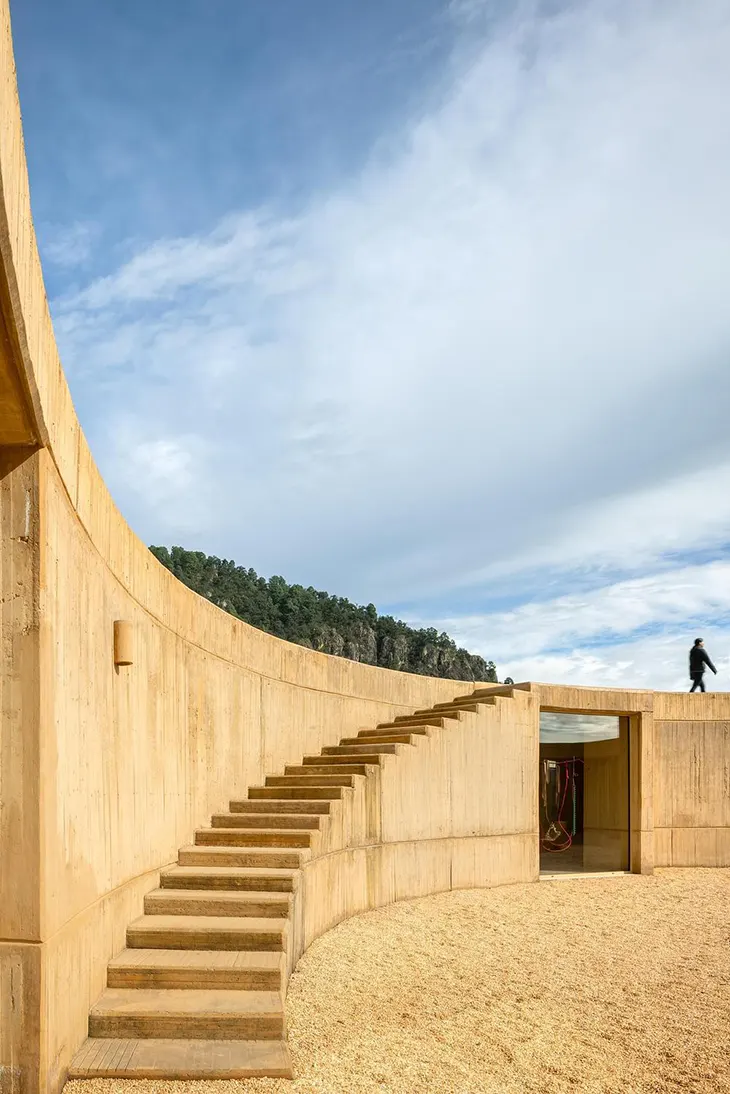
Inside the circular house, rectangular rooms are set within curved walls. Bedrooms, bathrooms, closets, and the kitchen occupy the solid portions of the plan, while circulation zones follow the curve, extending outward as terraces toward the courtyard and gardens toward the landscape. Flexible openings, including large fold-away windows and privacy screens, allow spaces to adjust to climate, use, and time of day.
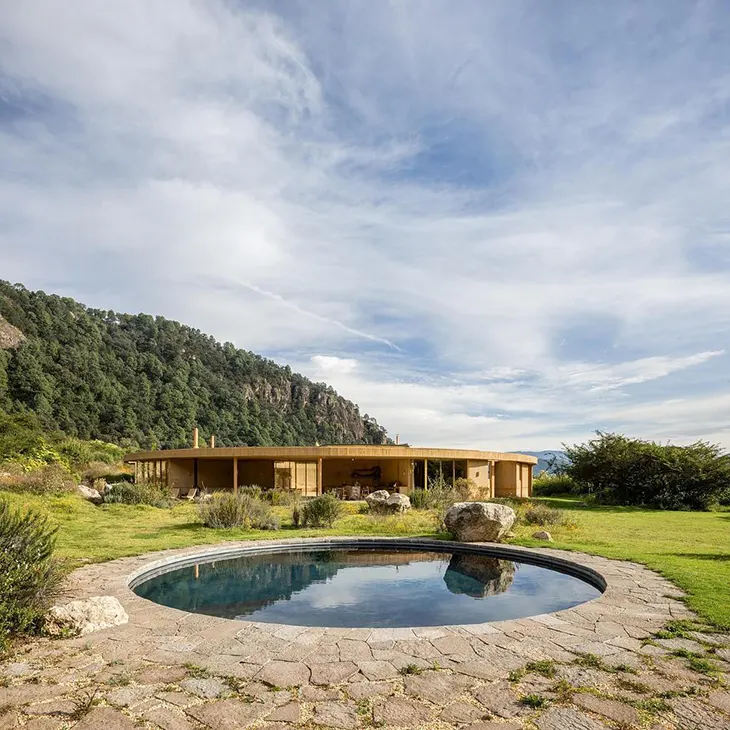
Material choices root the project firmly in its environment. Local soil mixed with concrete gives the house a surface that mirrors the surrounding land, while the low, single-level profile allows it to sit quietly within the valley. Designed to operate off the grid, the house harvests rainwater, generates electricity through solar panels, and relies on cross-ventilation and radiant floors to regulate comfort.
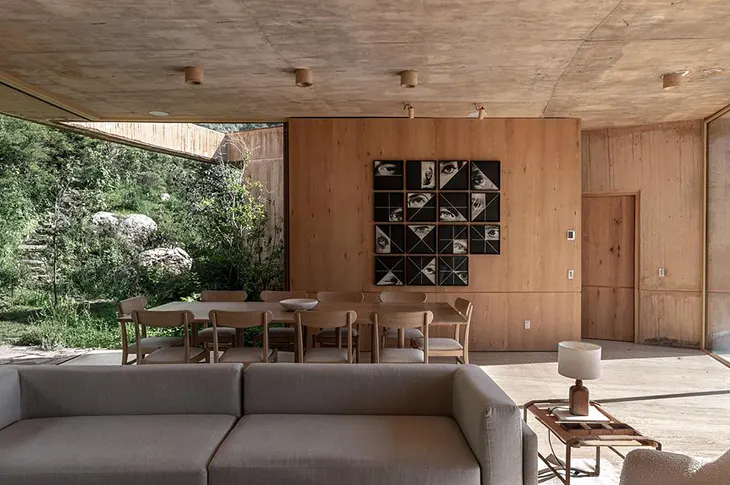
House 720 Degrees presents architecture as a responsive system shaped by climate, geography, and daily life, proposing a model of living that observes and adapts rather than dominates.
See more on ArchiSCENE.