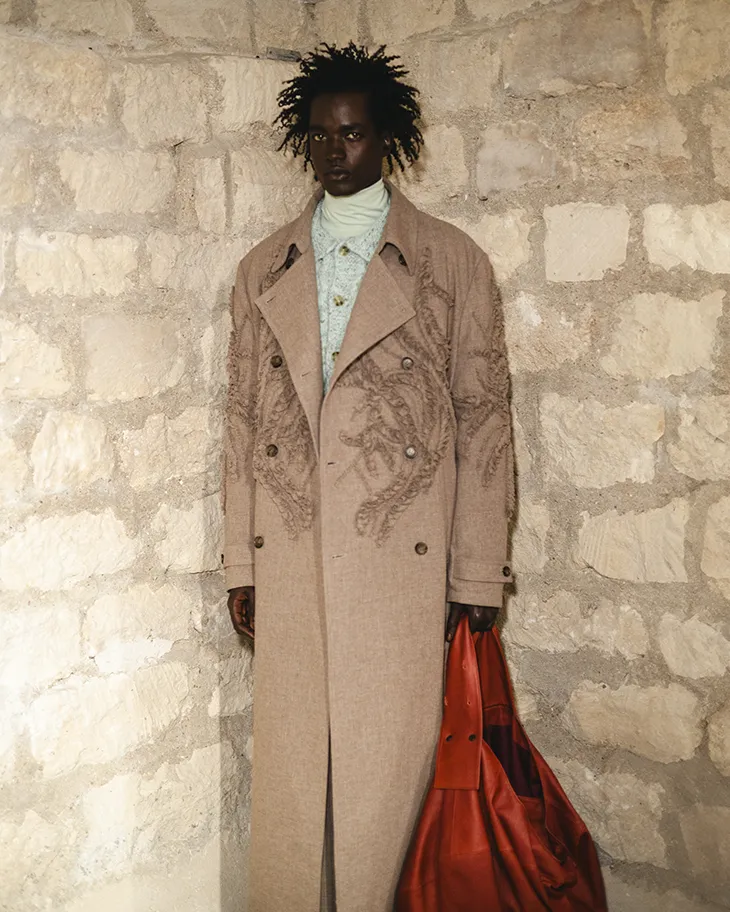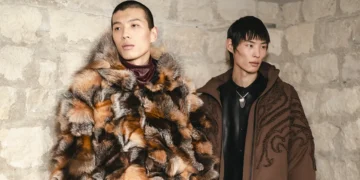



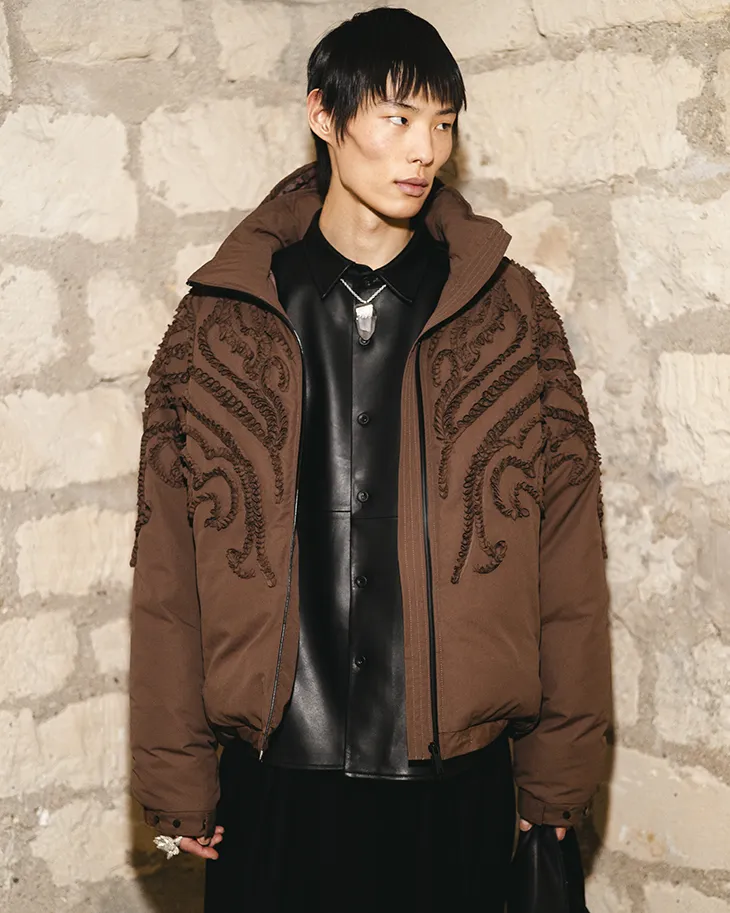
Fashion house TAAKK presented its Fall Winter 2026 collection on January 25 during Paris Fashion Week. Photographer Sohom Das documented the backstage moments on site, capturing the details exclusively for DSCENE Magazine.
BACKSTAGE
The collection draws from a deep fascination with the ancient Jomon culture. The Jomon period extended for nearly ten thousand years, reaching back to a time shaped by hunting, gathering, and early cultivation. Life during this era relied on close coexistence with forests, oceans, and rivers. This relationship informed every object and gesture, producing forms charged with intensity born from survival and adaptation.
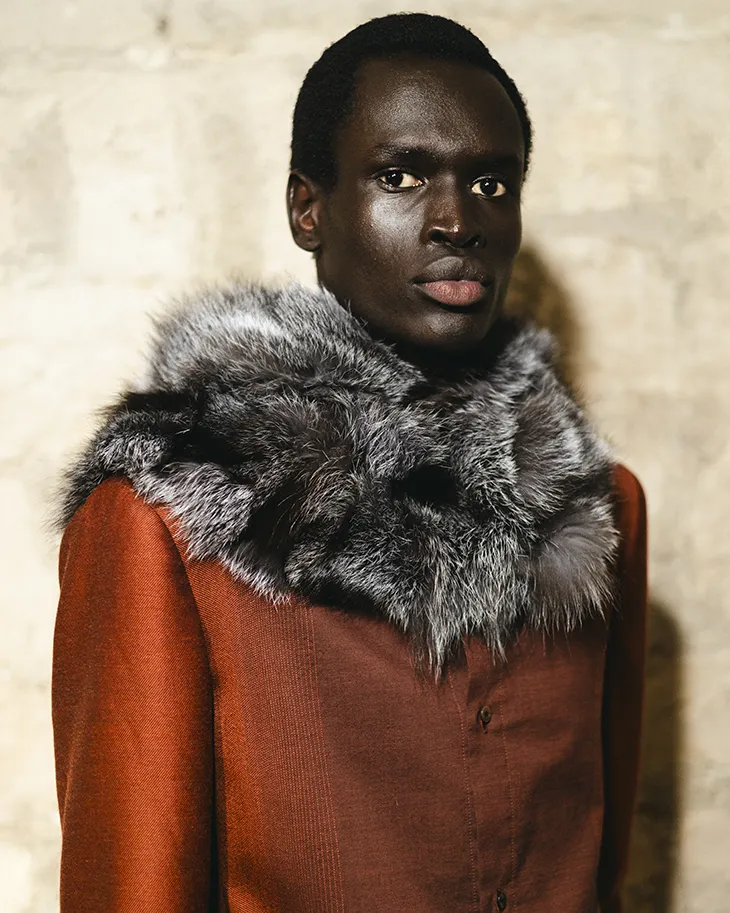
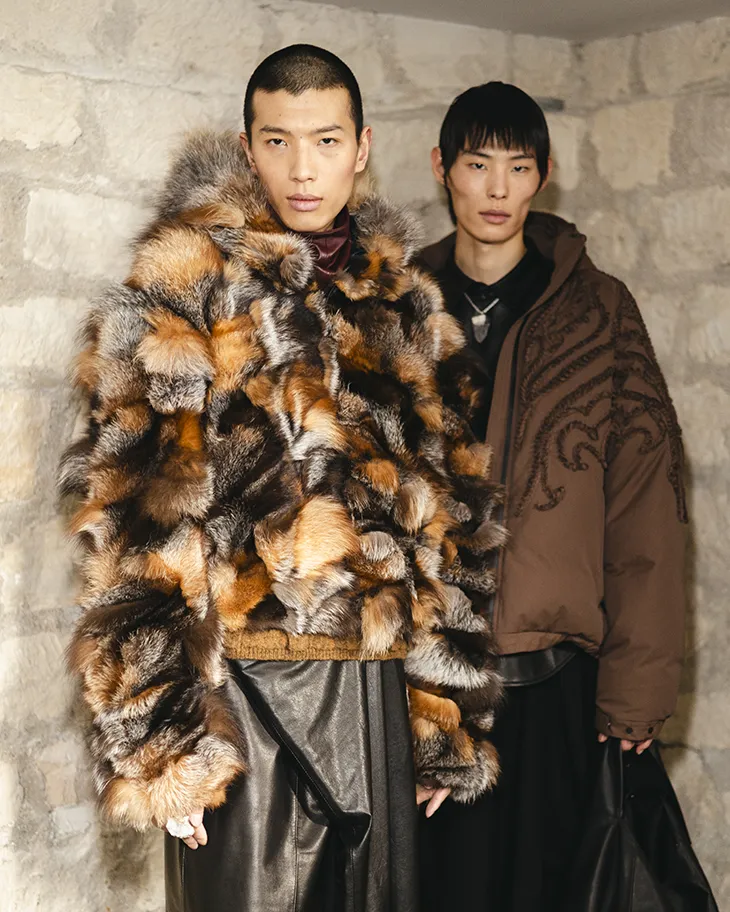
Japan’s identity as an island nation shaped this history. Complex terrain and four distinct seasons defined daily existence, placing people in constant negotiation with change, life, and death. Jomon society thrived within these shifts, and its creations carry force gathered from continuous interaction with nature. That force appears in shapes that surge and recede, carrying vitality that resists simple explanation or fixed symbolism.
These forms contrast sharply with the restrained minimalism often associated with Japanese beauty. The collection acknowledges another face of Japan that lives within its layered history. This vision recognizes impulses that resist harmony and seek disruption. The tone reads as intense, dynamic, and avant-garde, rooted in sensation that stretches beyond a single moment or action.
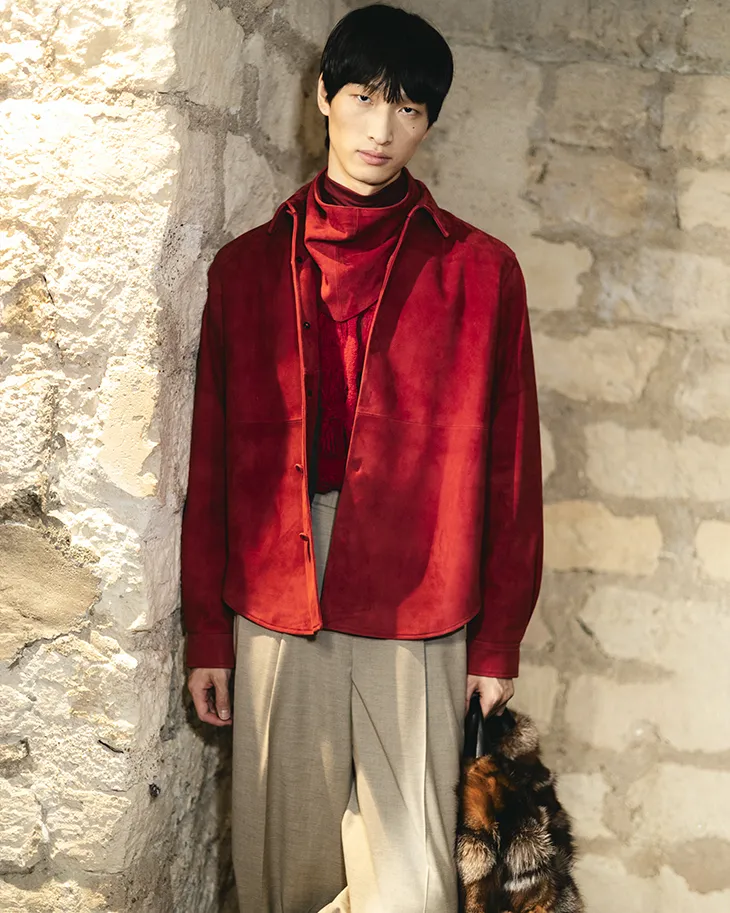
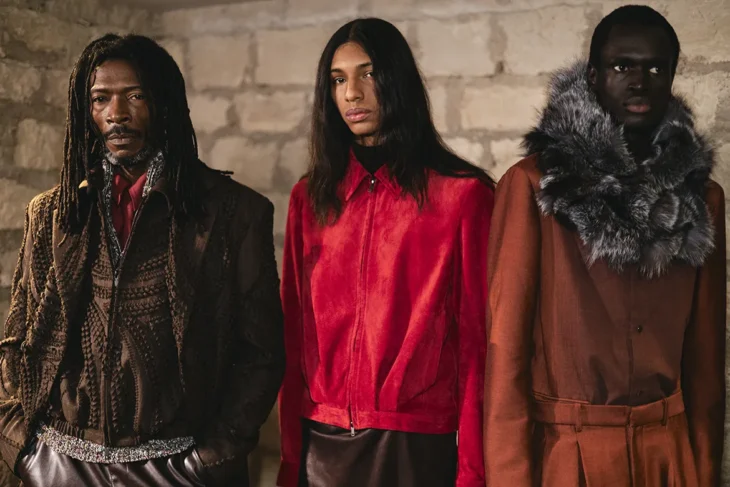
This internal drive shapes the foundation of TAAKK and defines the Fall Winter 2026 collection. The designer channels this energy through garments that pair refined surfaces with inner tension. A close look at the restrained frameworks reveals complexity and interconnection. Everyday wear carries a faint dissonance, and that friction generates strength.
The making process rejects control through concept alone. Artisans follow the flow of fabric through skilled needlework guided by touch and responsiveness. These inscriptions release both maker and material, allowing transformation into forms that exceed individual components. The result avoids reproduction of the past or praise of ancient customs. Instead, the collection seeks to awaken dormant sensibilities and unsettle the present moment.