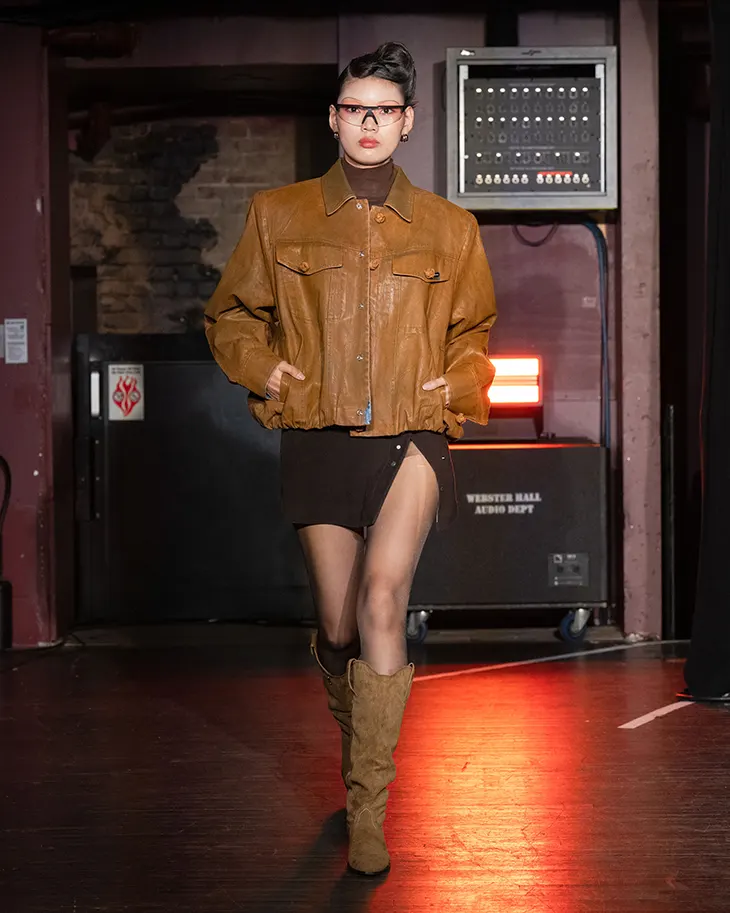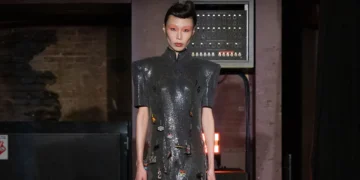



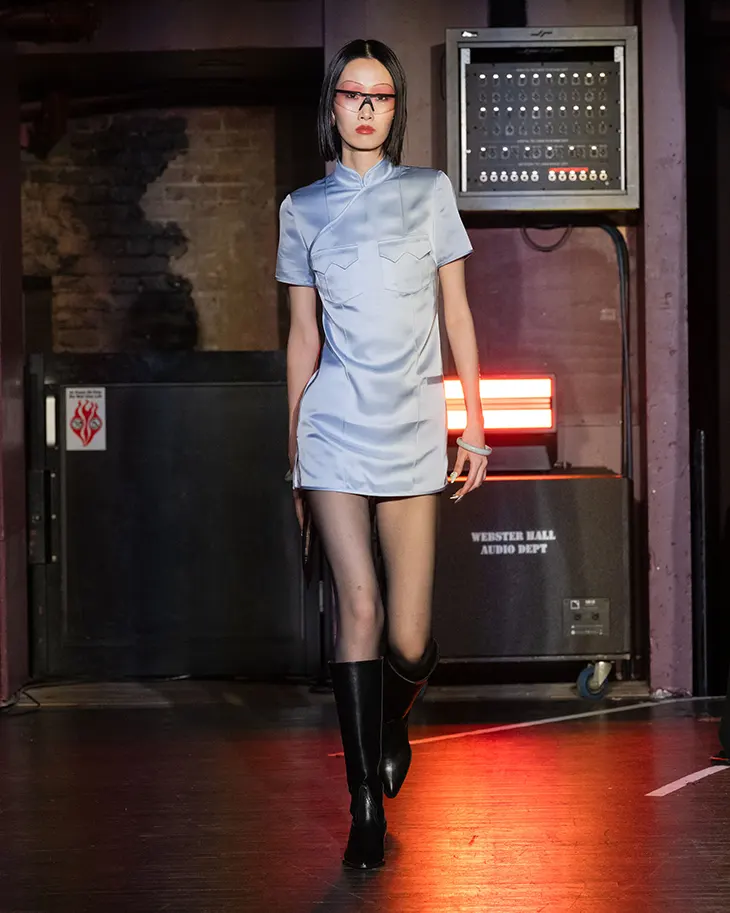
Released around Lunar New Year, a moment associated with renewal and generational continuity, Private Policy Fall Winter 2026 unfolds as a meditation on Asian labor and its ongoing imprint on American life. Presented at Webster Hall in New York, the runway situates history in the present tense. The collection draws a direct line from nineteenth-century railroad workers to Asian Americans and new-generation immigrants navigating institutions today.
FALL WINTER 2026
The starting point rests with the first generation of Chinese laborers who built the transcontinental railroads. Their physical endurance shaped the infrastructure of the American West, yet mainstream narratives often excluded their contributions. Private Policy approaches this history as active and unresolved. The garments do not frame labor as a closed chapter. They treat it as a force that continues to inform identity, opportunity, and belonging.
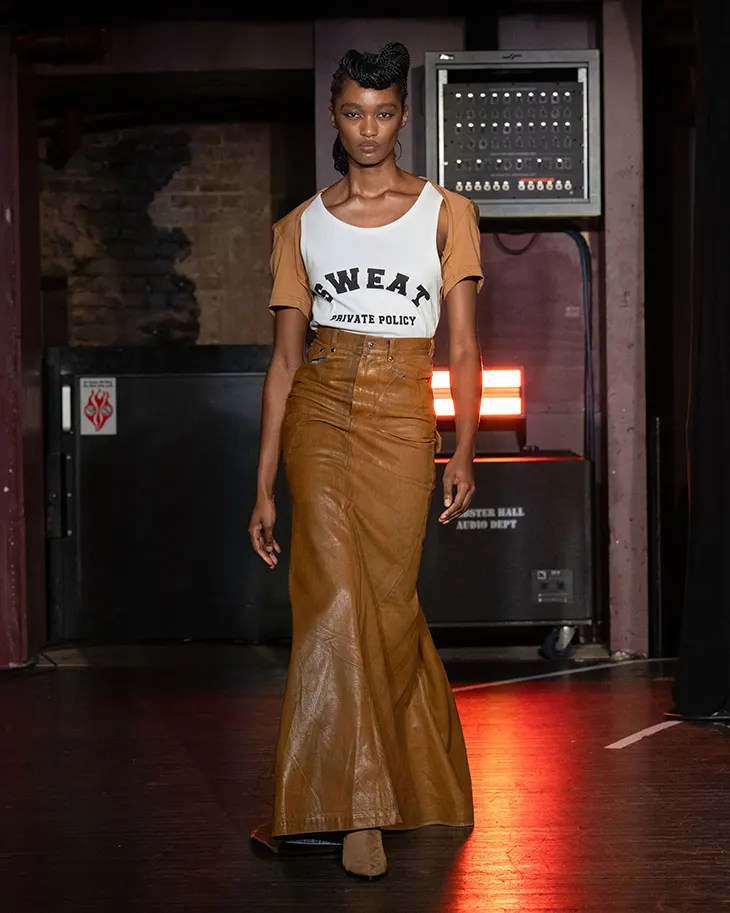
Workwear silhouettes anchor the collection. Designers employ functional cuts, reinforced seams, and multi-pocket constructions that echo garments built for survival. These details reference the physical strain of railroad construction while expanding the definition of labor to include emotional, psychological, and institutional demands. The pieces recognize that labor persists in offices, classrooms, and cultural spaces where effort often remains invisible.
A second layer of reference emerges from the 1980s, when Asian Americans entered the mainstream workforce in greater numbers and Asian designers gained traction within Western fashion. Power shoulders, sharp tailoring, and pencil skirts define this chapter. The silhouettes reflect professional dress codes that shaped participation in corporate and institutional life. They also signal the discipline required to navigate systems that demanded adaptation and self-regulation.
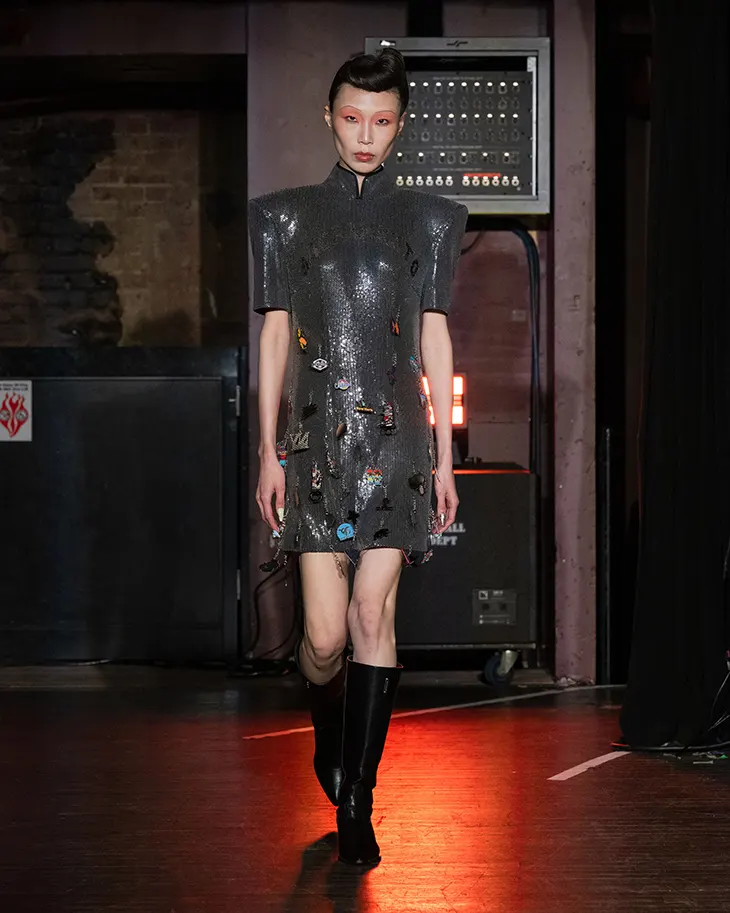
Material choices introduce tension and visibility. The collection reworks utilitarian structures in silk-finished and high-sheen fabrics. This shift reframes garments associated with dust and sweat in surfaces that catch light. The contrast honors earlier generations whose work went unnamed while asserting contemporary presence and recognition. Earth tones, rusted reds, office blues, and linear shapes reference the American West and corporate interiors alike. Distressed finishes and worn textures act as records of time, use, and endurance, allowing traces of labor to remain legible on the body.
By pairing nineteenth-century railroad codes with 1980s professional tailoring, Private Policy traces labor’s evolution from physical infrastructure to intellectual and cultural production. The runway frames this trajectory as continuous. Fall Winter 2026 reads as both acknowledgment and assertion. The collection honors those who built without credit and recognizes those who now reshape spaces that once excluded them. The tracks extend forward, and visibility follows.