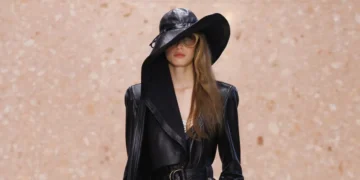



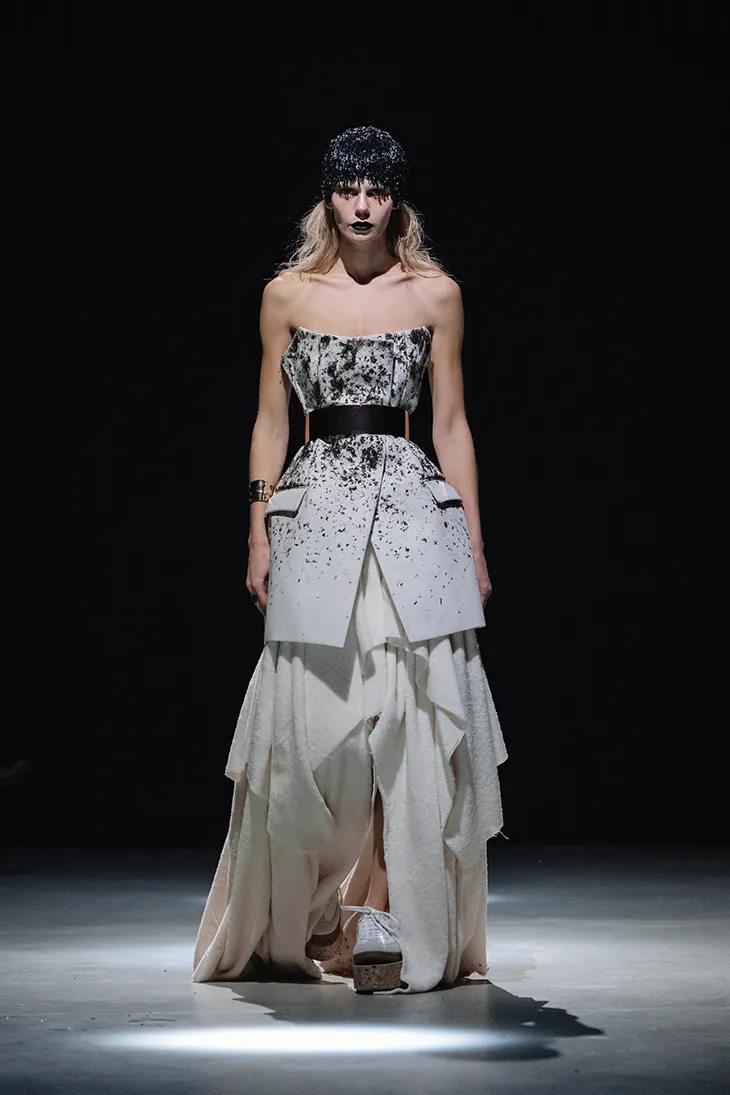
In Rebekka Ruétz‘s Fall Winter 2026 collection, Lilith is portrayed as a figure who embodies wholeness. She makes it her mission not to resolve her contradictory characteristics, but to unite them. Therefore, she embodies various, often contradictory character traits: fear alongside dignity, vulnerability and strength at the same time, as well as light alongside shadow. Lilith represents a self-determined woman who goes her own way through the world. To the poweful sounds of Lorde’s “Everybody Wants to Rule the World“, the models strolled down the runway with strength and grace.
BERLIN FASHION WEEK
The Alte Münze was once again chosen as the venue for this fashion show, a historic location characterised by transformation and change. With its high ceilings and monumental architecture, it creates an interesting contrast to the physicality of the collection. Moreover it reflects the layered complexity of the collection’s theme.
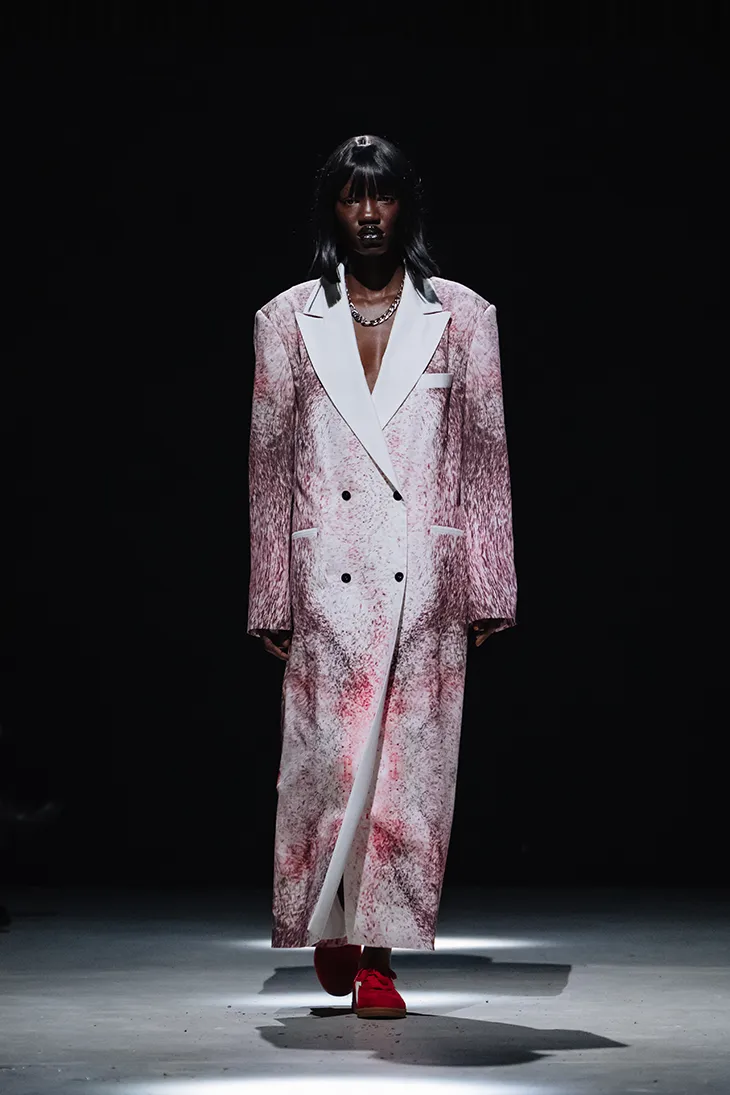
If you take a close look at the various pieces and outfits in this line, you can see the process behind the designs. For example, the silhouettes are not predetermined, but they develop in dialogue with the body. In a playful yet highly skilled manner, draping is adjusted, cuts are reshaped, and materials are tested until a clear position emerges. Each look is discovered and created in its own unique way. Thus, Lilith does not exist on paper, but rather in the process of creation.
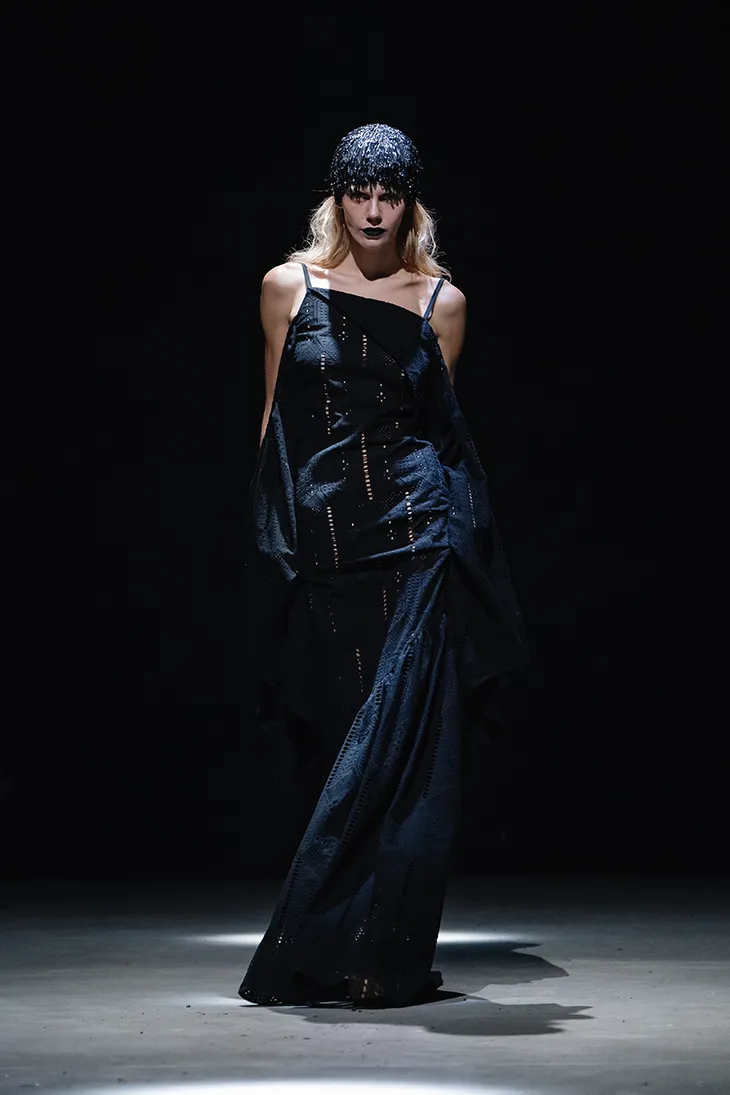
The colour palette is precise, layered and strongly designed: the most striking colours immediately catch the viewer’s eye, with the repeated use of black, red and white. Raven black serves as the basis for many outfits. Red is used in many different ways: mysterious, dark red is used as an accent colour, while a very bright and clear red is used to create impact and presence. Complementing this is a shade of red with violet undertones, which is reminiscent of the collection’s mythical inspiration. The white shades skilfully vary between a bright white tone and a rather subtle beige tone. Radiant gold and moonlit silver sparkle mysteriously across the catwalk. Also shining brightly are several illuminated sneaker models, which the designer once again created in collaboration with Skechers. It creates tension that the choice of nuances moves between ground and shimmer, between reality and between a fictional world.
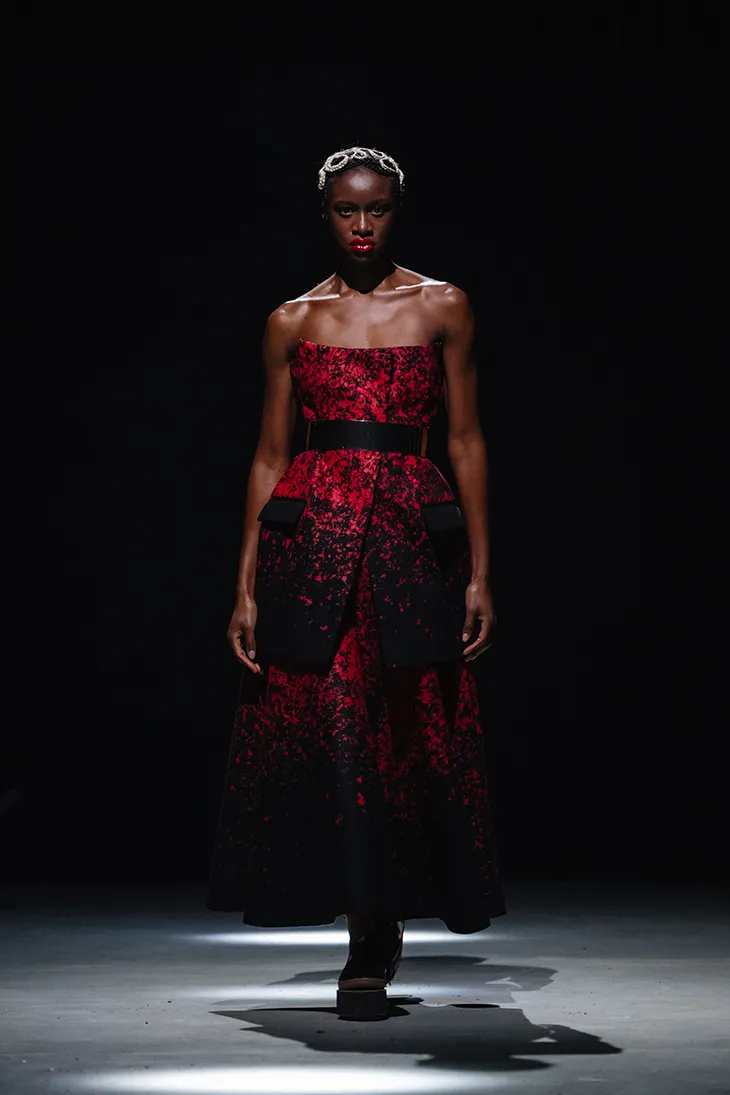
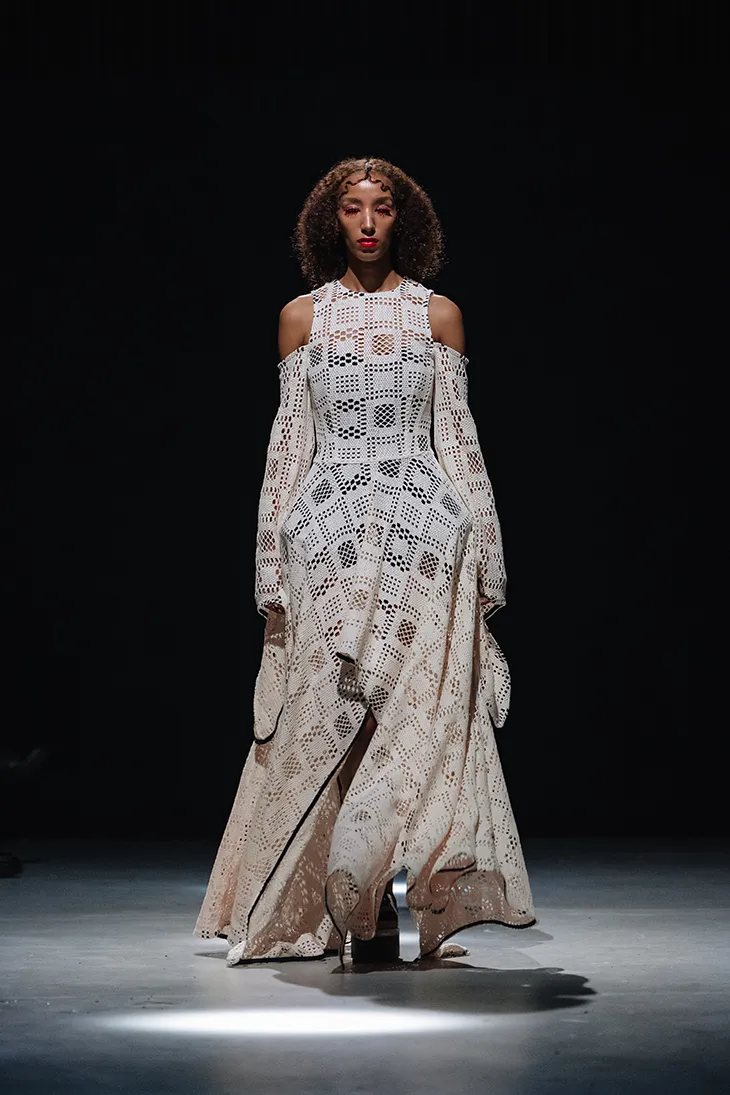
When it comes to choosing materials, the label remains true to its values: sustainability is a particular focus here, and so upcycled, recycled and deadstock garments continue to be used. In addition to this, the designer relies on durable fabrics and regional craftsmanship. Her Fall/Winter 2026 line features hand-selected organic lace, organic denim cotton, cast natural latex and traditional Tyrolean loden. Certified materials are used to create the prints. The pattern view Lilith from different perspectives and emphasise the complexity of her personality. Together, they define this line much more strongly than individual collection pieces. Contrasts between rough and soft, opaque and transparent both emphasise the silhouette and create an interesting visual statement.
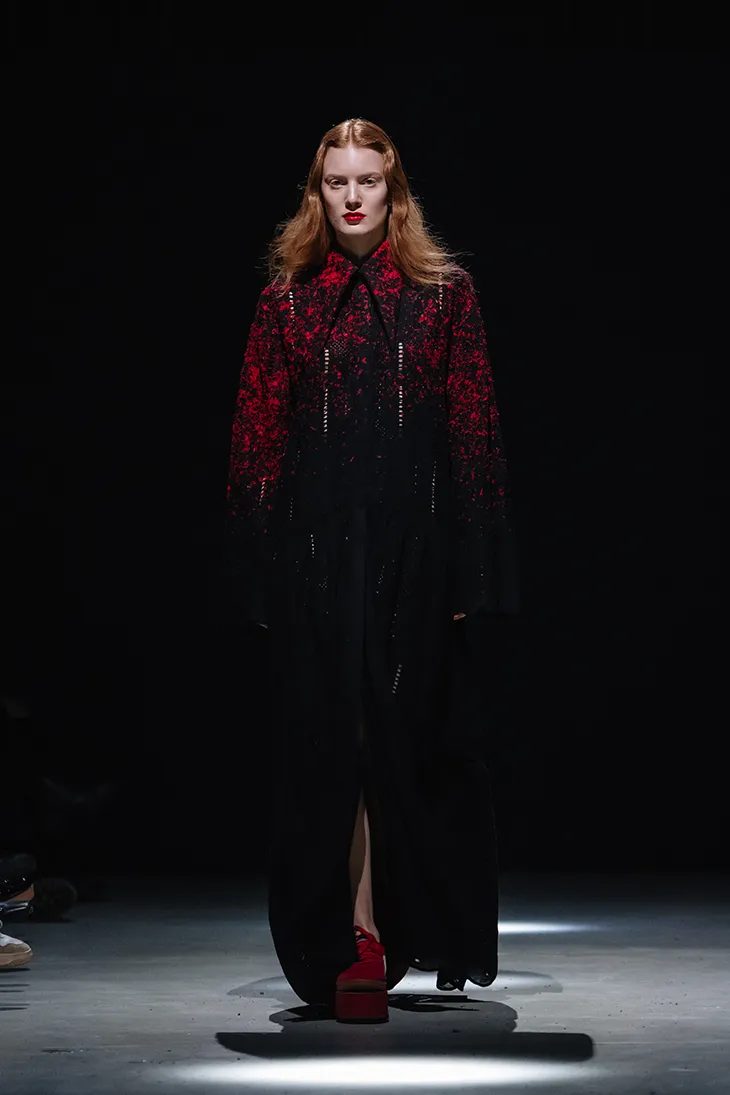
The silhouettes are characterised by a contemporary, minimalist, avant-garde overall impression. Contrary influences are often combined here: for example, sculptural garments are shown with flowing draping, and solid materials are set in motion. This creates many exciting, often unexpected overall looks. The outfits constantly play with volume, which is both constructed and dissolved. Another eye-catching feature are organic appliqués, which create a unique three-dimensionality and leave visible visual traces. It is important to mention that the silhouettes are not fixed in advance, but rather take shape and move in dialogue with the body.
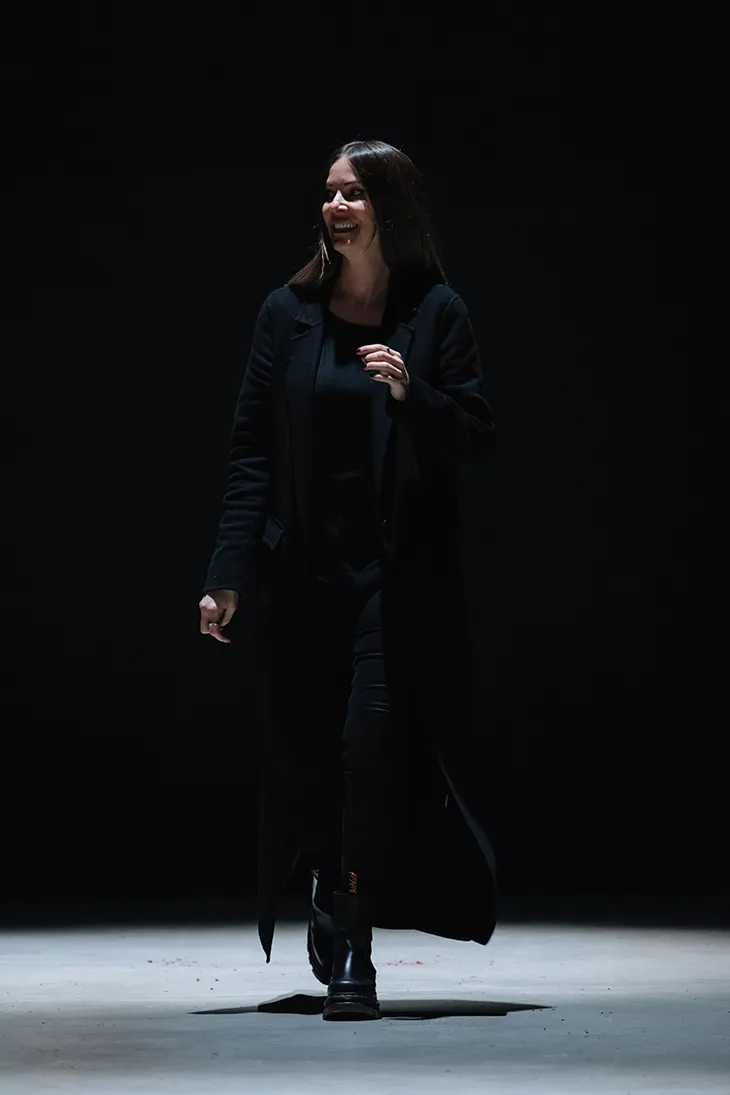
Lilith shows the image of a strong woman full of diverse wholeness, who strongly and clearly follows her own path. She supports this and is equally independent in her choice of clothing – valuing contrasting influences just as much as her choice of sustainable materials and shapes that move with her in her busy everyday life.
Review by Sussan Zeck for D’SCENE Magazine
Images Courtesy of ©Rebekka Ruetz, Photography by Marcus Hartelt for BFW