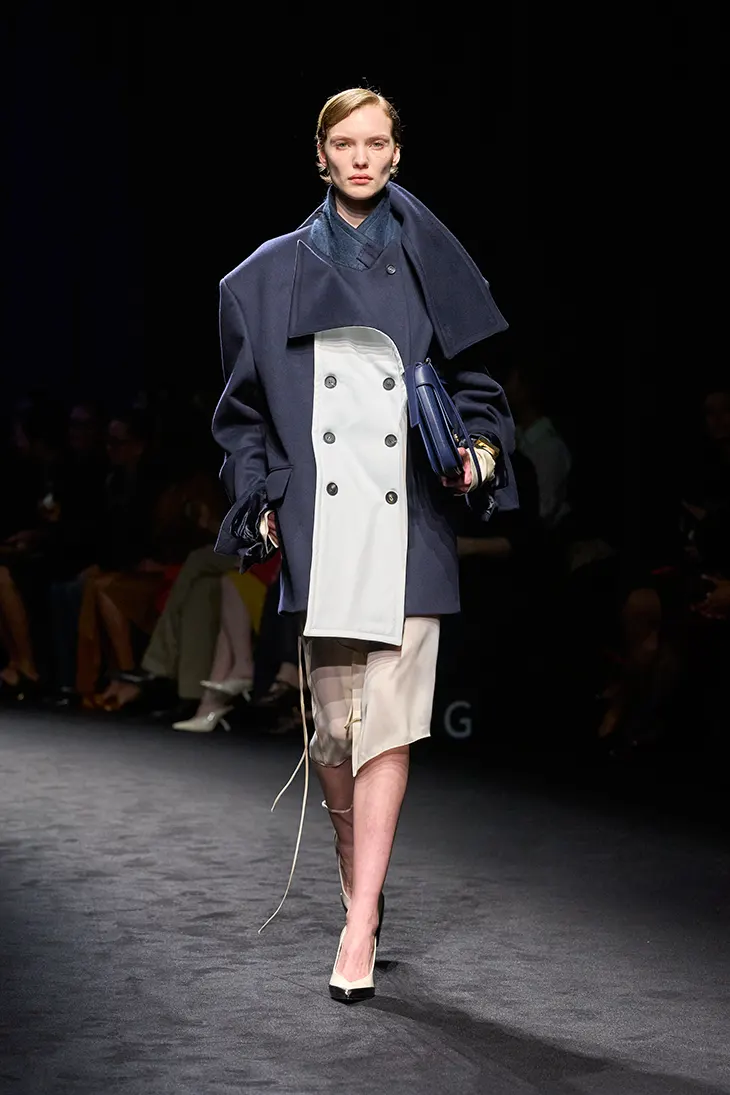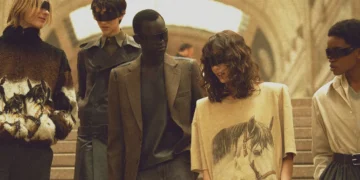



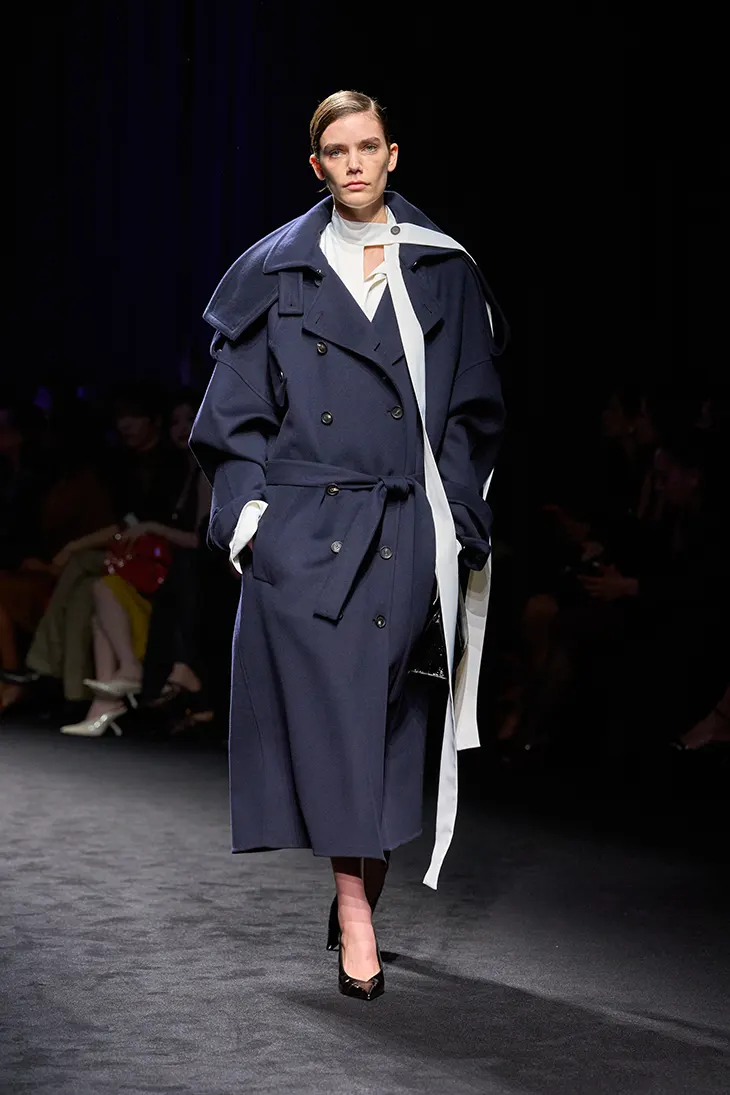
Ferragamo presents the Fall Winter 2026 collection through Maximilian Davis’s continued exploration of the 1920s, the decade in which the house began. The speakeasy serves as a central reference, representing a setting where social boundaries shifted and individuals from different backgrounds gathered. Davis considers the figures who occupied these spaces after hours and translates their presence into garments defined by freedom of movement and reinterpretation of dress codes.
FALL WINTER 2026
Sailor uniforms form a primary visual and structural reference. Davis draws from the history of migration associated with maritime life, referencing journeys taken in search of opportunity. He connects this theme to Salvatore Ferragamo’s move from Italy to the United States and to his own family’s relocation from Trinidad and Jamaica to Manchester. Uniform elements appear through altered construction, including displaced buttons, undone fastenings, and deconstructed forms. Fabric treatments reshape traditional naval garments. Nautical knitwear appears needle-punched with chiffon to create dimensional structure, while workwear parkas emerge in textured nappa leather with shearling-lined hoods.
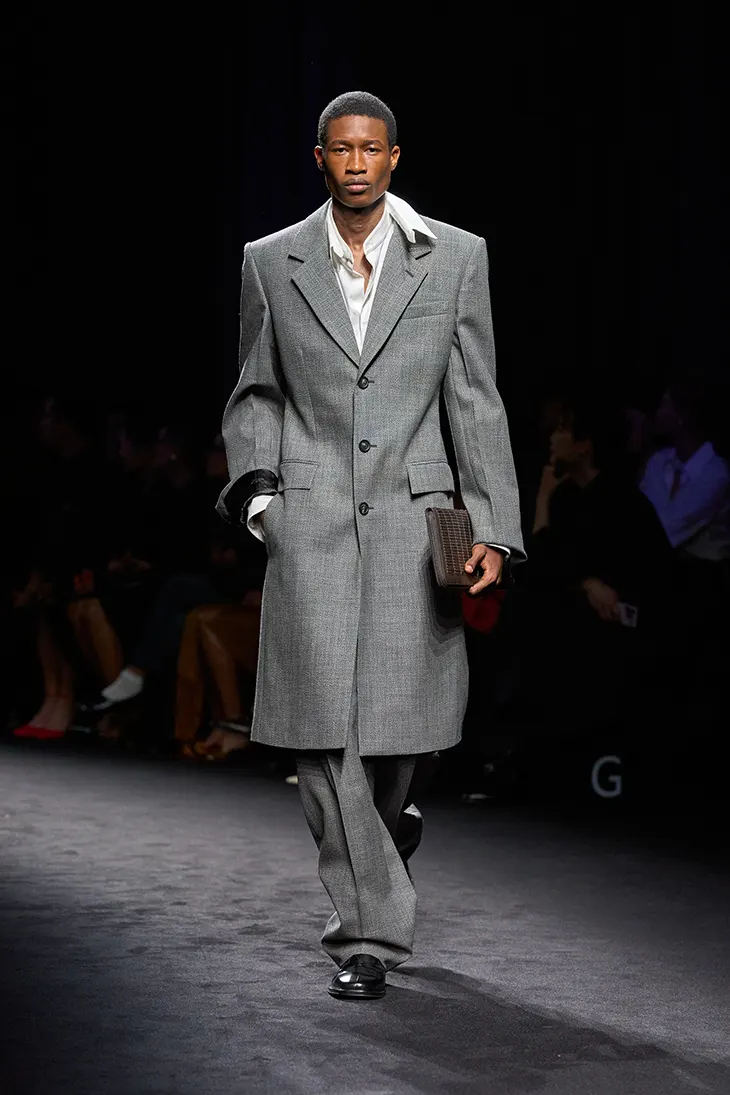
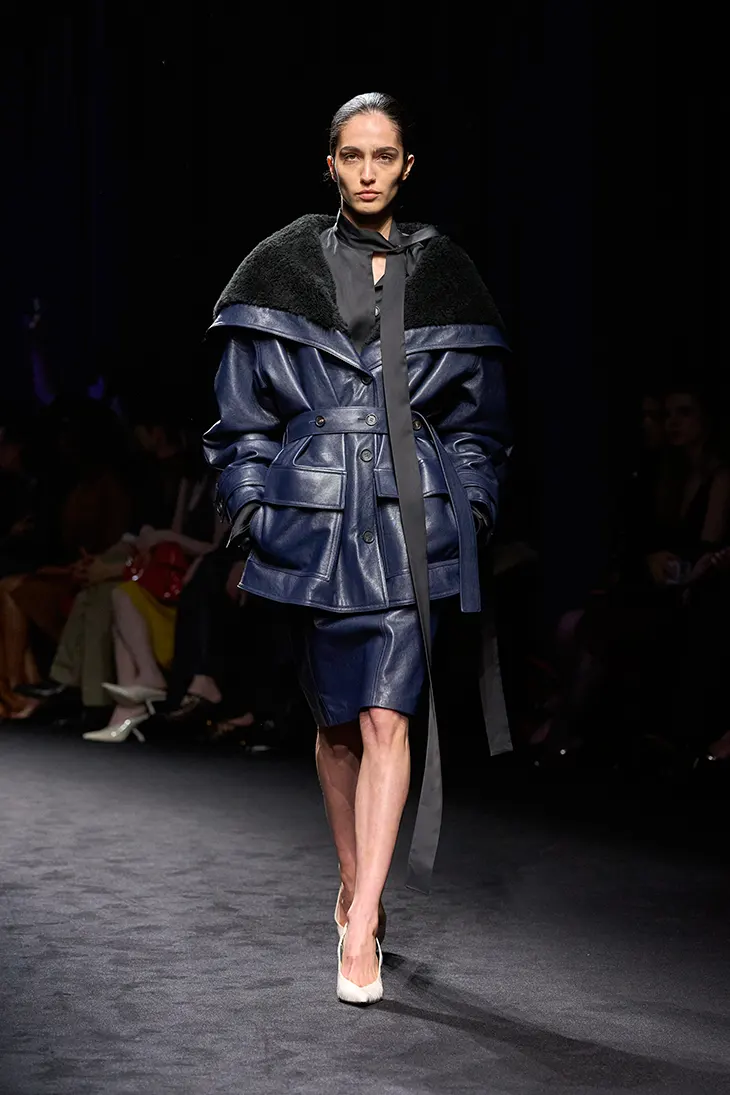
Eveningwear introduces silhouettes associated with 1920s nightlife. Foiled velvet lamé slip dresses and floral jacquard garments reflect the formal dress codes associated with speakeasy environments. Draped forms introduce volume that references the evolution of ruffles, while cocoon-shaped outerwear reflects couture-influenced structure layered over elongated silhouettes.
Material treatments draw influence from visual representations of the era, including loosely Cubist watercolor paintings and monochrome Surrealist photography. Organic cotton canvases and recycled nylon fabrics undergo garment dyeing processes that produce softened tonal variation. Quilted leather receives aerosol surface treatments that alter depth and texture. Davis approaches color through the idea of viewing the past through distance, introducing tones that appear altered by time. Polished Gancini hardware appears across garments and accessories, connecting contemporary design with established house codes.
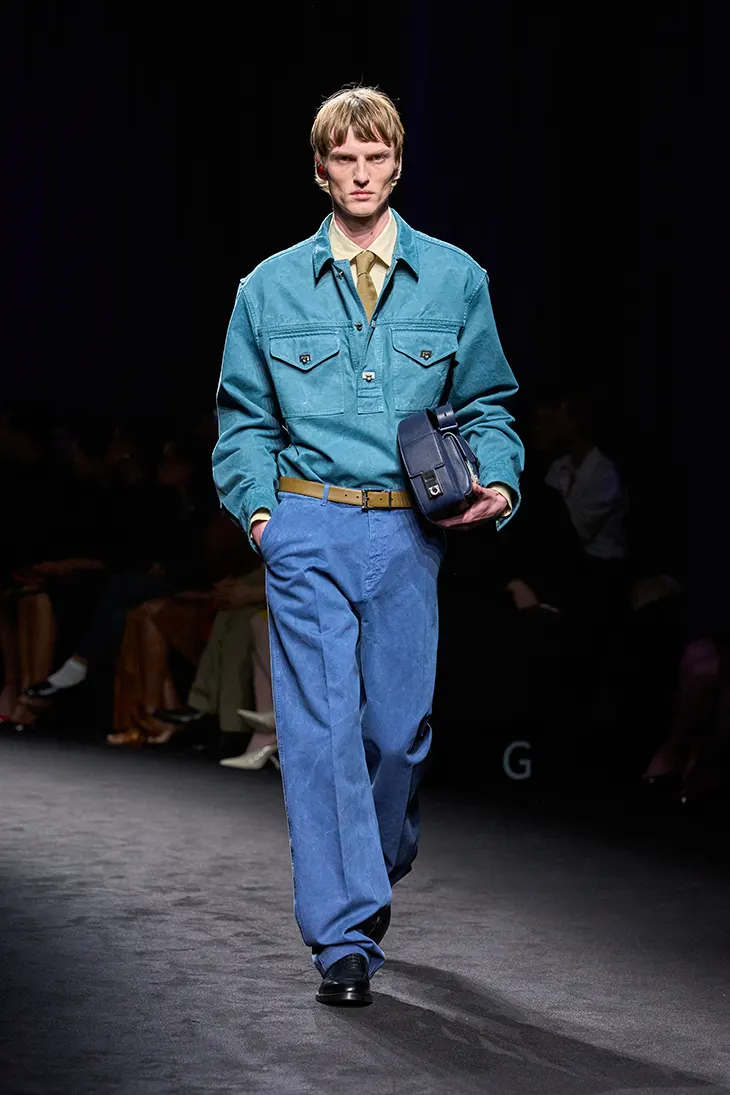
A pointed stiletto and sling-back silhouette feature a deep vamp inspired by a flat designed by Salvatore Ferragamo in 1954. Color combinations reference nautical uniforms, while jeweled embellishments introduce surface detail. The “shell sole,” developed in the 1950s with a structure that wraps around the foot, informs sandals shaped through curved lines and hybrid heel construction that references wedge geometry.
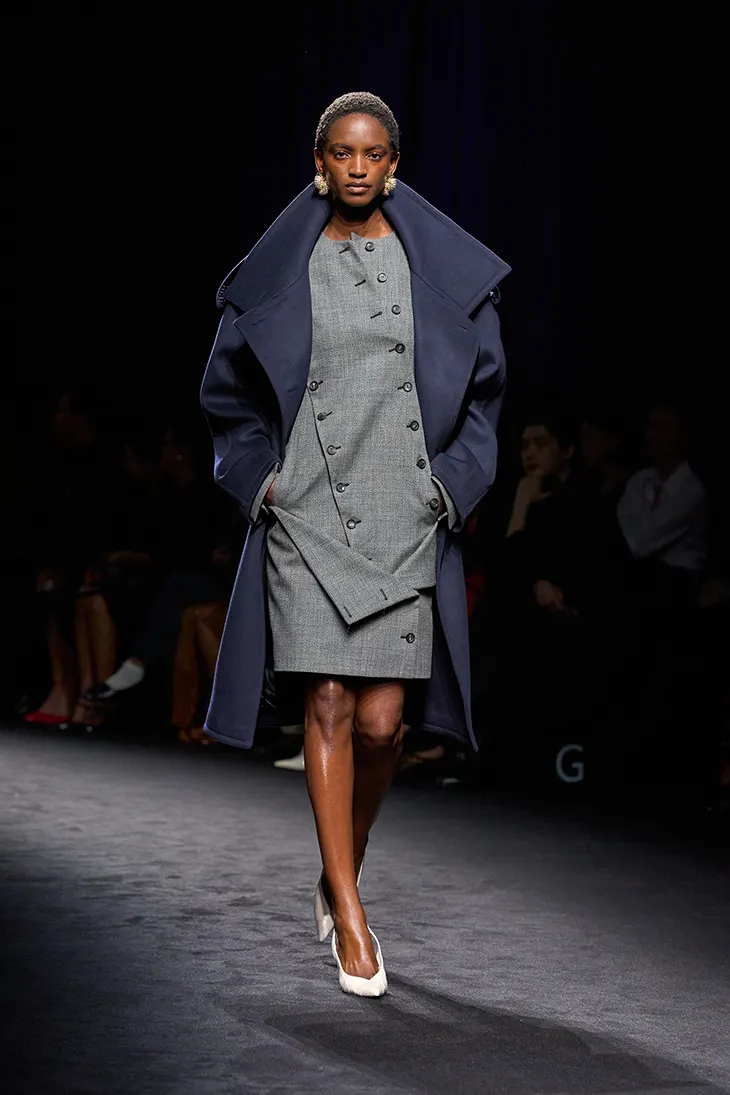
Menswear footwear expands formal construction through proportion and closure design. Oxford shoes appear with elongated silhouettes and apron-stitched toes that alter traditional shape. A monk shoe features the Hug closure, while a streamlined boot introduces a minimal structure.
Accessories introduce new bag forms and revised silhouettes. A slim bag secured with a Gancini plate appears in three sizes, establishing a graphic outline. The Hug bag appears in updated proportions and new color treatments. Menswear accessories include a cross-body pocket bag defined by utilitarian function and a woven calf leather Hug pouch. Ferragamo Fall Winter 2026 develops through references to migration, nightlife, and archival design, shaping garments, footwear, and accessories through material and structure.