


Artwork © Giuseppe Penone / 2026 Artists Rights Society (ARS), New York / ADAGP, Paris
Photo: Sebastiano Pellion di Persano / Courtesy the artist and Gagosian
Gagosian will open The Reflection of Bronze on April 22 at 555 West 24th Street in New York, presenting new sculptures by Giuseppe Penone. The exhibition introduces two bodies of work and marks the artist’s first collaboration with the gallery in the city. Adam D. Weinberg, director emeritus of the Whitney Museum of American Art, curates the project. Penone builds this presentation from his early research into trees, developed during the late 1960s, when he examined growth structures and produced carved works that revealed earlier stages within the trunk. The current sculptures translate that investigation into bronze.
ART
Penone’s practice develops through direct engagement with materials and their physical transformations. As a leading figure of Arte Povera, he has worked with multiple materials while maintaining a consistent focus on the relationship between human presence and natural processes. In this exhibition, bronze records duration and change through form. Weinberg describes Penone’s use of bronze as part of a sustained inquiry into artistic questions, where the material carries historical weight while remaining open to reinterpretation. Bronze once served industrial and military functions, and later reentered artistic production through approaches such as Penone’s. The sculptures also connect to an early observation in his work: removing the rings around knots in a wooden beam reveals the structure of a younger tree embedded within.
Artwork © Giuseppe Penone / 2026 Artists Rights Society (ARS), New York / ADAGP, Paris
Photo: Archivio Penone / Courtesy the artist and Gagosian
Artwork © Giuseppe Penone / 2026 Artists Rights Society (ARS), New York/ADAGP, Paris
Photo: Archivio Penone / Courtesy the artist and Gagosian
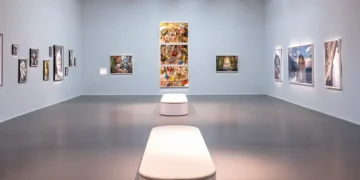
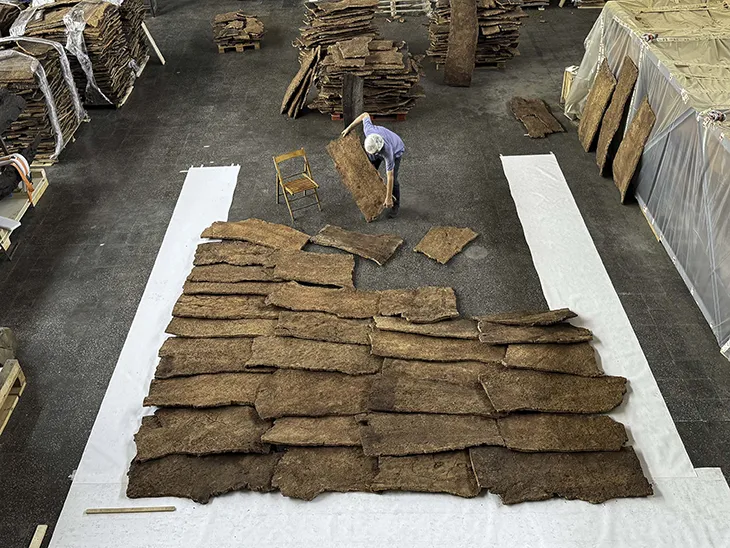
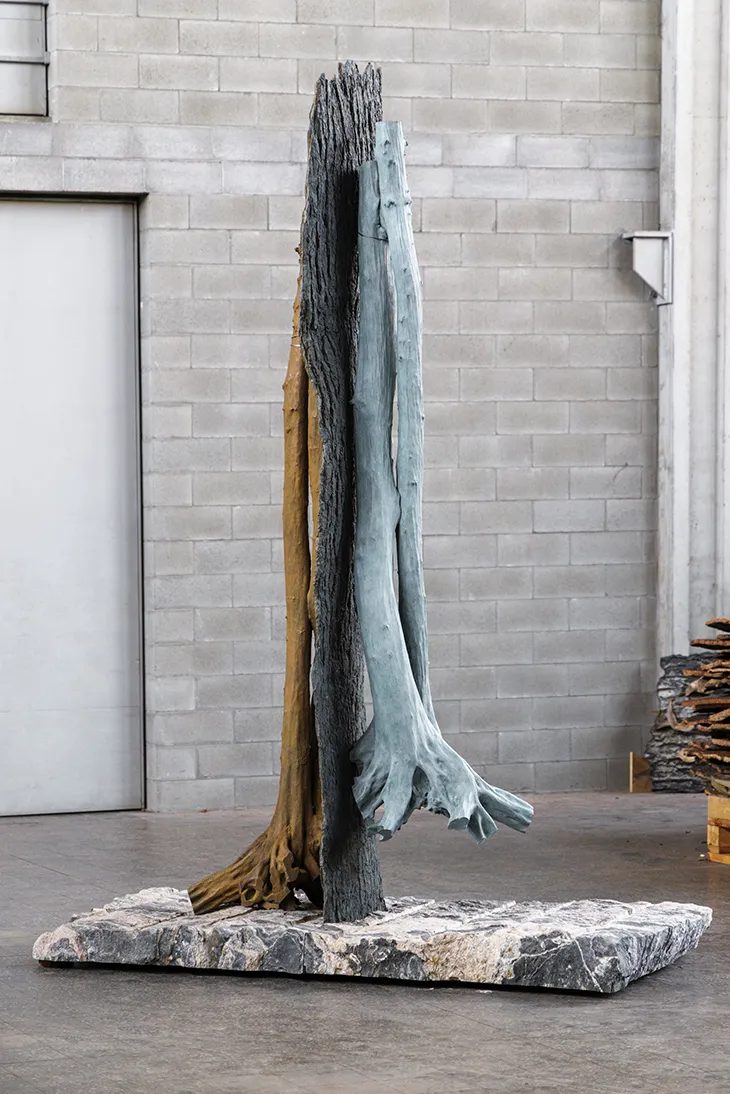
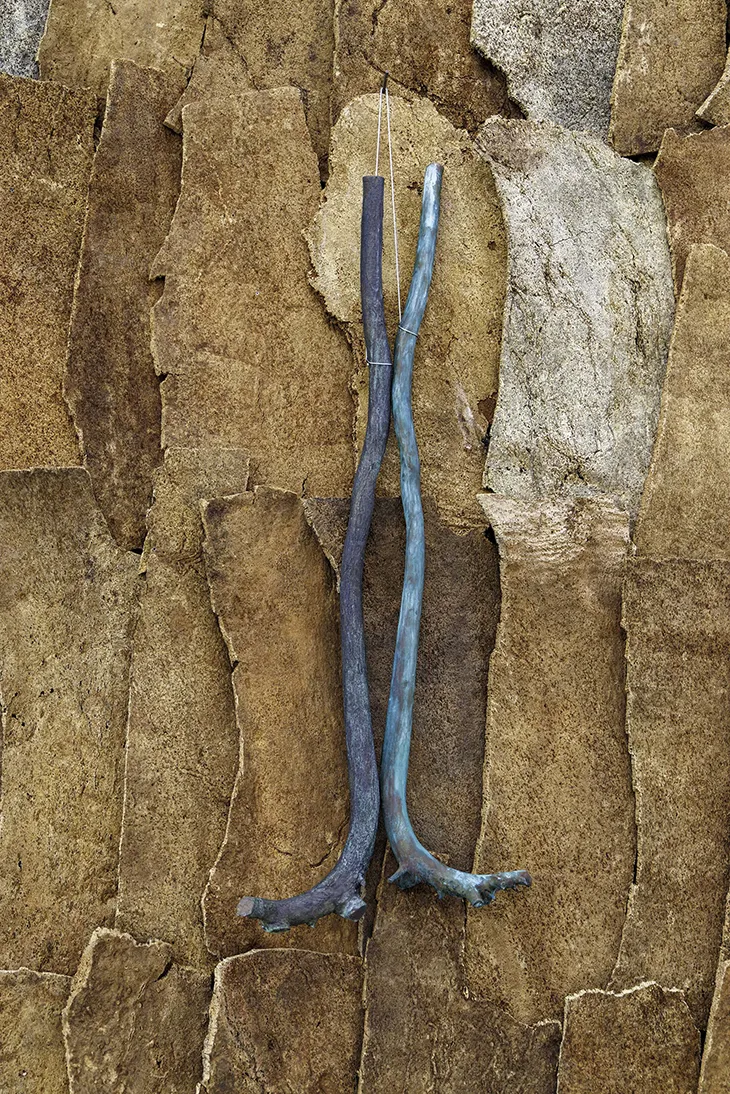
The exhibition develops across three rooms, each defined by a distinct material environment. The first room features walls covered in cork, sourced from the bark of the cork oak tree. This installation creates a continuous surface that surrounds bronze elements. At the center stands Marsia (Marsyas) (2024), a work based on the Greek myth of Marsyas. The sculpture consists of two connected bronze branches, one retaining bark and the other stripped. This pairing refers to the figure of Marsyas and the act of flaying described in the myth, translating the narrative into material form.
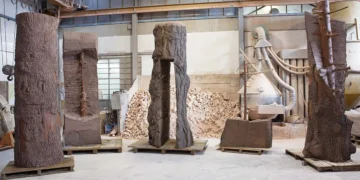
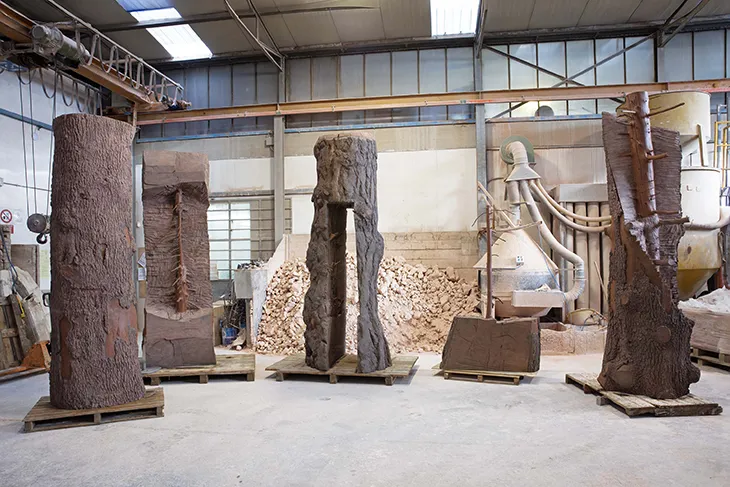
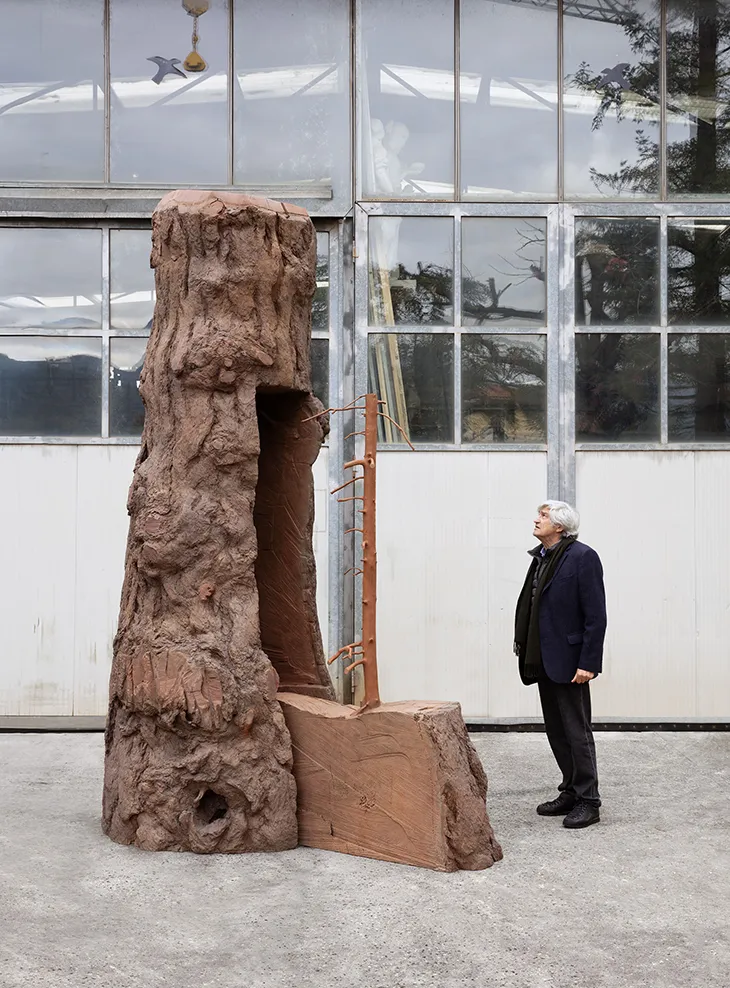
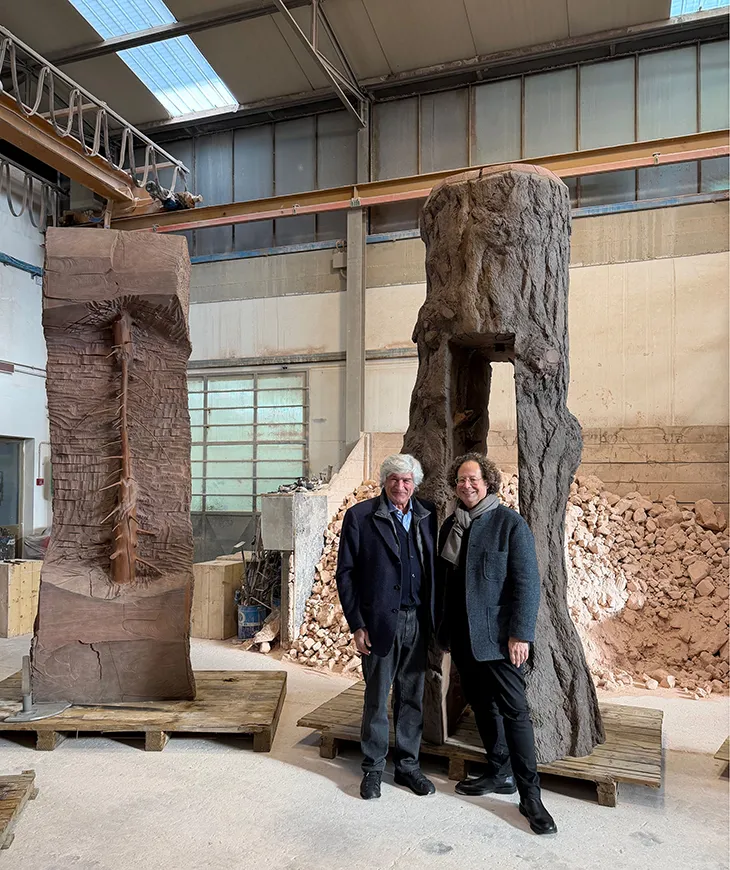
The second room presents works that extend Penone’s investigation into tree structures and chronology. Four sculptures titled Clepsydra (Water Clock), dated 2012 and 2024, consist of bronze casts taken from carved tree trunks. These works introduce a new use of bronze within his practice for this type of form. Nearby, Un anno di bronzo – Larice (A Year of Bronze – Larch) (2024) combines a bronze surface of bark with a living plant placed within the structure. The room also includes an early carved wood sculpture and Trattenere 6, 8, 12, 16, 20 anni di crescita (Continuerà a crescere tranne che in quel punto) (2004–24). This work presents five bronze trunks produced at different intervals, each marked at the center by a cast of the artist’s hand. The gesture refers to actions Penone carried out in the forests of Piedmont in 1968.
Artwork © Giuseppe Penone / 2026 Artists Rights Society (ARS), New York / ADAGP, Paris
Photo: Archivio Penone / Courtesy the artist and Gagosian
Artwork © Giuseppe Penone / 2026 Artists Rights Society (ARS), New York / ADAGP, Paris
Photo: Sebastiano Pellion di Persano / Courtesy the artist and Gagosian
The final room focuses on Riflesso del bronzo (The Reflection of Bronze) (2005), a sequence of bronze panels arranged in a linear progression. The first panel appears polished and reflective. Each subsequent panel derives from the previous one through casting, incorporating visible traces from the process. This progression introduces variation through repetition. Penone describes bronze as a material that imitates while carrying both value and history. The installation also includes an Egyptian bronze mirror dated to around 1539–1478 BCE, on loan from the Brooklyn Museum in New York, extending the exhibition’s focus on reflection and continuity over time.
An illustrated publication accompanies the exhibition, featuring an essay by Adam D. Weinberg alongside a conversation between Weinberg and Penone.
Artwork © Giuseppe Penone / 2026 Artists Rights Society (ARS), New York / ADAGP, Paris
Photo: Pepi Marchetti Franchi / Courtesy the artist and Gagosian
GIUSEPPE PENONE
The Reflection of Bronze
Curated by Adam D. Weinberg
Opening reception: Wednesday, April 22, 6–8pm
April 22–July 2, 2026
555 West 24th Street, New York