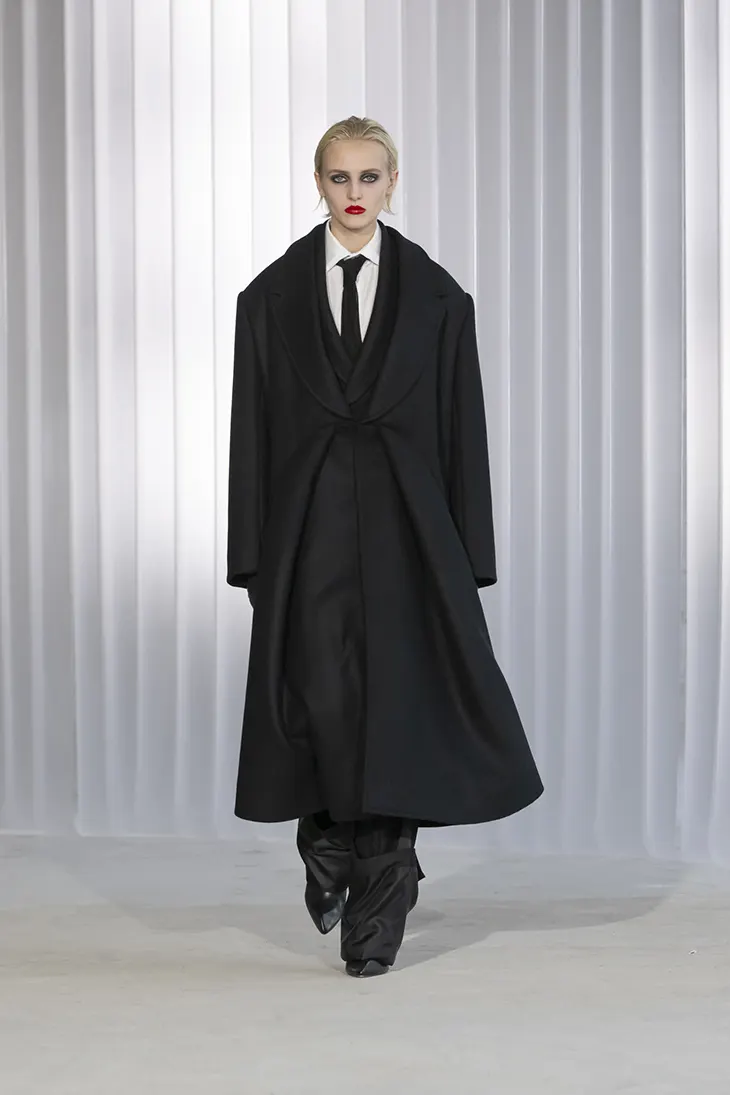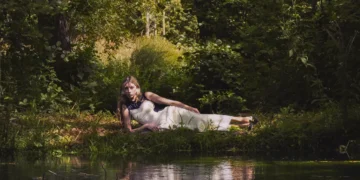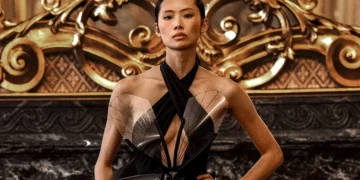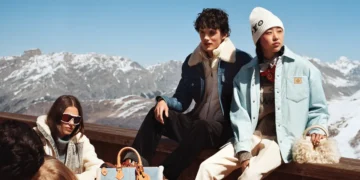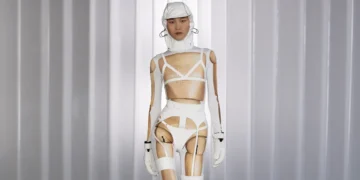



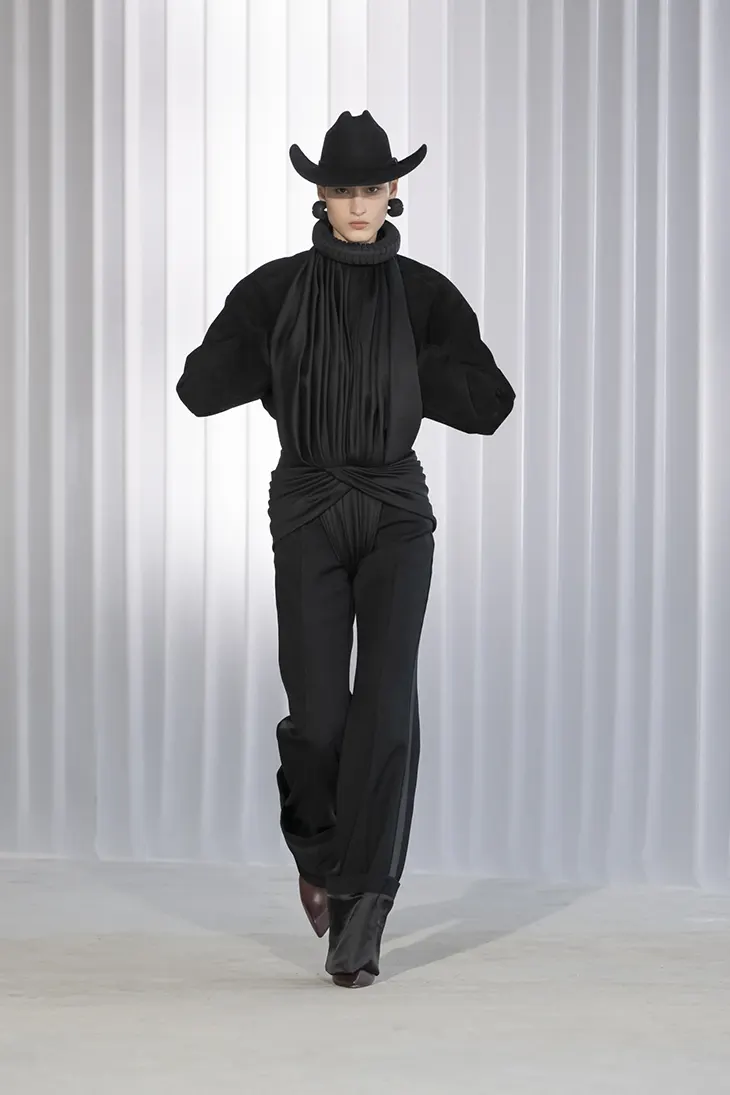
Duran Lantink approached Jean Paul Gaultier Fall Winter 2026/27 as a gathering of characters. Detectives, cowboys, ravers, bankers, steampunk figures, and femme fatales appeared together on the runway, each suggesting a role while resisting a fixed narrative. Lantink used this cast as the structure of the collection, where tailoring, sportswear, and elegance intersected with disruption. Every look carried the feeling of someone stepping into costume while remaining fully themselves.
FALL WINTER 2026 COLLECTIONS
The starting point arrived from Lantink’s own wardrobe. A vintage mesh T-shirt printed with the face of Marlene Dietrich shaped the direction of the collection. Dietrich’s image represents a figure who challenged conventions throughout her career, shifting between masculine and feminine codes with effortless authority. Her aura combined softness and command, glamour and distance. That duality aligned naturally with the language of Jean Paul Gaultier, a house long known for turning fashion codes inside out.
Dietrich appeared throughout the collection as both symbol and motif. Her face returned on garments, including a dress that showed the actor smoking, reinforcing the idea of performance and persona. Lantink used her presence as an invitation for other characters to enter the narrative. The runway became a place where identities intersected, echoing the house’s long-standing fascination with hybrid forms and theatrical transformation.
Archive exploration played a central role in shaping the silhouettes. Lantink examined earlier Jean Paul Gaultier collections and noticed gaps between famous pieces, garments that could be revived, altered, or placed in new contexts. The designer approached the archive with the same experimental attitude that defined his earlier independent work. For years Lantink built collections by transforming existing clothing sourced from vintage markets, designer stock, and his own wardrobe. This instinct continues here, where garments appear ready for a new role.
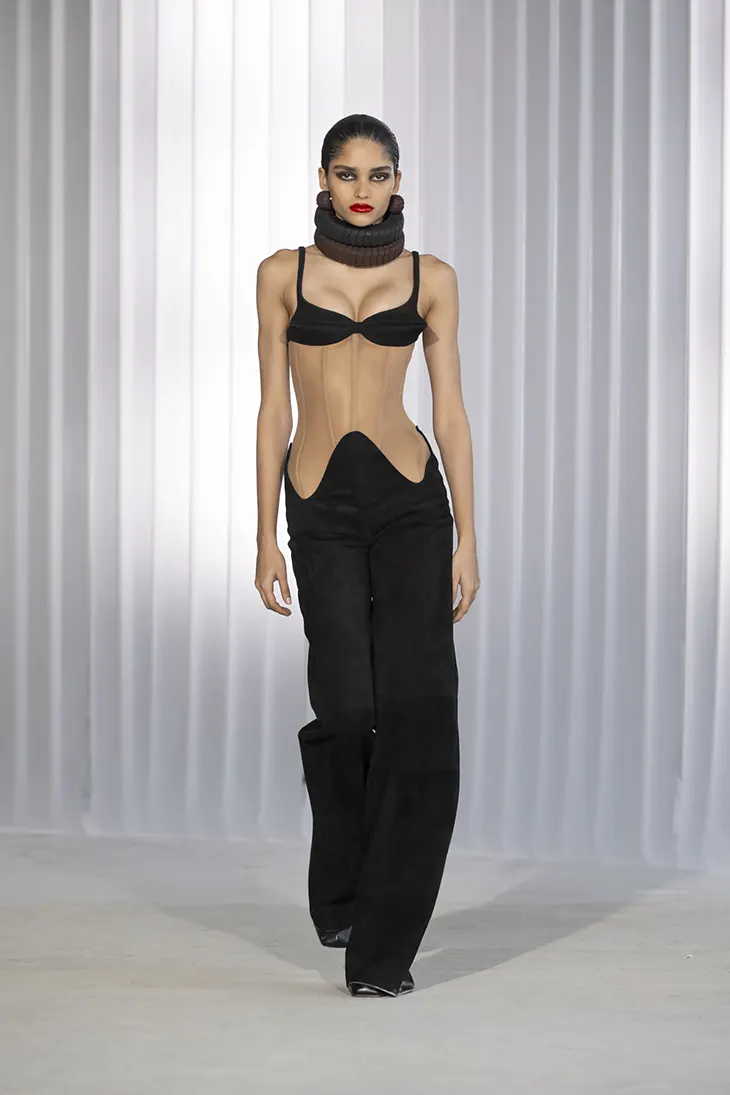
One of the key references emerged from the Haute Couture Spring Summer 2016 collection Le Palace. A pinstripe suit with a gathered waist inspired a series of sculptural tailoring experiments. Lantink expanded this detail into dramatic volumes that shifted the proportions of the body. Sloping shoulders and exaggerated waistlines introduced a sense of theatrical construction while maintaining a sharp tailoring vocabulary.
Several iconic garments returned with minimal alteration. A cropped bomber jacket originally introduced in 1985, then revisited in 1988 and 2002, appeared again almost exactly as it first did. Fair Isle knits from the Autumn Winter 1990 collection resurfaced as body-hugging base layers, reinforcing the theme of garments reentering the stage with a new purpose. Lantink treated these pieces as actors drawn from a wardrobe department, each ready to participate in another performance.
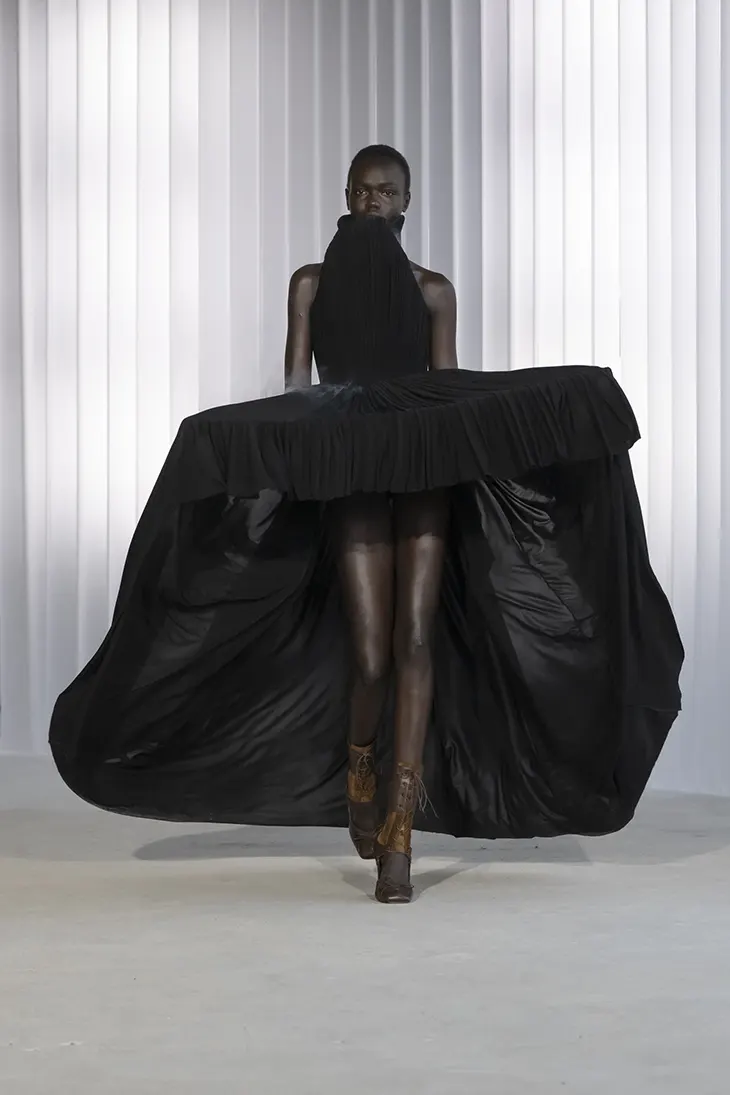
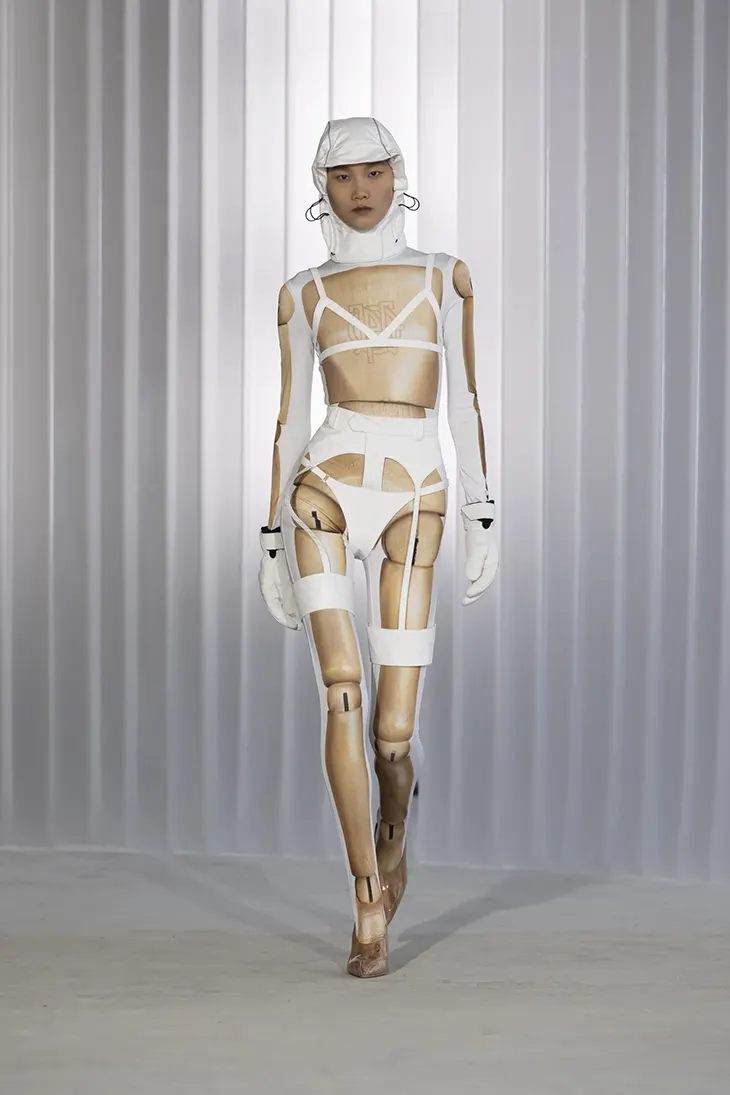
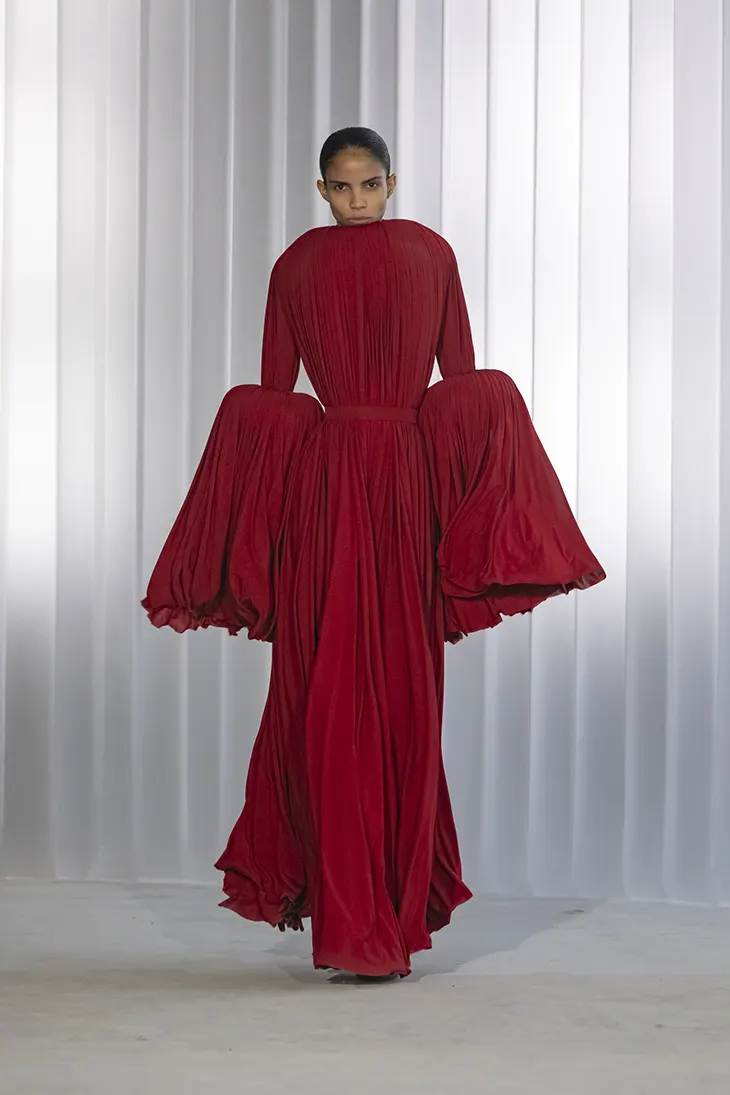
Materials and accessories added further transformation. Rubber car tires became unexpected accessories, introducing a sense of industrial texture within the collection. A wooden puppet referenced Les Marionnettes from the Autumn Winter 2004 show, linking the runway to earlier moments in the house’s theatrical history. Pleated jersey dresses brought energy to the silhouettes, bouncing with movement and introducing rhythm to the lineup.
Cinema also informed the collection’s direction. During regular lunches, Jean Paul Gaultier and Duran Lantink often discuss film and the power of visual storytelling. These conversations shaped the idea of the runway as a stage populated by characters. Their shared fascination with Futurism also surfaced in the collection’s sculptural approach to the body. Gaultier began his career assisting Pierre Cardin, whose futuristic imagination reshaped silhouettes through bold geometric construction. Lantink’s experiments with proportion and structure echo that same willingness to push clothing into new territory.
Stories from Gaultier’s past reinforced the collection’s playful attitude toward clothing. The designer once recalled finding a jacket at a flea market, turning it inside out, and realizing that he preferred the garment with the lining exposed. The gesture expressed a simple philosophy that continues to guide the house. Clothing invites reinvention. The inside may become the outside. Old garments may acquire new life.
Jean Paul Gaultier Fall Winter 2026/27 ultimately celebrates transformation. Through characters, archive references, and sculptural design, Lantink builds a wardrobe that encourages experimentation and freedom. The runway suggests that fashion thrives when it allows people to play with identity, shape, and possibility.