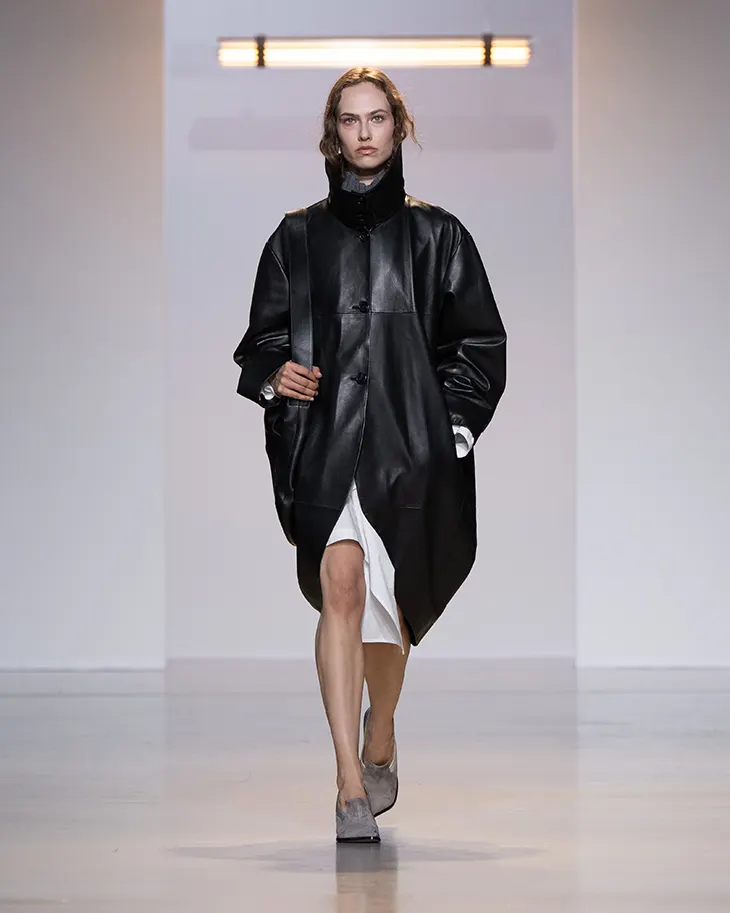



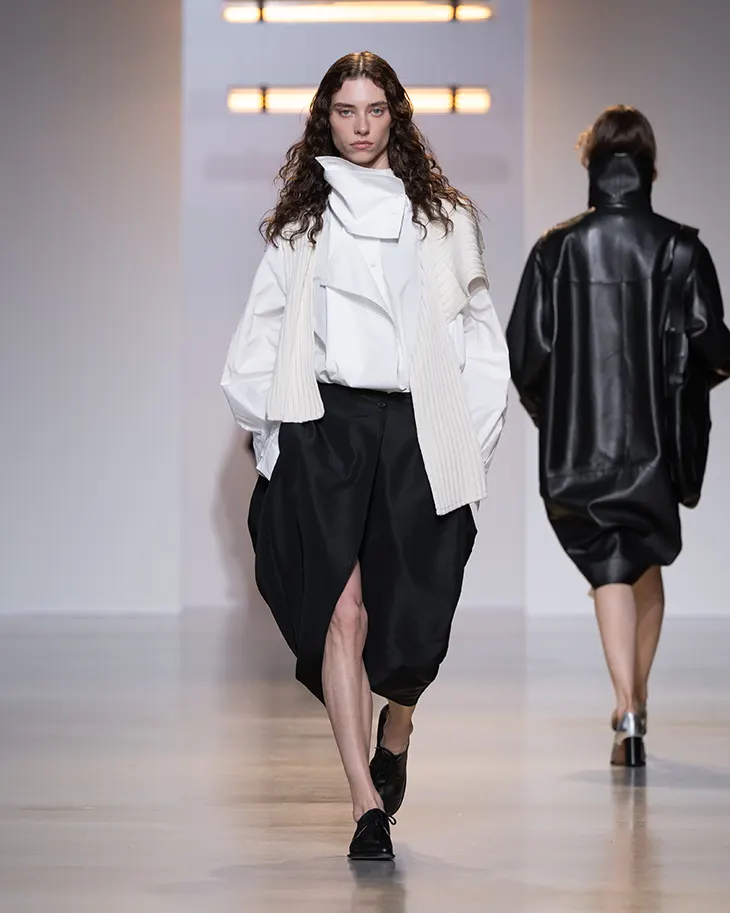
Niccolò Pasqualetti debuted Fall Winter 2026 at Palais de Tokyo. The collection investigates the relationship between the physical body and an ethereal presence expressed through clothing. Pasqualetti approaches this idea through garments that unite dense material surfaces with luminous forms. The collection functions as a meeting point where raw texture encounters sculptural construction. Through these elements, the designer constructs a wardrobe that connects the grounded qualities of fabric with shapes that appear almost weightless.
FALL WINTER 2026
Pasqualetti builds garments through surfaces that communicate physical presence. The palette contributes to this language through tones that evoke natural environments. Deep reds appear beside mossy greens, rusty oranges, and deep blues. These colors introduce visual density and establish the emotional atmosphere of the season.
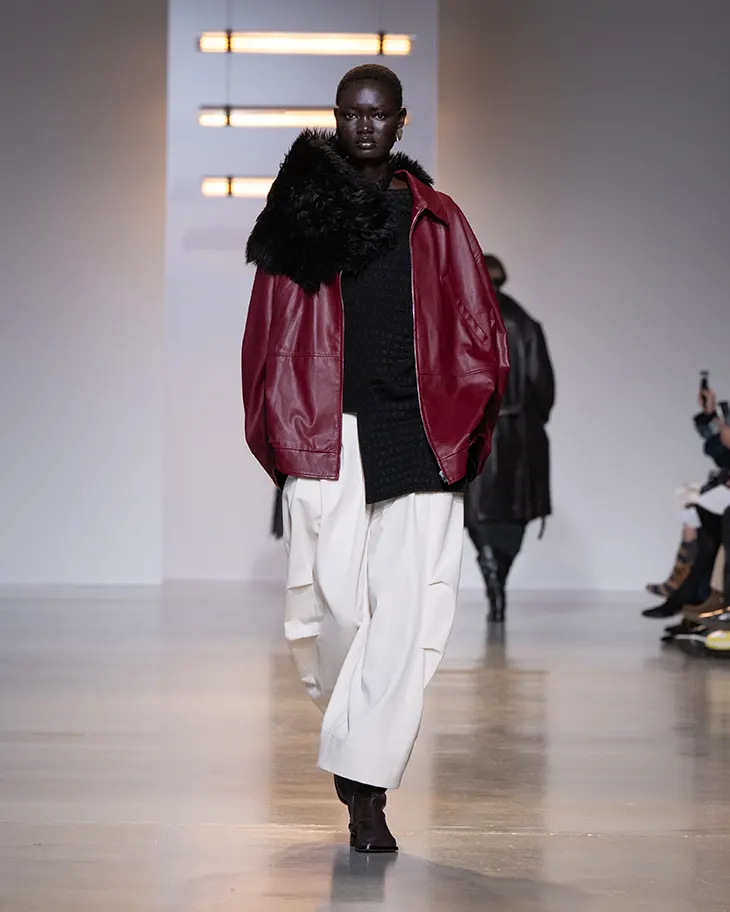
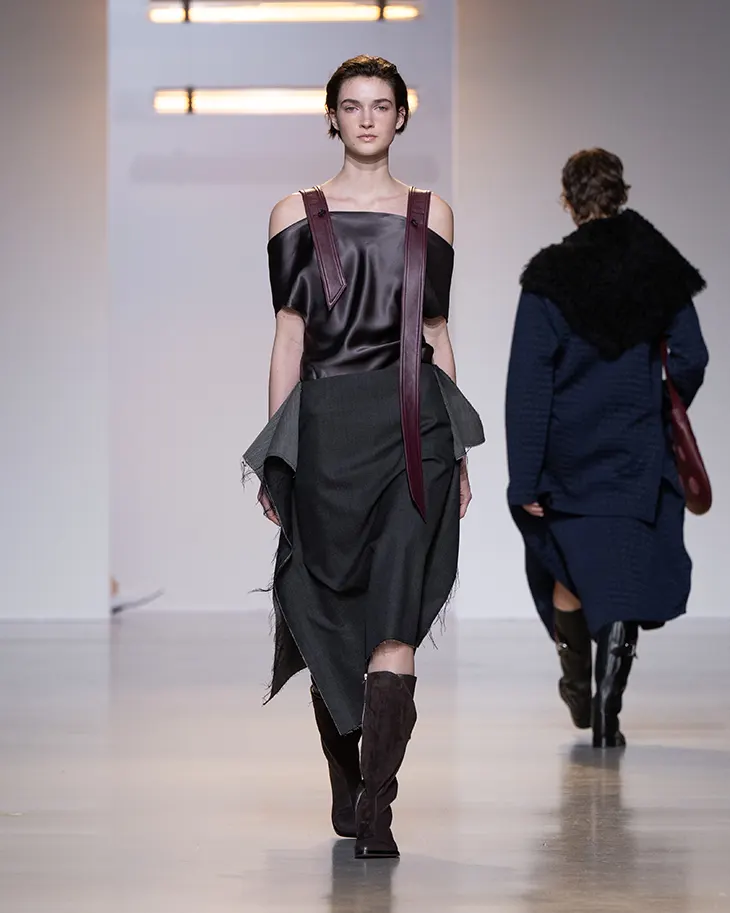
Chambray two-tone wovens create variation across the surface of the fabric. Long-nap suede introduces tactile depth that shifts visually as the wearer moves. Pebbled calfskin contributes structure and weight to the garments, while supple lambskin punctuated with studs introduces a controlled tension across the surface. Distorted jacquard fabrics alter the expected rhythm of woven patterns. Dense sequins produce reflective surfaces that react sharply to light.
Golden silk appears with a texture that resembles fur pelt. Sheepskin receives dye treatments that evoke the grain of deer hide. Cotton undergoes staining processes that mimic freshly excavated soil. These techniques reshape the perception of the fabrics and position each garment closer to an elemental material language. Metal also plays an important role within the collection. Sculptural silver pieces appear throughout the wardrobe and function as extensions of the body. These objects shift visually as the wearer moves, transforming from rigid elements into fluid shapes that follow the silhouette.
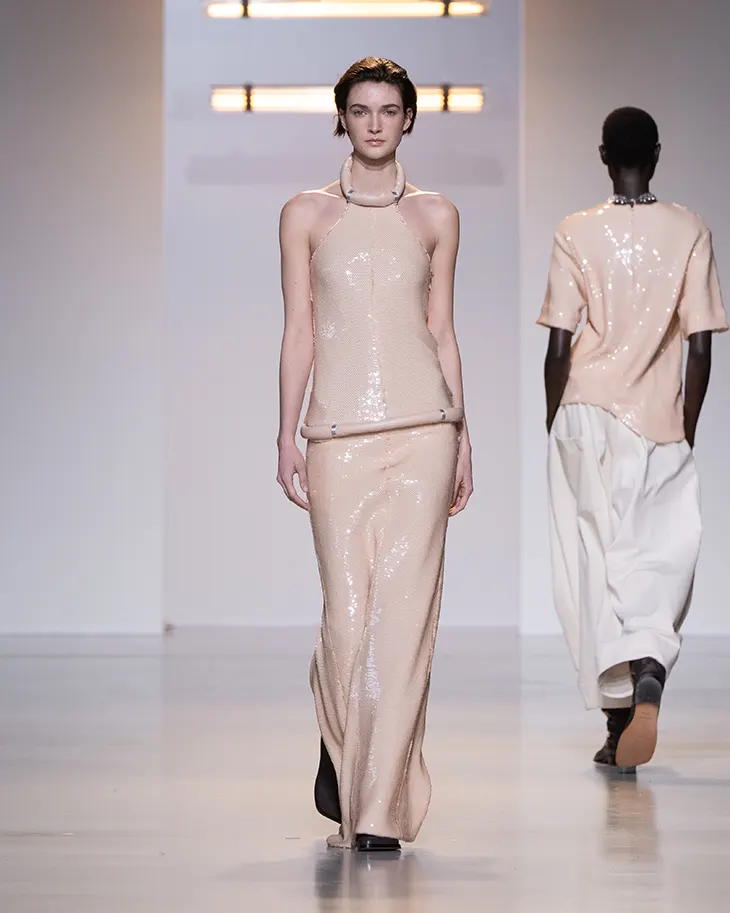
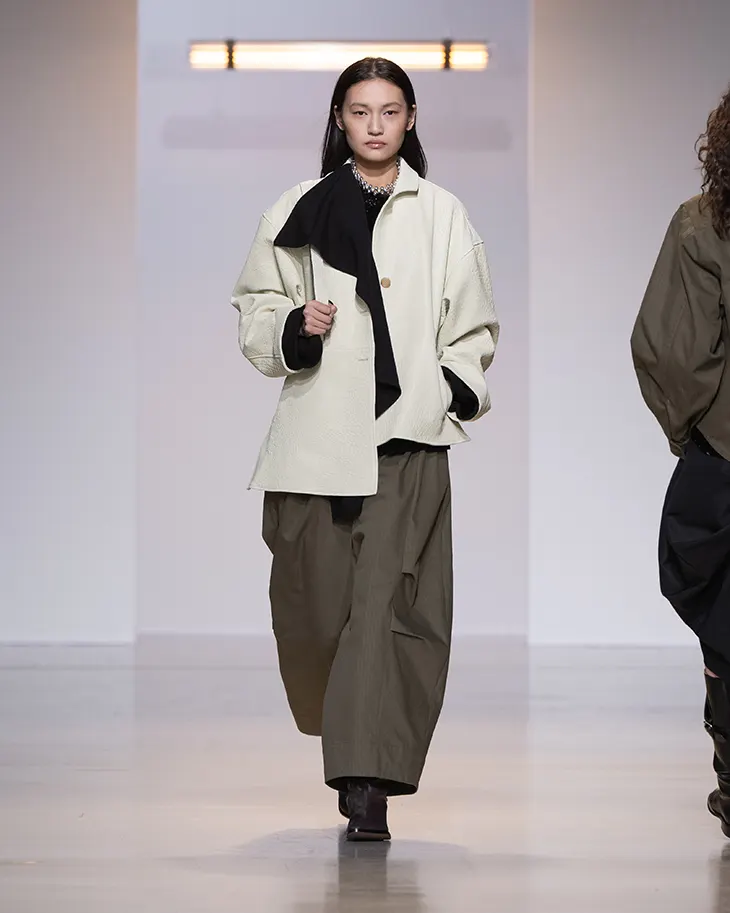
Pasqualetti develops soft structural elements linked by metal rings that form modular layers worn over familiar wardrobe staples. The designer treats these pieces as adaptable structures that shift according to how the wearer combines them with clothing. Traditional tailoring structures undergo alteration through asymmetry, reshaping the balance of the garment while maintaining clarity in construction. Jackets, coats, and other tailored pieces appear with lines that move slightly off axis.
Despite these structural complexities, the collection presents clothing intended for lived experience. Pasqualetti’s Fall Winter 2026 collection develops a dialogue between material substance and luminous form. Raw surfaces, experimental fabric treatments, sculptural silver elements, and altered tailoring create a wardrobe shaped by transformation.