


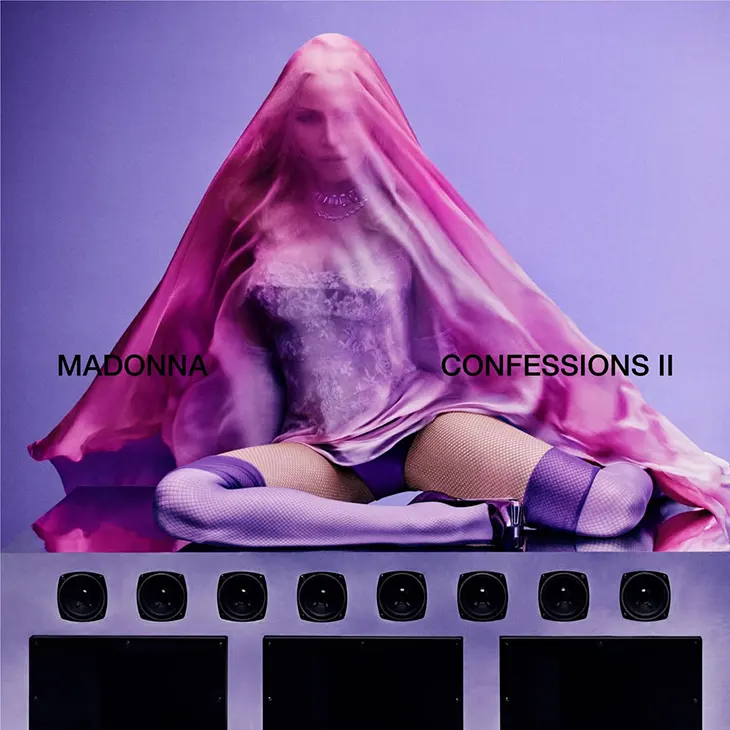
Madonna returns to club sound with Confessions II, confirmed after months of hints as a continuation of her 2005 album Confessions on a Dance Floor. The project arrives July 3 via Warner Records and marks her fifteenth studio album. The announcement follows a period of quiet buildup, including a wiped Instagram feed and short teasers that pointed toward a return to dance-focused sound.
MUSIC
The new record also signals a return to Warner Records, the label where she began her career, after nearly two decades. The move ties directly into the project’s direction, which reconnects with a defining moment in her catalog. In November, she revisited that era with the Confessions on a Dance Floor Twenty Years Edition, bringing renewed attention to tracks such as “Hung Up,” “Sorry,” and “Get Together.”
Confessions II draws directly from the structure and sound that defined the original album. Madonna reunites with Stuart Price, who produced the 2005 release, to rebuild that approach in a new context. They developed a shared framework for the record, grounded in the idea of the dance floor as a physical and emotional space shaped through movement, sound, and repetition.
She introduced the album with a visual preview for the opening track, “I Feel So Free.” The clip moves through strobe-heavy imagery, with Madonna appearing in shifting shadows while projected lyrics guide the sequence. A voice-over runs through the track, where she reflects on identity and transformation, speaking about stepping into different versions of herself.
The track centers on the experience of losing control within music. “Honestly, I wish I could be like other people and just not care,” she says in the preview, before shifting into the refrain that anchors the song. A second voice enters briefly, adding a sense of narrative before the sound drops out.
In a statement, Madonna frames the album through the idea of the dance floor as a space where movement replaces language. She describes it as a site where people connect through physical expression, pushing past limits and entering a shared state shaped by sound and repetition. The framework she and Price developed for the album treats rhythm as a tool that alters perception, with bass and light working together to pull listeners into a trance-like experience.