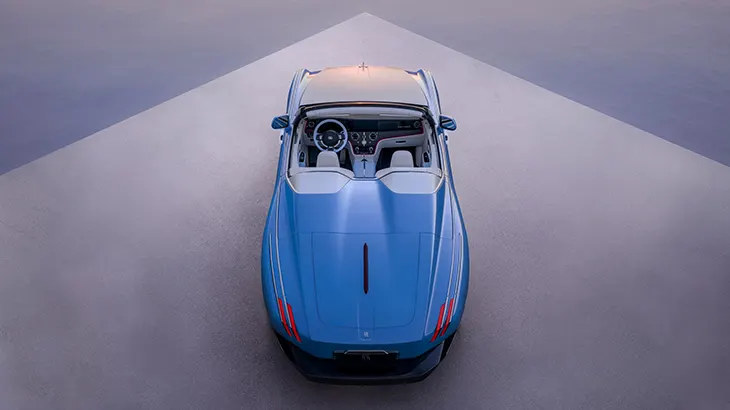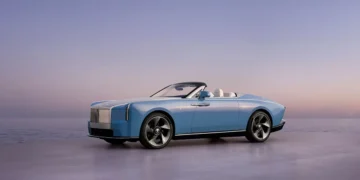



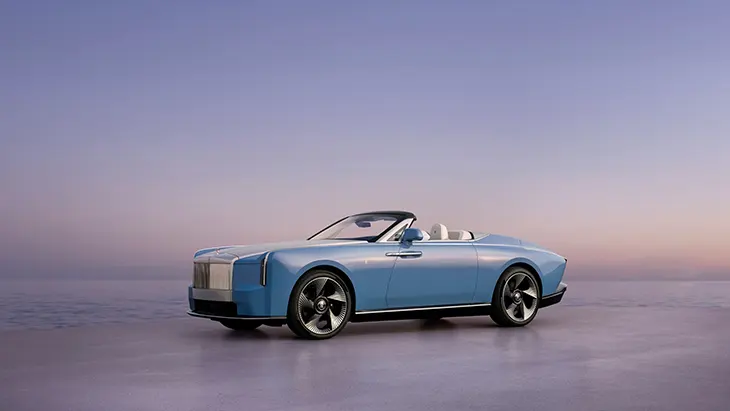
Rolls-Royce Motor Cars presents Project Nightingale, a Coachbuild Collection concept that introduces an open two-seat motor car defined by scale, precision, and a fully electric drivetrain. Named after Le Rossignol and connected to the designers’ and engineers’ house near Henry Royce’s Côte d’Azur residence, the project reflects a focused design direction rooted in historic references and current engineering. Only 100 examples will be produced, each built by hand at Goodwood and developed alongside clients through a multi-year programme of curated experiences.
CARS
The design draws from Streamline Moderne principles, where continuous surfaces and controlled lines take precedence over ornament. Rolls-Royce designers approached the form as a single volume, shaping the car with strong proportions and uninterrupted transitions. The influence of the 1920s experimental ‘EX’ models plays a central role, especially 16EX and 17EX. These cars introduced lightweight construction and increased speed, with elongated bonnets and compact cabins set deep within the body. Project Nightingale carries forward these ideas through three key elements: a transition from upright front to flowing rear, a central fuselage defined by a continuous hull line, and sculptural volumes that guide the eye toward the tail.
The front elevation reflects the advantages of an electric drivetrain. Without the need for large cooling systems, designers achieved wide, uninterrupted surfaces across the wings and grille. The Pantheon Grille features a broad stainless-steel surround with deeply set vanes, while the Spirit of Ecstasy integrates into the bonnet through a recessed section that flows rearward. A structured lower section anchors the grille, with a carbon fiber apron extending forward. Vertical headlamp assemblies sit at the outer edges, connected by polished stainless-steel bands that run along the full length of the car.
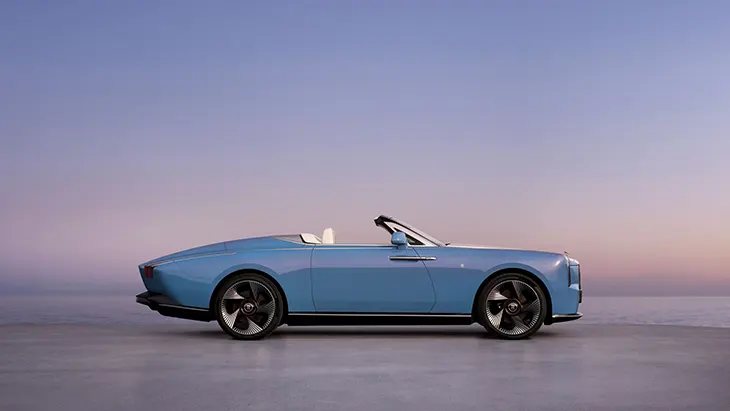
In profile, the proportions define the entire composition. A long bonnet leads into a sharply raked windscreen, followed by a compact cabin positioned low within the body. The rear tapers into a low trailing edge, creating a continuous motion from front to back. A single hull line runs uninterrupted along the side, beginning at the front wing and extending to the rear. Designers set this line high, reinforcing the feeling of enclosure within the cabin. Behind the headrests, an upswept form rises to shield occupants and integrate the seating into the overall structure. Below, sculpted surfaces and a carbon fiber sill reference earlier Rolls-Royce forms.
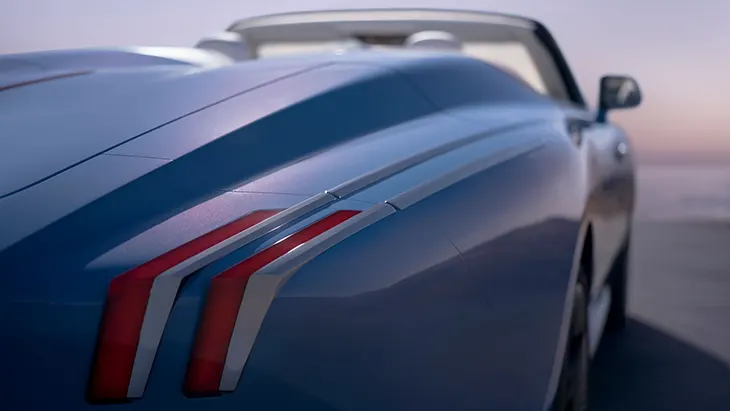
At the rear, the design emphasizes precision and balance. The body widens around the wheel arches, while the horizontal deck remains clean and restrained. Slim rear lamps drop from the upper surface at a sharp angle, reinforcing the geometric structure. The Piano Boot opens sideways on a cantilever, introducing a deliberate gesture that transforms access into a considered action. A central brake light runs along the longitudinal axis, while a recessed chrome plate surround adds a focused detail. The electric drivetrain enables a clean lower section, with a carbon fiber diffuser that supports stability.
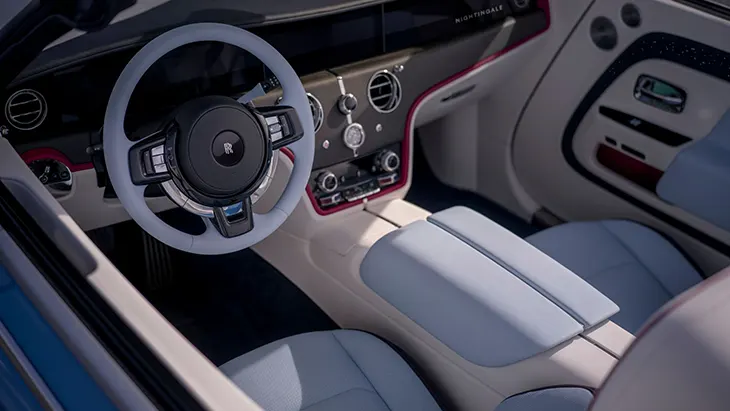
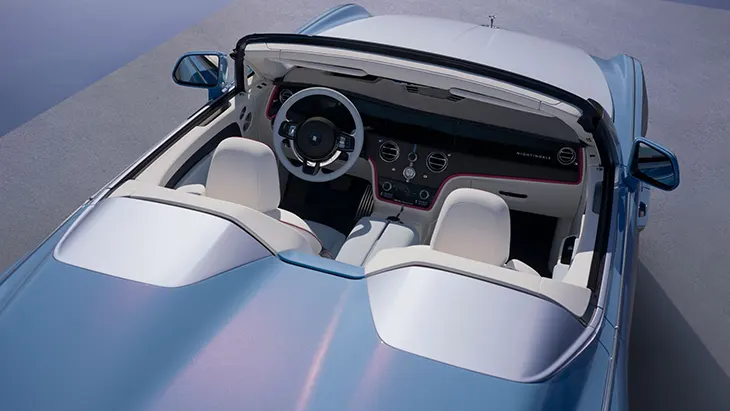
The interior builds around a concept inspired by birdsong. During early testing, designers noted the clarity of natural sounds within the cabin and translated this into a visual system. The Starlight Breeze suite uses over 10,000 points of light arranged according to soundwave patterns, wrapping around the occupants. This illumination sits within a sculptural structure that frames the seats and creates a contained environment for two. Materials and controls follow a restrained approach, with minimal elements shaped for tactile interaction and precise placement.
Project Nightingale operates as both a design study and a production concept. It draws from early Rolls-Royce experimentation while advancing electric mobility through form, silence, and control. Deliveries will begin in 2028, marking the next phase of the Coachbuild Collection programme.