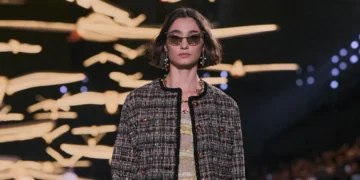



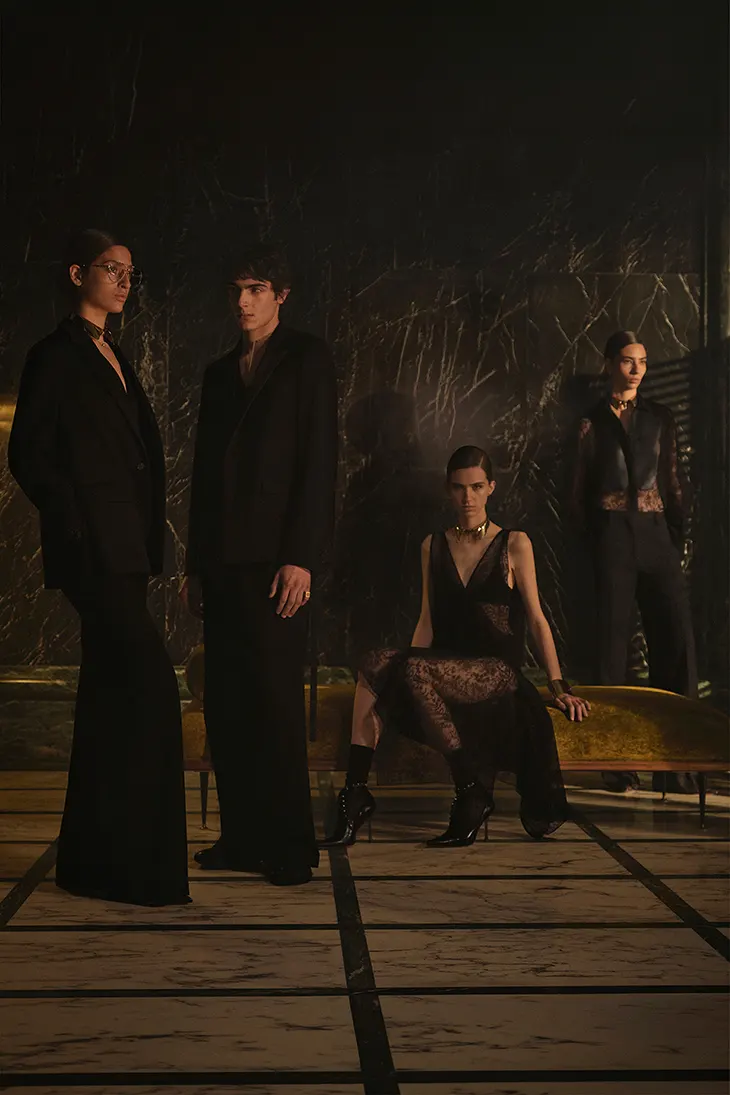
Fendi Cruise 2027 marks Maria Grazia Chiuri’s first Cruise collection for the house, setting the terms for a project still in formation. Chiuri approaches the season as a way to clarify how she wants to build the Fendi wardrobe, using the collection to define a method, a set of values, and a direction. She returns to her identity as an Italian designer through attention to process, material quality, and form, treating each garment as part of a larger system of dressing.
CRUISE COLLECTIONS
The collection centers fashion as a tool for awareness and possibility. Chiuri imagines a wardrobe for contemporary men and women, built through pieces that can move across bodies, habits, and expectations. Her idea of the bourgeoisie expands beyond class or fixed identity. She uses the word to describe a modern category shaped by generations, desires, behaviors, and changing ways of living. In this reading, clothes create a direct relationship with the body, gaining meaning through time, use, and the shifting perception of the self.
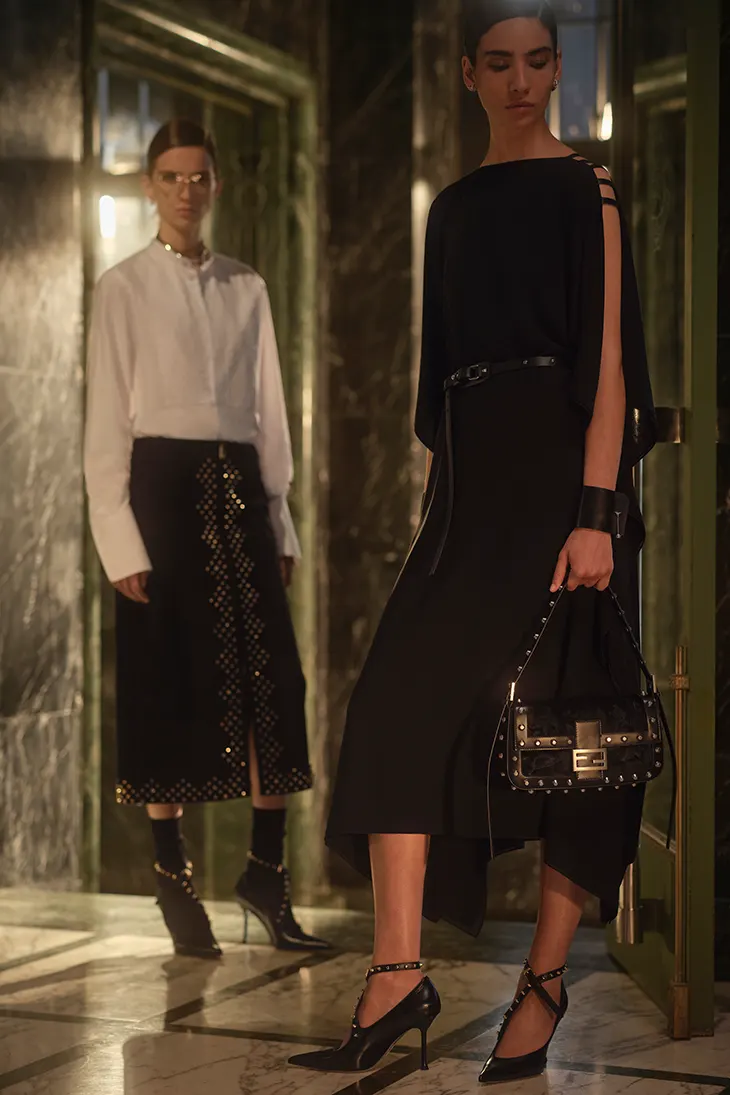
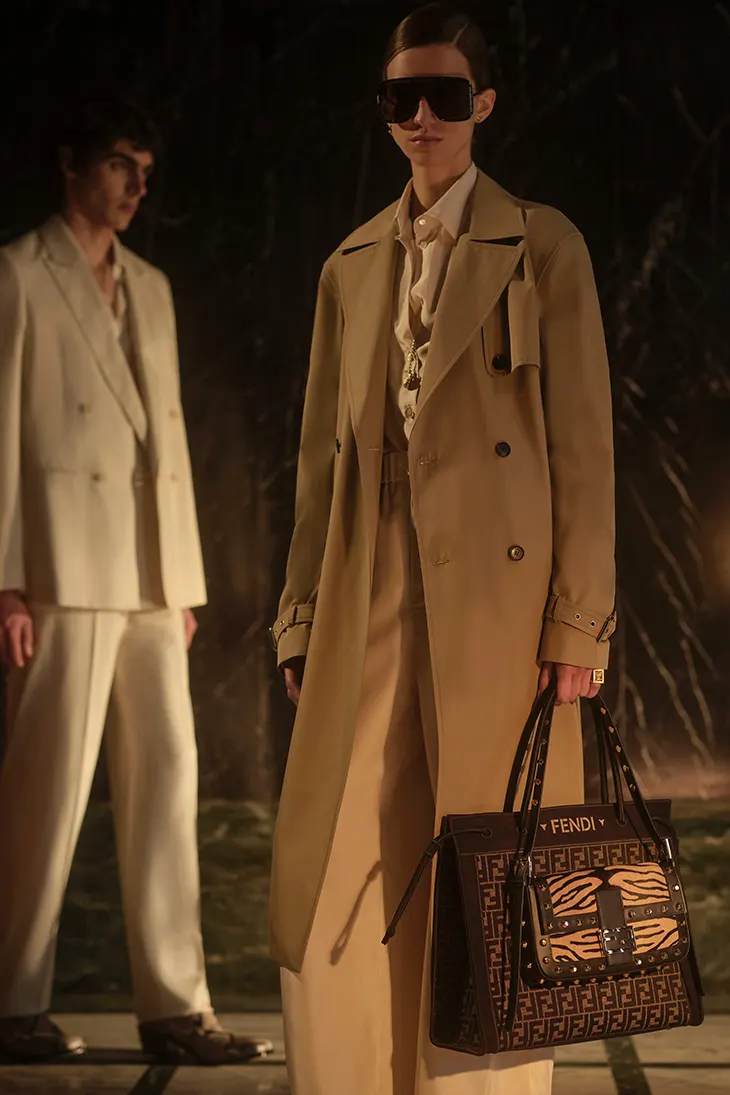
Men and women appear side by side in the collection, sharing pieces that move between different modes of dressing. Chiuri designs garments with an interchangeable quality, creating a wardrobe that allows the wearer to break down and rebuild each look. A shirt with trousers appears almost like one continuous piece, suggesting a uniform with room for adaptation.
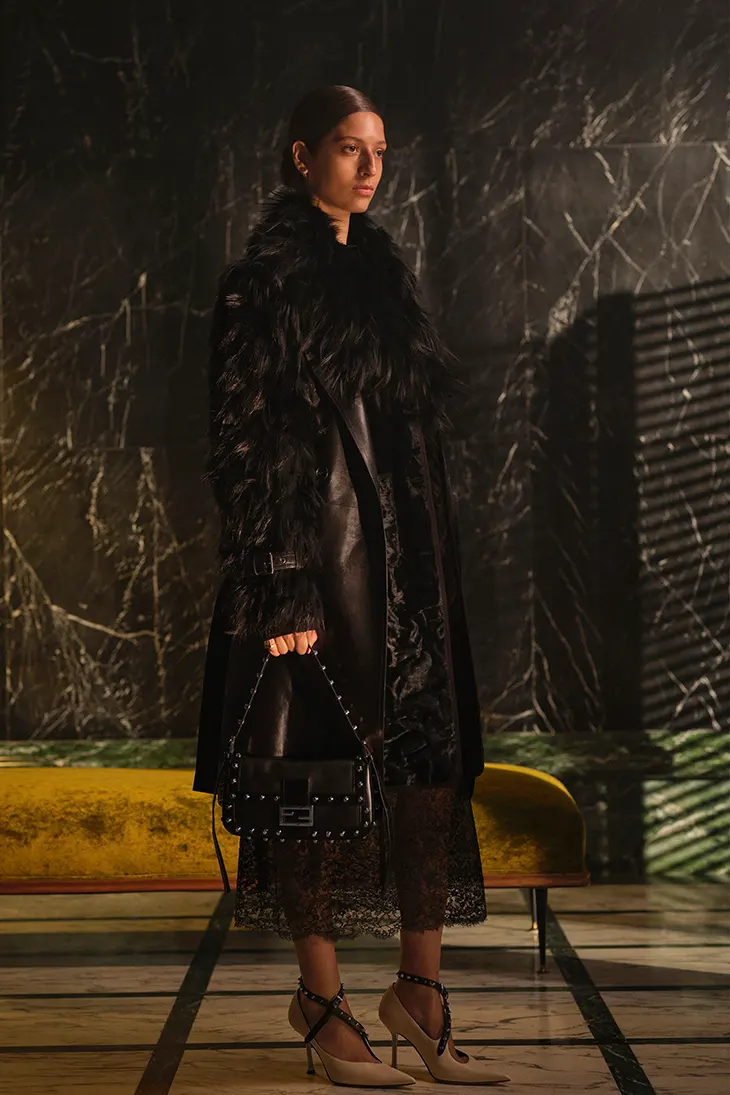
Chiuri brings parchment, a material tied to Fendi, into direct contact with studded black leather through the reactivated Baguette bag. In clothing, parchment becomes a color, set against black to create a sharper contrast. Accessories and apparel follow the same logic, with materials carrying ideas across categories.
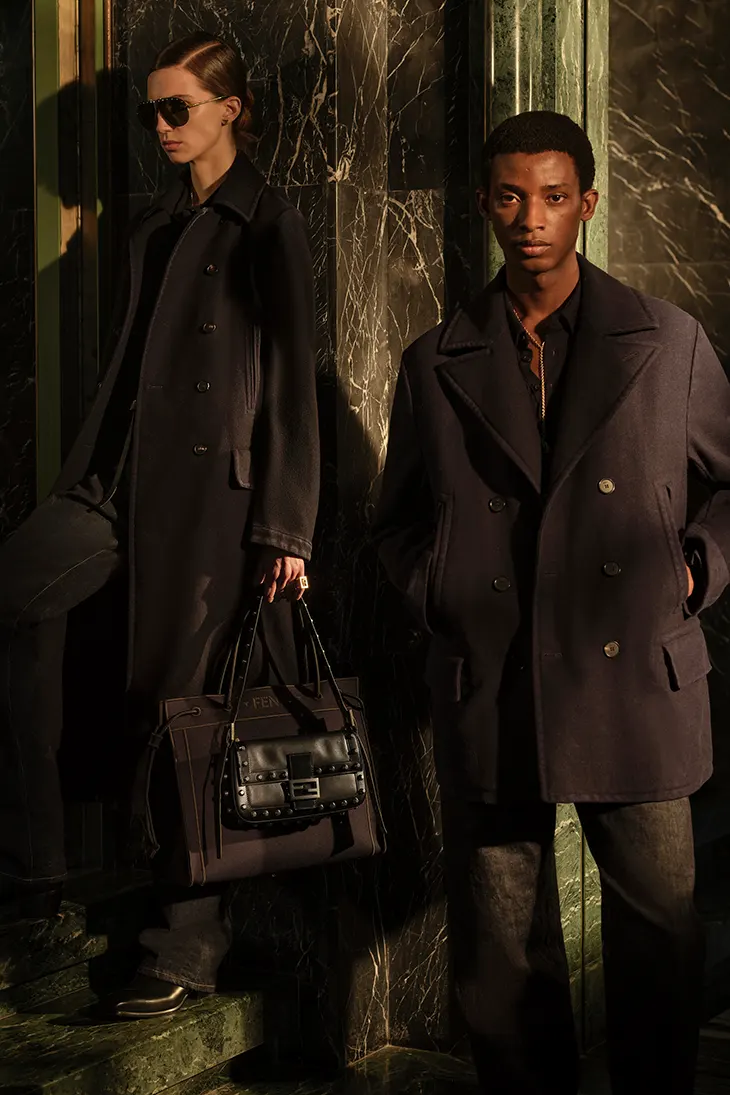
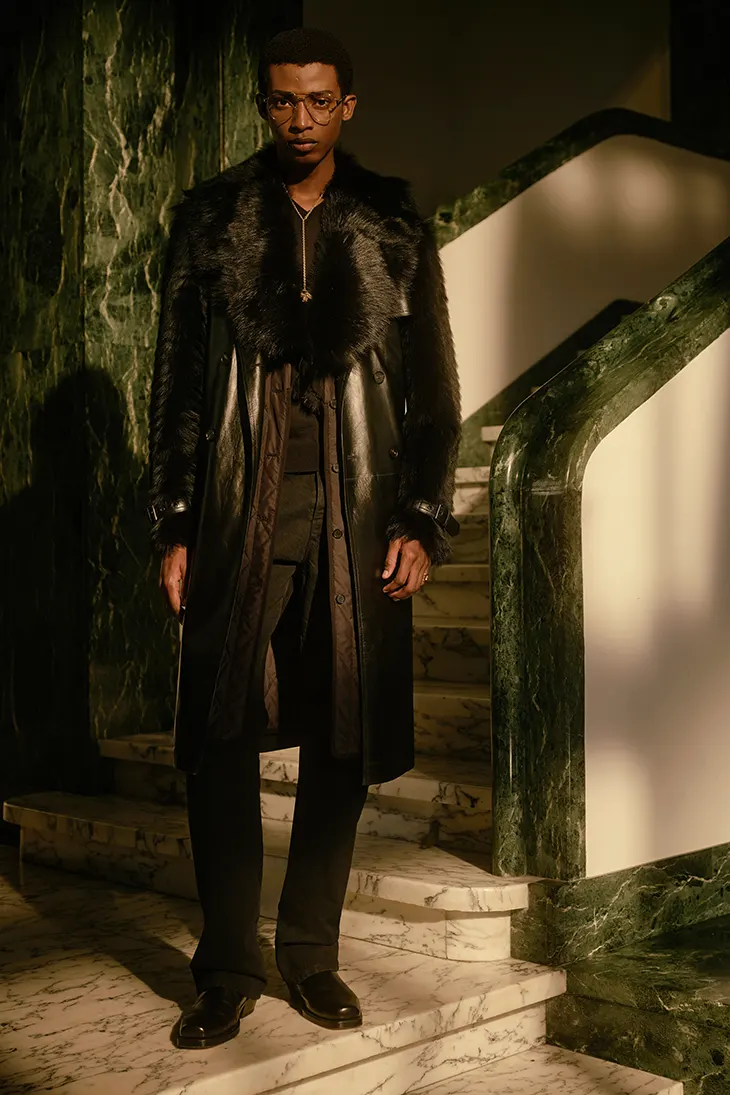
A georgette dress gains new tension through a leather plastron, changing how the fabric sits against the body. Wardrobe staples receive a different force through material opposition. The trench coat develops through fur stripes and wedge studs, turning a familiar shape into something more assertive. Shiny leather works against matte fabric on jackets and coats.
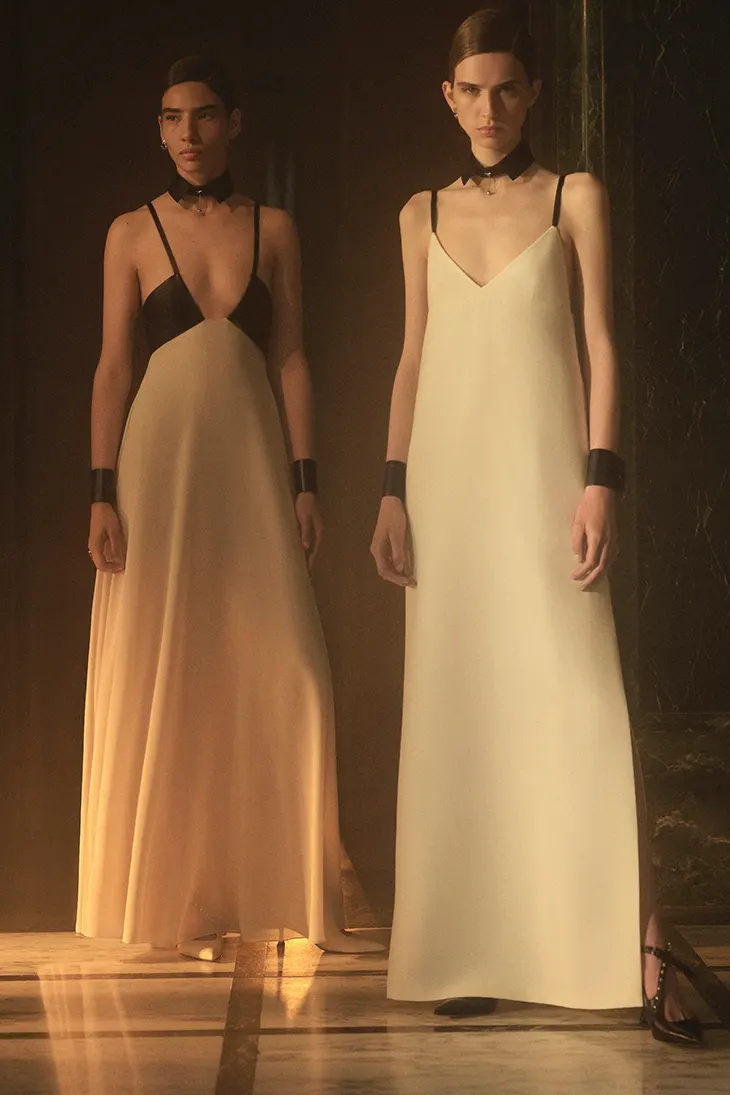
Evening pieces bring light into the collection through silver lace and sequin embroidery. These dresses introduce gleams across the season, giving the wardrobe a more decorative register while staying within Chiuri’s controlled framework.
The Tree of Life appears as the collection’s central image. Chiuri uses it to connect nature, humanity, reason, and coexistence, extending the idea of fashion as a shared practice. The motif leads back to her chosen motto, “Less I, more us,” which gives the collection its clearest emotional and political charge.